

Contact Info
- Greensboro, NC 27406
- Call: 336-707-0498
- Text: 336-707-0498
-
Mon - Fri: 8am - 4pm
Sat - Sun: Closed
Contact Info
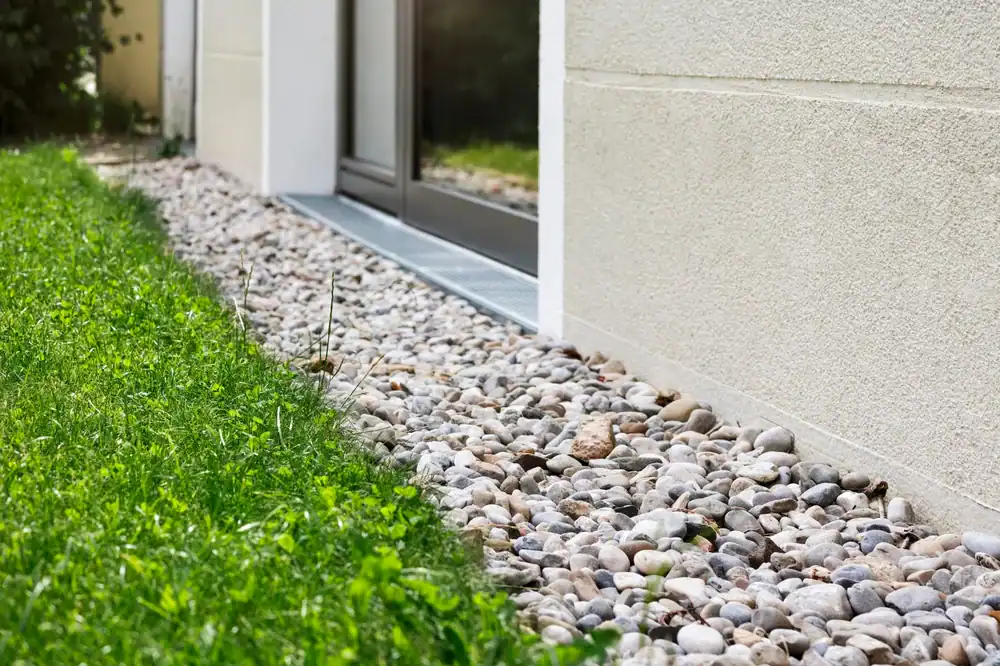
You stop seeing puddles around your foundation after every storm. The soggy spots in your yard dry up. Your crawl space quits turning into a swamp.
That’s what proper landscape drainage solutions do. Water gets redirected before it pools, before it seeps, before it causes the kind of damage that costs thousands to fix.
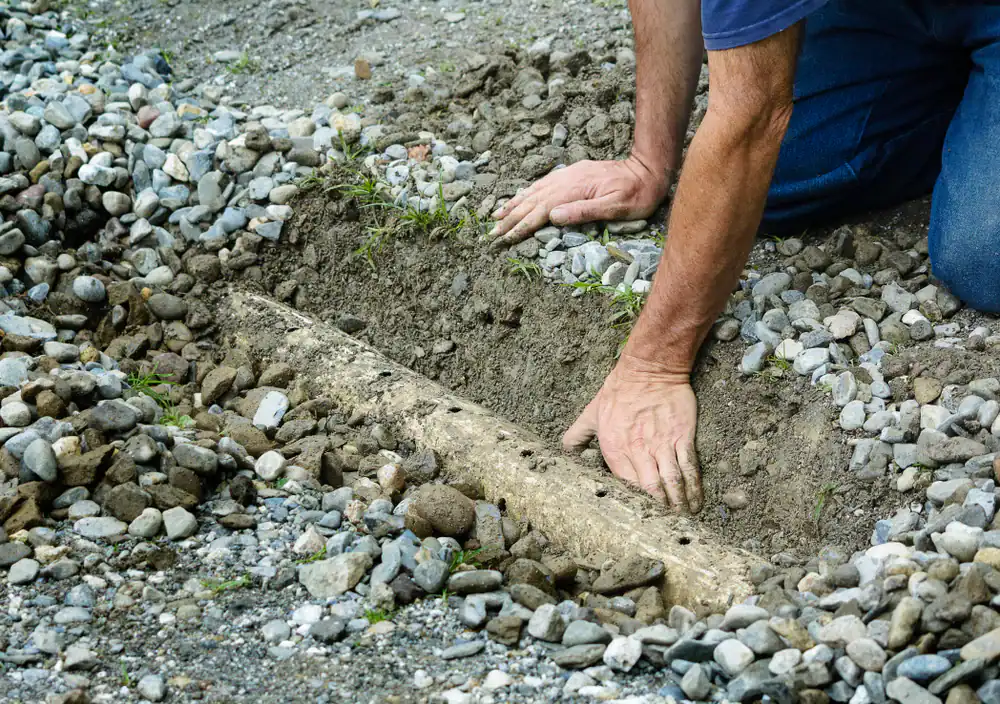
A French drain installation moves water away from your home through a gravel-filled trench and perforated pipe. Surface drainage gets handled before it becomes subsurface flooding. The system works with gravity, which means it keeps working without you having to think about it.
You’re not dealing with standing water anymore. You’re not watching your foundation develop new cracks. You’re not calling for emergency waterproofing every time the forecast shows rain.
We’ve spent over 30 years working in North Carolina. We’ve seen what the clay soil around Kirkman Crossroad does to foundations when water doesn’t drain properly.
That clay expands when it gets wet and contracts when it dries. The cycle puts constant pressure on foundation walls. Most basement flooding we see happens because the grading or drainage wasn’t done right in the first place.
We’ve been handling moisture problems in crawl spaces and basements since before most drainage companies existed in this area. French drain repair and installation is a natural extension of what we already do—keeping water away from places it doesn’t belong.

First, we figure out where your water is coming from and where it needs to go. That means looking at your property’s slope, your soil type, and where water naturally wants to flow.
Then we trench. The depth depends on your specific drainage issue—surface drains are shallower, foundation drains go deeper. We’re typically looking at 18 to 24 inches for most residential jobs.
We lay perforated pipe in the trench, wrap it in drainage fabric to keep soil and debris out, then surround it with gravel. The gravel creates a channel that lets water flow freely toward the pipe. The pipe carries that water away from your foundation to a safe discharge point.
Most installations take one to two days. You’ll see the trench, then you won’t—we cover everything back up with soil and sod. The system works underground, out of sight, redirecting water every time it rains.
Ready to get started?
You get a custom-designed system based on your property’s actual conditions. We’re not installing the same setup on every house in Kirkman Crossroad—your soil, your slope, and your water volume determine what you need.
The system can include foundation drains that protect your basement, yard drains that handle surface water, and downspout connections that move roof runoff away from your home. Some properties need a combination. Some need one targeted solution.
North Carolina gets an average of 43 inches of rain per year. When that water hits the heavy clay soil common around Kirkman Crossroad, it doesn’t absorb quickly. It pools. It runs toward the lowest point—which is often your foundation.
A properly installed French drain handles both the water you can see on the surface and the subsurface water that seeps through soil. The materials matter—we use high-strength dual wall pipe and proper drainage fabric, not the lightweight options that fail after a few seasons.

Most residential French drain installations in North Carolina run between $2,500 and $5,000. You’re looking at $20 to $60 per linear foot depending on depth, soil conditions, and how complex the drainage problem is.
A simple 50-foot yard drain costs less than a full perimeter foundation drain. If we’re trenching through heavy clay or need to go deeper to reach proper drainage slope, that affects the price.
The cost breaks down into labor, materials, and site conditions. Gravel, pipe, fabric, and proper grading take time to do right. Cheap installations fail because corners get cut—shallow trenches, wrong pipe, no fabric, poor slope. Then you’re paying twice.
A professionally installed French drain lasts decades with minimal maintenance. The pipe itself doesn’t wear out. The gravel doesn’t disappear. The system keeps working as long as the inlet stays clear.
Most failures happen because debris clogs the inlet or the pipe wasn’t wrapped in proper fabric during installation. Tree roots can infiltrate if the pipe has gaps or wasn’t installed deep enough.
Check your drain inlets twice a year—spring and fall. Pull out any leaves or debris. That’s usually all the maintenance required. If you notice water pooling again where it used to drain, call us to inspect the system. Usually it’s a simple clog, not a full replacement.
If water is getting into your basement because of poor exterior drainage, yes. A French drain installed along your foundation intercepts water before it reaches your basement walls.
But you need to know where the water is coming from first. Is it surface runoff pooling against your foundation? Is it groundwater rising during heavy rain? Is it a grading problem where your yard slopes toward your house instead of away?
French drains handle exterior water. If you’ve got cracks in your foundation walls or floor, the drain stops water from building up outside, which reduces pressure and seepage. For active leaks through cracks, you might need interior waterproofing too. Most basement flooding in Kirkman Crossroad happens because exterior drainage was never done right.
Most residential French drain installations don’t require permits in North Carolina, but you absolutely need to call 811 before anyone digs. That gets your utility lines marked so we don’t hit electric, gas, or water lines.
Some municipalities have specific rules about where you can discharge drainage water. You can’t redirect it onto a neighbor’s property or into a protected wetland. The discharge point matters.
If your French drain connects to a municipal storm drain system, you might need approval from your local public works department. If it’s draining onto your own property in a safe location away from structures, you’re usually fine. We handle the utility clearance calls and check local requirements before we start trenching.
Yes, and clay soil is actually one of the main reasons you need a French drain. Clay doesn’t absorb water quickly—it holds it. That’s why you see standing water in your yard for days after it rains.
The Piedmont region around Kirkman Crossroad has heavy clay soil. It expands when wet and shrinks when dry, which puts stress on foundations. A French drain gives water a path through the clay instead of letting it sit there.
We trench through the clay, install the perforated pipe and gravel, and create a channel where water can flow freely. The gravel is key—it doesn’t compact like clay, so water moves through it easily. The system works with clay soil, not against it. That’s the whole point.
A French drain is underground. You don’t see it after installation. It handles subsurface water and light surface runoff through a gravel-filled trench with perforated pipe.
A trench drain sits at ground level with a grated top. You see it—usually in driveways, patios, or areas where you need to catch a lot of surface water fast. It’s designed for high-volume surface drainage, like at the bottom of a sloped driveway.
Both move water away from your property, but they handle different problems. If you’ve got water pooling around your foundation or a soggy yard, you need a French drain. If you’ve got a paved area where water sheets across the surface, you might need a trench drain. Some properties need both.