

Contact Info
- Greensboro, NC 27406
- Call: 336-707-0498
- Text: 336-707-0498
-
Mon - Fri: 8am - 4pm
Sat - Sun: Closed
Contact Info
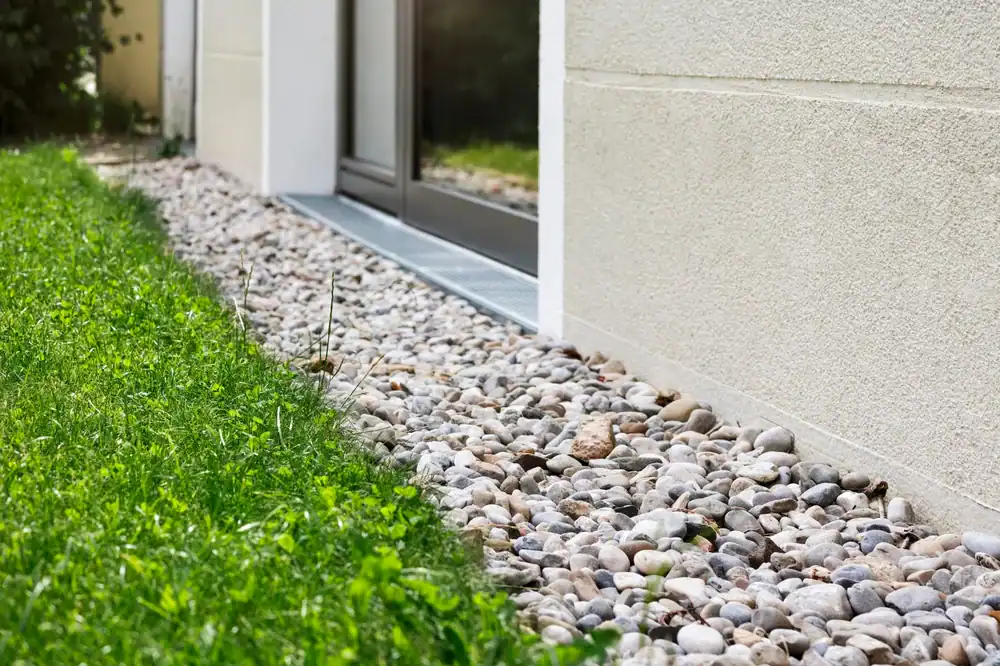
That musty smell coming from your crawl space? It’s not just unpleasant—it’s a sign that moisture is compromising your home’s air quality and structural integrity. When water pools around your foundation, it doesn’t just sit there. It seeps in, creates pressure against your walls, and invites mold growth that spreads through your HVAC system into every room.
A properly installed French drain system redirects water away from your foundation before it becomes a problem. You’ll notice the difference immediately—no more damp basement smell, no more water stains on your walls, no more worrying every time it rains. Most homes see up to 90% reduction in water intrusion once the system is working correctly.
Your foundation stays stable. Your crawl space stays dry. Your indoor air stays clean. That’s what effective landscape drainage solutions actually deliver.
We’ve been handling crawl space moisture and foundation drainage issues in Koontzville and throughout North Carolina for years. We started as indoor air quality specialists, which means we understand how water problems below your home affect the air you breathe inside it.
We’re not a national franchise following a script. We’re local contractors who know exactly how Koontzville’s red clay soil behaves when it gets saturated. We’ve seen what happens when drainage systems are installed without accounting for proper slope, when the wrong gravel gets used, or when corners are cut to save a few bucks.
You’re hiring people who will show up, assess your specific property conditions, explain what needs to happen, and install a system that actually works. We’re licensed, insured, and we’ve built our reputation on doing this right.

First, we come to your property and assess where water is collecting and why. We look at your soil type, your property’s grade, where your downspouts drain, and how water flows during heavy rain. This isn’t a quick walk-around—we’re identifying the exact source of your drainage problem.
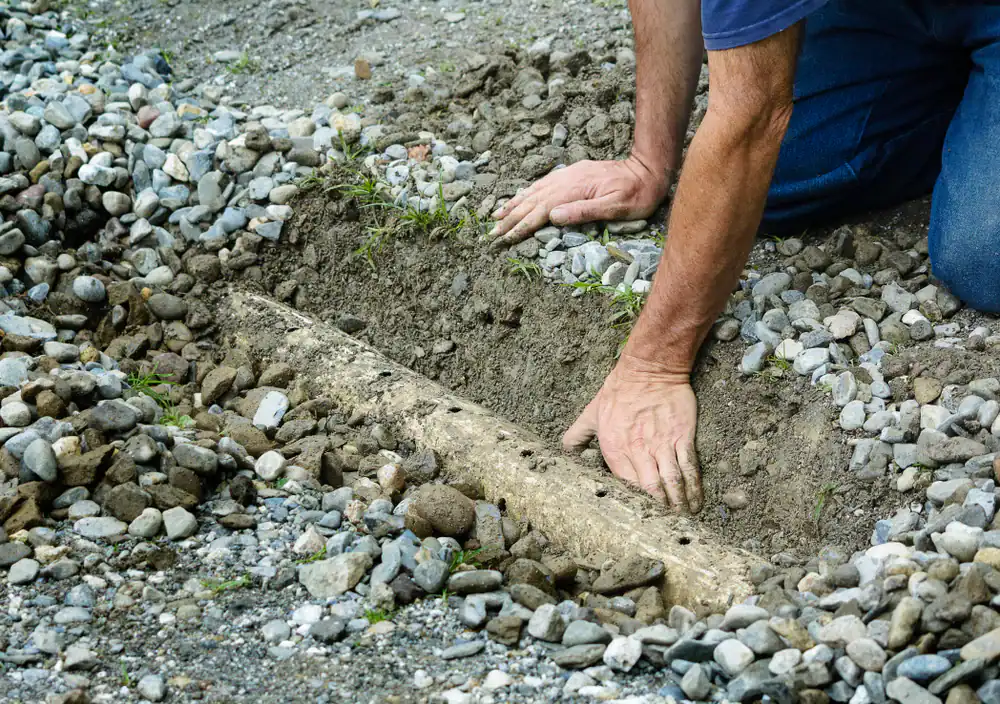
Once we know what’s causing the issue, we map out where the French drain needs to go. For most installations, that means digging a trench along your foundation down to footer level, which is typically where water pressure builds up. We make sure the trench has the right slope—even a small miscalculation here means water won’t flow properly.
We line the trench with filter fabric, add the correct type of gravel (not the cheap stuff that compacts), install perforated pipe, and backfill it properly. The pipe directs water to a safe drainage point away from your foundation—usually a dry well or drainage area on your property. If your situation calls for a sump pump or dehumidifier as part of the system, we’ll install that too.
You’ll see us remove any landscaping or structures that are in the way, and we’ll restore your yard once the work is complete. The whole process usually takes a few days depending on how much trench we’re running.
Ready to get started?
You’re getting a complete system designed for your property’s specific conditions. That includes the trench excavation, proper filter fabric to prevent sediment clogs, engineered gravel that allows water to flow freely, and commercial-grade perforated pipe that won’t collapse or shift over time.
We handle everything from start to finish. If you need a sump pump to move water away from low-lying areas, that’s part of the installation. If your crawl space needs a dehumidifier to control humidity levels after we’ve stopped the water intrusion, we install and configure that too. We’re not just digging a ditch—we’re solving your moisture problem completely.
Here in Koontzville, the clay soil creates unique challenges. When it rains, water doesn’t absorb quickly. It pools, it builds pressure, and it finds every crack and weak point in your foundation. Our installations account for that. We size the system correctly, we use materials that won’t fail in heavy clay, and we make sure water has a clear path away from your home even during North Carolina’s heaviest downpours.
You also get a walkthrough after installation where we show you how the system works, what to watch for, and how to maintain it. Most systems last 30-40 years when installed correctly.

Most residential French drain installations in this area run between $2,500 and $5,000, but your actual cost depends on how much trench we need to dig, your soil conditions, and whether you need additional components like a sump pump or dehumidifier.
If you’ve got a straightforward perimeter drain around one side of your foundation, you’re likely on the lower end. If we’re running drainage around your entire house, dealing with difficult access, or installing a more complex system with multiple drainage points, the cost goes up. We don’t give ballpark estimates over the phone because every property is different.
What matters more than the upfront cost is whether the system actually works. A cheap installation that fails in two years because someone used pea gravel or didn’t account for proper slope isn’t saving you money. You’ll pay to have it dug up and redone correctly. We price our work based on doing it right the first time with materials that last.
A properly installed French drain system lasts 30 to 40 years. That’s assuming it’s installed with the right materials, proper slope, and adequate filter fabric to prevent sediment from clogging the pipe.
The systems that fail early almost always have the same problems: wrong gravel that compacts over time, incorrect slope that lets water pool instead of flow, or cheap pipe that collapses under soil pressure. We’ve replaced plenty of failed systems where someone tried to DIY it or hired the cheapest contractor they could find.
Your system will need occasional maintenance—mainly keeping your gutters clean so you’re not overwhelming the drain with roof runoff, and checking the outlet point to make sure it’s not blocked. But the drain itself, when installed correctly, should work for decades without major intervention. That’s why the installation process matters so much.
A French drain can reduce basement water intrusion by up to 90% in most homes, but it’s not magic. It works by intercepting water before it reaches your foundation and redirecting it away from your house. If your basement flooding is caused by groundwater pressure or surface water pooling around your foundation, a French drain solves that problem.
If your flooding is coming from other sources—like a high water table, a cracked foundation that needs structural repair, or plumbing leaks—a French drain helps but might not be the complete solution. That’s why we assess your specific situation before recommending a system.
For most Koontzville homes dealing with water problems after heavy rain, the issue is surface drainage and clay soil that doesn’t absorb water quickly. A French drain handles that directly by giving water a path away from your foundation before it can seep into your basement or crawl space. Combined with proper grading and gutter management, it eliminates most basement moisture issues.
You can, but most DIY French drain installations fail within a few years. The most common mistakes are using the wrong gravel, not getting the slope right, and placing the pipe incorrectly. Any one of those errors means water won’t flow properly, and you’ll end up digging it up to start over.
Getting the slope correct is harder than it sounds. The trench needs to drop at least one inch for every eight feet of length, and it needs to be consistent along the entire run. If you eyeball it or don’t use proper leveling tools, you’ll create low spots where water pools and sediment accumulates. That clogs the system.
The gravel matters too. Pea gravel doesn’t provide enough drainage. Crushed rock with fines compacts over time and blocks water flow. You need clean, angular stone in the right size range. Then there’s the filter fabric, the pipe type, the backfill process, and making sure you’re not hitting utility lines when you dig. Professional installation costs more upfront, but it works. DIY attempts usually cost more in the long run when you’re paying to fix them.
If you’re seeing water pooling around your foundation after it rains, noticing damp spots or water stains in your basement or crawl space, or smelling that musty odor that won’t go away, you probably need a drainage solution. Those are all signs that water is getting too close to your foundation or already intruding into your home.
Other indicators include cracks in your foundation walls (especially horizontal cracks that suggest water pressure), efflorescence (white mineral deposits on basement walls from water seepage), or soggy areas in your yard that never seem to dry out. If your sump pump runs constantly during wet weather, that’s another sign your property isn’t draining properly.
The best way to know for sure is to have someone assess your property who understands drainage. We’ll look at your grading, your soil type, where water collects, and how it’s affecting your foundation. Sometimes a French drain is the right answer. Sometimes you need a different approach or a combination of solutions. We’ll tell you what’s actually going on and what it takes to fix it.
A French drain is a subsurface system—it’s buried underground and collects water that’s seeping through your soil toward your foundation. A trench drain or surface drainage system sits at ground level and catches water before it has a chance to soak into the ground. They solve different problems.
If you’ve got water pooling on your driveway, patio, or around your foundation after rain, a surface drainage system or trench drain makes sense. If your issue is groundwater pressure, a wet crawl space, or basement seepage, you need a French drain to intercept that water below the surface.
Sometimes you need both. We’ve installed plenty of systems where we run a French drain along the foundation to handle subsurface water and add a trench drain or surface grading to manage runoff from your roof and yard. The right solution depends on where your water is coming from and where it’s causing problems. That’s why the assessment matters—we’re not selling you one type of system regardless of what you actually need.