

Contact Info
- Greensboro, NC 27406
- Call: 336-707-0498
- Text: 336-707-0498
-
Mon - Fri: 8am - 4pm
Sat - Sun: Closed
Contact Info
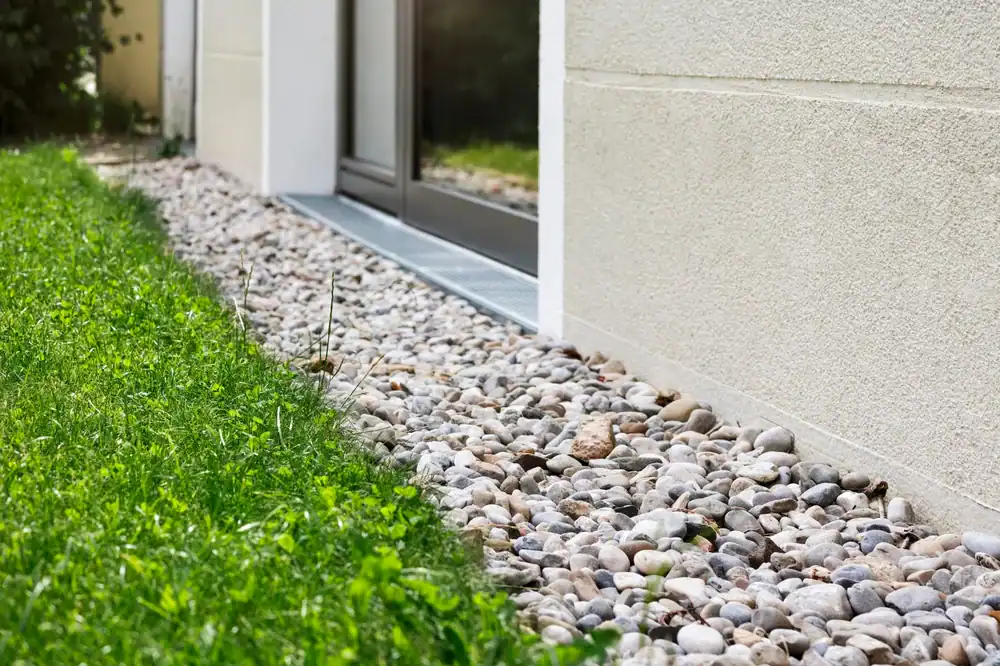
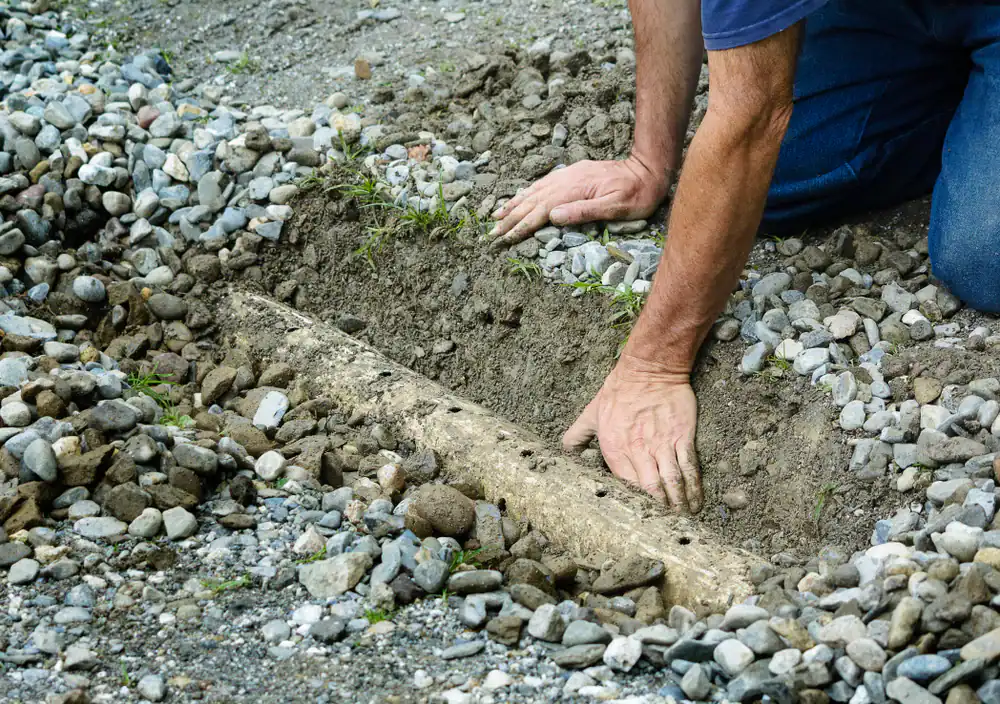
A professionally installed French drain keeps water away from your foundation before it can cause the kind of damage that costs thousands to fix. You’re looking at protection against basement flooding, foundation cracks, mold growth in crawl spaces, and that persistent dampness that makes your whole house feel off.
North Carolina gets about 45 inches of rain per year—six more than the national average. That’s a lot of water looking for somewhere to go. When your yard doesn’t drain properly, it goes straight to your foundation. The soil around here expands when wet and contracts when dry, which means your foundation is constantly shifting if water isn’t managed correctly.
French drains redirect that water away from your home through a gravel-filled trench and perforated pipe system. Surface water and groundwater both get channeled to a safe drainage point—away from your basement, away from your crawl space, away from the structural elements that keep your home standing solid. You get a dry basement, a stable foundation, and one less thing to worry about when the forecast calls for heavy rain.
We’ve spent over 30 years helping Greensboro-area homeowners deal with water and moisture issues. We started with indoor air quality and crawl space problems, which means we’ve seen firsthand what happens when drainage fails—the mold, the rot, the expensive repairs that could’ve been prevented.
We’re not a general landscaping company that does drains on the side. We specialize in moisture management. That means when we install a French drain system, we’re thinking about your crawl space, your basement air quality, and your foundation—not just moving dirt around your yard.
Latham Park sits in an area where North Buffalo Creek has topped its banks and reached residential streets during heavy rain events. Your drainage system isn’t just about convenience. It’s about protecting your home from the kind of water damage that this area is prone to when storms hit.

First, we come out and look at your property. We’re checking where water collects, how your yard slopes, where your downspouts drain, and what’s happening around your foundation. We take pictures and explain what we’re seeing—and what needs to happen to fix it.
Once you’re ready to move forward, we bring in contractor-grade trenching equipment. We dig a trench along the problem areas—usually around your foundation perimeter or across low spots in your yard where water pools. The trench gets lined with landscape fabric, then filled with gravel and a perforated pipe that captures and redirects water.
That pipe leads to a drainage point away from your home—sometimes a dry well, sometimes to daylight if your property slopes right, sometimes to a catch basin. We wrap everything properly so soil and roots don’t clog the system over time. Then we cover it back up, clean up the site, and restore your yard.
The whole installation typically takes hours, not days. When we’re done, you’ve got a system that can last 20-plus years if it’s installed correctly—which is exactly how we do it.
Ready to get started?
You’re getting a complete drainage system designed specifically for your property’s water problems. That includes the trench excavation, proper fabric lining to prevent soil infiltration, the right size perforated pipe for your water volume, clean gravel fill, and a discharge point that actually works with your property’s grade and layout.
We also handle surface drainage issues with trench drains when needed—those grated channels that capture water before it even gets underground. Sometimes you need both systems working together, especially if you’re dealing with heavy runoff from driveways or patios in addition to groundwater issues.
This area’s soil composition makes drainage even more critical. The clay-heavy soil common around Latham Park doesn’t absorb water quickly, which means surface water sits longer and puts more pressure on your foundation. A properly designed French drain system accounts for that. We’re not just following a generic installation guide—we’re building something that works with North Carolina soil and North Carolina rainfall patterns.
And because we also handle crawl space encapsulation and moisture control, we can coordinate your exterior drainage with interior waterproofing if that’s what your situation calls for. Most drainage problems aren’t one-size-fits-all, and neither are our solutions.

Most residential French drain installations in the Latham Park area run between $2,800 and $6,500, depending on how much linear footage you need and how complex your drainage situation is. A simple 50-foot run along one side of your house costs less than a full perimeter system with multiple discharge points.
The price includes excavation, materials, labor, and site cleanup. If your yard has difficult access or if we’re working around landscaping you want to preserve, that can add to the cost. Same goes if we need to install a sump pump system or connect to an existing drainage setup.
Here’s the thing—spending a few thousand on drainage now beats spending $5,000 to $8,000 on foundation repairs later. And those are conservative numbers for North Carolina foundation work. If you’re already seeing water in your basement or cracks in your foundation walls, the problem only gets more expensive the longer you wait.
A properly installed French drain can last 20 to 30 years, sometimes longer. The key word there is “properly.” If the system isn’t wrapped correctly or if the wrong materials get used, you might see problems in five years instead of twenty.
The pipe itself is durable. What typically causes failure is soil and roots infiltrating the system and clogging it up. That’s why we wrap everything in landscape fabric and use clean gravel—not the stuff with fines that’ll compact and block water flow.
You’ll want to check the inlet points once or twice a year to make sure leaves and debris aren’t blocking them. That’s about it for maintenance. The system works passively—gravity does the work, so there’s no pump to maintain or electricity to run. Once it’s in, it’s in.
We dig a trench where the drain needs to go, which means there’s going to be some disruption along that path. But we’re not excavating your whole yard. Most trenches are 12 to 18 inches wide and run along your foundation or through problem areas—not across every square foot of grass you’ve got.
We use professional trenching equipment that makes clean cuts and minimizes the footprint. Once the drain is installed and covered, we can lay sod over the top. Within a few weeks, you won’t even see where we worked.
If you’ve got specific landscaping concerns—flower beds, trees, irrigation lines—let us know during the inspection. We can often route around those features or work with you to protect what’s already there. The goal is to solve your drainage problem without creating new headaches in the process.
Yes, but it depends on where the water’s coming from. If your basement floods because water is pooling around your foundation and seeping through the walls, an exterior French drain can absolutely help. It intercepts that water before it ever reaches your foundation, which means it never gets the chance to push through into your basement.
If water is coming up through the floor because of a high water table, you might need an interior perimeter drain and a sump pump system instead. Sometimes you need both—exterior drainage to handle surface water and interior drainage to manage groundwater pressure from below.
During our inspection, we’ll figure out what’s causing your basement flooding and recommend the right fix. We’ve dealt with enough moisture problems in this area to know the difference between a grading issue, a drainage issue, and a waterproofing issue. You’ll get a straight answer about what’ll actually work for your situation.
A French drain is buried underground and handles subsurface water and groundwater. It uses a perforated pipe surrounded by gravel to collect water that’s already in the soil and redirect it away from your foundation. You don’t see it once it’s installed.
A trench drain sits at ground level with a grated top and captures surface water before it has a chance to soak into the ground. You typically see these in driveways, patios, or along the edges of hardscaping where water runs off quickly. They’re great for managing heavy surface runoff that needs to be channeled away fast.
Some properties need both. If you’ve got a sloped driveway that sends water toward your foundation and you’ve also got groundwater issues, we might install a trench drain to catch the surface flow and a French drain to handle what’s already in the soil. They work together to give you complete water control.
Most residential French drain installations don’t require a permit in Guilford County, but there are exceptions. If your drainage system discharges into a public storm drain or if you’re doing major grading work that changes how water flows across your property, you might need approval.
We’ll let you know during the inspection if your project needs permitting. If it does, we can walk you through what’s required. Most of the time, though, a standard French drain around your foundation or through your yard is straightforward enough that permits aren’t an issue.
What matters more than permits is making sure your drainage system doesn’t send water onto your neighbor’s property or into areas where it’ll cause new problems. We design systems that handle your water responsibly—directing it to appropriate drainage points that won’t create issues downstream. That’s just part of doing the job right.