

Contact Info
- Greensboro, NC 27406
- Call: 336-707-0498
- Text: 336-707-0498
-
Mon - Fri: 8am - 4pm
Sat - Sun: Closed
Contact Info
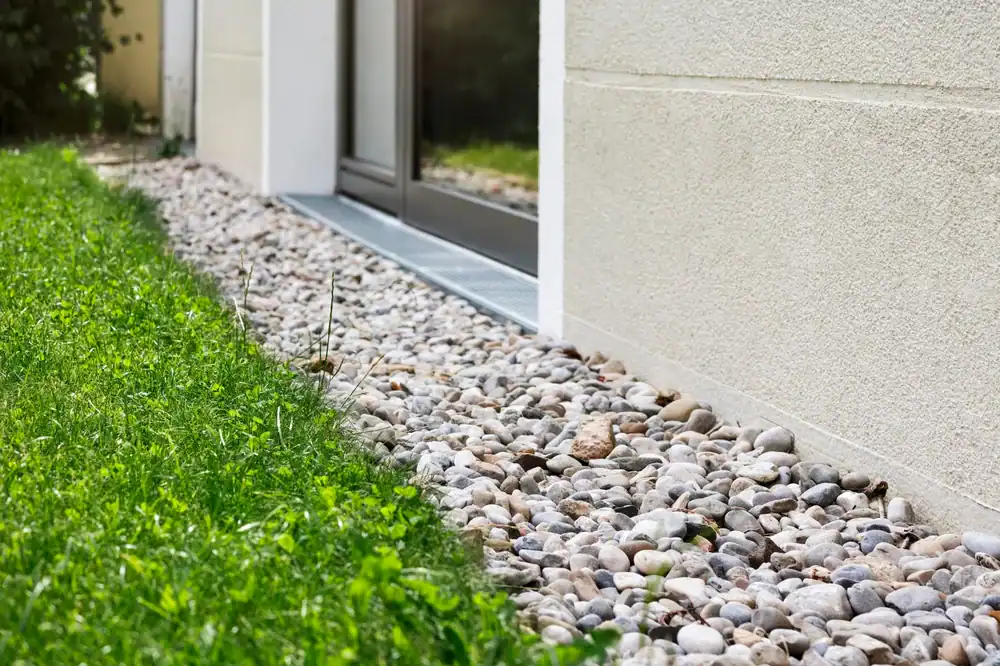
You stop worrying every time the forecast calls for rain. No more scrambling to move boxes off the floor or running a shop vac at midnight.
Your crawlspace stays dry, which means no mold creeping up your walls. No musty smell that hits you when you open the basement door. No wood rot eating away at your floor joists while you’re upstairs trying to ignore it.
Your foundation stops taking damage from water pressure. That’s the kind of damage that doesn’t announce itself until you’re looking at five-figure repair bills. A properly installed french drain system intercepts water before it ever reaches your foundation walls, which means you’re not dealing with cracks, settling, or structural problems down the road.
You get your basement back as usable space. Storage that stays dry. A workshop you can actually use. Maybe even finished living space that doesn’t come with an asterisk about flood risk.
We’ve spent over 30 years solving moisture problems in Pleasant Garden and throughout Guilford County. We’ve worked with every type of foundation, every soil condition, and every drainage nightmare this area throws at homes.
We know Pleasant Garden’s clay soil. That’s not a small thing. Clay absorbs water like a sponge and expands, pushing against your foundation with thousands of pounds of pressure. Most drainage problems here aren’t because someone didn’t try to fix them—they’re because whoever did the work didn’t account for how our soil behaves.
We’re BBB accredited and locally owned. We don’t subcontract your job to whoever answers the phone. The people who assess your property are the same people who install your system, and they’ve been doing this work right here in North Carolina for years.

We start with your property, not a sales pitch. Someone comes out to look at where water’s coming from, where it’s going, and what’s in the way. We check your soil type, your grading, your existing drainage, and how your downspouts are currently dumping water right next to your foundation.
Then we design a system that actually fits your situation. That means figuring out the right depth based on your water table, the right slope so gravity does the work, and the right discharge point so we’re not just moving your problem to a different part of your yard. For most homes in Pleasant Garden, that involves a perforated pipe in a gravel-filled trench that intercepts groundwater before it reaches your foundation.
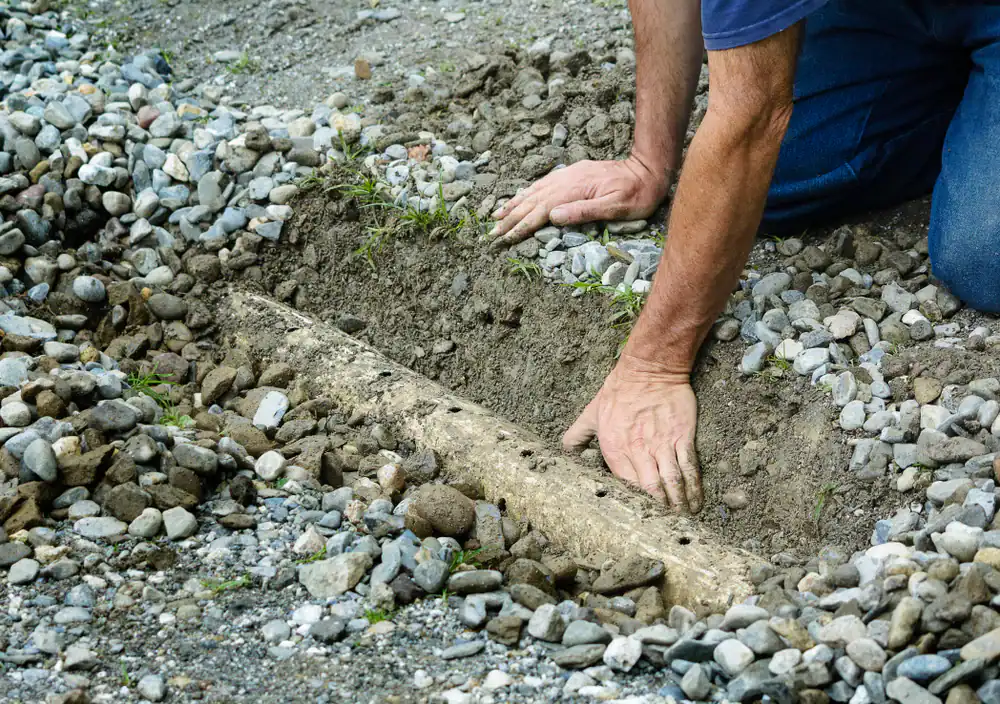
Installation means digging a trench around your foundation or along the problem area, setting the pipe at the correct slope, surrounding it with graded gravel that filters water, and covering it with fabric and soil. If you need it, we tie in a sump pump system with battery backup so you’re protected even when the power goes out during storms.
We also redirect your downspouts away from the foundation. Sounds basic, but most basement flooding in this area happens because roof runoff dumps thousands of gallons right where you don’t want it. We make sure that water gets carried away from your home, not toward it.
Ready to get started?
You get a custom-designed french drain system built for your property’s soil, slope, and water volume. We’re not running the same cookie-cutter setup on every house. Your system gets sized and positioned based on where your water problem actually is.
That includes perforated drainage pipe, proper grading and slope, graded gravel for filtration, and landscape fabric to prevent soil from clogging the system. If your situation calls for it, we install a sump pump with battery backup, interior or exterior foundation drains, and proper discharge lines that move water far enough away to matter.
Pleasant Garden’s clay soil makes surface drainage just as important as subsurface work. Clay doesn’t absorb water—it sheds it. That means we often combine french drains with surface solutions like trench drains or regrading to handle both groundwater and runoff. You might need downspout extensions, catch basins, or channel drains depending on how water moves across your property.
We also handle crawlspace drainage and encapsulation, because a wet crawlspace creates the same problems as a wet basement—mold, rot, and structural damage. If water’s getting under your house, we stop it there too.

Most residential french drain projects in Pleasant Garden run between $2,500 and $5,000, but your actual cost depends on how much drainage you need and what we’re working around. Linear footage is the biggest factor—most systems cost $20 to $60 per foot depending on depth, soil conditions, and whether we’re installing interior or exterior drains.
A basic exterior french drain around a small foundation might land on the lower end. A full perimeter system with sump pump installation, battery backup, and crawlspace work will cost more. Clay soil sometimes adds to the cost because it’s harder to dig and requires more careful grading to ensure proper drainage.
We give you an exact price after looking at your property. No ballpark guesses over the phone, because those numbers never hold up once we see what we’re actually dealing with. You’ll know what it costs before we start, and that number doesn’t change unless you change the scope.
Clay soil is why most DIY french drains and cheap installations don’t work here. Clay particles are tiny and stick together, leaving almost no space for water to move through. When you dig a trench and don’t account for that, water can’t reach your drain pipe—it just sits in the clay.
The other problem is slope. Without proper slope, water doesn’t flow through the pipe. It pools, the system backs up, and you’re right back where you started. A lot of french drains get installed too shallow or without enough fall, and gravity can’t do its job.
We handle clay soil by using the right gravel size, proper pipe perforation, and correct depth. We also make sure the trench is wide enough and the fabric is positioned to filter water without clogging. And we always check the discharge point—if water can’t exit the system, it doesn’t matter how well the drain is built.
A properly installed french drain system should last 20 to 30 years or more in Pleasant Garden. That’s assuming it’s built right from the start—correct slope, proper gravel, quality pipe, and a discharge point that doesn’t clog or erode.
The main thing that kills drainage systems early is poor installation. If the slope’s wrong, if the gravel’s too small, if the fabric isn’t there or gets positioned wrong, you’ll have problems within a few years. Tree roots can also infiltrate pipes over time if the system runs near large trees, but that’s manageable with the right pipe and placement.
We use commercial-grade materials and install to last. That means you’re not redoing this in five years. You’re getting a system that handles Pleasant Garden’s clay soil and heavy rains for decades, and if you ever do need service, we’re still here.
It depends on your water table and how much water you’re dealing with. If groundwater sits high or you get significant basement seepage, a sump pump gives you active protection on top of the passive drainage from your french drain.
French drains rely on gravity. They work great for moving water away from your foundation, but if water’s coming up through your basement floor or you’re in a low spot where water naturally collects, you need a pump to physically remove it. We typically recommend sump pumps for interior drainage systems or properties where the water table rises during heavy rain.
Battery backup is worth it in Pleasant Garden. Storms knock out power, and that’s exactly when you need your pump working. A battery backup system keeps you protected even when the grid goes down, which means you’re not waking up to a flooded basement after a storm.
Yes, but the foundation damage needs to be addressed first or at the same time. A french drain stops future water damage—it doesn’t reverse cracks or settling that already happened. If your foundation has structural issues from years of water pressure, you’ll need those repaired before or during drainage installation.
That said, installing a french drain now prevents the problem from getting worse. Water pressure from saturated clay soil is what causes most foundation cracks, bowing walls, and settlement in Pleasant Garden. Stop the water, and you stop the ongoing damage.
We’ll tell you honestly what you’re looking at during the assessment. If you need foundation work, we’ll let you know. If the damage is minor and a drainage system is enough to prevent further issues, we’ll tell you that too. The goal is fixing the problem right, not selling you work you don’t need.
A french drain is a subsurface system—it’s buried underground and handles groundwater and water that seeps through soil. You don’t see it once it’s installed. It’s designed to intercept water before it reaches your foundation and redirect it away from your home.
A trench drain is a surface drainage solution. It’s a channel with a grate on top that collects water running across your driveway, patio, or yard. You use trench drains where water pools on the surface and needs somewhere to go—like at the base of a sloped driveway or in front of a garage door.
A lot of Pleasant Garden properties need both. Clay soil doesn’t absorb water, so you get surface runoff and subsurface seepage at the same time. We assess your property and recommend the right combination of drainage solutions to handle both problems. Sometimes that’s a french drain alone, sometimes it’s french drain plus surface drainage, and sometimes it’s a full landscape drainage system that ties everything together.