

Contact Info
- Greensboro, NC 27406
- Call: 336-707-0498
- Text: 336-707-0498
-
Mon - Fri: 8am - 4pm
Sat - Sun: Closed
Contact Info
You stop checking the basement every time a storm rolls through. No more standing water in the yard after heavy rain. No more wondering if this is the year your foundation starts cracking.
A French drain installation handles water before it becomes your problem. It intercepts groundwater, redirects it away from your home, and keeps your basement dry even during North Carolina’s wettest months. That means no flooding, no mold creeping into your crawl space, and no expensive foundation repairs down the road.
Most homeowners in Rudd don’t realize how much pressure saturated soil puts on a foundation until the damage is already done. Clay soil around here expands when it gets wet, pushing against your foundation walls and creating cracks. A French drain reduces that hydrostatic pressure and gives water somewhere else to go. You get peace of mind, a dry basement, and a home that holds its value.
We’ve spent over 30 years helping homeowners in Greensboro and surrounding areas like Rudd deal with moisture, mold, and water intrusion. We started with crawl space encapsulation and indoor air quality, but we kept seeing the same root cause: water getting where it shouldn’t.
French drain installation is a natural extension of what we already do. We understand how water moves through North Carolina soil, how basements fail, and what it takes to fix drainage problems the right way. Our team includes certified professionals who’ve seen every type of foundation and grading issue this region throws at us.
We’re not the cheapest option, and we’re fine with that. You’re hiring people who show up on time, install systems that last 30+ years, and don’t cut corners when it rains.

We start with an inspection of your property to figure out where water is coming from and where it needs to go. That means looking at your grading, soil type, foundation, and any existing drainage systems. We’re checking for low spots, downspout issues, and signs of water pooling or erosion.
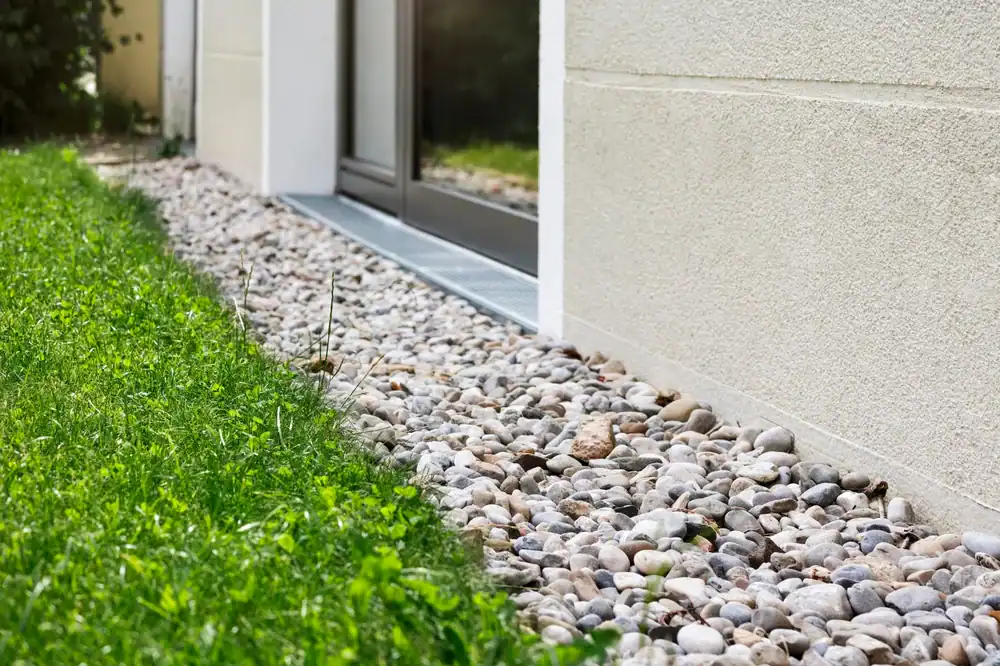
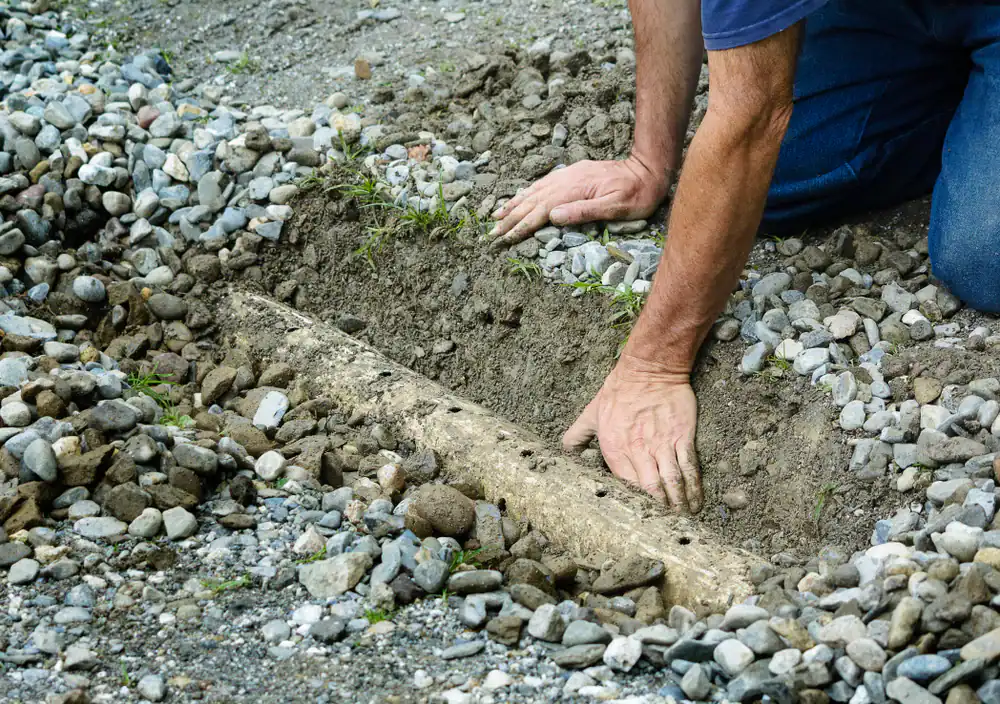
Once we know the problem, we map out the trench route. A French drain is essentially a gravel-filled trench with a perforated pipe at the bottom. Water flows into the trench, gets collected by the pipe, and gets carried away from your foundation to a safe discharge point. The trench is typically dug along the foundation perimeter or across areas where water collects in your yard.
We excavate the trench to the right depth and slope—this isn’t guesswork. The pipe has to slope at least 1% to move water effectively. We lay down landscape fabric, add a base layer of gravel, install the perforated pipe, cover it with more gravel, and then wrap it all in fabric to keep soil and roots out. Finally, we backfill the trench and restore your landscaping as much as possible.
The whole process usually takes one to three days depending on the length of the drain and site conditions. You’ll know exactly what to expect before we start, and we’ll walk you through everything as we go.
Ready to get started?
You get a system designed specifically for your property. That includes site evaluation, trench excavation, proper grading, landscape fabric, crushed stone, perforated drain pipe, and a safe discharge location. We also handle any necessary permits and make sure the installation meets local building codes.
In Rudd and the surrounding Piedmont region, clay soil is a major factor. It doesn’t drain well, and it expands when wet. That’s why we pay close attention to soil composition and adjust our installation approach accordingly. If your property has grading issues or poor surface drainage, we’ll address that too. Sometimes a French drain works best alongside other landscape drainage solutions like trench drains or surface grading corrections.
We also offer interior French drain installation for basements that are already dealing with water intrusion. This involves cutting a channel along the inside perimeter of the basement floor, installing a drain system, and connecting it to a sump pump. It’s more invasive than an exterior drain, but it’s often the best option for homes where exterior access is limited or the foundation is already compromised.
Every installation comes with a clear explanation of how to maintain the system. French drains are low-maintenance, but they’re not zero-maintenance. We’ll show you what to watch for and how to keep the system running for decades.

Most residential French drain installations in North Carolina fall between $2,500 and $5,000. The cost depends on how many linear feet you need, soil conditions, site access, and whether you’re installing an exterior or interior system.
Exterior French drains typically run $23 to $36 per linear foot in this area. A 60-foot drain would cost roughly $1,400 to $2,200. Interior drains cost more because they involve cutting concrete, installing a sump pump, and dealing with basement access challenges.
If your property has rocky soil, steep grading, or requires permits and engineering, expect the price to go up. But compare that to foundation repair costs, which can easily hit $10,000 to $30,000 if water damage gets out of hand. A French drain is one of the most cost-effective ways to protect your home long-term.
A properly installed French drain lasts 30 to 40 years. The key word is “properly.” If the system is installed with the right materials, correct slope, and good filtration fabric, it’ll keep working for decades with minimal maintenance.
The most common failure point is clogging. Tree roots, soil, and sediment can work their way into the pipe over time if the fabric breaks down or wasn’t installed correctly. That’s why we use high-quality landscape fabric and crushed stone that won’t degrade quickly.
You can extend the life of your French drain by keeping gutters clean, directing downspouts away from the drain, and checking the discharge point once or twice a year. If you notice water pooling where it didn’t before, that’s a sign the system might need inspection or cleaning. But most homeowners never have to think about it once it’s in the ground.
You can, but it’s not a good idea unless you have experience with grading, drainage, and excavation. French drains look simple, but they’re easy to mess up. If the slope is wrong, the pipe will hold water instead of moving it. If the trench isn’t deep enough or the gravel isn’t sized correctly, the system won’t work.
There are also code requirements in North Carolina. Depending on your county, you may need a permit. If you hit a utility line during excavation, you’re looking at expensive repairs and potential safety hazards. Professional installers know how to locate utilities, navigate obstacles, and design a system that actually solves the problem.
Most DIY French drains fail within a few years because of improper installation. Then you’re paying to have it dug up and redone. It’s almost always cheaper and less stressful to hire a professional from the start, especially if you’re dealing with foundation protection or basement waterproofing.
Yes, if it’s installed correctly and addresses the source of the water. French drains work by intercepting groundwater before it reaches your foundation. If your basement floods because of high groundwater levels, poor grading, or saturated soil, a French drain will solve that problem.
However, if your basement floods because of surface water running directly toward your foundation, you may also need grading corrections or a trench drain to handle runoff. In some cases, an interior French drain with a sump pump is the better option, especially if the exterior foundation is hard to access or already damaged.
North Carolina’s clay soil makes basement flooding worse because it doesn’t absorb water well. When the ground gets saturated, water has nowhere to go except into your basement. A French drain gives it a path away from your home. Most homeowners see immediate results after installation—no more water in the basement, even during heavy storms.
An exterior French drain is installed outside your home, along the foundation perimeter. It intercepts water before it ever reaches the foundation walls. This is the preferred option because it keeps water away from your home entirely and reduces hydrostatic pressure on the foundation.
An interior French drain is installed inside the basement, along the perimeter of the floor. It collects water that’s already made it through the foundation and channels it to a sump pump, which then pumps it outside. Interior drains are more invasive and don’t reduce pressure on the foundation, but they’re often necessary when exterior access is limited or the foundation is already compromised.
Both systems work, but exterior drains are generally more effective for long-term foundation protection. Interior drains are a good solution for existing basements with chronic water problems. In some cases, homeowners install both for maximum protection. We’ll assess your property and recommend the best approach based on your specific situation.
Yes, but they require proper installation. Clay soil is common throughout the Piedmont region, including Rudd, and it’s one of the main reasons homeowners need French drains in the first place. Clay doesn’t drain well, so water sits on the surface or saturates the soil around your foundation.
A French drain works in clay soil because it creates a path of least resistance. Water naturally flows toward the gravel-filled trench and perforated pipe instead of sitting in the clay. The key is making sure the trench is deep enough, the pipe has the right slope, and the gravel is sized correctly to allow water to move freely.
In heavy clay, we sometimes recommend additional measures like surface grading or downspout extensions to reduce the amount of water reaching the drain. We may also use a larger trench or more gravel to increase capacity. Every property is different, and clay soil requires a customized approach. But French drains absolutely work here—we’ve installed hundreds of them in similar conditions.