

Contact Info
- Greensboro, NC 27406
- Call: 336-707-0498
- Text: 336-707-0498
-
Mon - Fri: 8am - 4pm
Sat - Sun: Closed
Contact Info
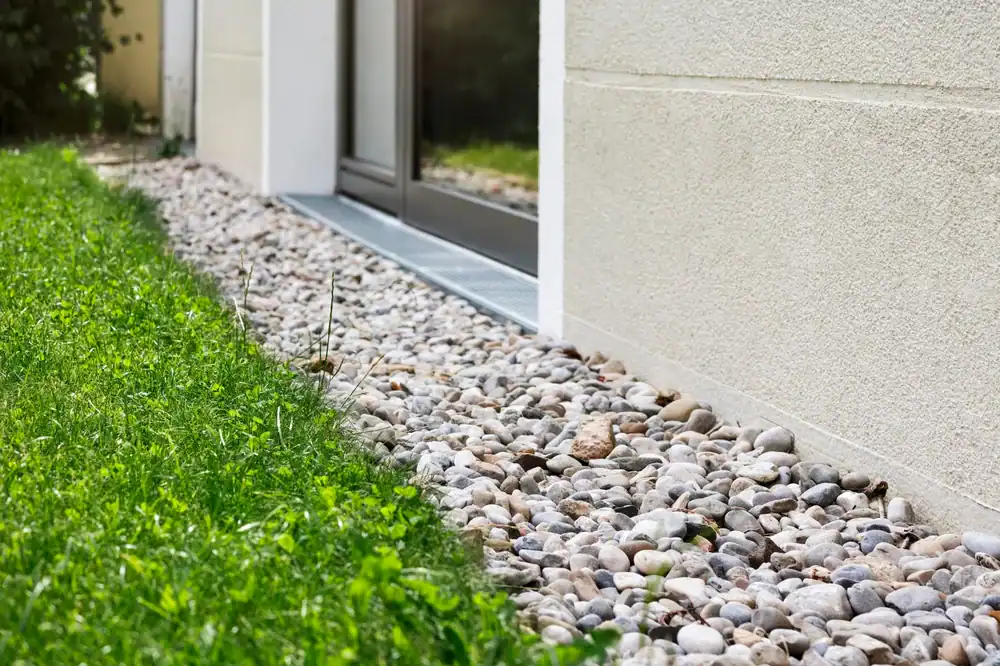
You stop seeing puddles in your yard three days after a storm. Your crawl space stops smelling like mold every summer. You stop wondering if that crack in your foundation is getting worse.
A properly installed French drain moves groundwater away from your home before it can cause problems. That means no more hydrostatic pressure pushing against your foundation walls. No more saturated soil turning your crawl space into a swamp. No more standing water killing your grass and making your yard unusable.
North Carolina gets hit with heavy seasonal rains and high humidity year-round. Without proper landscape drainage solutions, that water has nowhere to go except into your foundation, under your slab, or into your basement. A French drain gives it a path away from your home instead of through it.
We’ve been solving water and air quality issues in the Greensboro and Alamance County area since the early 1990s. We’re BBB accredited with an A+ rating, and our owner Rick Watson holds ASCS and CVI certifications through NADCA.
We started in air duct cleaning and crawl space work. Over three decades, we’ve learned that most indoor air quality problems start with water where it shouldn’t be. That’s why we added French drain installation and foundation drainage to what we do. You can’t fix mold and humidity issues without first fixing where the water comes from.
Snow Camp sits in an area where clay soil and seasonal flooding create real drainage challenges. We’ve worked on enough properties here to know what works and what doesn’t when it comes to moving water away from homes.

We start with an inspection of your property to figure out where water is coming from and where it needs to go. We’re looking at grading, soil type, existing drainage, and how water moves across your yard during heavy rain.
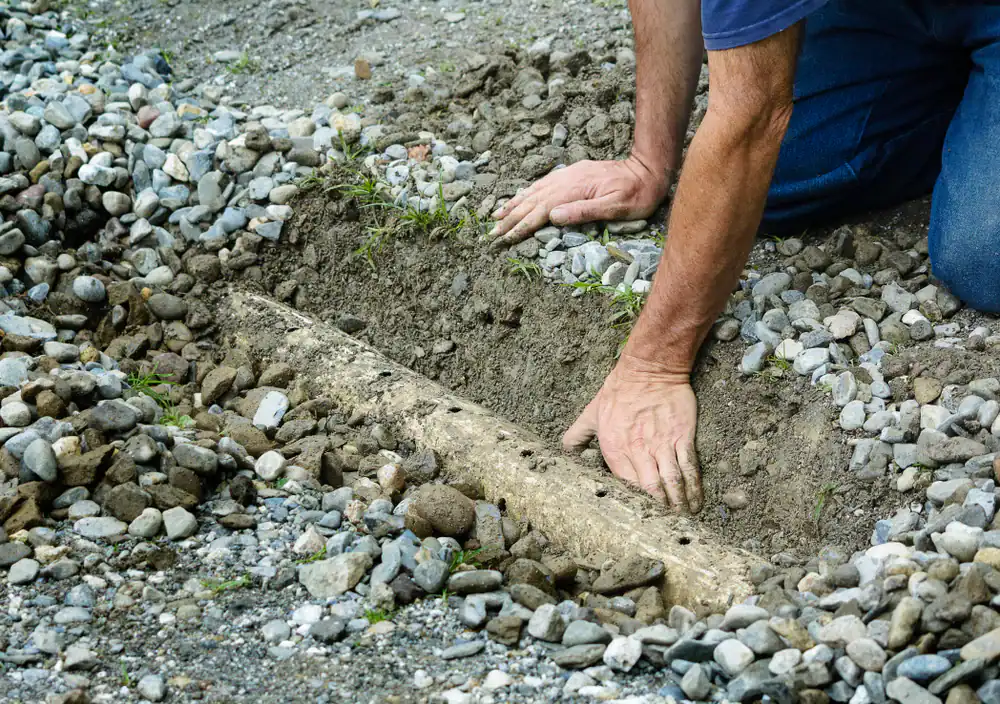
Once we know the water’s path, we trench along your foundation or across problem areas in your yard. The trench gets lined with landscape fabric, then filled with gravel and perforated pipe. Water flows into the gravel, enters the pipe, and gets carried away from your foundation to a safe drainage point. We slope everything correctly so gravity does the work.
The whole system gets wrapped and covered. Most installations take hours, not days, because we use contractor-grade trenching equipment. You’re left with a system that works passively—no pumps, no power, just gravity moving water where you want it.
After installation, you’ll notice the difference after the first good rain. Water that used to pool near your foundation or flood your crawl space now drains away. If we’re also handling crawl space encapsulation or waterproofing, the French drain is usually the first step because it stops water from entering in the first place.
Ready to get started?
A French drain installation from us includes a full property assessment, not just digging where you point. We’re checking slope, soil drainage, downspout placement, and any existing surface drainage issues that might be feeding the problem.
You get a system designed for Snow Camp’s specific conditions. The clay-heavy soil here doesn’t drain well on its own, and the area’s flood risk means you need a system that can handle serious water volume during storms. We size the trench, gravel, and pipe based on your property’s actual needs, not a one-size-fits-all approach.
We also coordinate with any other moisture control work you might need. If your crawl space is already dealing with mold or humidity issues, a French drain stops new water from coming in while encapsulation handles what’s already there. If you’ve got foundation cracks or basement seepage, we can integrate interior or exterior waterproofing with perimeter drainage.
Most French drains last 30 to 40 years if they’re installed right. That means proper slope, the right gravel size, quality landscape fabric that won’t clog, and pipe that’s positioned to actually catch water. We’ve seen plenty of DIY jobs and cheap installations that failed within a few years because corners were cut. You’re paying for a system that works long-term.

Most French drain projects in the Snow Camp and Alamance County area run between $23 and $36 per linear foot, depending on depth, soil conditions, and site access. A typical 60-foot perimeter drain around a foundation usually falls between $1,400 and $2,200.
The price changes based on what we’re dealing with. If your yard has heavy clay soil, we might need more gravel and better fabric to prevent clogging. If there’s landscaping or hardscaping in the way, that adds time. If we’re tying the system into existing drainage or running it a long distance to a safe outlet, that affects cost too.
We give you a clear estimate after looking at your property. No one can give you an accurate price over the phone because every yard drains differently. What matters is whether the system actually solves your water problem for the next 30 years, not whether it’s the cheapest option available.
A French drain stops water from building up around your foundation, which is the main cause of basement flooding and crawl space water intrusion. It won’t help if your problem is a high water table or a broken pipe, but it handles the most common issue—surface water and groundwater saturating the soil around your home.
When soil gets saturated, hydrostatic pressure forces water through any crack or gap in your foundation. A French drain intercepts that water before pressure builds. It gives groundwater a path away from your foundation instead of through it.
If you’re already seeing water in your basement or crawl space after heavy rain, a French drain is usually the first fix. Sometimes it’s the only fix you need. Other times, you might also need interior waterproofing or a sump pump if water’s already finding its way in. We’ll tell you what’s actually necessary after we see what’s happening on your property.
A properly installed French drain lasts 30 to 40 years. The system works on gravity, so there’s no pump or mechanical parts to break. What eventually happens is the pipe or gravel can clog with sediment if the fabric fails or if the system wasn’t built right from the start.
The key to longevity is using quality landscape fabric that filters water but doesn’t clog, the right size gravel that allows flow, and proper slope so water keeps moving. Cheap installations skip these details and fail within 5 to 10 years.
You don’t need to do much maintenance. Keep your gutters clean so you’re not overwhelming the system with roof runoff. Make sure the outlet point stays clear. If you notice water pooling again after years of the system working fine, that usually means something’s clogged and needs cleaning or the pipe has shifted. But that’s rare if it’s done right the first time.
Yes, but we’ll need to trench through whatever’s in the way. That might mean temporarily removing plants, cutting through grass, or working around hardscaping like patios and walkways. We do our best to minimize damage, but a French drain requires a trench, and that trench has to go where the water is.
Most of the time, grass grows back within a few weeks once we’ve backfilled and seeded. Shrubs and plants can usually be replanted. If there’s expensive landscaping directly where the drain needs to go, we’ll talk through options—sometimes we can route around it, sometimes we can’t.
The tradeoff is whether you want to protect your foundation or protect your landscaping. Most people choose the foundation. Water damage and foundation repairs cost a lot more than replacing some plants. We’ll walk you through what’s going to be affected before we start so there’s no surprises.
If your gutters are dumping water right next to your foundation, fixing that is step one. But gutters only handle roof runoff. They don’t do anything about groundwater, yard grading, or water that’s already saturating the soil around your home.
A French drain handles water that gutters can’t. It catches groundwater before it reaches your foundation. It drains low spots in your yard where water pools. It relieves hydrostatic pressure that builds up in saturated soil during heavy rain.
You probably need both. Gutters and downspouts should carry roof water at least 10 feet away from your foundation. A French drain should intercept groundwater and surface drainage before it gets close. We’ll look at your whole property and tell you what’s actually causing your water problem. Sometimes it’s one thing, usually it’s a combination.
A French drain is buried underground and catches water that’s soaking into the soil. A trench drain sits at ground level with a grate on top and catches surface water before it has a chance to soak in. They solve different problems.
You’d use a French drain around a foundation, along a property line, or in a yard that stays soggy. You’d use a trench drain across a driveway, at the bottom of a sloped walkway, or anywhere you need to catch water that’s flowing across a hard surface.
Sometimes you need both. If you’ve got a sloped driveway that sends water toward your garage, a trench drain catches it at the surface. If you’ve got groundwater seeping into your crawl space, a French drain intercepts it underground. We install both types depending on where your water is coming from and where it needs to go.