

Contact Info
- Greensboro, NC 27406
- Call: 336-707-0498
- Text: 336-707-0498
-
Mon - Fri: 8am - 4pm
Sat - Sun: Closed
Contact Info
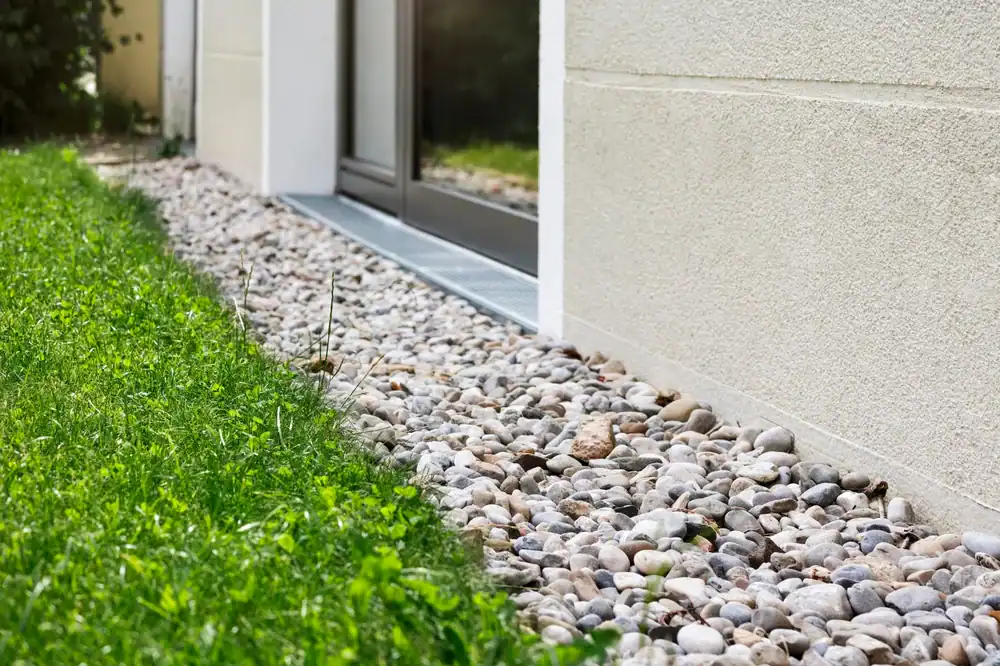
You stop worrying every time rain hits. Your foundation isn’t sitting in saturated soil that expands and contracts with every weather shift. Your crawl space stays dry instead of turning into a breeding ground for mold and structural damage.
That’s what proper drainage does. It redirects surface and subsurface water before it becomes a problem. No more standing water in your yard. No more damp basements after storms. No more foundation cracks from clay soil pressure.
French drains handle the water volume that Summerfield properties deal with, especially during heavy rain events. The system moves water to a proper discharge point instead of letting it pool around your foundation or seep into your crawl space. You get a home that’s protected from the ground up.
We’ve spent over 30 years working on homes throughout Greensboro and Summerfield. We started with crawl space encapsulation and air quality, which means we’ve seen what water damage does when it’s ignored.
French drain installation became a natural extension of that work. When you’re already under homes dealing with moisture issues, you learn exactly where the water’s coming from and how to stop it. We understand how North Carolina’s clay soil behaves, how mature trees affect drainage, and what happens to foundations built in the 1980s and 90s when drainage fails.
We’re NADCA certified, and our team knows the difference between a quick fix and a system that actually works long-term. You’re not getting a crew that learned drainage last month. You’re getting people who’ve diagnosed these problems for decades across Guilford County.

We start with an inspection of your property to identify where water’s collecting and why. That means looking at soil type, grading, existing drainage, downspout discharge, and how water moves across your lot during rain.
Once we know where the problem is, we map out the drainage system. This includes determining trench depth, pipe placement, discharge location, and whether we need to integrate downspout drains or surface drainage solutions. Every system is built according to your soil type and water volume, not a one-size-fits-all template.
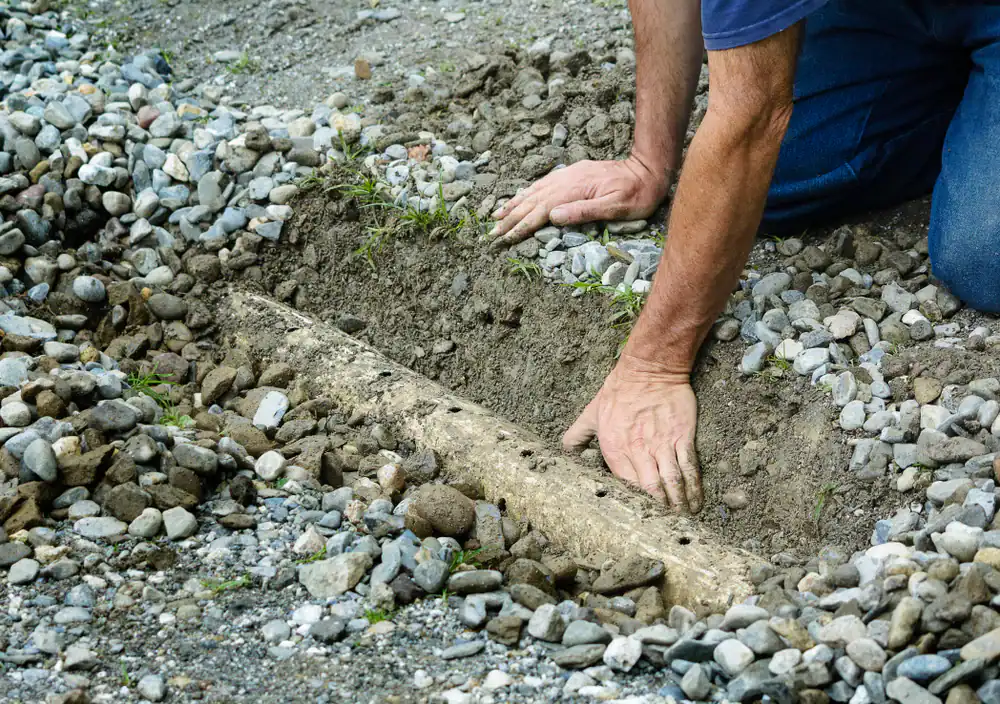
Installation uses contractor-grade trenching equipment, so most residential jobs wrap up in hours, not days. We dig the trench at the proper slope, lay perforated pipe surrounded by gravel, wrap it in filter fabric, and backfill. The system starts working immediately, moving water away from your foundation to a safe discharge point.
You’ll see the difference the first time it rains. Water that used to pool near your foundation or flood your crawl space now flows through the French drain system and away from your home.
Ready to get started?
Summerfield sits on clay soil that retains water and shifts with moisture changes. That’s not a minor detail. It’s the reason so many homes here deal with foundation cracks, basement seepage, and crawl space flooding.
Our French drain systems account for that. We use premium materials rated for North Carolina soil conditions. The perforated pipe, gravel, and filter fabric are selected based on your property’s water table depth and drainage needs. If your downspouts are dumping water near the foundation, we integrate downspout drains into the system so gutter runoff gets routed properly.
We also handle landscape drainage issues that go beyond foundation protection. Standing water in your yard, erosion problems, surface drainage failures—all of that ties into how water moves across your property. A properly designed system addresses the whole picture, not just one symptom.
You’re getting a system that’s engineered for your specific lot, installed by people who’ve worked on hundreds of properties in this area, using materials that last. That’s what waterproofing your home actually requires.

Most residential French drain installations in the Summerfield area fall between $2,500 and $5,000, depending on the length of the system, soil conditions, and whether we’re integrating downspout drains or additional surface drainage. That’s for a complete installation with proper materials and equipment.
If you’re seeing quotes significantly lower, ask what’s included. Cheap installations often skip the filter fabric, use inadequate gravel, or don’t slope the trench correctly. Those systems fail within a few years, and you’re paying to redo the work.
We price based on what your property actually needs. That means a site inspection first, not a ballpark number over the phone. Once we see your soil type, water volume, and existing drainage issues, we can give you an accurate cost that reflects a system built to last.
A properly installed French drain using quality materials should last 20 to 30 years, sometimes longer if it’s maintained. The key factors are correct slope, adequate gravel, filter fabric that prevents soil intrusion, and a discharge point that doesn’t back up.
Summerfield’s clay soil can be tough on drainage systems if they’re not designed correctly. Clay particles are fine enough to clog perforated pipe if the filter fabric fails or wasn’t used at all. That’s why material quality matters as much as installation technique.
We build systems with longevity in mind. That means using contractor-grade components and ensuring the trench is dug to the right depth and slope. You shouldn’t need to think about your French drain again for decades, aside from occasional checks to make sure the discharge point stays clear.
If your basement flooding is caused by exterior water pressure or poor grading around your foundation, yes—a French drain is one of the most effective solutions. It intercepts water before it reaches your foundation walls and redirects it away from your home.
However, if you’re dealing with groundwater coming up through the floor or cracks in the foundation itself, you might need additional waterproofing measures like interior drainage, sump pump installation, or foundation repair. That’s why the inspection matters. We need to see where the water’s actually coming from.
Most basement flooding in Summerfield happens because water pools around the foundation during heavy rain, especially when downspouts discharge too close to the house. A French drain combined with proper downspout routing solves that problem. You’re removing the source of the pressure instead of just treating the symptoms.
Yes. Clay soil actually makes French drains more necessary, not less feasible. Clay retains water and expands when wet, which puts constant pressure on your foundation. A French drain relieves that pressure by giving water a path to follow instead of saturating the soil around your home.
The installation process adjusts for clay. We may need to dig deeper, use more gravel, or design the system with a steeper slope to ensure proper drainage. Clay doesn’t drain naturally, so the French drain has to compensate by moving water efficiently through the gravel and pipe.
Summerfield has plenty of clay soil, and we’ve installed drainage systems in these conditions for years. It’s not a barrier. It’s just a factor we account for when designing your system. The result is the same: water moves away from your foundation instead of sitting in the soil and causing damage.
Most residential French drain installations complete in one day, often within a few hours, depending on the system length and site conditions. We use contractor-grade trenching equipment, which speeds up the process significantly compared to manual digging.
The timeline can extend if we’re dealing with obstacles like tree roots, existing utilities, or if we’re installing a more complex system that includes multiple discharge points or integration with downspout drains. But even larger jobs typically wrap up within a day or two.
You won’t have a torn-up yard for weeks. We dig, install, backfill, and clean up efficiently. The system starts working immediately, so the next time it rains, you’ll see water moving through the drain instead of pooling near your foundation. Fast installation doesn’t mean rushed work—it means we have the right equipment and experience to do the job correctly without wasting your time.
It depends on the scope of the work and where the drainage system discharges. Most basic French drain installations around residential foundations don’t require a permit, but if the system ties into a municipal storm drain or significantly alters site grading, you might need approval from Guilford County.
We handle this during the consultation. If your project requires a permit, we’ll let you know upfront and guide you through the process. It’s not common for standard drainage work, but it’s worth confirming before we start digging.
What matters more than permits is making sure the discharge point is legal and won’t cause problems for neighboring properties or local waterways. We design systems that manage stormwater responsibly, so you’re not just moving your water problem onto someone else’s lot. That’s part of doing the job right from the beginning.