

Contact Info
- Greensboro, NC 27406
- Call: 336-707-0498
- Text: 336-707-0498
-
Mon - Fri: 8am - 4pm
Sat - Sun: Closed
Contact Info
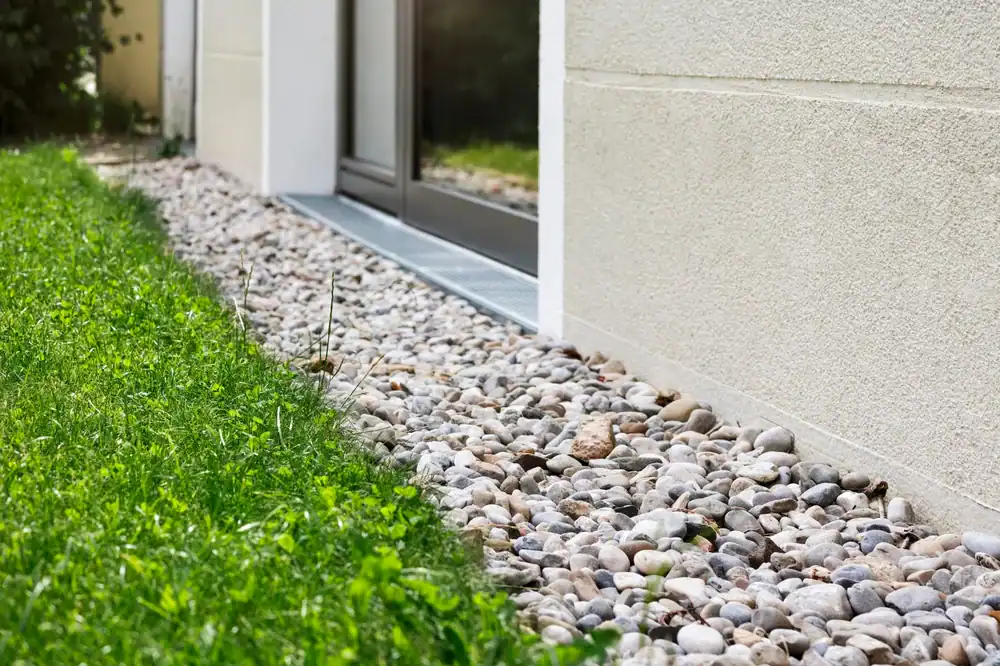
You stop worrying every time it rains. That’s the first thing homeowners tell us after we install their French drain system.
No more standing water next to your foundation. No more basement humidity that makes the air feel thick and smells musty. No more watching cracks spread across your foundation walls while you wonder how much the repair bill will be.
A properly installed French drain system redirects water before it ever reaches your foundation. That means the soil around your home stays stable instead of expanding and contracting with every weather change. Your crawl space stays dry. Your basement stops feeling like a swamp. And you’re not dealing with mold growth that affects your family’s health and your home’s air quality.
The Piedmont soil around Vandalia has a lot of clay content. When it gets wet, it expands and pushes against your foundation. When it dries out, it shrinks and pulls away. That cycle creates the cracks and settlement issues you’re seeing. Surface drainage and landscape drainage solutions only handle part of the problem—you need subsurface drainage that intercepts groundwater before it becomes your problem.
We’ve been solving moisture problems in the Greensboro area since the early 1990s. We started with indoor air quality and crawl space work, but we kept seeing the same issue: outdoor drainage problems were creating indoor moisture issues.
So we expanded into French drain installation and foundation waterproofing. It made sense—if we’re already fixing the moisture damage inside your home, we should help you stop it from happening in the first place.
We’re NADCA certified, BBB A+ rated, and we’ve worked on hundreds of properties throughout Vandalia and the surrounding communities. You’re not getting a fly-by-night crew that learned drainage from YouTube. You’re getting licensed professionals who understand how North Carolina soil behaves and what it takes to move water away from your foundation permanently.

We start with a site evaluation. That means walking your property to identify where water collects, how it flows, and where it’s causing problems. We’re looking at grading, soil composition, and existing drainage patterns.
Once we know where the water’s coming from and where it needs to go, we design a trench drain system that intercepts it. Most French drains run along your foundation, but depending on your property, we might recommend additional lines to handle surface drainage from other problem areas.
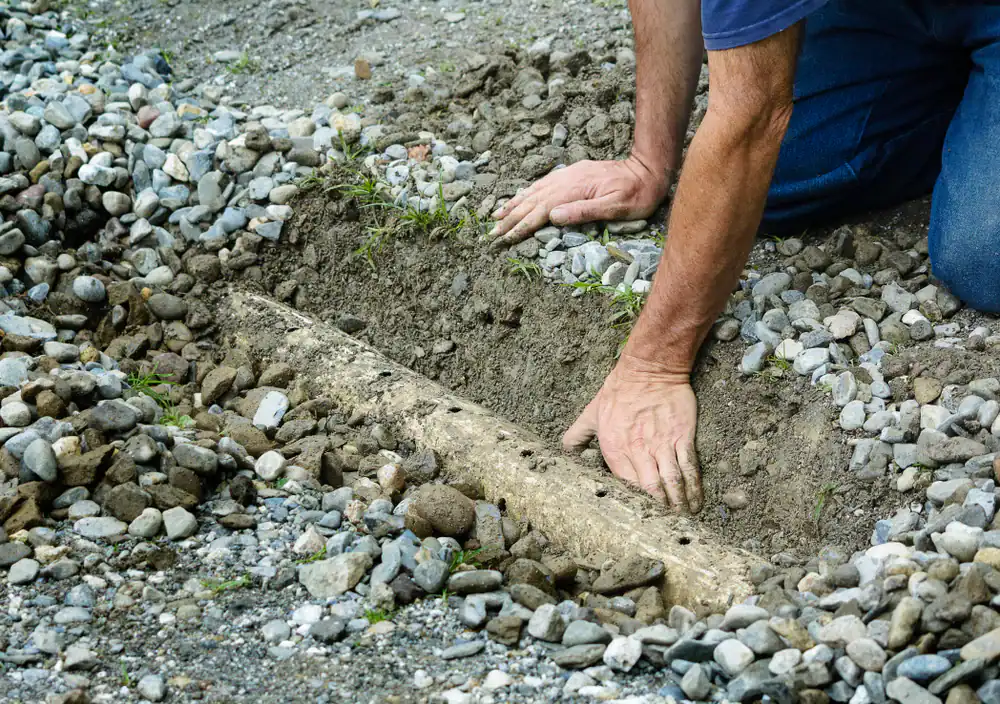
Installation starts with excavation. We dig a trench to the proper depth and slope—usually about 18 to 24 inches deep, sloped at least 1% grade so water flows naturally toward the discharge point. We line the trench with landscape fabric to prevent soil from clogging the system.
Then we add a layer of gravel, install perforated pipe, cover it with more gravel, and wrap the whole thing in fabric. The gravel creates a channel for water to flow into the pipe, and the fabric keeps dirt out. We backfill the trench and restore your landscaping as much as possible.
The entire system drains to a safe discharge point away from your home—usually a drainage ditch, dry well, or storm drain. Most residential installations take one day. You’ll see water flowing away from your foundation the next time it rains.
Ready to get started?
Every French drain system we install includes a full site assessment, custom drainage design, professional-grade materials, and proper installation to code. You’re not getting a one-size-fits-all solution—we’re designing the system based on your property’s specific drainage issues.
We use heavy-duty perforated pipe, not the cheap corrugated stuff that collapses under soil pressure. The gravel we use is clean crushed stone that won’t break down or compact over time. And the landscape fabric is commercial-grade, designed to filter water while blocking sediment for decades.
In Vandalia and the surrounding Piedmont region, we’re dealing with clay-heavy soil that doesn’t drain well naturally. That’s why so many properties here have foundation issues and yard flooding after heavy rain. A French drain system gives that water somewhere to go before it saturates the soil around your foundation.
We also handle French drain repair if you’ve got an older system that’s failing. Sometimes that means cleaning out a clogged line, sometimes it means replacing sections that have collapsed or filled with sediment. We’ll assess what’s salvageable and what needs replacement, then give you a straight answer about the most cost-effective fix.

Most residential French drain installations in the Vandalia area run between $2,500 and $5,000 for a complete system. That’s the typical range for a drainage line running along one or two sides of your foundation.
The actual cost depends on how much linear footage you need, how deep we have to dig, what we’re dealing with in terms of obstacles like tree roots or existing utilities, and where the water needs to discharge. If your property requires a longer run to reach a safe discharge point, or if we need to install a sump pump system as part of the solution, that affects pricing.
We charge $20 to $60 per linear foot depending on site conditions and system complexity. A straightforward installation in accessible soil costs less than one that requires excavation through rock or around landscaping you want to preserve. We’ll give you an exact quote after we evaluate your property—no ballpark guesses, no surprises later.
A properly installed French drain should last 30 to 40 years, sometimes longer if it’s maintained. The pipe itself doesn’t wear out—what eventually happens is sediment works its way through the fabric and gravel, gradually reducing flow capacity.
That’s why installation quality matters so much. If the trench isn’t sloped correctly, water sits in the pipe instead of flowing out. If the fabric isn’t installed properly, soil clogs the gravel and pipe perforations. If cheap materials are used, the pipe can collapse under soil pressure or the gravel can break down into smaller particles that compact and stop draining.
We see failed French drains all the time that are only 5 or 10 years old because they were installed wrong or built with substandard materials. When we install a system, we’re building it to last decades—proper slope, quality materials, correct fabric installation, and clean gravel that maintains its drainage properties. You might need minor maintenance over the years, like flushing the line if you notice slower drainage, but the system itself should outlast most other components of your home.
There’s going to be excavation—we can’t install a subsurface drainage system without digging. But we’re not tearing up your entire yard, and most of the disruption is temporary.
The trench itself is typically 12 to 18 inches wide and runs along your foundation or through problem areas where water collects. We excavate the trench, install the system, backfill it, and restore the surface. If we’re going through a lawn, we’ll replace the sod. If we’re going through landscaping beds, we’ll restore the mulch and work around plants when possible.
The biggest visual impact is usually right after installation when the soil is freshly disturbed. Give it a few weeks and some rain to settle, and you’ll barely notice where we worked. The trench line might be slightly visible for a season, but it blends in quickly.
We do our best to minimize disruption and protect existing landscaping. That said, if you’ve got extensive plantings or hardscaping right where the drain needs to go, we’ll talk through options—sometimes we can route around obstacles, sometimes we can’t. We’ll be straight with you about what’s possible before we start digging.
If your basement is wet because of exterior water pressure against your foundation, yes—a French drain can solve that problem. But if water is coming in through other sources, you might need additional waterproofing work.
Most wet basements in the Vandalia area are caused by poor exterior drainage. Water saturates the soil around your foundation, creates hydrostatic pressure, and pushes through any cracks or weak points in your foundation walls. A French drain intercepts that water before it ever reaches your foundation, which eliminates the pressure that’s forcing water inside.
But sometimes basement moisture comes from interior sources—condensation, plumbing leaks, or groundwater coming up through the floor. A French drain won’t fix those issues. That’s why we start with an assessment to identify where the water is actually coming from.
In many cases, the solution is a combination approach: exterior French drain to handle surface and subsurface water, plus interior waterproofing or a sump pump system to handle any water that does make it to your foundation. We’ll tell you exactly what you need based on what we find during the evaluation—not what makes us the most money, but what actually solves your problem.
A French drain is a subsurface system that handles groundwater and water that’s already soaking into your soil. A trench drain is a surface system with a grated channel that catches water before it goes into the ground.
French drains work underground. We install perforated pipe in a gravel-filled trench, and water seeps into the pipe through the perforations, then flows to a discharge point. You don’t see the system once it’s installed—it’s completely buried. These are ideal for foundation drainage, yard drainage problems where water saturates the soil, and managing groundwater around your property.
Trench drains sit at ground level with a visible grate on top. Water flows across your driveway, patio, or yard and into the grated opening, then travels through solid pipe to wherever you’re directing it. These work well for driveways, areas where you get heavy runoff, or spots where you need to catch surface water before it flows toward your foundation.
Sometimes you need both. If you’ve got surface water running toward your house and groundwater saturating the soil around your foundation, we might install a trench drain to catch the surface flow and a French drain to handle the subsurface water. It depends on your property’s specific drainage issues.
It depends on where you’re discharging the water and whether you’re connecting to any municipal systems. Most basic French drain installations on private property don’t require a permit, but there are exceptions.
If you’re tying into a storm sewer or drainage easement, you’ll likely need approval from the local municipality. If you’re altering grading in a way that affects water flow onto neighboring properties, that can trigger permitting requirements. And if you’re in a subdivision with a homeowners association, they might have rules about drainage modifications.
We handle permit requirements as part of the installation process when they’re needed. We know the local codes, we know what triggers permitting, and we’ll pull whatever permits are necessary to keep your installation legal and compliant.
What you don’t want to do is install a drainage system that dumps water onto your neighbor’s property or into a protected wetland area. That creates legal problems and doesn’t actually solve your drainage issue—it just moves the problem somewhere else. We design systems that discharge water responsibly to appropriate areas, whether that’s a drainage ditch, dry well, or approved storm drain connection.