

Contact Info
- Greensboro, NC 27406
- Call: 336-707-0498
- Text: 336-707-0498
-
Mon - Fri: 8am - 4pm
Sat - Sun: Closed
Contact Info
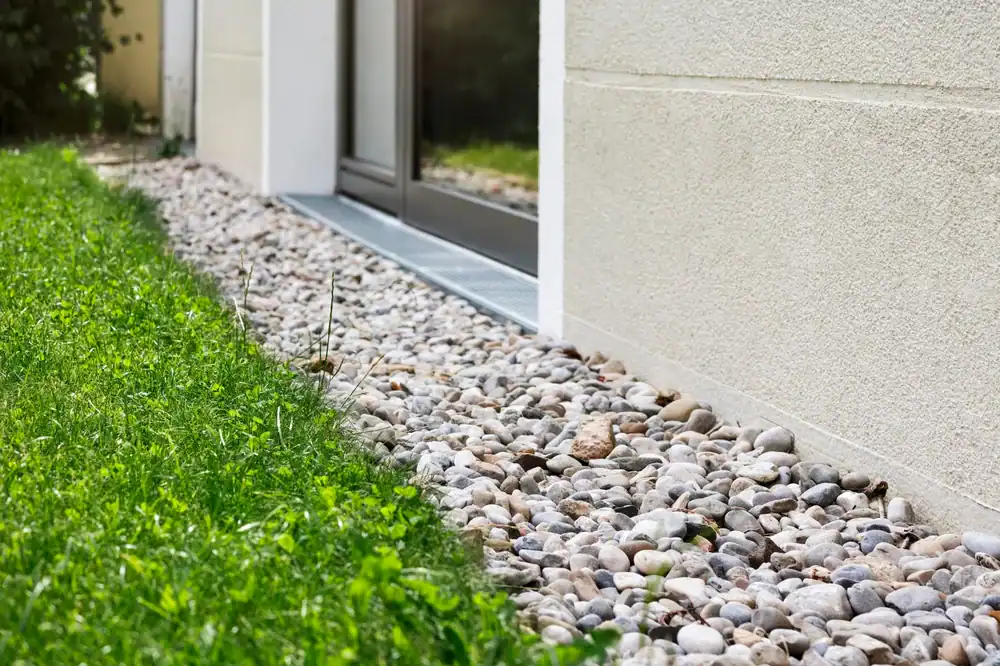
You stop checking the forecast before every thunderstorm. That musty smell disappears. The anxiety about what’s happening below your feet during heavy rain goes away.
A properly installed French drain system handles the water before it becomes your problem. It intercepts groundwater, relieves hydrostatic pressure against your foundation walls, and moves everything away from your home through a gravity-fed trench system. No standing water in your yard after storms. No damp spots creeping across your basement floor.
This matters more in Winston-Salem than most places. Our red clay soil doesn’t absorb water—it holds it against your foundation until it finds a way in. When summer storms drop two inches in an hour, that water has nowhere to go except toward your basement. A French drain gives it a different path, one that doesn’t involve your living space or your foundation’s structural integrity.
We’ve been working in Winston-Salem crawl spaces and basements since we started. We’ve seen what moisture does to homes in Ardmore, West End, and Clemmons. We’ve cleaned mold out of HVAC systems that started because water found its way into a crawl space.
French drain installation is a natural extension of what we already do—keeping moisture away from your home so your air stays clean and your structure stays sound. We’re NADCA certified, which means we follow national standards for air quality and contamination control. That same attention to detail applies when we’re trenching around your foundation or installing drainage systems in your basement.
You’re not hiring a company that just showed up to do drainage work. You’re working with people who understand how water, soil, and home systems interact in this specific area.

We start with an assessment of where water is coming from and where it needs to go. That means looking at your grading, your soil type, and how water moves across your property during rain. In Winston-Salem, that almost always involves dealing with clay.
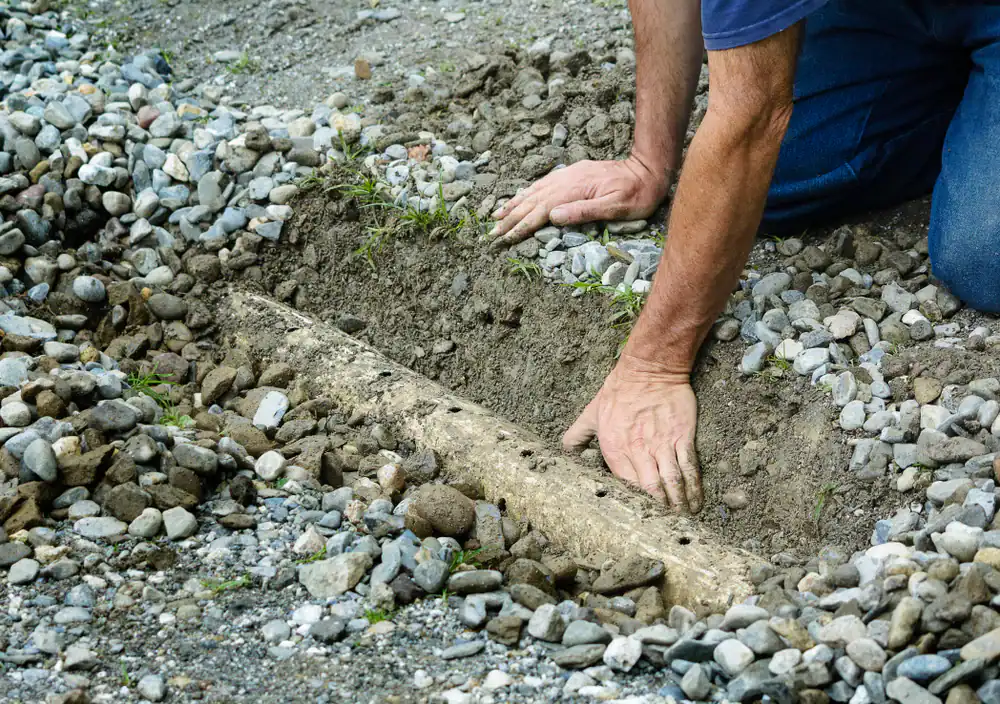
Next, we trench along the problem area—either around your foundation exterior or along the interior perimeter of your basement, depending on what your situation requires. The trench gets lined with landscape fabric to prevent clay and sediment from clogging the system. Then we install perforated pipe surrounded by gravel, which allows water to enter the pipe and flow toward a discharge point away from your home.
For interior systems, we often tie the French drain into a sump pump basin. For exterior installations, we route water to a safe drainage area on your property or into a municipal storm system if available. Everything gets backfilled, compacted, and restored so you’re not left with a torn-up yard.
The whole system works on gravity. No power needed. No mechanical parts to fail during a storm when you need it most.
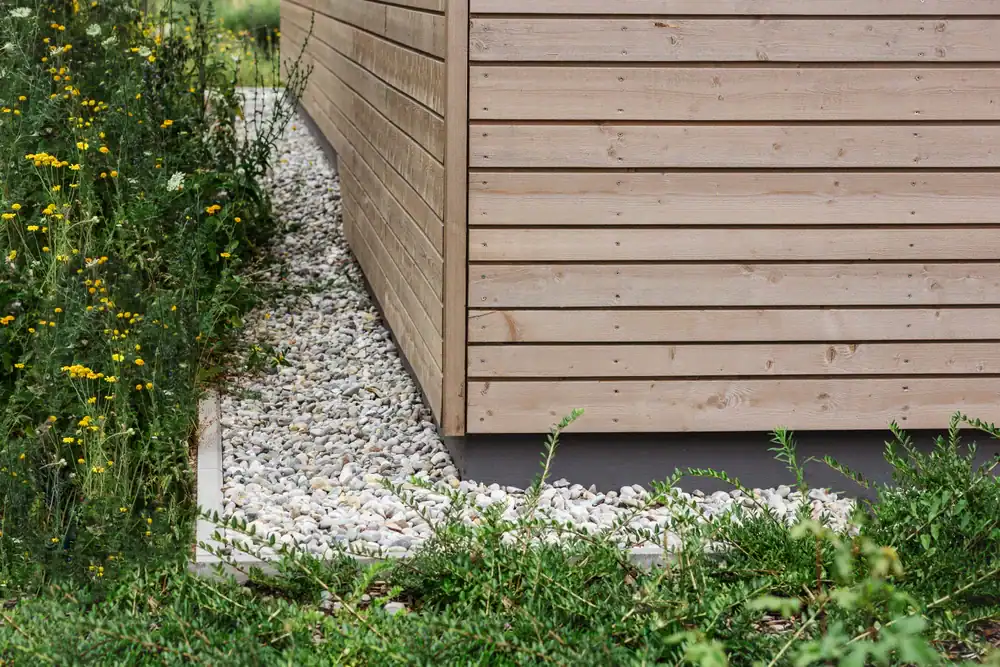
Ready to get started?
A complete French drain system includes the trench, perforated drainage pipe, gravel bedding, landscape fabric, and proper grading to move water away from your foundation. Depending on your home’s layout and the severity of water intrusion, we may recommend interior or exterior installation—or both.
Interior French drains work well when you’re dealing with basement flooding or when exterior access is limited. We install them along the inside perimeter of your basement floor, just inside the foundation wall. This captures water before it surfaces and routes it to a sump pump or floor drain.
Exterior systems intercept water before it ever reaches your foundation. These are ideal for preventing hydrostatic pressure buildup, especially in areas with poor soil drainage like we have throughout Forsyth County. Exterior drains also help with surface water management and landscape drainage issues that contribute to foundation problems.
Both systems are designed to handle Winston-Salem’s clay soil and intense summer rainfall. We’re not installing a generic solution—we’re building a drainage system that accounts for how water behaves on your specific property in this specific climate.

Most residential French drain installations in Winston-Salem run between $2,500 and $5,000, depending on the length of the system and whether it’s interior or exterior. Exterior surface drains typically cost $10 to $15 per linear foot. Interior perimeter systems run $50 to $60 per linear foot because they involve more labor—breaking through the basement floor, trenching, and tying into a sump system.
For a standard basement with a 100-linear-foot perimeter, you’re looking at $5,000 to $6,000 for a full interior system. Exterior installations are usually less expensive but depend heavily on your property’s grading and how far we need to run the discharge line.
The cost is almost always less than dealing with foundation repairs, mold remediation, or water damage restoration after the fact. Those run $1,800 to $8,000 or more in Winston-Salem, and that’s just to fix what already happened—not prevent it from happening again.
Yes, but only if they’re installed correctly for clay conditions. Clay soil is the reason most homes in Winston-Salem need French drains in the first place. It doesn’t absorb water—it repels it and holds it against your foundation until pressure forces it through cracks or seams.
A French drain in clay soil requires proper gravel bedding and fabric lining to prevent the clay from clogging the perforated pipe. We also make sure the trench is deep enough and graded correctly so water flows toward the discharge point, not back toward your foundation. The pipe has to stay clear, and the gravel has to stay permeable, or the whole system stops working.
This is where experience with local soil matters. We’ve installed drainage systems throughout Forsyth County and know how clay behaves when it gets wet, dries out, and shifts with the seasons. The installation has to account for that movement, or you’ll end up with a system that works for six months and then fails.
A properly installed French drain can last 20 to 30 years or more, depending on soil conditions and maintenance. The pipe itself is durable and doesn’t degrade. What causes problems over time is sediment buildup, root intrusion, or shifting soil that changes the grade.
In Winston-Salem, clay soil expansion and contraction can affect drainage systems if they’re not installed with enough gravel buffer and proper fabric lining. That’s why the installation quality matters more than the materials themselves. Cheap installations skip steps—thin gravel layers, no fabric, improper slope—and those systems fail within a few years.
We install systems that account for how your soil moves and how water flows across your property during heavy rain. That means they keep working long after installation. You’re not going to need a replacement in five years if it’s done right the first time.
It depends on where the water is coming from and what access we have to your foundation. Exterior French drains prevent water from ever reaching your foundation walls, which makes them the best option for stopping hydrostatic pressure and protecting your foundation long-term. They also handle surface water and yard drainage issues.
Interior French drains are better when exterior installation isn’t possible—maybe because of landscaping, driveways, or existing structures. They’re also the right choice if you’re already dealing with water coming up through your basement floor or if your foundation walls are already compromised. Interior systems capture water after it’s entered the soil around your foundation but before it floods your basement.
In some cases, both make sense. If you have severe water intrusion, an exterior drain reduces the load on your foundation, and an interior drain provides backup protection during extreme weather. We’ll assess your property and recommend what actually solves the problem, not what’s easiest to install.
Yes, because mold needs moisture to grow, and a French drain eliminates the moisture source. If water is seeping into your basement or crawl space, even in small amounts, you’re creating the conditions mold needs to thrive. That musty smell you notice after rain is often the first sign.
A French drain system stops water from building up around your foundation and keeps it from entering your basement. No water intrusion means no damp walls, no wet floors, and no environment for mold to establish itself. This is especially important in Winston-Salem’s humid climate, where even minor moisture problems can escalate quickly during summer.
We’ve seen this connection firsthand. A lot of our air duct cleaning and crawl space work involves dealing with mold that started because of poor drainage. Installing a French drain is a permanent fix that addresses the root cause instead of just treating the symptoms. Your indoor air quality improves because you’re not circulating mold spores from a damp basement through your HVAC system.
Very little if it’s installed correctly. The main thing is keeping the discharge point clear so water can exit the system. Check it a few times a year to make sure leaves, debris, or soil aren’t blocking the outlet. If you have an interior system tied to a sump pump, test the pump periodically to make sure it’s working.
Over time, sediment can build up inside the pipe if the fabric lining fails or if clay finds a way into the gravel layer. This usually takes years, and it’s more common in poorly installed systems. If you notice water pooling where it didn’t before, or if your basement starts getting damp again, that’s a sign the system may need inspection or cleaning.
We install French drains with high-quality fabric and proper gravel bedding specifically to minimize maintenance. You shouldn’t have to think about it much. It should just work, year after year, every time it rains.