
Contact Info
- Greensboro, NC 27406
- Call: 336-707-0498
- Text: 336-707-0498
-
Mon - Fri: 8am - 4pm
Sat - Sun: Closed
Contact Info
Your crawl space might be silently affecting your health and energy bills. Learn how moisture, mold, and humidity issues impact Greensboro homes—and what actually works to fix them.
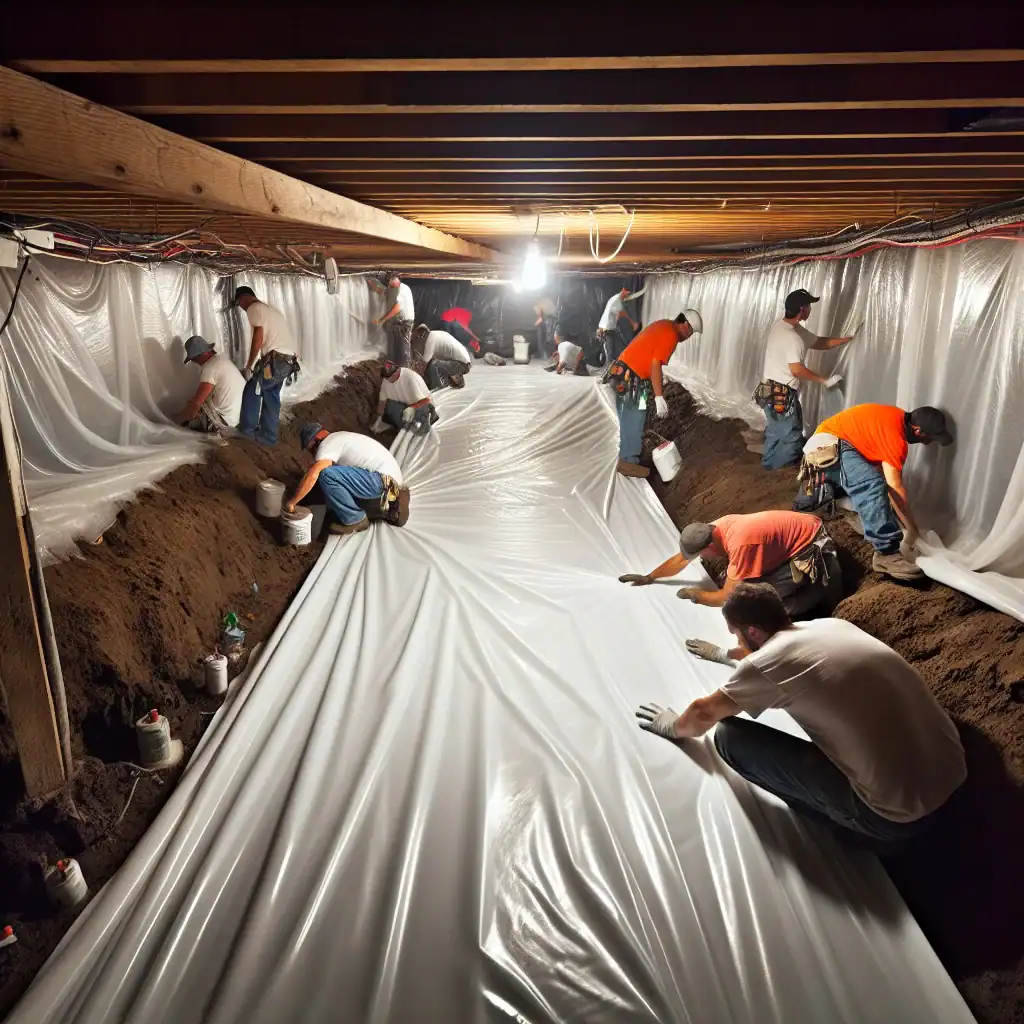
Encapsulation means fully sealing your crawl space from moisture, outside air, and ground humidity. It’s not just laying down plastic—that’s a vapor barrier, which is only one piece of the system.
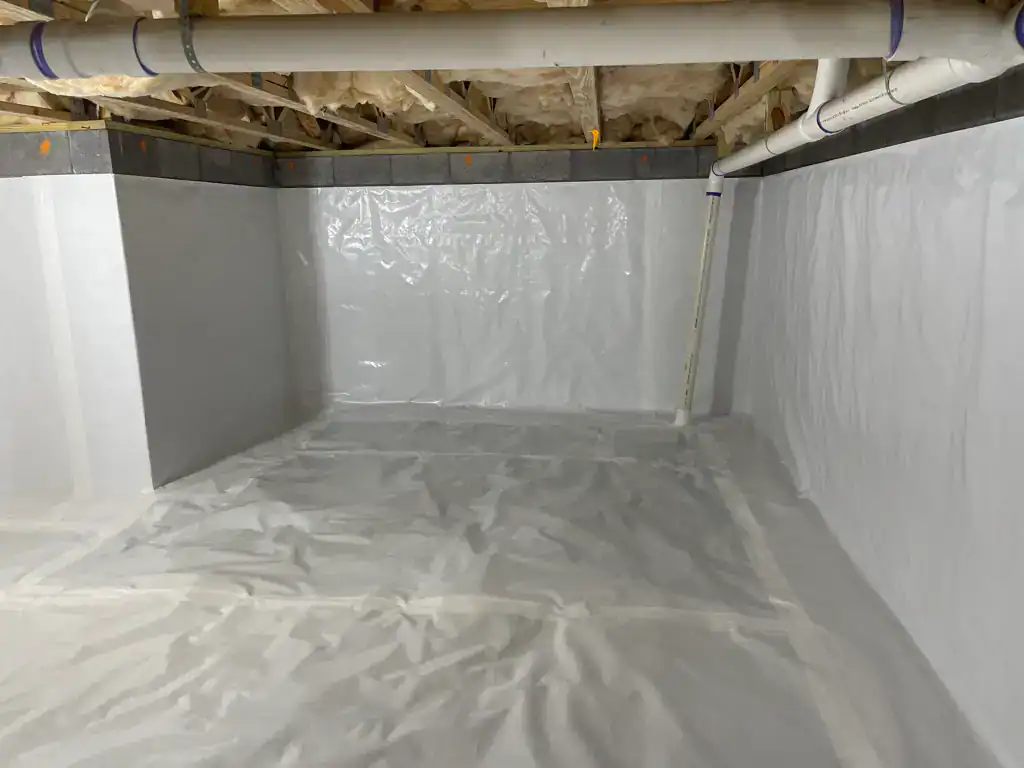
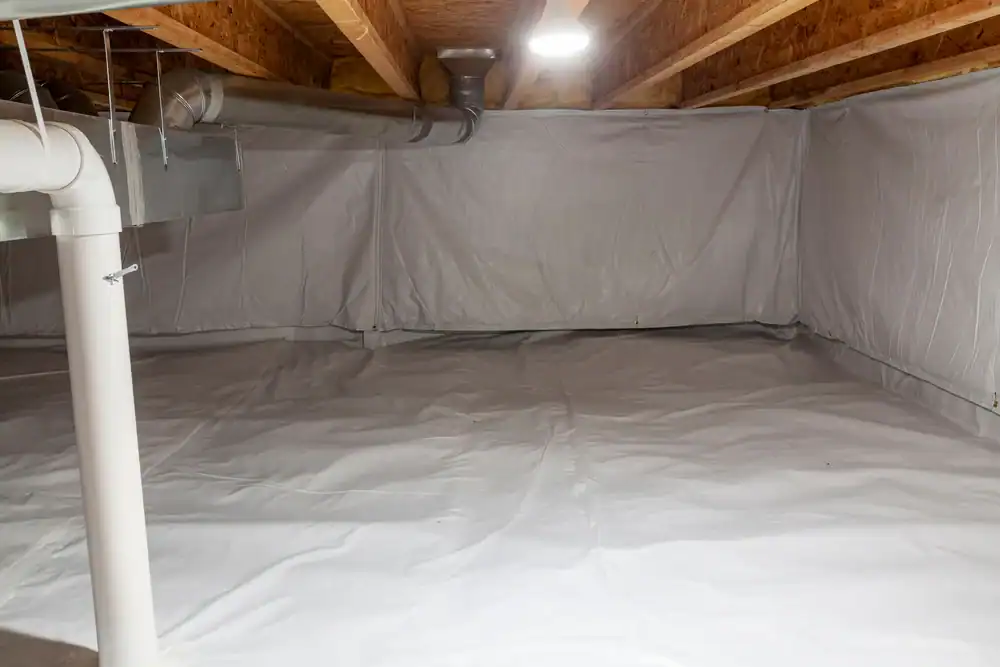
True encapsulation involves covering your crawl space floor and walls with a heavy-duty vapor barrier, sealing all vents and openings, adding crawl space insulation where needed, and installing a dehumidifier to control humidity levels year-round. The goal is creating a controlled environment that stays dry regardless of what’s happening outside. Think of it as turning your crawl space from an outdoor space into a conditioned part of your home.
In Greensboro, NC, where summer humidity regularly hits 70% and clay soils hold water like a sponge, this matters more than in drier climates. Your crawl space is constantly fighting moisture from below and humid air from outside. Without a complete system, you’re just managing symptoms instead of solving the problem.
Greensboro sits in a humid subtropical zone. That means hot, wet summers and temperature swings that create perfect conditions for moisture problems. When warm, humid air enters your cooler crawl space through vents or gaps, it hits its dew point and condenses on every surface—your floor joists, ductwork, insulation, everything.
This isn’t occasional. It happens daily during spring and fall when morning temperatures drop significantly below afternoon highs. That continuous cycle of condensation keeps wood damp, creates ideal conditions for mold growth, and slowly rots the structural supports holding up your floors.
The clay-heavy soil common throughout Greensboro makes it worse. Clay retains water and directs it toward your foundation instead of draining away. After heavy rain, that moisture evaporates upward into your crawl space. Even homes without standing water often have humidity levels above 60%—the threshold where mold starts thriving.
Older neighborhoods like Fisher Park and Lindley Park face additional challenges. Many homes were built with vented crawl spaces, which builders once thought helped with moisture. Research now shows the opposite is true. Those vents pull in humid summer air and cold winter air, making your HVAC system work harder while creating the exact conditions mold needs to spread. If your home has open vents and you’re noticing musty smells or cold floors, this is likely why.
A vapor barrier is a thick plastic sheet laid over your crawl space floor to block ground moisture. It’s a start, but it’s not encapsulation. The difference matters because one addresses part of the problem while the other creates a complete solution.
Vapor barrier installation typically means covering the dirt floor with 6-mil to 20-mil polyethylene plastic, securing it with stakes, and sealing the seams with tape. This prevents moisture from the soil from evaporating into your crawl space air. Cost runs between $1,200 and $4,000 for most homes, depending on square footage and material thickness. It helps, especially if your main issue is ground moisture, but it doesn’t address humid air entering through vents or condensation forming on surfaces.
Full encapsulation goes further. You’re covering walls and floors with the vapor barrier, sealing every vent and opening, often adding crawl space insulation to walls, and installing a dehumidifier sized for your space. The dehumidifier installation is critical—it actively removes moisture from the air, keeping humidity below 60% even during Greensboro’s wettest months. This complete system typically costs more upfront but addresses all moisture sources instead of just one.
Here’s how to think about it: if you only have ground moisture seeping up, a vapor barrier might be enough. But if you’re dealing with musty odors, visible mold, condensation, or humidity-related issues, you need the full system. Most Greensboro homes benefit from complete encapsulation because our climate creates multiple moisture sources simultaneously. A vapor barrier alone won’t stop humid summer air from condensing on your floor joists or prevent mold from growing on damp wood.
The investment difference is real—full encapsulation can run $5,000 to $15,000 depending on your crawl space size and condition. But the energy savings alone often justify it. Studies show encapsulated crawl spaces reduce heating and cooling costs by 15% to 20%. That’s $200 to $400 annually for many homeowners, meaning the system can pay for itself over time while protecting your home’s structure and your family’s health.
Want live answers?
Connect with a Clean Air LLC expert for fast, friendly support.
The air you breathe indoors doesn’t stay where you think it does. Because of something called the stack effect, warm air rises and escapes through your upper floors and attic. Your home pulls replacement air from the easiest source—usually your crawl space. If that space is damp, moldy, or contaminated, those pollutants travel directly into your living areas.
This isn’t theoretical. Up to 50% of the air on your first floor originated in your crawl space. When humidity levels exceed 60% down there, mold grows on wood, insulation, and any organic material. Those mold spores become airborne and circulate through your HVAC system and floor gaps into the rooms where your family spends time.
The health impacts show up in ways people don’t always connect to their crawl space. Persistent allergy symptoms that don’t match pollen seasons. Asthma that seems worse at home than elsewhere. Sinus infections that keep coming back. Headaches, fatigue, or respiratory irritation without clear cause. Children and elderly family members are particularly vulnerable because their immune systems are more sensitive to mold exposure.
Musty odors are usually the first sign people notice. That earthy, damp smell isn’t just unpleasant—it’s mold releasing volatile organic compounds as it grows. If you smell it near your floors, HVAC vents, or in certain rooms, mold is likely growing somewhere beneath your home. The smell travels up through gaps around pipes, electrical penetrations, and HVAC ducts. Often, crawl space cleaning can temporarily help, but without moisture control, the problem returns.
Visible signs appear next. You might see discoloration on baseboards or lower walls—white, black, or greenish spots that indicate mold growth. Condensation forming on windows, especially on lower floors, suggests high indoor humidity often caused by moisture rising from your crawl space. Hardwood floors that cup or warp are reacting to moisture exposure from below.
Physical symptoms in your family members are harder to connect but just as telling. If multiple people experience worsening allergies at home, increased asthma symptoms, persistent coughing, or unexplained respiratory irritation, poor air quality from your crawl space could be the cause. Pay attention to whether symptoms improve when you leave home for extended periods.
Structural indicators matter too. Sagging or bouncy floors suggest your floor joists are weakening from moisture exposure and possible wood rot. This is serious—it means the structural supports holding up your floors are deteriorating. Cold floors in winter, even with heating running, indicate your crawl space is pulling in cold air and your insulation isn’t working properly. Higher-than-expected energy bills, especially during summer when your AC runs constantly, often trace back to your HVAC system fighting humidity and temperature problems originating in your crawl space.
These signs don’t always appear together. You might have musty odors without visible mold, or cold floors without respiratory symptoms. But each one indicates your crawl space environment is affecting your living space. The longer these conditions persist, the more damage occurs to both your home’s structure and your family’s health.
Mold needs three things: moisture, organic material to feed on, and oxygen. Your crawl space provides all three in abundance. When humidity stays above 60%, mold spores that are naturally present in air land on wood surfaces, insulation, cardboard, or any organic material and start growing. In Greensboro’s climate, uncontrolled crawl spaces regularly hit 70% to 80% humidity during summer months.
The process accelerates with condensation. When warm, humid air contacts cooler surfaces like floor joists, ductwork, or foundation walls, water droplets form. This creates consistently damp conditions—exactly what mold needs to thrive. Unlike occasional water intrusion from flooding, condensation happens repeatedly, keeping surfaces damp enough for continuous mold growth.
Different types of mold appear depending on conditions. Black mold, the variety people worry about most, appears slimy or powdery and ranges from dark gray to greenish-black. It releases mycotoxins that can seriously impact respiratory health. White mold often shows up first on wood surfaces and looks powdery or fuzzy. Yellow mold feeds on wood and weakens structural elements over time. All varieties spread by releasing microscopic spores into the air.
Those spores don’t stay in your crawl space. They circulate through your home via the stack effect and your HVAC system. Every time your heating or cooling kicks on, it pulls air from your crawl space, potentially carrying mold spores with it. Those spores settle on surfaces throughout your home and can trigger allergic reactions, respiratory issues, or infections, especially in people with weakened immune systems or existing respiratory conditions.
Wood rot follows mold growth. As moisture and mold attack your floor joists and support beams, the wood loses structural integrity. What starts as surface mold can progress to soft, crumbling wood that can’t support the weight of your floors above. This kind of damage requires expensive structural repairs—replacing floor joists, support beams, and potentially sections of subfloor. Prevention through moisture control costs far less than repairing rot damage after it occurs.
The cycle continues until you address the moisture source. Crawl space cleaning removes visible mold, but without controlling humidity, it grows back within weeks. That’s why effective treatment requires both removing existing contamination and creating conditions where it can’t return—which is exactly what crawl space encapsulation accomplishes.
Crawl space problems don’t fix themselves. Greensboro’s climate ensures moisture will find its way into unsealed spaces, creating conditions for mold, wood rot, and poor indoor air quality. The question isn’t whether to address it, but when and how completely.
If you’re noticing musty odors, cold floors, unexplained allergy symptoms, or rising energy bills, your crawl space is likely the source. A proper assessment can identify whether you need vapor barrier installation, full encapsulation, or additional solutions like drainage systems. The investment protects your home’s structure, improves your family’s health, and typically pays for itself through energy savings over time.
We’ve been helping Greensboro homeowners solve crawl space problems for over three decades. We understand the specific challenges our climate creates and can evaluate your situation without pressure. Sometimes a straightforward solution works. Sometimes you need a comprehensive approach. Either way, knowing what’s happening under your home is the first step toward fixing it.
Summary:
Share: