
Contact Info
- Greensboro, NC 27406
- Call: 336-707-0498
- Text: 336-707-0498
-
Mon - Fri: 8am - 4pm
Sat - Sun: Closed
Contact Info
You’re trying to figure out what a vapor barrier for your crawl space actually costs, and every number you find online is different. One site says $1,500. Another says $15,000. A contractor quoted you $8,000, but your neighbor paid $3,200 for what sounds like the same thing.
Here’s what’s actually happening. The price depends on what you’re getting, how big your space is, what condition it’s in, and whether you’re just laying down plastic or solving the actual moisture problem. In Guilford County, where humidity doesn’t take a day off, that distinction matters. This breakdown walks you through the real numbers, what drives them up or down, and what you should expect when you’re ready to protect your home from the ground up.
In 2026, installing a vapor barrier in your crawl space runs between $2 and $4 per square foot when you hire a professional. That’s for a basic installation—covering your crawl space floor with a moisture barrier and sealing the seams properly.
For a typical 1,200 square foot crawl space in Greensboro, you’re looking at $2,400 to $4,800 for materials and labor combined. Smaller spaces under 800 square feet might come in around $1,600 to $3,200, while larger homes with 2,000+ square feet of crawl space can hit $4,000 to $8,000 just for the barrier itself.
The material alone costs $0.30 to $0.70 per square foot. A standard roll covering about 1,200 square feet runs $360 to $840 depending on thickness. Labor makes up the bulk of what you pay—usually 50% to 70% of the total cost—because proper installation means more than tossing plastic on dirt.
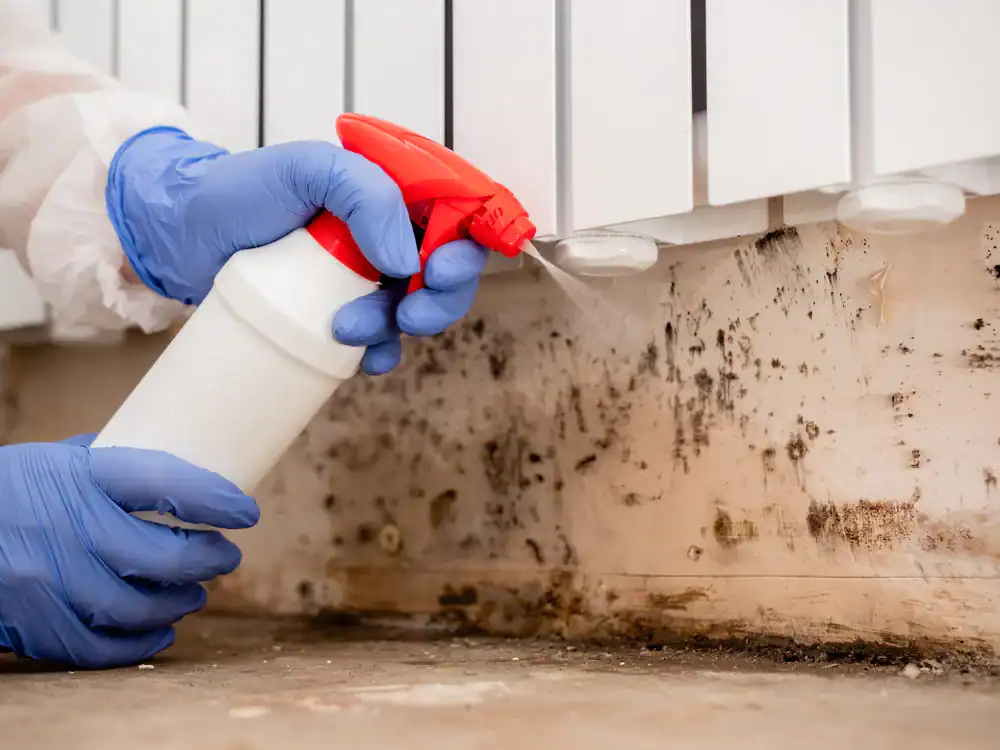
Your crawl space size is the biggest factor in what you’ll pay. It’s straightforward math until it isn’t.
A 500 square foot crawl space with easy access and no major issues might cost $1,000 to $2,000 for a basic vapor barrier. Double the size to 1,000 square feet, and you’re looking at $2,000 to $4,000. Go up to 1,500 square feet—common for many Guilford County homes—and the range jumps to $3,000 to $6,000.
But here’s where it gets less predictable. A crawl space that’s only 18 inches tall takes longer to work in than one with 4 feet of clearance. Tight spaces mean slower installation, more physical difficulty for the crew, and higher labor costs even if the square footage is smaller. Same goes for crawl spaces packed with plumbing, HVAC ducts, or support columns. More obstacles mean more cutting, fitting, and sealing around each one.
If your crawl space has multiple access points or requires removing old insulation or debris before installation, add time and cost. Some contractors charge extra for prep work. Others build it into the quote. That’s why getting a free inspection matters—you want someone to actually look at your space and give you a number based on what’s really there, not a ballpark guess over the phone.
The other piece that affects cost is what’s already wrong. Standing water means drainage work before the barrier goes down. Mold means remediation first. Rotting floor joists mean structural repairs. Those aren’t part of the vapor barrier cost, but they’re part of the total bill if you want the work done right.
Not all vapor barriers are the same, and the difference shows up in both price and performance.
Building code in North Carolina requires a minimum 6-mil polyethylene barrier for crawl spaces. That’s the thinnest option, running about $0.05 to $0.20 per square foot for materials. It meets code, but it’s also the most likely to tear when someone crawls across it to check plumbing or when you store anything down there. Most professionals don’t recommend it for long-term use.
A 12-mil barrier costs around $0.25 to $0.40 per square foot. It’s thicker, more durable, and less likely to puncture during installation or over time. This is the middle ground—better than code minimum without maxing out the budget.
The 20-mil reinforced polyethylene barrier is what most crawl space specialists recommend for North Carolina’s climate. It costs $0.40 to $0.60 per square foot for materials, but it’s built to last 20+ years without degrading. The reinforced layers resist tears and punctures, and the permeability rating is lower, meaning it blocks moisture more effectively than thinner options.
Here’s the cost difference in real terms. For a 1,200 square foot crawl space, materials alone range from $60 to $240 for 6-mil, $300 to $480 for 12-mil, or $480 to $720 for 20-mil. Add installation labor at $2 to $3 per square foot, and your total installed cost goes from around $2,460 to $4,320 depending on which material you choose.
The thicker barrier costs more upfront, but you’re not replacing it in 5 years when the thin one starts breaking down. In a humid climate where moisture is constant, durability matters. You want something that holds up when a plumber needs to access your crawl space or when groundwater pushes against it during heavy rain.
Want live answers?
Connect with a Clean Air LLC expert for fast, friendly support.
A vapor barrier and waterproofing aren’t the same thing, even though people use the terms interchangeably. The difference affects what you pay and what problems you actually solve.
A vapor barrier covers your crawl space floor to block moisture rising from the ground. It’s a moisture control measure. Waterproofing is a complete system—vapor barrier plus drainage, sump pump, sealed vents, and often a dehumidifier—designed to keep water out and humidity controlled year-round.
If your crawl space gets damp but doesn’t flood, a vapor barrier might be enough. If you see standing water after rain, puddles that don’t drain, or consistent moisture even in dry weather, you need waterproofing. The cost difference is significant. Full waterproofing runs $3,000 to $15,000 depending on what your space needs, while a vapor barrier alone stays in that $2,000 to $5,000 range for most homes.
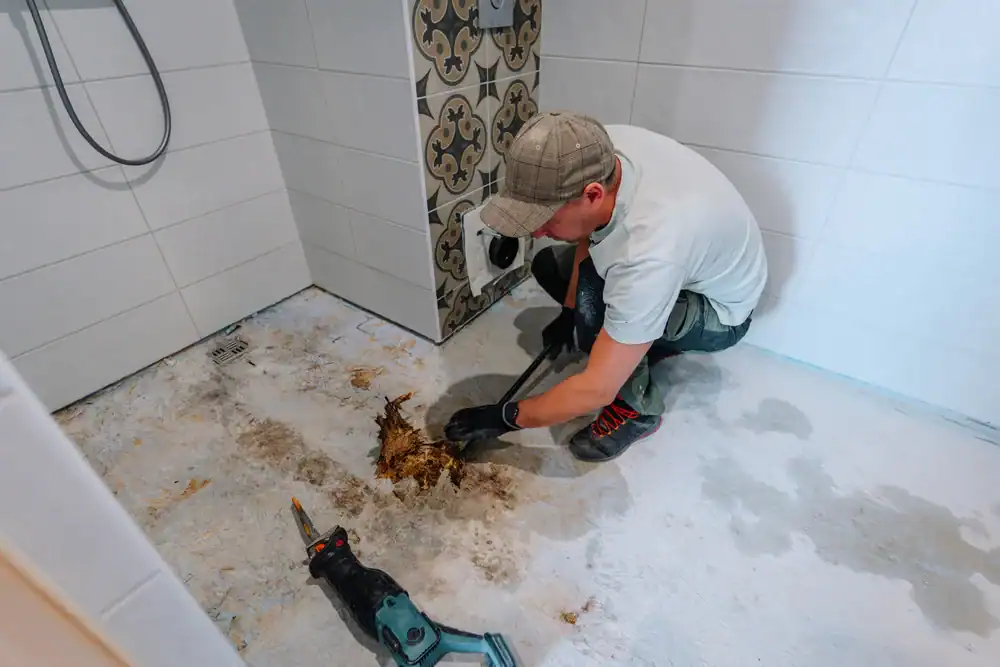
Crawl space waterproofing in Guilford County typically includes several components working together.
First, the vapor barrier—usually a heavier 12 to 20-mil material that covers the floor and extends up the foundation walls. That’s the base layer. Then comes drainage. If water pools in your crawl space, a perimeter drain system collects it and channels it to a sump pump. The drain costs $25 to $35 per linear foot to install, and sump pumps with battery backup run $2,800 to $3,500.
Sealed vents are next. Open crawl space vents let humid outdoor air pour in during North Carolina’s sticky summers, which defeats the purpose of the vapor barrier. Sealing them costs $40 to $50 per vent when done professionally, or $15 to $22 each if you handle it yourself. Most homes have 4 to 8 vents.
A crawl space dehumidifier is the final piece for humid climates. Even with a sealed vapor barrier, humidity can build from condensation or small leaks. A commercial-grade dehumidifier designed for crawl spaces costs $1,000 to $3,000 installed and maintains humidity levels between 40% and 50%—the range that prevents mold growth and wood rot.
Add it all up, and you’re looking at $5,000 to $12,000 for a comprehensive waterproofing system in an average-sized crawl space. That’s higher than a vapor barrier alone, but it’s also solving a different problem. If moisture keeps coming back with just a barrier, waterproofing is what stops it for good.
The other factor is what’s already damaged. If mold is growing on your floor joists, that needs treatment before waterproofing. Mold remediation runs $15 to $30 per square foot or $1,500 to $4,000 for a typical crawl space. If your foundation has cracks letting water in, sealing them costs $200 to $800 for minor cracks or $2,000 to $7,000 for major structural repairs. Those aren’t waterproofing costs—they’re prerequisite fixes—but they show up on the same invoice.
Crawl space sealing is another term that gets thrown around, and it usually refers to closing off your crawl space from outside air and moisture. It’s more than a vapor barrier but not quite full waterproofing.
Sealing typically includes installing a vapor barrier on the floor and walls, sealing foundation vents, and air-sealing gaps where pipes, wires, or ducts penetrate the crawl space. The goal is creating a controlled environment that doesn’t let humid outdoor air in or let conditioned indoor air escape.
Cost-wise, sealing runs $3 to $7 per square foot for most projects. For a 1,200 square foot crawl space, that’s $3,600 to $8,400. It’s more expensive than a floor-only vapor barrier because you’re covering walls and sealing every penetration, but it’s less than full waterproofing because it doesn’t always include drainage or dehumidification.
In North Carolina’s climate, sealing makes sense. The state’s year-round humidity means open vents don’t help—they make things worse. Warm, moist air comes in during summer, hits the cooler crawl space, and condenses on everything. That’s how you get mold on floor joists even without standing water.
The confusing part is that contractors use “sealing,” “encapsulation,” and “waterproofing” differently. Some mean the same thing. Others don’t. When you’re getting quotes, ask exactly what’s included. Does it cover just the floor or the walls too? Are vents sealed? Is a dehumidifier part of the package or an add-on? Is drainage included if water is present?
The clearest way to compare quotes is to break down the cost per component. Vapor barrier materials and installation. Vent sealing. Wall coverage. Dehumidifier. Drainage. Mold treatment. Structural repairs. When you see what each piece costs separately, you can figure out if the total makes sense or if someone’s padding the bill.
That’s also where free inspections help. A company that looks at your crawl space and explains what you actually need—not what they want to sell—gives you a baseline. If three contractors say you need drainage and one says you don’t, you know which quote to question.
Vapor barrier crawl space cost in Guilford County comes down to what you’re solving and how big your space is. A basic barrier runs $2 to $4 per square foot. Full waterproofing or encapsulation pushes that to $3 to $10 per square foot depending on condition and features. For most homes, the real number lands somewhere between $2,500 and $8,000 once you factor in materials, labor, and what your crawl space actually needs.
The key is knowing what you’re paying for before work starts. Transparent pricing, a free inspection, and a breakdown of each cost keep you from getting hit with surprise fees halfway through the job. North Carolina’s humidity doesn’t go away, so whatever you install needs to handle moisture year-round—not just meet minimum code.
If your crawl space smells musty, feels damp, or shows signs of mold, getting it checked is the first step. We’ve been serving Guilford County for over 30 years with free inspections, NADCA certification, and honest pricing. You’ll know what your space needs and what it costs before any work begins.
Summary:
Share: