
Contact Info
- Greensboro, NC 27406
- Call: 336-707-0498
- Text: 336-707-0498
-
Mon - Fri: 8am - 4pm
Sat - Sun: Closed
Contact Info
Not all mold problems start the same way. Where it grows changes everything — the cause, the fix, and what happens if you ignore it.
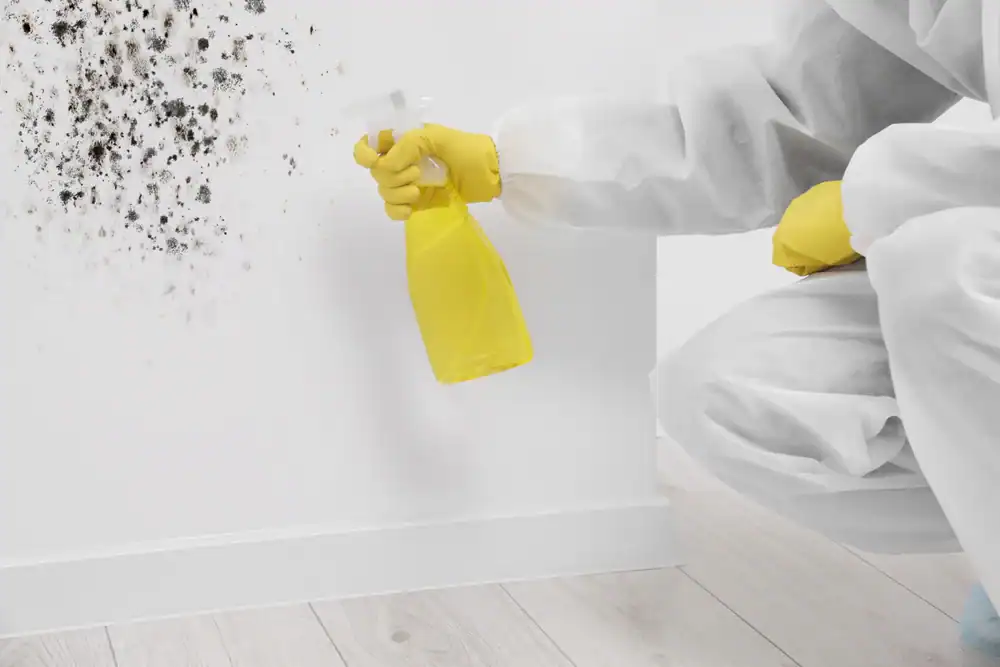
Most people don’t think about their crawl space until something goes wrong. Then they smell something, or an inspector finds something, or their allergies won’t quit — and suddenly the space under their house becomes the most urgent thing in their life. If that’s where you are right now, you’re not alone. Crawl space mold is one of the most common problems we see in Guilford County homes, and it’s also one of the most misunderstood.
The location of the mold isn’t just a detail — it changes the cause, the treatment, and what you have to do to make sure it doesn’t come back.
Mold needs three things to grow: moisture, an organic surface, and time. In a crawl space, all three are almost always present. The floor joists and subfloor sheathing give mold plenty of organic material to work with. Guilford County’s clay-heavy soil holds moisture long after rain ends, and with roughly 45 inches of rainfall annually and summer humidity that regularly climbs past 70%, the moisture piece takes care of itself.
What makes crawl space mold different from mold in a bathroom or basement is where the moisture comes from and how the space was designed to handle it. Most older homes in Greensboro and across Guilford County — with an average build year around 1985 — were constructed with vented crawl spaces. The idea was that outside air would dilute the humidity below the floor. In a dry climate, that works. In Piedmont North Carolina, it backfires completely.
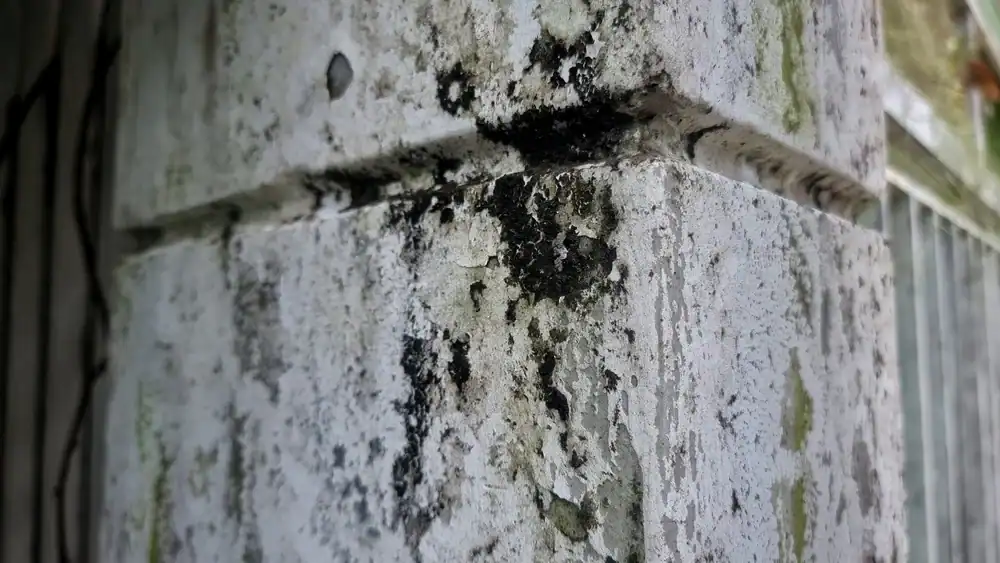
When outdoor air in July or August is sitting at 80 to 90 percent humidity, pulling that air into your crawl space doesn’t dry it out — it makes it wetter. The warm, humid air hits the cooler surfaces under your floor and condenses. Over time, that condensation soaks into wood, raises the relative humidity of the crawl space well above 60 percent, and creates exactly the conditions mold needs to take hold.
This is why crawl space mold is so prevalent in established Greensboro neighborhoods like Fisher Park, Irving Park, and Westerwood. The homes are well-built, well-maintained, and still dealing with mold problems — not because the owners did anything wrong, but because the original design of the crawl space was never suited for this climate.
Building science has caught up with the problem. The current standard for homes in the Southeast is an encapsulated crawl space — sealed from the ground up, with a dehumidifier maintaining humidity below 50 percent. But millions of homes in Guilford County still have the old vented design, and they’re actively creating the conditions for mold growth every summer.
Mold can begin growing on damp building materials within 24 to 48 hours of moisture exposure. A heavy rain event, a small plumbing drip, or a few weeks of high humidity can be enough to start a colony that takes months to discover. By the time you smell it upstairs, the growth below is often well established.
Here’s what many homeowners don’t realize: up to 40 percent of the air circulating through your home comes from the space beneath your floors. That means whatever is growing in your crawl space is actively influencing the air your family breathes every day.
In older Guilford County homes, the HVAC equipment is often located in or near the crawl space. When mold is actively growing in that space, spores don’t stay put. They travel — through HVAC returns, into the ductwork, and out through every register in your home. What starts as a crawl space problem can become a whole-house air quality problem without any visible sign that it’s happening.
This is the scenario that explains why some families spend money on air purifiers and allergy medication for years without ever getting relief. The source of the problem is below the floor, and nobody’s addressed it there.
It’s also why treating the crawl space alone sometimes isn’t enough. If mold has migrated into the duct system, the ductwork needs attention too — otherwise you’re cleaning one part of the system while the other part continues circulating contaminated air. We hold both IICRC AMRT certification for mold remediation and NADCA certification for air duct cleaning, which means we can assess and address both sides of the problem without you having to coordinate multiple contractors.
Most remediation companies handle one or the other. The crawl space specialists don’t always look at the ducts. The duct cleaners don’t always inspect the crawl space. If your home has HVAC equipment in or near the crawl space — which is common in Guilford County construction — you want someone who looks at the full picture.
The connection between crawl space conditions and duct contamination is also why we always start with a thorough inspection before recommending anything. We want to know where the moisture is coming from, whether there’s active mold growth, how far it’s spread, and whether the duct system has been affected. That inspection is free, and it’s the only honest way to know what you’re actually dealing with.
Want live answers?
Connect with a Clean Air LLC expert for fast, friendly support.
Homeowners sometimes assume that mold is mold — that wherever it shows up, the cause and the fix are basically the same. That assumption leads to a lot of wasted money and a lot of recurring problems. Attic mold and crawl space mold share the same basic biology, but the conditions that create them, the way they spread, and what it takes to actually solve them are very different.
Getting this distinction right matters because treating the wrong problem — or treating the right problem the wrong way — doesn’t just fail to fix things. It can make them worse.
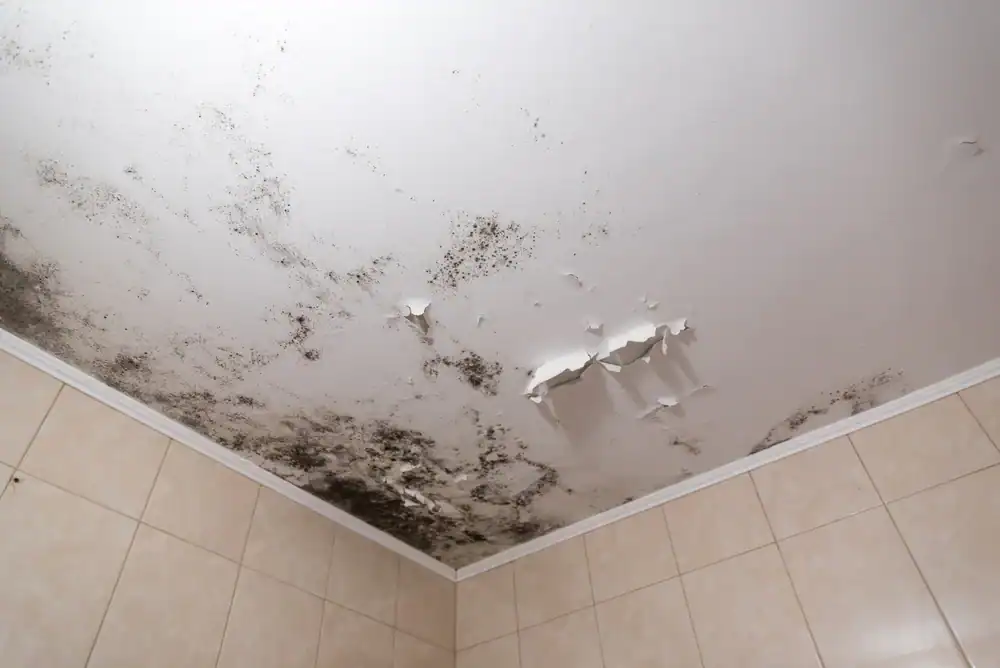
Attic mold is almost always a heat and ventilation problem. Warm, moist air rises through the living space, hits the cooler attic surfaces, and condenses on the roof sheathing. Bathroom exhaust fans that vent into the attic instead of outside are one of the most common culprits — they dump humid air directly onto the wood surfaces above the insulation. Inadequate soffit and ridge ventilation compounds the problem by trapping that moisture with nowhere to go.
The result is mold that grows on the underside of the roof deck, often in a relatively uniform pattern across the sheathing. It’s driven by what’s happening above the living space, not below it.
Crawl space mold works in the opposite direction. The moisture source is the ground — clay soil releasing moisture upward, outdoor humidity entering through crawl space vents, and sometimes groundwater intrusion from poor drainage on the lot. The mold grows on the structural wood below the living space: floor joists, beam pockets, subfloor sheathing, and any insulation that’s absorbed moisture over time.
The treatment approach follows from the cause. Attic mold remediation typically involves cleaning the roof sheathing, correcting the ventilation, and rerouting any exhaust fans that are venting into the attic space. Crawl space mold remediation involves removing contaminated materials, treating the structural wood with professional antimicrobials, and then addressing the moisture source — whether that’s encapsulation, a vapor barrier upgrade, a dehumidifier, improved drainage, or some combination of all of them.
Applying an attic solution to a crawl space problem, or vice versa, doesn’t work. The physics are different. The moisture sources are different. And the long-term prevention strategies are entirely different.
This is one of the most common questions we hear, and it’s a fair one. Mold remediation has a reputation for being vague — a truck shows up, some work happens out of sight, and you’re handed a bill. Here’s what the process actually looks like when it’s done correctly.
It starts with identifying the moisture source before anything else is touched. Removing mold without understanding where the moisture is coming from is like mopping up a leak without turning off the water. The mold will come back. Every time. So the first step is always inspection — checking humidity levels, looking for standing water or drainage issues, examining the floor joists and vapor barrier, and identifying any areas where outdoor air or groundwater is getting in.
Once the source is understood, containment is set up to prevent spores from spreading to the rest of the home during the remediation process. Contaminated insulation and debris are physically removed — not sprayed over. This is a step that some companies skip or shortcut, and it’s one of the most important parts of the job. Mold disinfectants applied to surfaces that still contain contaminated material don’t solve the problem. They mask it temporarily.
After physical removal, the structural wood is treated with EPA-approved antimicrobial solutions — not bleach. Bleach doesn’t penetrate porous wood. It can whiten the surface while leaving mold roots intact. Professional antimicrobials are formulated to penetrate wood grain and address the growth at its source. HEPA air filtration runs throughout the process to capture airborne spores.
After the remediation work is complete, we document the before and after conditions. You should be able to see what was found and verify that it was addressed — especially in a space you can’t easily access yourself.
The final step — and the one that determines whether the fix actually lasts — is moisture control. Encapsulation, a properly sized dehumidifier, vapor barrier installation, or drainage improvements depending on what the inspection found. In Guilford County, where the Cecil sandy clay loam soil holds moisture long after rain ends and summer humidity is relentless, skipping this step means the mold comes back. We’ve seen it happen to homeowners who paid another company for remediation and were back to square one within a season.
North Carolina has no state licensing requirement for mold remediation. That means any contractor can claim to do this work, regardless of training or process. The credentials that actually mean something in this market are IICRC AMRT certification — the Applied Microbial Remediation Technician designation, tied directly to the ANSI/IICRC S520 standard for professional mold remediation — and a track record of work in this specific climate, with this specific housing stock.
What you’re looking for is someone who will tell you honestly what they found, explain what needs to happen and why, and address the moisture source — not just the visible mold. A company that skips the inspection, can’t explain their process, or offers to “spray and treat” without removing contaminated materials is not offering you a real solution.
We’ve been doing this work in Guilford County since the early 1990s. We offer free crawl space inspections because we think you should know what you’re dealing with before you commit to anything. If you’re ready to find out what’s actually happening under your home, Clean Air LLC is a straightforward place to start.
Summary:
Share: