
Contact Info
- Greensboro, NC 27406
- Call: 336-707-0498
- Text: 336-707-0498
-
Mon - Fri: 8am - 4pm
Sat - Sun: Closed
Contact Info
Treated attic mold that came back? You're not alone. Here's why it keeps returning — and what it actually takes to stop it.
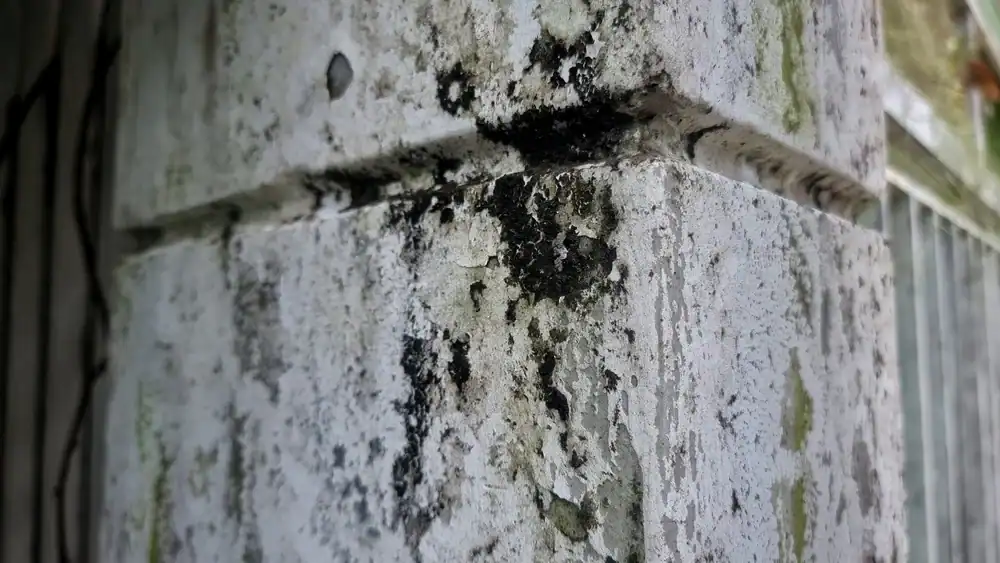
You noticed a musty smell. Maybe you spotted some dark staining on the rafters when you went up to grab something from storage. You had it treated — or tried to handle it yourself — and a few months later, it’s back. That’s the part nobody talks about enough: attic mold doesn’t just come back because you missed a spot. It comes back because the conditions that caused it in the first place were never corrected. Understanding that difference is what separates a real fix from a temporary one. Here’s what’s actually going on up there, and what it takes to make it stop.
That stale, earthy odor that shows up on humid days — or hits you the moment you walk through the door — isn’t just “old house smell.” It’s a signal. Mold and mildew release gases called microbial volatile organic compounds as they grow, and those gases are what you’re actually smelling. The odor itself doesn’t mean mold is everywhere, but it does mean it’s somewhere.
The tricky part is that the smell travels. Air moves through a home constantly, and mold growing in one area can make an entire floor smell like something’s wrong without giving you an obvious place to look. That’s why a lot of homeowners spend weeks checking bathrooms and basements before someone finally looks up.
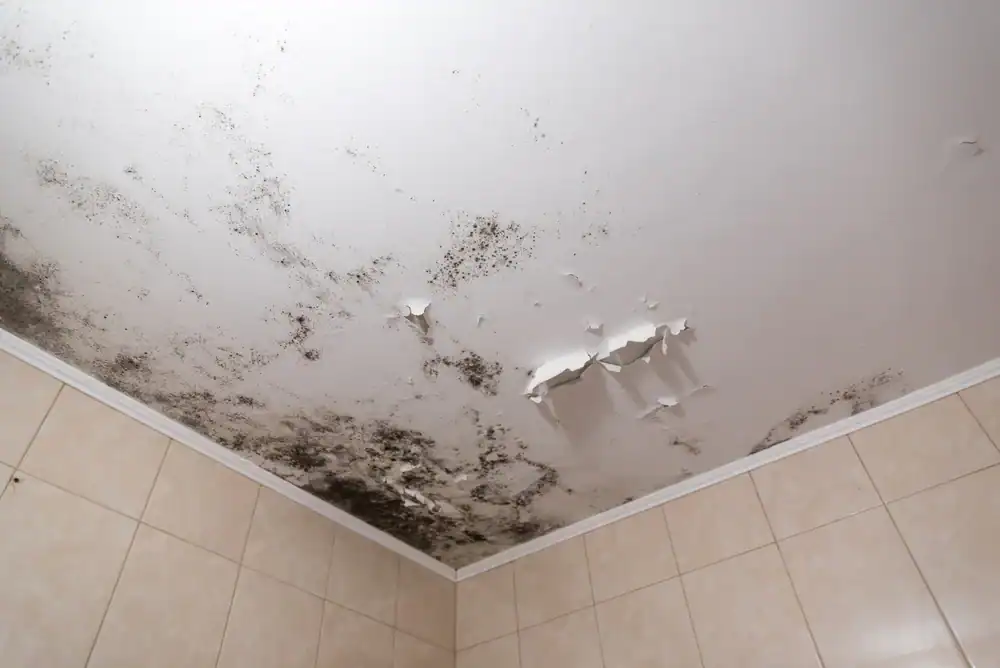
There are several common sources of a mildew smell inside a home — a damp crawl space, a slow plumbing leak behind a wall, condensation around HVAC equipment, or old insulation that’s absorbed moisture over the years. But the attic is one of the most overlooked sources, partly because most people don’t go up there often, and partly because the smell doesn’t always seem to be coming from above.
Here’s why the attic ends up being the problem more often than people expect: warm, moist air rises. In a home that isn’t perfectly sealed — and almost none are — that air makes its way into the attic through gaps around recessed lights, attic hatches, and HVAC penetrations. When it hits the cooler roof sheathing, it condenses. Do that repeatedly over a Guilford County summer, where humidity regularly climbs above 70 percent, and you’ve created exactly the conditions mold needs to get started.
The other common culprit is a bathroom or kitchen exhaust fan that vents into the attic instead of through the roof or soffit to the outside. It sounds like a minor installation detail, but it pumps warm, humid air directly onto the wood sheathing every time someone showers. Over time, that adds up to significant moisture accumulation — and mold follows moisture.
What makes this harder to catch is that attic mold typically grows on the underside of the roof decking, not on a surface you’d notice during a quick visual check. By the time there’s visible staining on the rafters or a strong smell reaching the living areas below, the growth is usually already well established. The smell is your early warning system — it’s worth taking seriously before it becomes a larger remediation project.
This is the question that brings a lot of homeowners back to square one. The attic was treated. The visible mold was removed. But a few months later, the smell is back — sometimes worse than before. The reason almost always comes down to the same thing: the moisture source wasn’t corrected.
Remediation doesn’t stop moisture from building up again unless the cause has been resolved. Mold spores are microscopic and resilient, and even a small amount left behind in the wood grain can regrow quickly once conditions return to normal — and in Guilford County, those conditions return every summer without fail. If the exhaust fan is still venting into the attic, or the soffit vents are still blocked, or the ridge vent is still inadequate, the attic will get humid again. And mold will grow again.
There’s also a common misconception worth addressing directly: bleach does not fix attic mold. It kills surface growth on non-porous materials, but wood is porous. Bleach can’t penetrate into the grain where the mold’s root structure — the hyphae — actually lives. You can scrub the visible surface clean and still have active mold inside the wood. When conditions are right again, it grows back from those roots. This is the most common reason DIY attic mold treatment fails, and it’s also why some professional treatments fail too — if the contractor cleaned the surface without addressing ventilation or moisture, the result is the same.
Nearly 90 percent of attic mold cases trace back to ventilation problems rather than roof leaks. That statistic matters because it means the fix usually isn’t about the roof — it’s about airflow. A properly ventilated attic allows heat and moisture to escape before they accumulate on the sheathing. When that balance is off, even a small amount of humidity becomes a recurring mold problem.
Want live answers?
Connect with a Clean Air LLC expert for fast, friendly support.
At some point, self-diagnosing a musty smell becomes an exercise in frustration. You’ve checked the obvious places. You’ve run the dehumidifier. You’ve cleaned. The smell keeps coming back, usually in summer, sometimes when the AC kicks on, occasionally after a heavy rain. That pattern is telling you something.
A smell that worsens in summer or when the air conditioning runs is often a sign that mold is growing somewhere in the air pathway — the attic, the crawl space, or the ductwork itself. When conditioned air moves through or near a mold-affected area, it picks up spores and odor compounds and distributes them through the home. That’s why the smell can seem to come from everywhere at once.
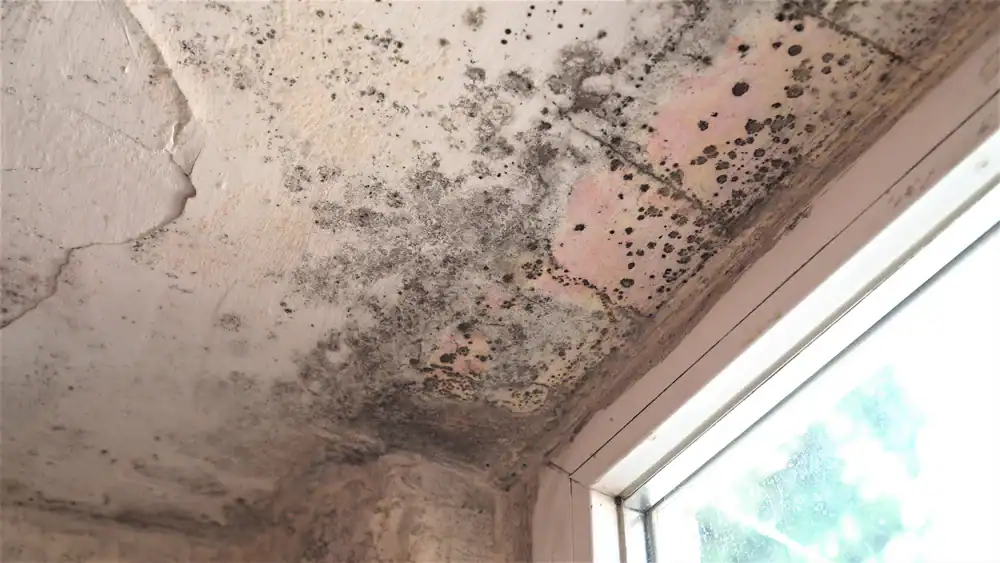
A lot of homeowners assume that because mold is in the attic — technically outside the living space — it isn’t affecting the air they breathe. That’s not always true, and in certain home configurations it’s significantly not true.
Many ranch-style and one-story homes throughout Guilford County, particularly those built between the 1950s and 1990s, have HVAC air handlers and ductwork located in the attic. It’s a common setup in this part of North Carolina, and it creates a direct pathway between attic air and the conditioned air circulating through every room. When mold is growing in an attic that also houses HVAC equipment, the air quality impact on the rest of the home can be immediate and measurable. Spores don’t need a wide-open door — they need a gap, a duct connection, or a pressure differential to move from the attic into the living areas below.
Even in homes where the HVAC isn’t in the attic, the stack effect — the natural movement of air from lower to higher pressure zones — means attic air does migrate downward through small gaps and penetrations. Recessed light fixtures, attic access hatches, and poorly sealed ceiling joints all create pathways. This is why people with allergies or asthma sometimes notice their symptoms worsening at home without any obvious explanation. The source may be above the ceiling, not around them.
For Guilford County homeowners, the combination of older housing stock and high summer humidity creates conditions where this problem is genuinely common. Homes built before modern ventilation standards were adopted are more likely to have undersized soffit vents, no ridge vent, or exhaust fans that were never properly routed to the exterior. These aren’t rare edge cases — they’re the norm in neighborhoods across Greensboro, High Point, and the surrounding communities.
If you’ve had attic mold treated before and it came back, it’s worth understanding what a thorough remediation process actually involves — because not every company does it the same way, and the difference matters.
The first step in any legitimate remediation is identifying the moisture source. Before anything is cleaned or treated, a qualified technician should be able to tell you where the moisture is coming from — whether that’s a blocked soffit vent, an exhaust fan venting into the attic, inadequate ridge ventilation, or a combination of factors. Without that diagnosis, cleaning is cosmetic. The mold will return.
Once the source is identified and addressed, proper remediation involves containing the work area to prevent spore dispersal into the living space, physically removing affected material through scrubbing or wire brushing, and applying an EPA-registered antimicrobial treatment to the cleaned surfaces. HEPA-filtered equipment is essential during this process — it captures spores rather than redistributing them through the air. After the work is done, before-and-after documentation gives you a verifiable record that the remediation was actually completed.
What separates a durable result from a temporary one is the ventilation correction happening alongside — or before — the cleaning. This is where our NADCA Certified Ventilation Inspector credential becomes directly relevant. A CVI-certified technician is specifically trained to assess whether attic airflow meets current standards and to identify the imbalances that allow moisture to accumulate. Correcting ventilation as part of the remediation scope is what makes the difference between a problem that stays solved and one that comes back in eighteen months.
North Carolina doesn’t require a state mold remediation contractor license, which means the quality of work varies widely depending on who you hire. Third-party certifications — the IICRC AMRT (Applied Microbial Remediation Technician) for mold, and NADCA credentials for ventilation — are the most reliable indicators that a company is working to a professional standard rather than just showing up with a spray bottle. We hold both, and we’ve been serving Guilford County since the early 1990s. That’s not a marketing line — it means we’ve seen what Guilford County’s clay soil, heavy summer humidity, and aging housing stock actually do to homes over time, and we know what a real fix looks like.
Attic mold isn’t a cleaning problem. It’s a moisture and ventilation problem that happens to show up as mold. Treating the surface without fixing what’s driving the moisture is why so many homeowners end up dealing with the same issue twice — or more.
If you’re smelling something you can’t locate, seeing staining in the attic, or dealing with a recurrence after previous treatment, the right next step is an honest inspection — not a sales pitch. We offer free inspections because we’d rather tell you what you’re actually dealing with than guess at it or talk you into something you don’t need.
Clean Air LLC serves homeowners across Guilford County and the surrounding area. If you want a straight answer about what’s going on in your attic, give us a call.
Summary:
Share: