
Contact Info
- Greensboro, NC 27406
- Call: 336-707-0498
- Text: 336-707-0498
-
Mon - Fri: 8am - 4pm
Sat - Sun: Closed
Contact Info
Guilford County's climate creates crawl space conditions most of the country never deals with. Here's what that means for your home.
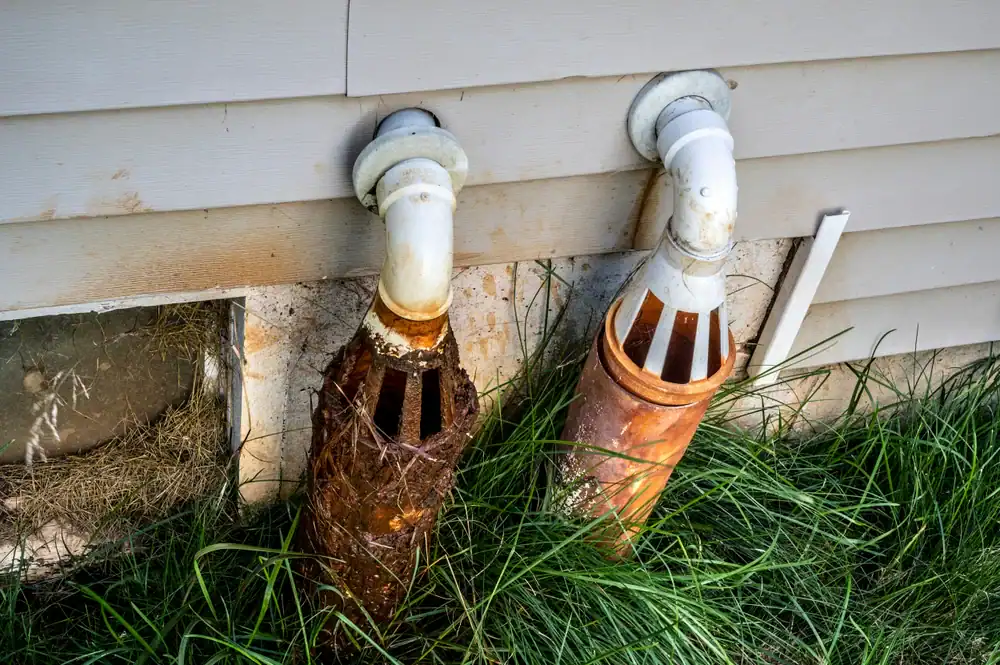
Most homeowners don’t think about their crawl space until something forces them to — a smell they can’t track down, a floor that feels softer than it used to, or a home inspector’s report that stops a sale cold. By that point, the problem has usually been building for a while. What makes Guilford County different is that the conditions here — the humidity, the rainfall, the clay-heavy Piedmont soil — create a crawl space environment that’s harder to manage than most of the country. This isn’t a generic warning. The numbers are specific, and they matter.
Greensboro’s average annual humidity sits around 69%, peaking at 76% in August. Mold needs humidity above roughly 60% to grow — and in Guilford County, the air stays below that threshold for only about 14% of the year. That’s not a seasonal problem. That’s a near-constant one.
Add to that the 45 inches of rainfall Guilford County receives each year — about seven inches more than the national median — and you have ground that stays saturated for long stretches. The Piedmont’s clay-heavy soil doesn’t drain quickly, which means moisture presses against foundations and migrates upward into crawl spaces long after a rain event has passed. There’s no extended dry season here that gives crawl spaces a chance to recover on their own.
Here’s the part most homeowners don’t know: roughly 40 to 50 percent of the air on your home’s first floor comes from the crawl space. It’s called the stack effect — warm air rises through the house and draws air upward from below to replace it. Every time your HVAC runs, it accelerates that process.
What that means practically is that whatever is happening in your crawl space isn’t staying there. Mold spores, excess humidity, soil gases, and pest waste get pulled up through gaps in the subfloor and into the rooms where your family spends time. The crawl space and your living area aren’t separate systems. They’re connected, whether you want them to be or not.
This is why homeowners often notice symptoms before they ever look under the house. A persistent musty smell that no candle or air freshener touches. Allergy symptoms that seem worse indoors than outside. An HVAC system that runs longer than it should. These aren’t random — they’re often the crawl space making itself known through the air you’re breathing.
For homes in Greensboro’s older neighborhoods — places like Fisher Park, Lindley Park, or College Hill — many of the houses were built in the 1950s through 1970s with vented crawl spaces. That design made sense under the building codes of the time, but it means decades of humid Piedmont air cycling through the structure. Original vapor barriers, if they were ever installed at all, are long past their useful life.
Newer construction in areas like Summerfield, Stokesdale, or McLeansville isn’t automatically immune either. Clay soils and grading issues can direct water toward foundations regardless of when the home was built. The risk factors here are geographic and climatic, not just a function of a home’s age.
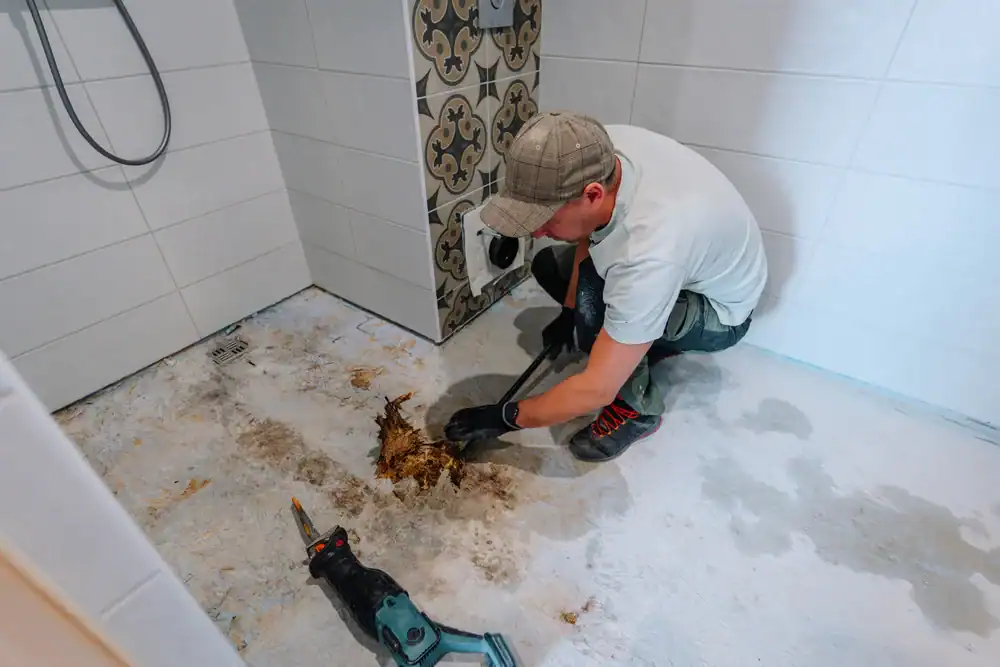
Moisture damage in a crawl space is progressive. It doesn’t plateau — it compounds. What starts as elevated humidity and condensation eventually creates conditions where mold takes hold on floor joists and structural wood. From there, wood rot sets in, insulation loses its effectiveness, and the structural integrity of the subfloor begins to deteriorate. The soft or springy floors some homeowners notice are often the visible end result of a process that started quietly, years earlier.
The cost difference between catching a moisture problem early and addressing it after mold and rot have taken hold is significant. Mold remediation alone — once it’s established in a crawl space — can reach $10,000 to $15,000, and that’s before any structural repairs are factored in. Encapsulation and moisture control addressed proactively cost a fraction of that.
There’s also the HVAC angle, which most crawl space content ignores entirely. When crawl space humidity degrades your insulation’s R-value, your heating and cooling system works harder to maintain the same temperature. Homeowners sometimes spend years paying higher energy bills without connecting it to what’s happening below the floor. And when mold spores are circulating through the duct system, cleaning the crawl space without addressing the ducts means the contamination pathway stays open. We handle both — crawl space repair and duct cleaning — which is not something most contractors in Guilford County can say.
The other scenario that creates urgency is a home sale. Real estate inspectors in Guilford County find crawl space moisture and mold issues regularly, and when they do, the clock starts ticking. Emergency pre-sale remediation is more stressful and more expensive than dealing with the problem before a listing is involved. If you’re planning to sell within the next few years, finding out what’s under your home now is worth doing.
Want live answers?
Connect with a Clean Air LLC expert for fast, friendly support.
There’s a lot of confusion about what crawl space repair actually means — partly because the term covers several different problems and solutions, and partly because contractors don’t always explain the difference clearly. The right approach depends on what’s actually happening under your home, which is why the starting point matters.
Before recommending anything, we document the crawl space condition — moisture levels, mold growth, structural concerns, and contamination sources — with photos and readings. That documentation drives the recommendation, and it means you know exactly what we found before any work begins.
Crawl space encapsulation is one of the most searched terms in this category, and it’s also one of the most misunderstood. A lot of homeowners assume it means laying plastic sheeting on the ground — which is closer to a basic vapor barrier than true encapsulation. The distinction matters.
Full encapsulation seals the crawl space from both the earth below and the outside air that would otherwise infiltrate through vents and gaps. That typically means a reinforced polyethylene liner — modern best practice calls for 10 to 20 mil thickness — covering the ground and running up the foundation walls, combined with sealing the rim joists and any other air entry points. The goal is to convert the crawl space from an uncontrolled, vented environment into a conditioned or semi-conditioned one.
Here’s the critical part that often gets skipped: encapsulation alone doesn’t eliminate moisture — it controls where moisture can come from. Any residual humidity still inside the sealed space needs somewhere to go. That’s why a properly installed encapsulation system includes a crawl space-rated dehumidifier. A dehumidifier running in an unencapsulated crawl space is fighting a losing battle against constant ground moisture and outside air. The sequence matters — seal first, then dehumidify.
For Guilford County homes, this combination is particularly important given the climate. You’re not dealing with a moisture problem that goes away in the summer or resolves itself during a dry stretch. The conditions here are persistent, which means the solution needs to be permanent and active, not just a barrier that slows things down.
If mold is already present in the crawl space, encapsulation is not the first step — remediation is. Installing a vapor barrier over active mold doesn’t fix the problem; it seals it in. Mold remediation done properly follows the IICRC S520 standard, which means containment barriers to prevent spore spread during the work, HEPA air filtration to capture airborne particles down to 0.3 microns, and removal of affected materials within containment. We hold the IICRC AMRT certification — Applied Microbial Remediation Technician — which is the specific credential for this type of work. It’s not a general contractor license; it’s training in the science of microbial contamination and how to remove it without making things worse.
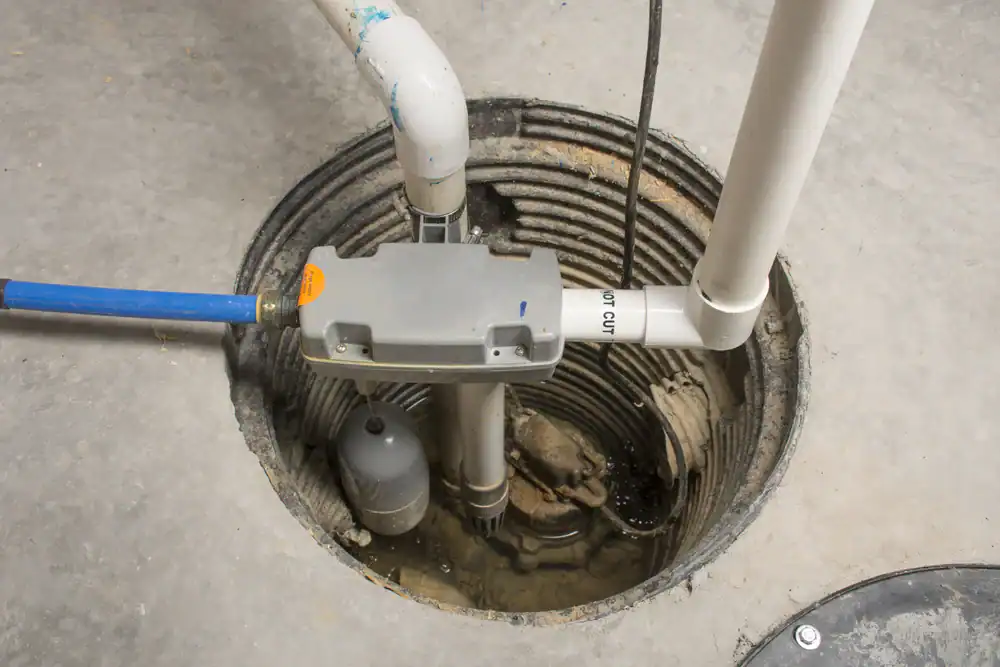
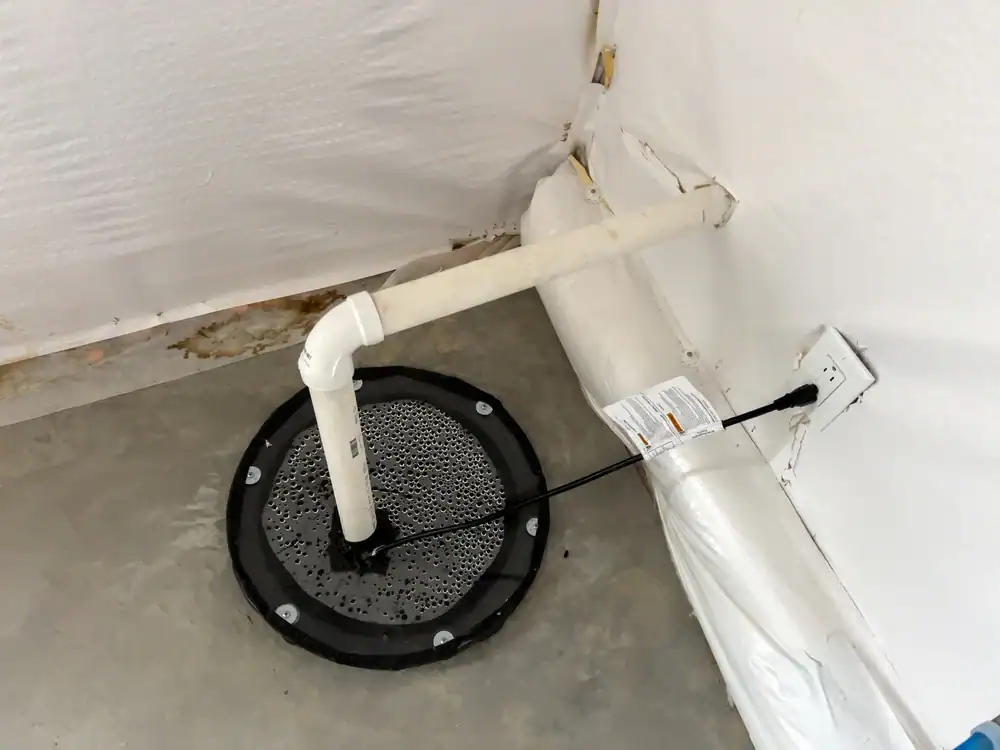
The other situation that changes the approach is standing water or active drainage problems. If water is entering the crawl space during rain events — not just humidity, but actual intrusion — a vapor barrier and dehumidifier won’t solve it. That’s where a French drain system comes in. A French drain installed around the interior perimeter of the crawl space collects water before it can accumulate and directs it to a sump pump for discharge. In Guilford County, where clay soils hold water against foundations and 45 inches of annual rainfall keeps the ground saturated for extended periods, drainage issues are common — especially in homes where the grading around the foundation has shifted over time or where downspout discharge lands too close to the house.
Sump pump installation is often part of the same conversation. The pump needs to be sized correctly for the volume of water the system is managing, the pit needs to be placed at the lowest point of the crawl space, and the discharge line needs to direct water far enough from the foundation that it doesn’t cycle back. These are details that matter — a pump installed incorrectly won’t protect the home during the heavy rain events that come through the Piedmont, including the remnants of tropical systems that occasionally track through the region and deliver sustained, multi-day rainfall.
The reason crawl space problems in Guilford County tend to go unaddressed longer than they should is that the damage happens out of sight. There’s no visible flood, no obvious collapse — just a slow accumulation of moisture, mold, and deterioration that makes itself known through smells, floors, energy bills, and eventually an inspector’s report.
The good news is that the right fix — done in the right order, with the right documentation — is durable. Guilford County’s climate isn’t going to change, but a properly encapsulated and drained crawl space can handle it.
We’ve been doing this work in Guilford County since the early 1990s, and we offer free inspections as a starting point — no cost, no pressure, just an honest look at what’s actually there. If you’ve been putting off finding out what’s under your home, Clean Air LLC is a straightforward next call.
Summary:
Share: