
Contact Info
- Greensboro, NC 27406
- Call: 336-707-0498
- Text: 336-707-0498
-
Mon - Fri: 8am - 4pm
Sat - Sun: Closed
Contact Info
Still smelling something musty no matter what you try? The problem is probably under your feet — and here's what actually fixes it.
You’ve tried everything. Candles, air fresheners, opened windows, maybe even a store-bought mold spray on anything that looked suspicious. And the smell is still there. That’s not a cleaning problem — it’s a source problem. In most Guilford County homes, that musty odor traces back to the crawl space, a dark, humid space most homeowners never think about until something goes wrong. This guide explains why surface fixes don’t work, what real crawl space mold removal looks like, and how to finally get rid of the smell for good.
The first thing most people do is look for the obvious source — a damp towel, a forgotten corner of the bathroom, something under the sink. When nothing turns up, they clean harder. When that doesn’t work, they start wondering if it’s just “old house smell” and try to live with it.
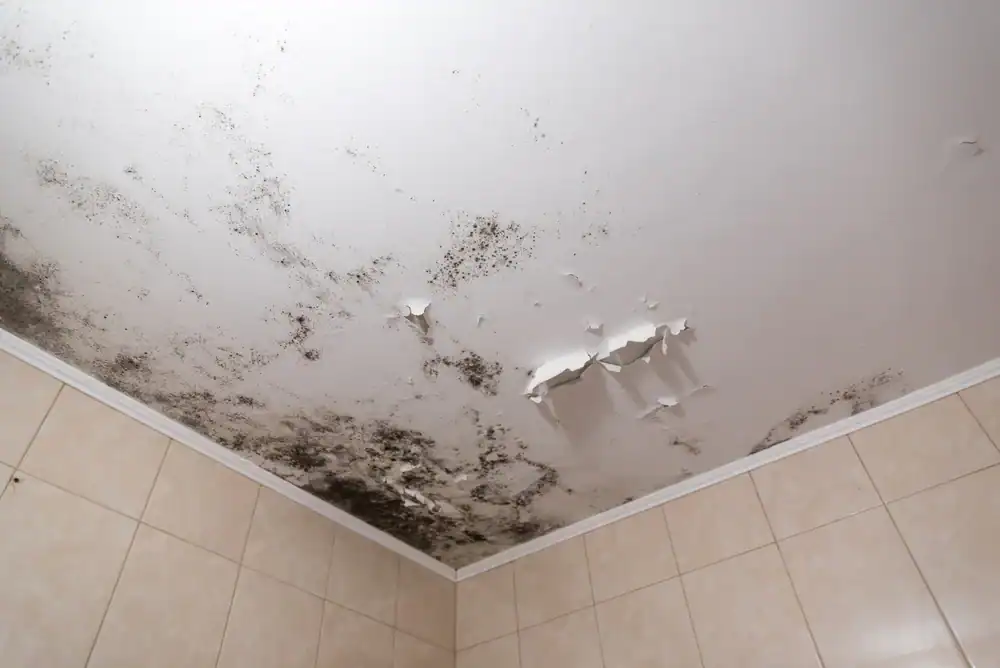
Here’s what’s actually happening. Mold and fungi release microbial volatile organic compounds — mVOCs — as they consume organic material. That musty odor is those compounds traveling through your home’s air. In many Guilford County homes, up to 40% of the air you breathe upstairs comes directly from your crawl space. The warm air down there rises through gaps in your floors, through your ductwork, and into your living spaces. If mold is growing on the wood joists or insulation in your crawl space, you’re breathing what’s down there — whether you’ve ever looked down there or not.
The crawl space is the last place most homeowners check, which is exactly why the smell keeps coming back no matter what you do upstairs.
This is the question we hear most often, and the answer is straightforward: you can’t clean your way out of a moisture problem.
Mold needs three things to grow — organic material, warmth, and moisture. Your crawl space has all three. The wood floor joists and any remaining insulation are organic material. Guilford County’s summers push ambient humidity well above 70%, and the county’s Cecil clay soil drains slowly, which means ground moisture is pressing against your foundation long after the last rain. That combination creates conditions where mold doesn’t just grow — it thrives for months before anyone notices it upstairs.
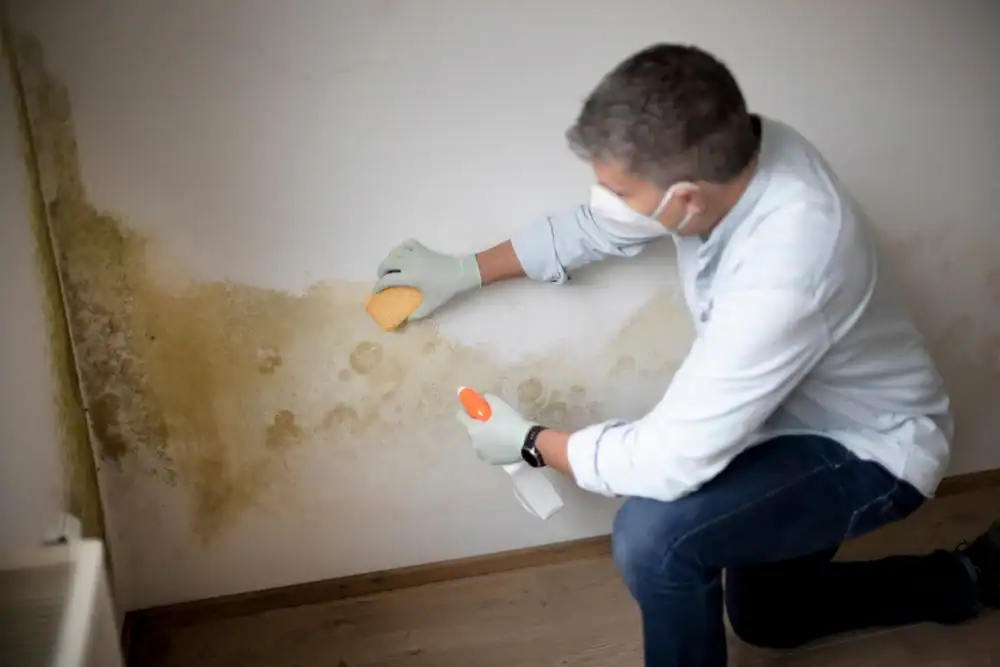
When you spray a store-bought mold killer on a surface, you’re addressing what you can see. But crawl space mold grows on the underside of floor joists, on insulation, on debris — places you’re not reaching. More importantly, bleach-based products don’t penetrate porous wood surfaces. They kill surface mold and leave the root structure intact. Within weeks, the growth is back.
There’s also the moisture source itself. Even if you managed to kill every visible mold colony in your crawl space today, if the conditions that caused it haven’t changed — the humidity, the inadequate vapor barrier, the drainage — mold will return. This is why so many homeowners end up treating the same problem twice. The smell comes back, they spray again, and the cycle continues.
The spring transition is a particularly high-risk window in this region. In April and May, outdoor dew points rise faster than your crawl space warms up. That temperature difference causes condensation on cool crawl space surfaces — floor joists, ductwork, any metal components — and that condensation is enough to trigger mold growth. By the time summer heat arrives and the smell becomes noticeable upstairs, the growth has often been active for weeks.
Fixing the smell permanently means addressing the moisture source. Everything else is temporary.
You don’t need to crawl under your house to get a reasonable sense of whether the crawl space is involved. There are a few patterns that point clearly in that direction.
The smell gets worse when it rains or when humidity climbs. If you notice the musty odor intensifying after a wet stretch of weather, that’s a strong signal — you’re smelling moisture-activated mold, and the crawl space is the most likely location. Guilford County averages around 45 inches of rainfall annually, and the clay soil underneath many homes in areas like Fisher Park, Westerwood, and Sunset Hills doesn’t drain quickly. That means the ground under your house stays wet long after the sky clears.
The smell is strongest near the floor or comes from your vents. mVOCs travel upward through your home. If the odor is noticeably stronger near floor level or seems to intensify when your HVAC runs, that’s consistent with a crawl space source — the air handler is drawing air from below and distributing it through your ductwork.
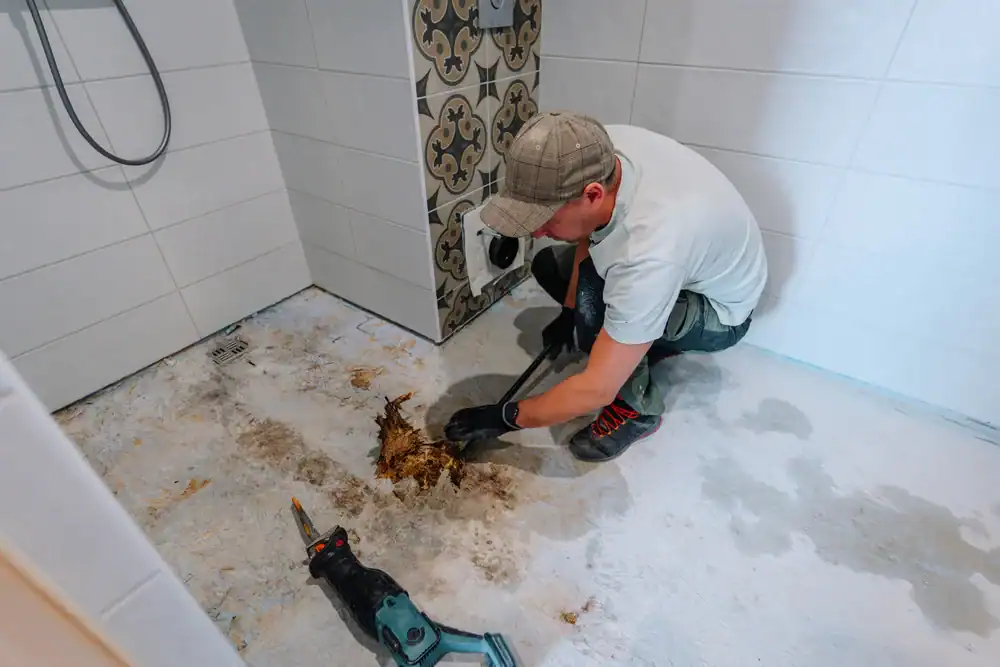
Your floors feel soft or slightly springy in spots. This is a more serious sign. When wood joists stay wet long enough for mold to establish, they also become vulnerable to wood rot. A floor that gives slightly underfoot in certain spots may indicate that the structural wood beneath it has been compromised.
You’ve ruled out everything else. If the bathroom is clean, the laundry room is dry, there’s no visible mold anywhere in the living space, and the smell persists — the crawl space is the logical next step. We offer free inspections to confirm it one way or the other, with no commitment required.
Want live answers?
Connect with a Clean Air LLC expert for fast, friendly support.
There’s a meaningful difference between mold removal and mold remediation, and it’s worth understanding before you hire anyone. Mold removal is surface cleaning — scrubbing or spraying what’s visible. Mold remediation is a comprehensive process that includes identifying the moisture source, containing the work area so spores don’t spread, removing contaminated material, treating structural wood with EPA-registered antimicrobials, and correcting the conditions that allowed mold to grow in the first place.
One of those approaches solves the problem. The other delays it.
A professional remediation job in a typical residential crawl space takes one to five days depending on the extent of the growth and what moisture corrections are needed. The process is methodical, and every step matters.
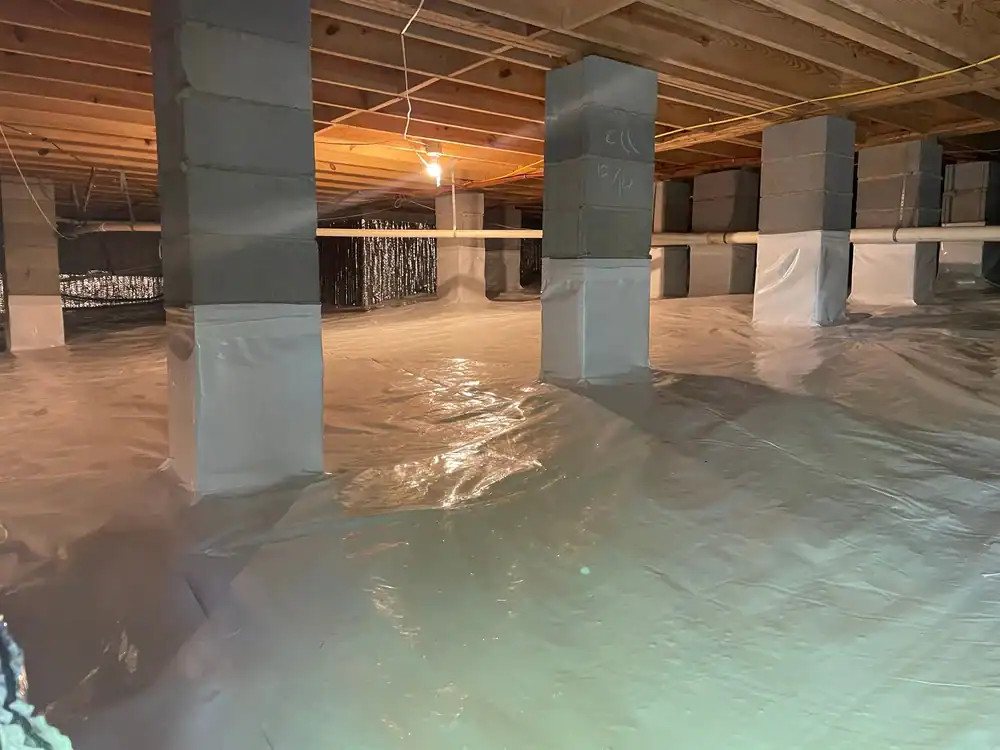
It starts with an inspection. Before any work begins, we go into the crawl space to assess what’s actually there — the extent of the mold growth, the moisture levels, the condition of the vapor barrier if one exists, and whether there are drainage issues contributing to the problem. That inspection drives the scope of work. You should know exactly what’s being done and why before we start.
Once the scope is confirmed, the work area is set up for containment. This is a step that low-cost operators frequently skip, and it matters. When mold is physically disturbed during removal, spores become airborne. Without proper containment — negative pressure and HEPA-filtered air scrubbers — those spores migrate into your living space during the job. The containment setup keeps the remediation isolated to the crawl space.
From there, the physical removal begins. Loose mold growth is HEPA-vacuumed from surfaces. If insulation has been contaminated, it comes out. Any structural wood that’s been significantly compromised may need to be addressed as well. After the physical removal, EPA-registered antimicrobial treatments are applied to the wood surfaces — not household bleach, which doesn’t penetrate porous wood effectively, but products specifically formulated for this application.
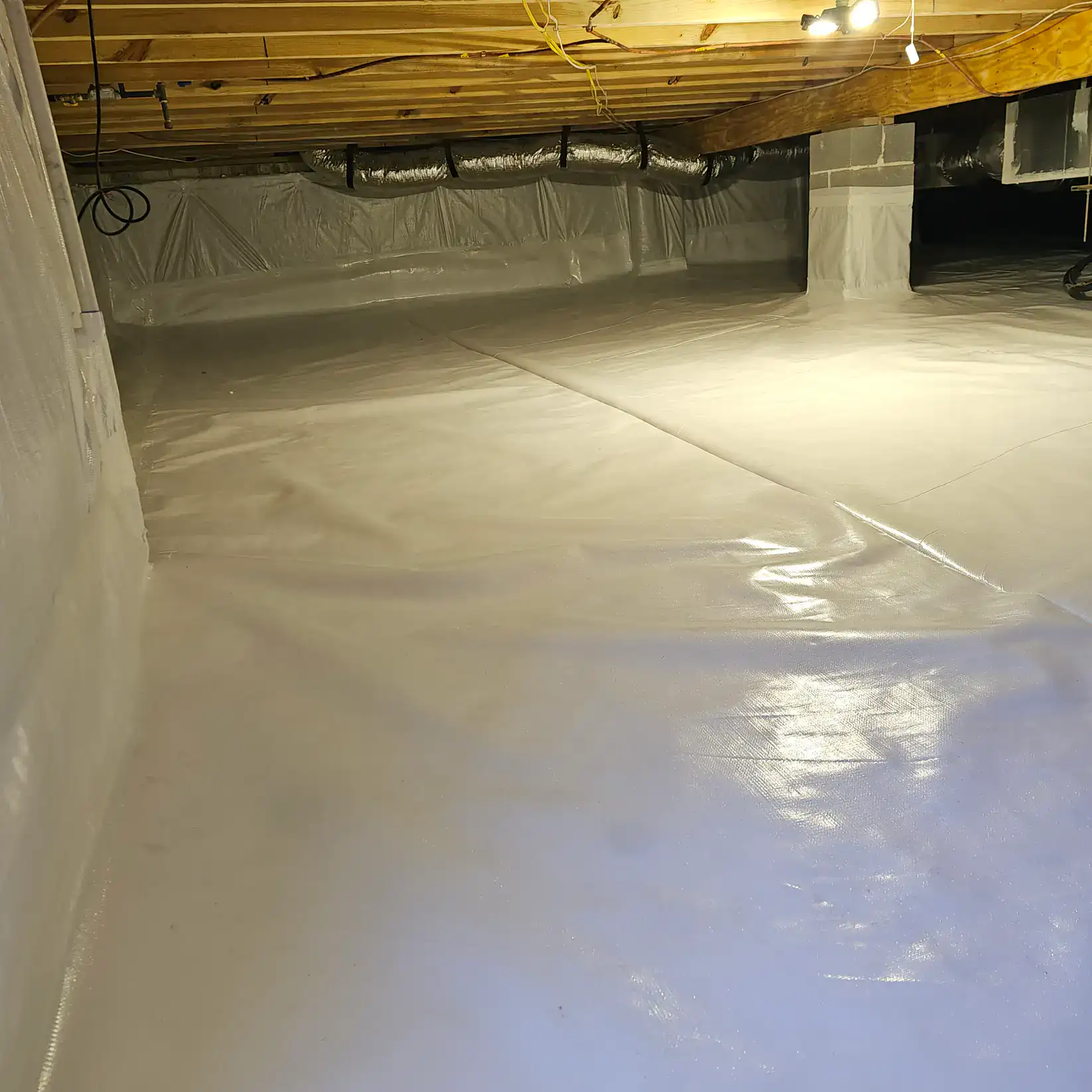
The final and most important step is moisture correction. Depending on what the inspection found, that might mean installing or upgrading a vapor barrier, adding a crawl space dehumidifier, improving drainage with a French drain system, or moving toward full encapsulation. Without this step, the remediation is temporary. The moisture conditions that produced mold the first time will produce it again.
We document everything — before and after — so you have a clear record of what was found, what was done, and what the crawl space looks like now.
North Carolina has no state-mandated mold remediation license. That’s not a technicality — it means any contractor can legally offer mold removal services without any formal training, certification, or demonstrated competency. In a market like Guilford County, where there are dozens of companies offering crawl space services, that creates a real problem for homeowners trying to make a good decision.
The credential that actually means something in this space is the IICRC AMRT — Applied Microbial Remediation Technician. It’s issued by the Institute of Inspection, Cleaning and Restoration Certification and represents training and proficiency in the ANSI/IICRC S520 standard, which is the accepted industry benchmark for professional mold remediation. It’s verifiable. You can look up any technician on the IICRC’s global locator before you hire them.
We hold that certification. We also hold NADCA certifications — ASCS and CVI — for air duct cleaning, which matters in crawl space mold situations because mold spores from the crawl space routinely enter your HVAC ductwork and get distributed through your home. Most companies handle the crawl space or the ducts. We’re equipped to address both in the same engagement, which closes a gap that often gets overlooked.
We’ve been working in Guilford County homes since the early 1990s. That’s not a marketing line — it means we’ve worked in the pre-war bungalows in Fisher Park, the mid-century ranches in Sunset Hills, the newer builds in Oak Ridge and Summerfield, and everything in between. The clay soil, the Piedmont humidity, the vented crawl spaces in older neighborhoods that were built long before anyone thought seriously about vapor management — we know what we’re dealing with here because we’ve been dealing with it for over 30 years.
We’re also BBB accredited with an A+ rating, carry 66 or more five-star Google reviews, and use HEPA-filtered equipment on every job. Before-and-after documentation comes standard. If you’re comparing companies, those are the things worth comparing.
The musty smell in your home isn’t a mystery — it’s a moisture problem that found a place to grow. In Guilford County’s climate, with its clay soil, humid summers, and older housing stock, crawl spaces are exactly the kind of environment where mold establishes quietly and spreads slowly. By the time you’re searching for answers, it’s usually been active for a while.
The good news is that it’s fixable. Real crawl space mold removal — done right, with proper containment, EPA-registered treatments, and moisture correction — solves the problem rather than postponing it. You stop treating symptoms and start addressing the source.
If you’re ready to find out what’s actually going on under your home, Clean Air LLC offers free inspections. No commitment, no guesswork — just a clear picture of what’s there and what it would take to fix it.
Summary:
Share: