
Contact Info
- Greensboro, NC 27406
- Call: 336-707-0498
- Text: 336-707-0498
-
Mon - Fri: 8am - 4pm
Sat - Sun: Closed
Contact Info
Searching for HVAC companies in Greensboro but not sure who handles mold? This guide breaks down exactly which type of company you need — and why it matters.
If you searched “HVAC companies Greensboro, NC” because something smells off when the air kicks on — or your allergies are worse inside than outside — you’re not alone. But here’s the thing most homeowners don’t find out until after they’ve made a call: not all HVAC companies handle mold, and most don’t touch ductwork at all. The company you need depends entirely on what the actual problem is. This guide breaks down the different types of HVAC-related companies in the Greensboro area, what each one does, and what Guilford County homeowners specifically should be looking for when mold prevention is the goal.
HVAC repair companies are skilled at what they do. They install systems, diagnose mechanical failures, replace components, and keep your heating and cooling equipment running. Greensboro has several well-established companies in this space — some have been around for decades and have large fleets and crews to match.
What they typically don’t do is clean your ductwork, test your indoor air quality, or remediate mold. That’s not a knock on them — it’s just a different trade. If your system isn’t heating or cooling properly, an HVAC repair company is the right call. But if you’re dealing with a musty smell, visible mold near your vents, or allergy symptoms that worsen every time the air runs, that’s a different problem requiring a different kind of company.
Here’s a scenario that plays out constantly in Greensboro summers: a homeowner notices their AC seems less efficient than it used to be. Maybe the house takes longer to cool down. Maybe there’s a faint smell when the system runs — nothing alarming, just off. They call an HVAC repair company, get a tune-up, maybe a refrigerant recharge, and the technician leaves. A few weeks later, the smell is back.
The issue wasn’t the equipment. It was what was living inside the ductwork.
Dirty ducts restrict airflow, which forces your air conditioning system to work harder to push air through the home. Over time, that extra strain shows up as reduced efficiency, higher energy bills, and uneven cooling — all of which look like AC problems but aren’t. The equipment is fine. The system carrying that air through your home is the issue.
This matters even more in Guilford County because of the climate. Summer humidity in the Piedmont regularly climbs above 70 percent. That moisture doesn’t stay outside — it works its way into your home, into your crawl space, and into the air your HVAC system is pulling and distributing. When humidity meets the dust, debris, and organic material that accumulates in ductwork over the years, you get the conditions mold needs to grow. Your AC runs, the air moves, and whatever is in those ducts gets pushed into every room.
The fix isn’t a refrigerant top-off. It’s cleaning the system that carries the air — and addressing the moisture source that’s feeding the problem. An air conditioning repair company can’t do either of those things. That’s where a certified duct cleaning and indoor air quality specialist comes in.
Greensboro and the surrounding Guilford County area have a combination of conditions that make mold a more persistent problem than most homeowners expect — and that most standard HVAC companies aren’t equipped to handle.
Start with the soil. Guilford County has heavy clay soil throughout much of the county. Clay retains water and drains slowly, which means moisture consistently pushes up against crawl space foundations. Older homes in neighborhoods like Fisher Park — the bungalows and craftsman-era houses that define a lot of Greensboro’s residential character — were built with vented crawl spaces that were standard practice at the time but are now understood to be a significant moisture liability in humid climates like ours.
Here’s the part that surprises most homeowners: up to 40 percent of the air you breathe upstairs in a Guilford County home comes from the crawl space. The physics of how air moves through a house — what’s called the stack effect — means that air is constantly being drawn upward from below. If your crawl space is damp or has mold growth, that air is carrying those contaminants directly into your HVAC system and into your living spaces.
So when a homeowner calls an HVAC repair company about a musty smell, the technician checks the equipment, finds nothing wrong mechanically, and moves on. The smell comes back because the source — moisture in the crawl space, mold in the ductwork — was never touched. Solving this correctly requires a company that understands the ductwork and the crawl space as a connected system, not two separate problems. That’s a fundamentally different scope of work than HVAC repair, and it requires different certifications to do it properly.
Want live answers?
Connect with a Clean Air LLC expert for fast, friendly support.
Once you understand that your problem is air quality and mold prevention — not a broken compressor — the next question is how to find a company that can actually fix it. The duct cleaning industry has a well-documented scam problem, and knowing what separates a legitimate operator from a bait-and-switch is worth understanding before you call anyone.
You’ve probably seen the ads: “$49 whole-house duct cleaning.” Those companies typically show up with residential shop vacuums, clean only the visible registers, and leave the trunk lines, coils, and air handler untouched. The ducts look clean at the opening. Everything behind that is exactly as it was.
NADCA — the National Air Duct Cleaners Association — is the professional body that sets the standard for how duct cleaning should be done. Their ACR standard covers assessment, cleaning, and restoration of HVAC systems, and their ASCS certification (Air Systems Cleaning Specialist) requires technicians to pass a written exam and maintain ongoing recertification.
More importantly, NADCA requires member companies to have at least one ASCS-certified technician on staff and to carry general liability insurance. That minimum bar alone filters out a large portion of the operators running the $49 bait-and-switch model.
When you’re vetting a company, you can verify NADCA membership directly at nadca.com — you don’t have to take anyone’s word for it. At Clean Air LLC, both Rick Watson (ASCS and CVI — Certified Ventilation Inspector) and Noah Watson (ASCS) are listed by name in the NADCA public directory. That kind of transparency is uncommon in this industry. Most companies that claim to be “certified” don’t name the specific individuals or point you to an independent directory where you can check.
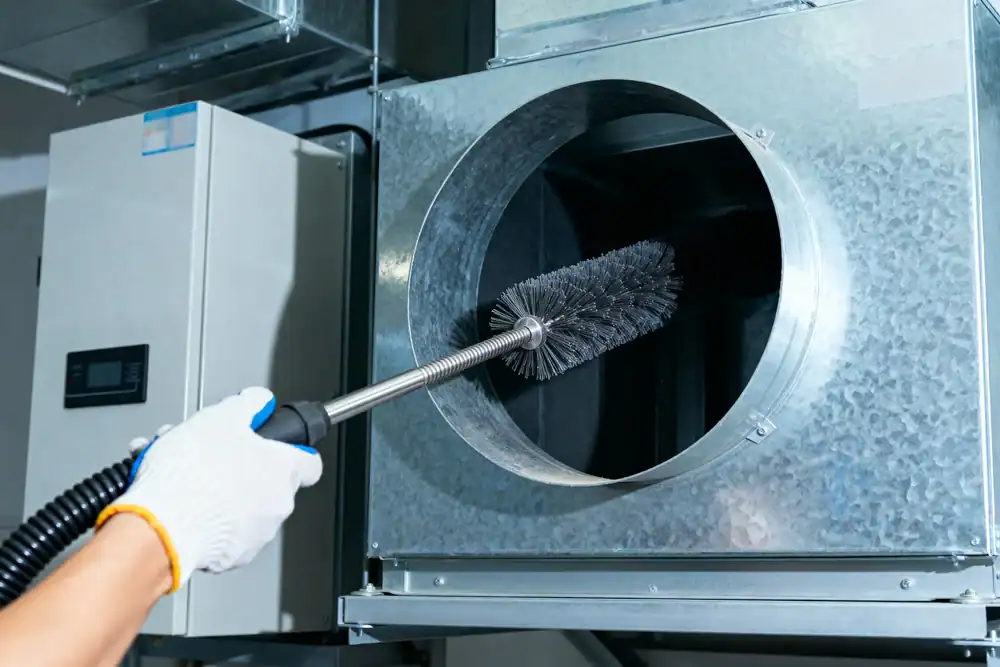
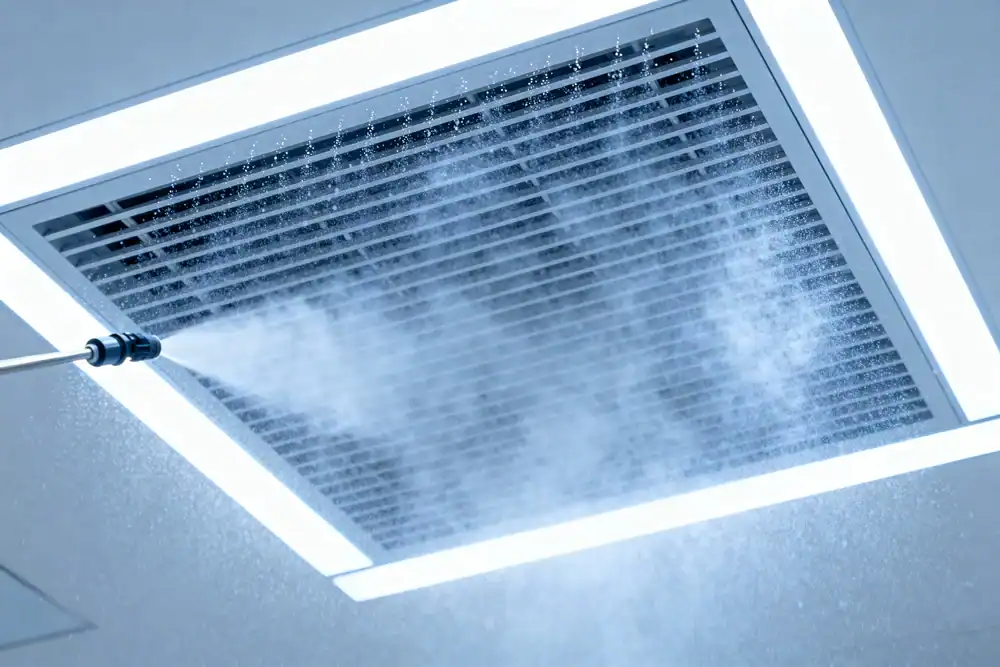
What does proper duct cleaning actually look like? It involves truck-mounted HEPA vacuum equipment that creates negative pressure throughout the entire duct system — not a shop vac at the register opening. It means cleaning both the supply and return sides separately, addressing the air handler, coils, and blower components, and providing before-and-after camera documentation so you can see exactly what was in your ductwork and confirm it’s been removed. If a company can’t show you what they found and what they removed, you have no way of knowing whether the job was done at all.
Properly remediating mold in an HVAC system legally and correctly requires two separate certifications — not one. The IICRC S520 standard is the professional benchmark for mold remediation. When an HVAC system is involved in a mold remediation project, that standard specifically directs contractors to also follow NADCA’s ACR protocol for the ductwork. In plain terms: you need IICRC certification for the mold work and NADCA certification for the duct work.
Most companies have one or the other. Very few have both. This is a real gap in the Greensboro market. Standard HVAC repair companies aren’t mold remediators. Most mold remediation companies aren’t NADCA-certified duct cleaners. The homeowner with mold in their ductwork often ends up calling two separate companies, getting two separate scopes of work, and hoping they coordinate — or they call a company that handles only part of the problem and wonder why the issue comes back.
At Clean Air LLC, we hold both NADCA certification and IICRC AMRT (Applied Microbial Remediation Technician) certification. We’ve been serving Guilford County homes since the early 1990s — more than 30 years — and we’ve cleaned thousands of homes across Greensboro, High Point, and the surrounding area. We understand how this region’s clay soil, crawl space construction, and summer humidity create conditions that make mold a recurring problem if the root cause isn’t addressed. That means we look at the ductwork and the crawl space together, not as separate jobs.
We also offer free inspections, so if you’re not sure what you’re dealing with, there’s no cost to find out. Most residential jobs take three to four hours, and we provide before-and-after camera documentation on every job so you have a clear record of the work.
Not every HVAC problem needs a duct cleaner, and not every musty smell needs an HVAC repair company. The key is knowing which type of problem you actually have — and matching it to the right type of company.
If your system isn’t heating or cooling, call an HVAC repair company. If you’re dealing with musty odors, worsening allergies, visible mold near your vents, or a home that’s never had its ductwork professionally cleaned, you need a certified indoor air quality specialist who can address the full picture — ducts, crawl space, moisture, and all.
Guilford County’s climate and housing stock make this more than a routine maintenance question. If you’ve been noticing something off and you’re not sure where to start, Clean Air LLC offers free inspections with no obligation. It’s a straightforward way to find out exactly what you’re dealing with before committing to anything.
Summary:
Share: