

Contact Info
- Greensboro, NC 27406
- Call: 336-707-0498
- Text: 336-707-0498
-
Mon - Fri: 8am - 4pm
Sat - Sun: Closed
Contact Info
Guilford County's EPA Zone 3 label gives many homeowners a false sense of security. Here's what the local data actually says about radon risk.
If you’ve looked into radon at all, you’ve probably come across North Carolina’s EPA zone map and noticed that Guilford County sits in Zone 3 — the lowest risk category. It’s easy to read that and move on. Most people do.
But “lowest average risk” is not the same as “no risk,” and the gap between those two things matters quite a bit when you’re talking about a gas that causes roughly 21,000 lung cancer deaths in the U.S. every year. The zone map was never designed to tell you whether your specific home is safe. It was designed to give policymakers a broad picture of regional geology.
What it actually means for your home in Greensboro, High Point, or anywhere else in Guilford County is a different conversation — and that’s exactly what we want to have with you here.
Radon is a naturally occurring radioactive gas that forms when uranium and radium in the soil and rock beneath your home break down. It seeps up through the ground, finds gaps in your foundation, and accumulates indoors — silently, with no smell, no color, and no warning.
Guilford County sits in North Carolina’s Piedmont region, on a foundation of gneiss, schist, and granite — rock types that contain higher concentrations of uranium and radium than the coastal plain geology to the east. That geology is why radon levels generally increase as you move from the coast toward the mountains, and why the Piedmont isn’t as low-risk as many homeowners assume.
Here’s a data point that rarely makes it into consumer-facing content: a USGS study of Guilford County groundwater found radon concentrations ranging from 37 to 6,300 picocuries per liter, with a median of 735 pCi/L — and the highest levels occurring in the northwestern parts of the county, where younger granites and biotite gneiss are most prevalent. That’s groundwater, not indoor air, but it reflects the same underlying geology that drives radon into your home.
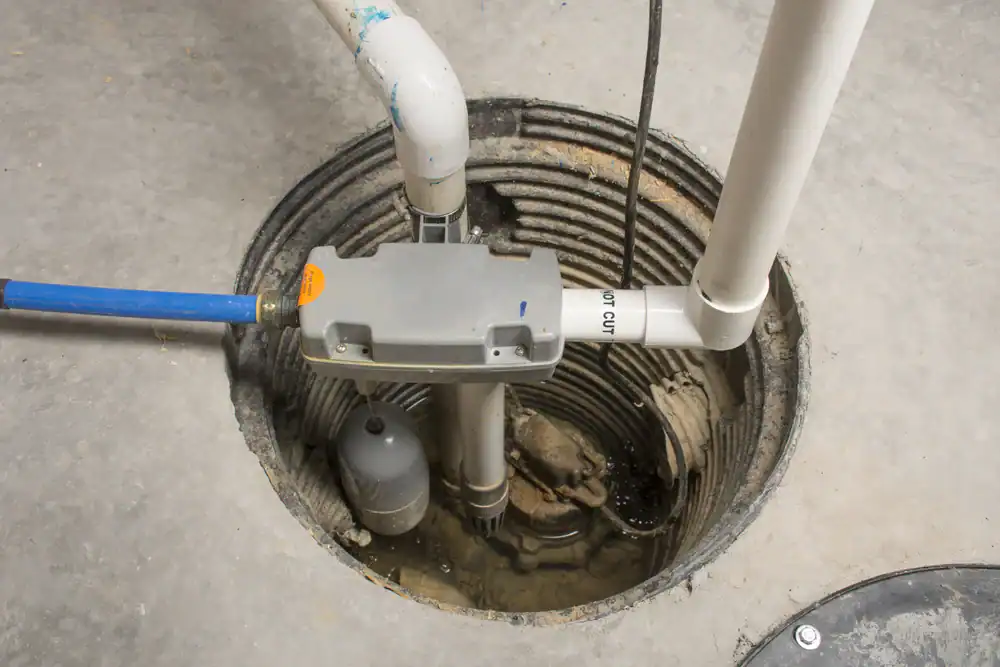
It does — significantly. Radon enters homes through the path of least resistance: cracks in concrete slabs, gaps around pipes, joints in foundation walls, and the open soil beneath crawl spaces. The more direct access the soil has to your living space, the easier it is for radon to accumulate.
Crawl space foundations are extremely common in Guilford County’s older housing stock. Neighborhoods in Greensboro like Fisher Park, Irving Park, and Lindley Park, and comparable communities throughout High Point, were largely built in an era when crawl spaces were standard and radon wasn’t on anyone’s radar. An unencapsulated crawl space is essentially an open channel between the soil and the air your family breathes. Even a partially encapsulated crawl space can leave gaps that allow radon to migrate upward.
This is one of the reasons we think about radon differently than most companies in this space. We’ve been cleaning and encapsulating crawl spaces in Guilford County since the early 1990s, and we’ve seen firsthand how much soil contact these homes have. Crawl space encapsulation helps with moisture and can reduce some radon entry points — but it is not a substitute for radon testing. The two issues overlap, but they’re not the same problem, and addressing one doesn’t automatically resolve the other.
Slab homes and newer construction aren’t immune either. The EPA is clear that all home types — slabs, crawl spaces, basements, condos, manufactured homes — should be tested. Radon doesn’t care how new your home is or how well it was built. What matters is what’s in the ground beneath it and how well sealed your foundation is.
One more thing worth knowing: your neighbor’s test result tells you nothing about your home. Radon levels can vary dramatically between two houses on the same street, depending on foundation details, soil permeability, and how the home is ventilated. Two adjacent homes can have readings on opposite ends of the spectrum. The only number that matters for your family is the one from your home.
The EPA’s radon zone map divides every U.S. county into one of three categories based on predicted average indoor radon screening levels. Zone 1 predicts averages above 4 pCi/L — the EPA’s action level. Zone 2 predicts averages between 2 and 4 pCi/L. Zone 3, where Guilford County sits, predicts averages below 2 pCi/L.
The county’s measured average from Air Chek test data is 1.4 pCi/L — below the EPA’s action level of 4 pCi/L. On paper, that sounds fine. In practice, it means that across all the homes tested in Guilford County, the average came out below the threshold. It says nothing about the distribution. Some of those homes tested at 0.5 pCi/L. Others almost certainly tested above 4 pCi/L. The average smooths all of that out.
Across North Carolina, 77 counties — including Zone 2 and Zone 3 counties — have had homes test above 4.0 pCi/L. The state’s overall average radon level across tested properties is 7.42 pCi/L, which is well above the national average of 1.3 pCi/L. That statewide number reflects a real geological reality that the zone map, on its own, doesn’t fully capture.
It’s also worth noting that Rockingham County — directly north of Guilford County — is classified as EPA Zone 1, the highest risk designation. That proximity doesn’t automatically elevate Guilford County’s risk, but it’s a reminder that the geology in this part of the state isn’t uniformly low-risk. The same granite and gneiss formations that drive elevated radon in Rockingham don’t stop at the county line.
The EPA itself is explicit on this point: the zone map is not intended to determine whether an individual home needs testing. It’s a planning tool. Testing is the only way to know what’s actually happening in your home, and the EPA recommends it regardless of zone classification.
Want live answers?
Connect with a Clean Air LLC expert for fast, friendly support.
One of the most common reasons people put off radon testing is uncertainty about what it costs — and more importantly, what it might lead to. But the numbers here are less intimidating than most people expect.
Professional radon testing in the NC market typically runs $100 to $200 for a standard test. DIY short-term test kits are available for $15 to $30, though they’re best used as an initial screen rather than a definitive result. If you’re buying or selling a home, or if you want documented results you can actually rely on, professional testing with certified equipment and lab analysis is the more defensible choice.
If your test comes back elevated, that’s where mitigation enters the picture — and it’s worth understanding what that actually involves before you assume the worst.
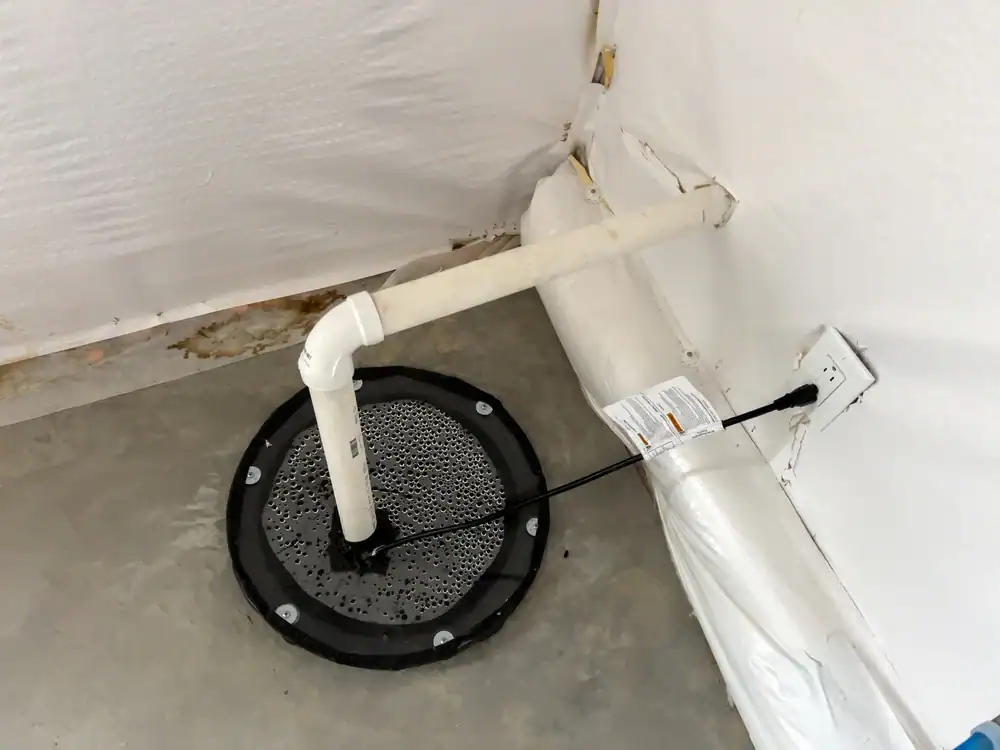
The standard approach to radon mitigation is called sub-slab depressurization. A contractor installs a pipe through the foundation slab or beneath the crawl space membrane, connects it to a fan, and vents the radon-laden air outside before it can accumulate indoors. It’s a well-established method that reduces radon levels by up to 99% in most homes.
In North Carolina, radon mitigation typically costs between $800 and $2,500, with most standard systems falling in the $1,000 to $1,500 range. The final cost depends on your foundation type, the severity of the radon levels, and the complexity of the installation. A crawl space home may require a different approach than a slab home, which is one reason a proper foundation inspection before any quote is essential — contractors who price a job without seeing your foundation are guessing.
The value framing here matters. Radon mitigation is a one-time investment that eliminates an ongoing cancer risk. It’s not a recurring service, it doesn’t require major renovation, and in most homes it’s completed in a single day.
After mitigation, the EPA recommends retesting within 30 days to confirm the system is working, and retesting again every two years. If you’ve had crawl space work done recently, that’s also a good trigger for retesting, since changes to your foundation can alter how radon enters the home.
One thing to know about hiring in North Carolina specifically: the state does not license radon contractors. That means anyone can hang out a shingle and call themselves a radon professional. The credentials to look for are NRPP (National Radon Proficiency Program) or NRSB (National Radon Safety Board) certification — both are nationally recognized, EPA-acknowledged programs that require passing an exam and ongoing continuing education. Asking for those credentials before you hire anyone is a reasonable and important step.
The NC Radon Program recommends testing every five years under normal circumstances, and retesting any time you make significant changes to your home — finishing a basement, altering your crawl space, adding HVAC equipment, or making structural changes that affect your foundation. If you’ve never tested, that’s the place to start, regardless of how long you’ve lived in the home.
Short-term tests run for two to seven days and give you a quick snapshot. Long-term tests run for 90 days or more and provide a more accurate picture of your annual average exposure, since radon levels fluctuate with seasons, weather, and how tightly your home is sealed. Winter months tend to produce higher indoor readings because homes are more closed up, which is why the EPA recommends closed-house conditions — windows and doors closed for at least 12 hours — before and during a short-term test.
For Guilford County homeowners specifically, the crawl space connection is worth revisiting here. If you’ve recently had your crawl space cleaned or encapsulated — something we do for a lot of homes in Greensboro and High Point — radon testing is a natural next step. Encapsulation addresses moisture, mold risk, and some radon entry points. But it doesn’t test the air. Knowing what’s actually in your home’s air after that work is done gives you a complete picture that encapsulation alone can’t provide.
We offer Air Quality Testing (AQT) as part of our indoor air quality services. We’ve been working in Guilford County homes for over 30 years, and we understand the specific conditions here — the clay soil, the crawl space prevalence, the older housing stock, the humidity that pushes 70% or higher in summer. Radon testing isn’t something we added as an afterthought. It fits into the same conversation we’ve been having with homeowners about air quality for three decades. If you’ve already invested in duct cleaning, crawl space work, or dehumidification, radon testing is the piece that completes the picture — because no amount of duct cleaning addresses a gas that’s coming up through your foundation.
Guilford County’s Zone 3 designation is real, and the county’s average indoor radon level of 1.4 pCi/L is genuinely below the EPA’s action threshold. That’s not nothing. But averages don’t protect individual families, and the only way to know your home’s actual radon level is to test it.
If you’ve never tested, or if it’s been more than five years, or if you’ve recently had crawl space or foundation work done, now is a reasonable time to take that step. Testing is inexpensive, the process is straightforward, and the information it gives you is genuinely useful — whether your levels come back low or elevated.
Clean Air LLC has been serving Guilford County homeowners since the early 1990s. If you have questions about radon testing, crawl space conditions, or your home’s overall air quality, reach out to us directly. We offer free inspections and we’ll give you a straight answer about what we find.
Summary:
Share: