
Contact Info
- Greensboro, NC 27406
- Call: 336-707-0498
- Text: 336-707-0498
-
Mon - Fri: 8am - 4pm
Sat - Sun: Closed
Contact Info
Not sure if that smell or those symptoms are worth a call? Here are five signs Guilford County homeowners shouldn't ignore.
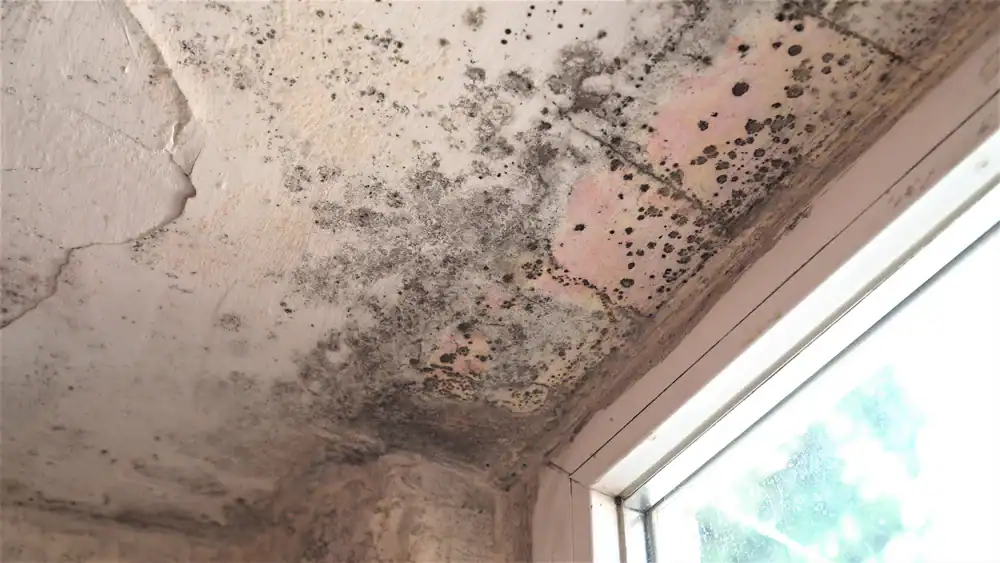
Most people picture mold as something obvious — a dark patch on the bathroom ceiling, or visible damage after a flood. But the kind of mold that causes real problems in Guilford County homes is usually the kind you can’t see at all. It’s growing in the crawl space, inside the ductwork, or behind a wall that looks perfectly fine from the outside. You might smell something off, or notice your allergies are worse indoors, and not connect the two. This page breaks down the five signs that a professional mold inspection is worth scheduling — and explains what that process actually looks like when it’s done right.
These aren’t obscure warning signs. Most homeowners who eventually discover a mold problem can look back and identify at least one or two of these — they just didn’t know what they were looking at yet.
The tricky part is that mold rarely gives you one clear, unmistakable signal. It tends to show up as a collection of smaller things that each seem explainable on their own. When you start seeing more than one, that’s when it’s worth getting a professional set of eyes on the situation.
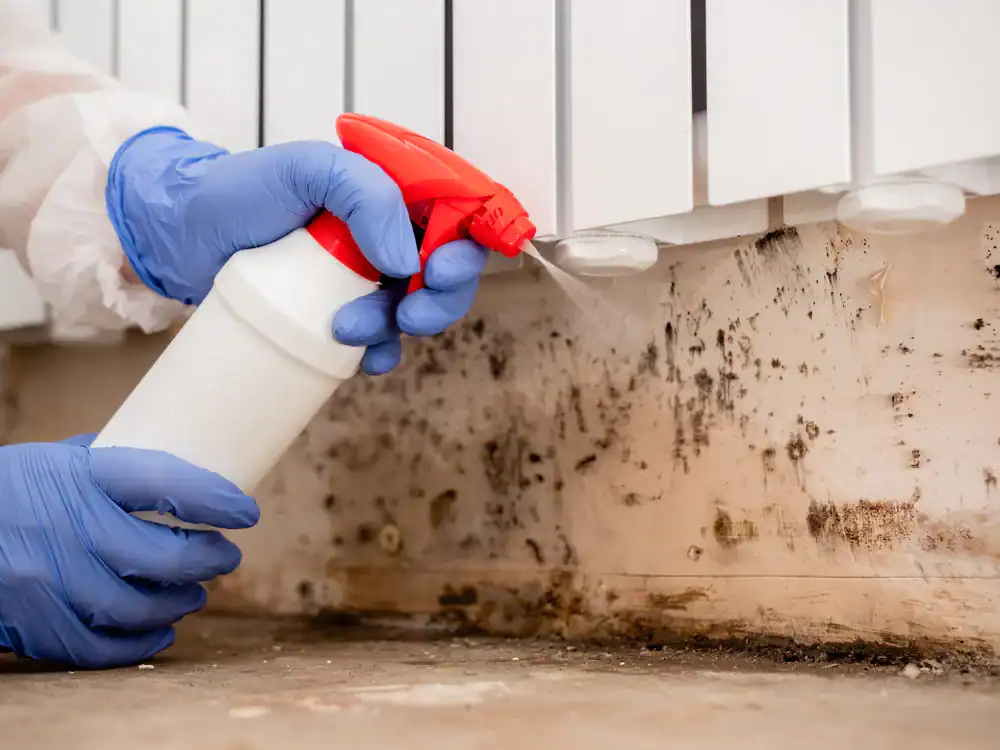
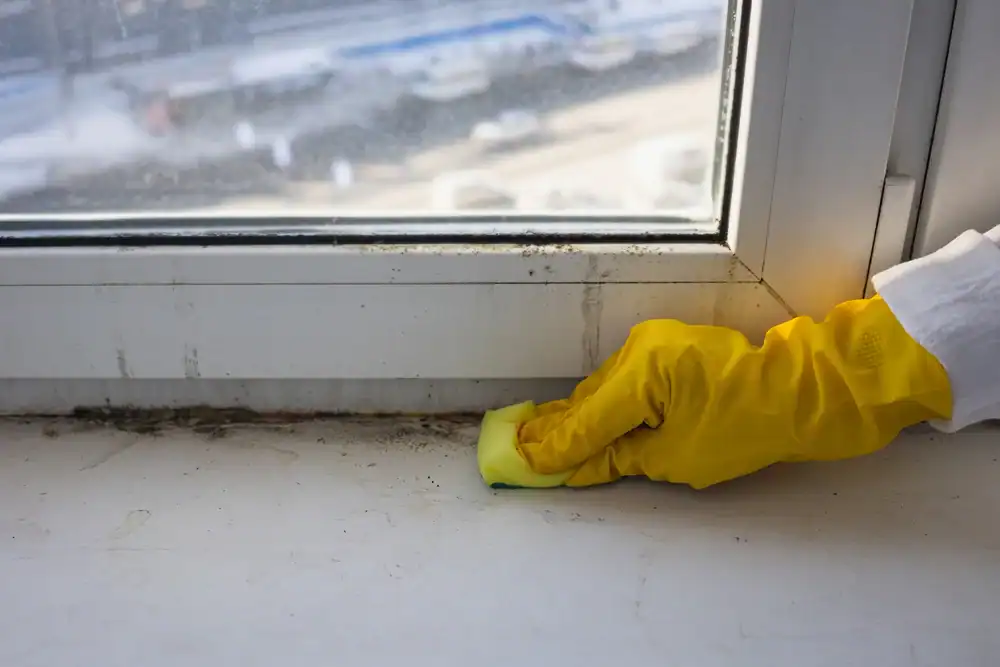
This is the most common thing people describe when they call us. Not a constant, overwhelming odor — just something that drifts through the house at certain times of day, or gets stronger in a specific room, or seems to kick up when the heat or air conditioning turns on. They’ve tried candles, air fresheners, cleaning the vents. Nothing fixes it for long.
That pattern — intermittent smell tied to HVAC cycles — is a strong indicator that mold is somewhere in the air distribution system or in the crawl space below. When the system kicks on, it pulls air from those spaces and pushes it through every vent in the house. The smell follows the airflow.
Here’s something most Guilford County homeowners don’t know: up to 40% of the air circulating through your home comes from the crawl space beneath your floors. In older homes across Greensboro neighborhoods like Fisher Park, Lindley Park, and Irving Park — most of which were built with vented crawl spaces — that means outside air, humidity, and whatever’s growing down there gets drawn up into your living space every time the system runs. A musty smell that tracks with your HVAC isn’t a minor nuisance. It’s your home telling you something is wrong at the source.
If you’ve noticed this and haven’t had the crawl space or ductwork inspected, that’s where the investigation needs to start.
This one gets dismissed constantly, because the default assumption is that allergies come from outside — pollen, trees, seasonal changes. But if your symptoms are consistently worse at home than they are at work, in the car, or outdoors, that pattern points inward.
Mold exposure tends to produce symptoms that look a lot like persistent allergies: runny nose, itchy or watery eyes, coughing, sinus congestion, skin irritation, and in more sensitive individuals, wheezing or shortness of breath. What distinguishes mold-related symptoms from typical seasonal allergies is that they don’t follow the seasons — they follow the building. They’re worse in winter when windows are closed and the HVAC is recirculating indoor air. They improve when you travel or spend extended time away from home.
The EPA estimates that indoor air is two to five times more polluted than outdoor air in many homes. Research from Lawrence Berkeley National Laboratory found that building dampness and mold raise the risk of respiratory and asthma-related health outcomes by 30 to 50 percent. About 4.6 million of the 21.8 million asthma cases in the U.S. have been linked to mold and moisture exposure in the home.
Children, elderly family members, and anyone with an existing respiratory condition are more sensitive — but mold affects people differently, and some individuals show no obvious symptoms while still experiencing low-grade inflammation over time. If someone in your household keeps getting sick and the doctor hasn’t found a clear cause, the indoor environment is worth investigating. A professional mold inspection is often the missing step.
Want live answers?
Connect with a Clean Air LLC expert for fast, friendly support.
A real mold inspection is more than a visual walkthrough. The most dangerous mold in a home is usually hidden — inside walls, under flooring, in ductwork, or deep in a crawl space — and it takes the right equipment and a systematic process to find it accurately.
Understanding what a thorough inspection covers also helps you evaluate who you’re hiring. In North Carolina, there’s no state licensing requirement for mold inspection, which means anyone can offer the service. Certifications, experience, and a documented process matter more here than in most trades.
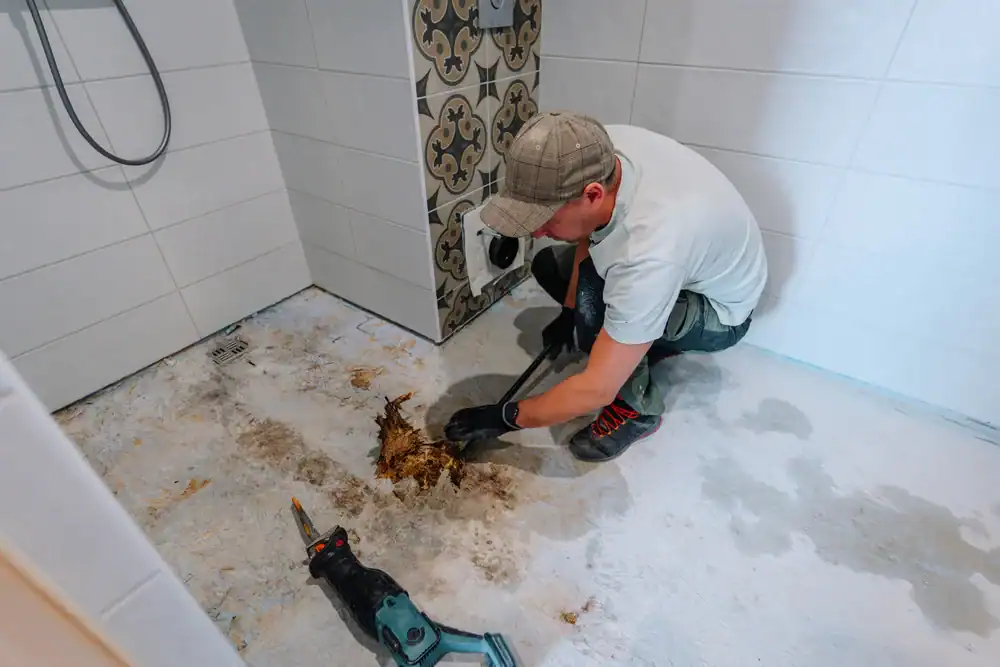
We don’t just look at surfaces — we use tools designed to find moisture and microbial growth in places that aren’t visible to the eye. Digital moisture meters measure water content inside walls and flooring without causing damage. Thermal imaging cameras reveal temperature differentials that indicate moisture intrusion behind drywall or under subfloor. Borescopes — small camera systems — allow us to see inside ductwork and wall cavities without tearing anything apart.
Air sampling is another component of our thorough inspection process. Spore trap cassettes collect air samples from inside the home, which are then sent to a certified laboratory for analysis. The lab identifies the types of mold present, their concentrations, and how those levels compare to an outdoor baseline sample. This matters because not all mold is equally hazardous, and context — species, quantity, location — determines the appropriate response.
Surface sampling, using tape lifts or swabs from suspect areas, gives additional information about what’s growing on specific materials. Together, these methods build a complete picture: not just whether mold is present, but where it’s coming from, how far it’s spread, and what’s driving it. That last part — identifying the moisture source — is what separates a useful inspection from one that just confirms a problem exists without explaining why.
We hold NADCA certifications in Air Systems Cleaning (ASCS) and Certified Ventilation Inspection (CVI), which means our process is grounded in the same standards used by the most rigorous HVAC and indoor air quality professionals in the industry. We’ve been serving Guilford County since the early 1990s, and the equipment and methods have evolved considerably — but the goal has always been the same: find the actual source, not just the symptoms.
Mold inspection isn’t one-size-fits-all, and Guilford County has a specific set of conditions that make crawl space assessment especially important here.
The county’s red clay soil drains poorly. Water pools near foundations after rain and seeps into crawl spaces slowly and persistently — not as a dramatic flood, but as a steady source of moisture that keeps humidity levels elevated. Pair that with the Piedmont Triad’s hot, humid summers, where outdoor relative humidity regularly sits above 70%, and you have conditions where a crawl space can sustain mold growth without any visible water damage or leaks at all.
Most older homes in Greensboro and High Point were built with vented crawl spaces — a design that was standard practice for decades. The idea was that ventilation would keep moisture levels down. In drier climates, it works reasonably well. In North Carolina, it does the opposite. Humid outside air flows into the crawl space, hits cooler surfaces, and condenses. That moisture feeds mold growth on floor joists, subfloor sheathing, and insulation — often for years before anyone notices.
Because up to 40% of a home’s circulating air originates in the crawl space, mold growing down there doesn’t stay down there. It gets pulled into the HVAC system and distributed through every room. This is why a mold inspection for a Guilford County home should always include a crawl space assessment — not as an add-on, but as a core component of the process.
We also offer soda blasting for mold removal from structural wood surfaces in crawl spaces — an eco-friendly method that’s effective on the porous materials where chemical treatments fall short. After remediation, we conduct follow-up air sampling to confirm that spore levels have returned to normal, giving you a documented baseline going forward.
If you recognized any of the signs above — a smell that tracks with your HVAC, symptoms that improve when you leave the house, visible discoloration, past water damage, or a crawl space that’s never been looked at — the next step is a professional assessment. Not a DIY test kit from the hardware store, which can only confirm that mold spores exist somewhere (they always do) without telling you the source, species, or severity. A real inspection, done by someone who knows what they’re looking for and has the equipment to find it.
The good news: you don’t have to pay to find out. We offer free inspections for Guilford County homeowners, which means there’s no financial barrier to getting an honest answer about what’s in your home’s air.
Clean Air LLC has been serving Guilford County since the early 1990s — more than 30 years of working in homes across Greensboro, High Point, Summerfield, Oak Ridge, and the surrounding Piedmont Triad. If you’ve been putting this off, now is a reasonable time to stop wondering and find out what’s actually there.
Summary:
Share: