
Contact Info
- Greensboro, NC 27406
- Call: 336-707-0498
- Text: 336-707-0498
-
Mon - Fri: 8am - 4pm
Sat - Sun: Closed
Contact Info
Basement mold doesn't just look bad — it affects the air your family breathes every day. Here's what professional removal actually involves.
You noticed the smell first. Maybe it was a dark patch on the wall, or your allergies flared up every time you went downstairs. Either way, you’re now wondering how serious this is — and whether the bleach spray you used last spring actually did anything.
It probably didn’t. Not permanently, anyway. Basement mold is one of those problems that looks like a cleaning issue but is actually a moisture issue. And until the moisture is addressed, the mold keeps coming back. This page explains exactly how professional basement mold removal works, why the process is more involved than most people expect, and what a complete solution actually looks like here in Guilford County, NC.
The short version: we don’t just remove what’s visible. We identify why mold grew in the first place, contain the work area so spores don’t spread through the rest of your home, remove or treat affected materials, and verify that the job is actually done before we leave.
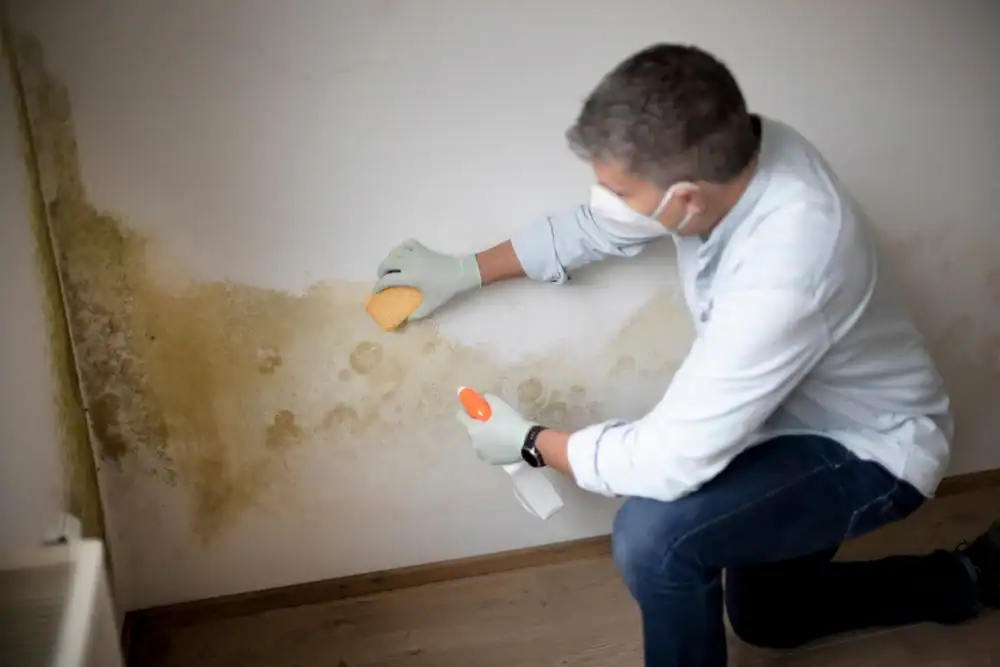
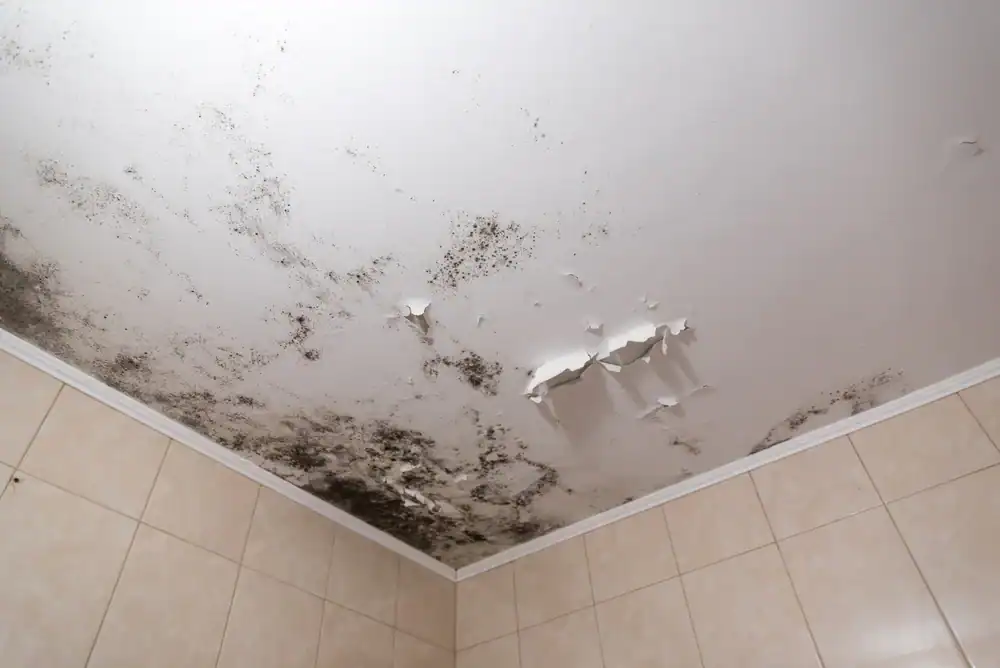
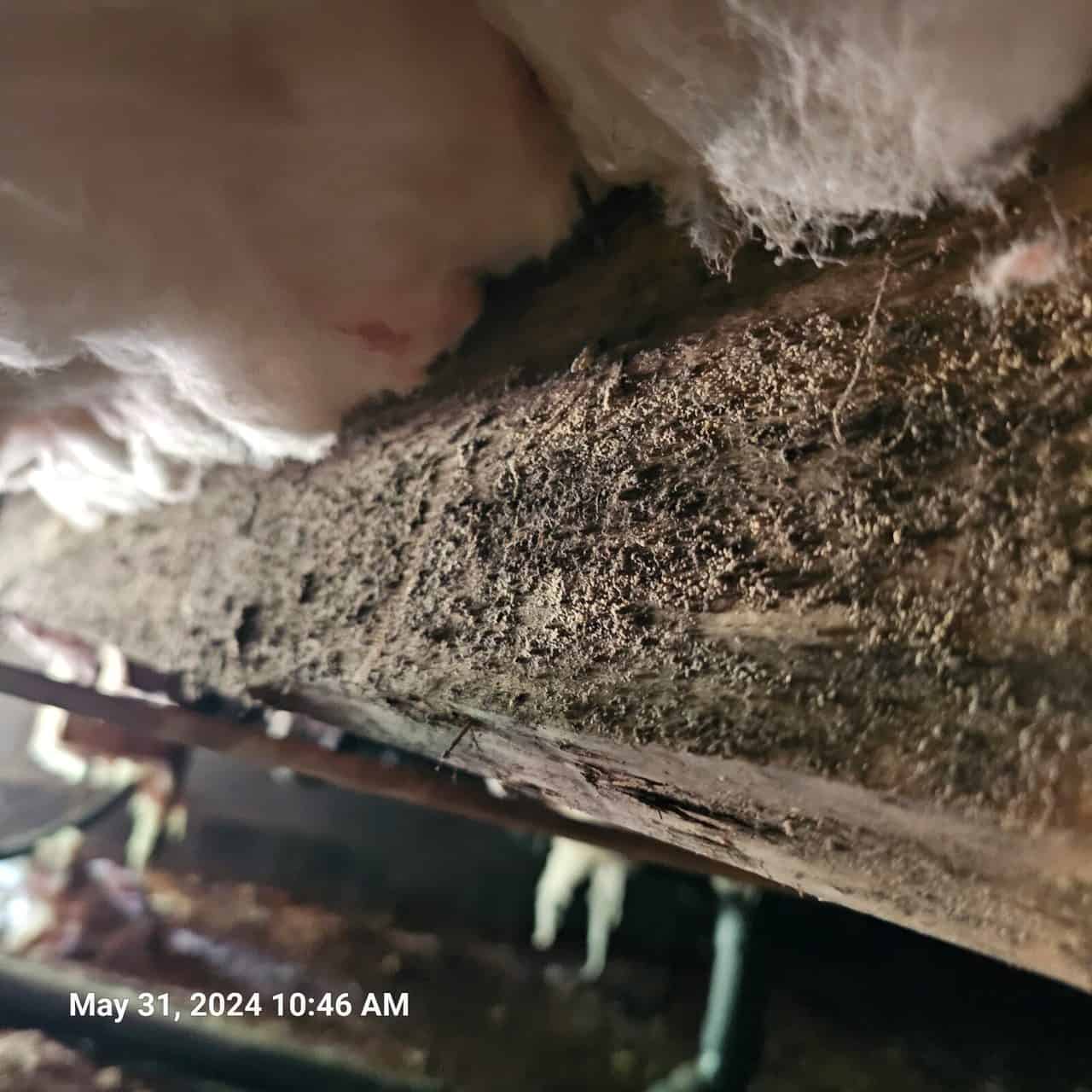
That process looks very different from wiping down a surface with a cleaning product. Mold penetrates porous materials — wood, drywall, insulation — and what you see on the surface is often just a fraction of what’s actually there. A proper inspection uses moisture meters and sometimes thermal imaging to find the full extent of the problem, including areas behind walls or under flooring that show no visible signs yet.
Here’s something most mold removal companies won’t tell you upfront: if your basement has a drainage problem, removing the mold without fixing the drainage is a temporary fix at best. The water will find its way back in, humidity will climb, and within a season or two, you’re dealing with the same situation again.
In Guilford County, this is a particularly common pattern. The Piedmont region’s clay-heavy soil holds water against foundation walls long after a rain event ends. Unlike sandy soil that drains quickly, clay keeps that moisture pressure against your basement walls for days. Over time, water seeps through cracks, mortar joints, and porous concrete — and once it’s in, it creates exactly the conditions mold needs to colonize: sustained moisture, a food source like wood or drywall, and temperatures that stay between 40 and 100 degrees year-round.
A basement drain system intercepts that water before it can pool on your floor or saturate your walls. There are two main approaches. An exterior French drain redirects water away from the foundation using a gravel-filled trench and perforated pipe, relying on gravity to move water away from the structure entirely. An interior perimeter drain captures water that’s already entered through the foundation and channels it toward a sump pump for removal. Both systems are passive and low-maintenance once installed — and both are significantly more effective at preventing mold than any treatment applied to the walls alone.
When we inspect a basement with recurring mold, drainage is one of the first things we look at. The Guilford County area sees roughly 44 to 45 inches of rainfall per year — above the national average — and that consistent moisture load has a way of exposing every weak point in a foundation over time. Fixing the drainage isn’t an upsell. It’s the reason the mold removal actually holds.
An interior drain system is installed along the perimeter of your basement floor, just inside the foundation wall. A shallow channel is cut into the concrete, a perforated pipe is laid in gravel, and the concrete is patched back over it. Water that seeps through the foundation walls flows down into that channel and gets directed to a sump pit, where a pump moves it out of the house entirely.
What makes this relevant to mold remediation is what happens to your basement’s humidity levels after installation. When water no longer sits against your walls or pools on the floor, the relative humidity in that space drops significantly. Mold needs humidity above roughly 60 percent to grow. A properly functioning interior drain system, paired with a dehumidifier maintaining the 40 to 60 percent range, removes the primary condition mold depends on. You’re not just treating the symptom — you’re eliminating the environment that creates it.
We install interior drain systems as part of a broader remediation approach when the inspection shows active water intrusion. In older Guilford County neighborhoods like Fisher Park, College Hill, and Westerwood, many homes were built on pier-and-beam foundations without any interior drainage infrastructure. Those homes can develop chronic moisture problems that no amount of surface treatment will resolve on its own. The drainage system is what changes the equation.
One thing worth knowing: the mold remediation and the drainage installation don’t always happen simultaneously, but they should be planned together. Remediating mold and then leaving an unresolved water intrusion problem is like patching a roof leak from the inside without ever fixing the shingles. The sequence matters. We assess both during the initial inspection so the remediation scope and any drainage work are coordinated from the start.
Want live answers?
Connect with a Clean Air LLC expert for fast, friendly support.
Remediation and restoration are related but different. Remediation is the removal and treatment phase — containing the work area, pulling out affected materials, applying antimicrobial treatment, and drying everything down. Restoration is what comes after: replacing drywall, repairing framing, reinstalling insulation, and verifying through clearance testing that mold levels have returned to normal.
The full arc from discovery to a finished, safe basement typically runs one to three days for smaller projects and up to a week or more for moderate contamination. Larger situations — where mold has spread through multiple wall cavities or affected structural framing — can take longer, particularly during Guilford County’s humid summer months when drying times extend.
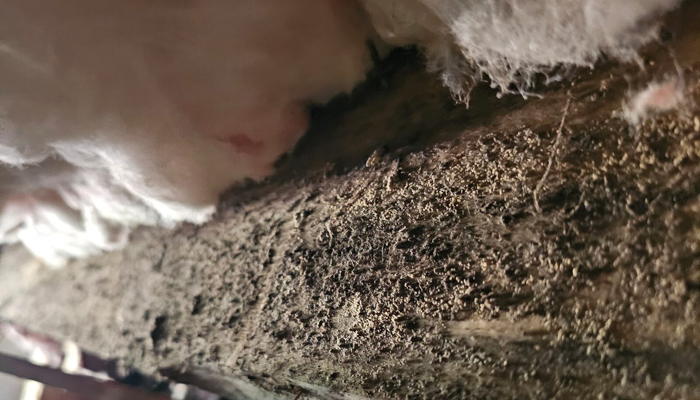
The process starts with a thorough inspection. Before any work begins, we need to know the full scope — not just what’s visible, but where the moisture is coming from, how far the mold has spread, and what materials are salvageable versus what needs to come out. Moisture meters and thermal imaging help identify hidden problem areas that a visual inspection alone would miss.
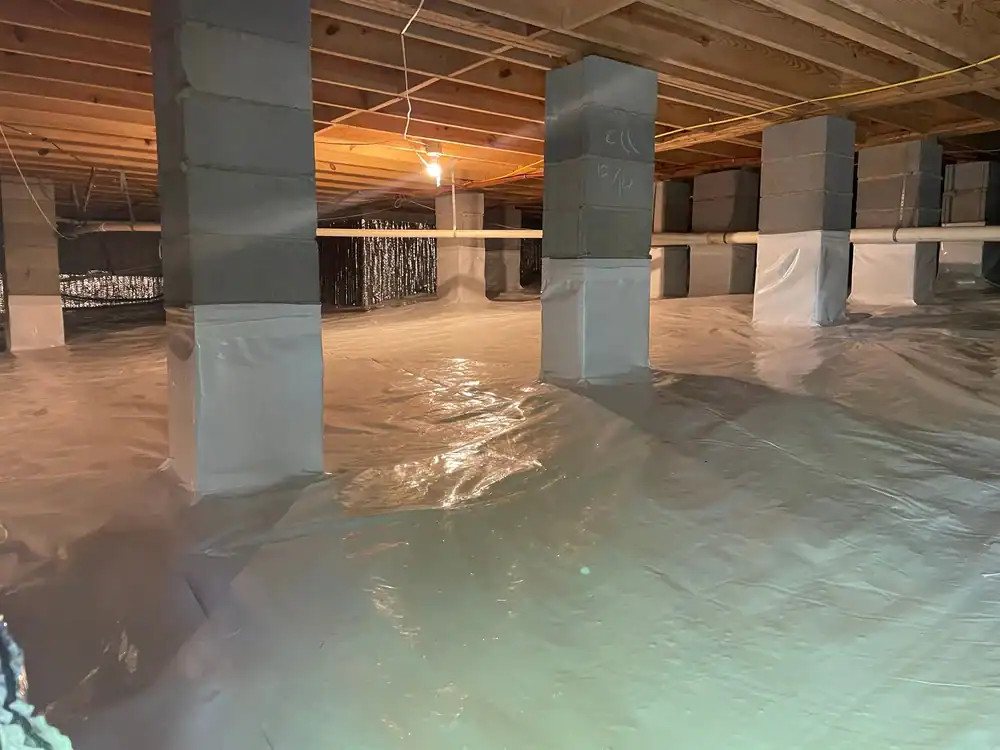
Once the scope is established, the work area gets contained. Polyethylene barriers seal off the basement from the rest of the house, and a HEPA-filtered negative air machine keeps the pressure inside the containment zone lower than the surrounding space. That pressure differential is what prevents mold spores from traveling into your living areas while work is underway. It’s a step that low-quality operators skip — and it’s the reason a poorly handled remediation can make whole-home air quality worse, not better.
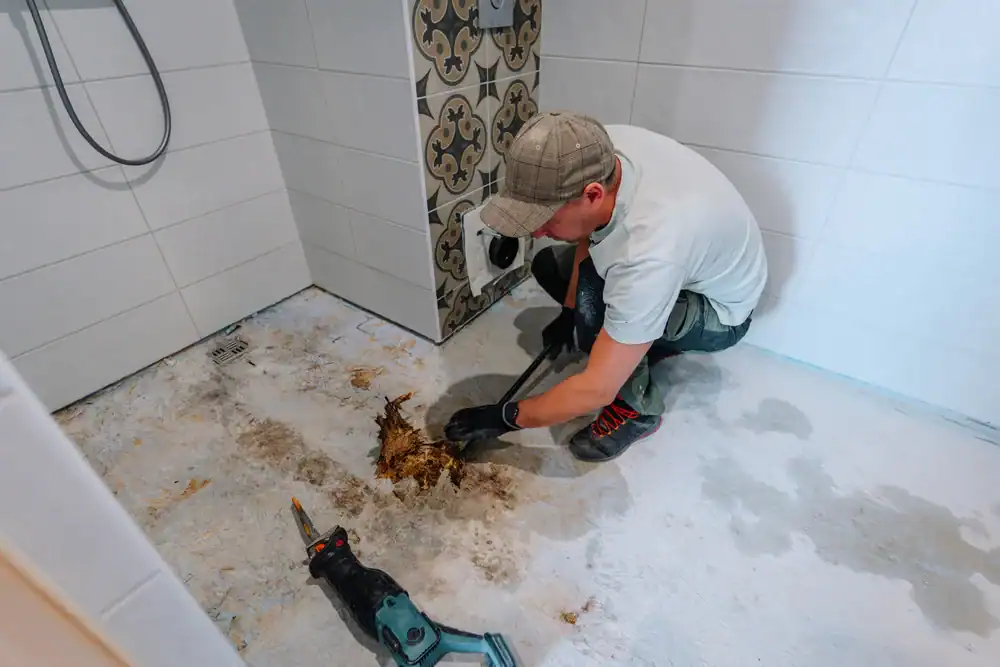
Physical remediation comes next. Porous materials that can’t be effectively cleaned — sections of drywall, compromised insulation, severely affected wood — are removed and properly disposed of. Surfaces that can be treated are HEPA-vacuumed, wiped down, and treated with an antimicrobial agent. For wood framing and structural surfaces, we use soda blasting: a method that uses sodium bicarbonate under compressed air to clean mold without damaging the wood underneath. It’s more thorough than chemical treatments on porous surfaces and doesn’t leave behind residue that can interfere with encapsulants or finishes.
After the physical work is done, the space needs to dry completely — wood moisture content should drop below 16 percent before any encapsulant or restoration work begins. Commercial dehumidifiers accelerate that process. Post-remediation clearance testing confirms that mold levels have returned to what the IICRC calls Condition 1, meaning the indoor spore ecology is consistent with normal outdoor baseline levels. That clearance documentation matters if you’re filing an insurance claim or planning to sell the home.
One of the most common questions we hear is whether you need to leave during remediation. For most projects, no. Proper containment means the work is isolated to the basement, and normal household activity can continue in the rest of your home. Larger projects with significant contamination — or situations where ductwork is involved — may require temporary relocation for a day or two, but that’s the exception rather than the rule. We’ll tell you upfront if that’s the case.
People also ask whether homeowners insurance covers basement mold removal. The honest answer is: it depends on your policy and the cause of the mold. Mold that results from a sudden, covered event — like a burst pipe — is more likely to be covered than mold from long-term moisture intrusion or a drainage issue that went unaddressed. What we can tell you is that having professional documentation — a written inspection report, a remediation plan, and a post-clearance certificate — gives you the strongest possible position when dealing with your insurer, regardless of coverage.
Another question that comes up often in Guilford County specifically: why does mold keep coming back even after treatment? The answer almost always traces back to unresolved moisture. The region’s clay soil and above-average rainfall create persistent water pressure against foundations, and without a drainage solution in place, that moisture continues to find its way in. We’ve worked in homes in Summerfield, High Point, and throughout the county where the mold had been “treated” two or three times by other contractors — each time without addressing the underlying drainage problem. A thorough inspection that evaluates both the mold and the moisture source is what breaks that cycle.
Finally, homeowners ask how they know a contractor is qualified to do this work. North Carolina has no state licensing requirement for mold remediation, which means anyone can legally offer the service. That makes voluntary credentials the only meaningful quality signal available to you as a consumer. Look for IICRC certification, NADCA membership, BBB accreditation, and verifiable local reviews — not just a website with stock photos.
Basement mold is a solvable problem. But the solution has to address the full picture — the mold itself, the materials it’s affected, the moisture source feeding it, and the humidity conditions that let it thrive. A process that handles only one of those pieces will leave you back where you started within a year.
We’ve been doing this work in Guilford County since the early 1990s. We know what Piedmont clay does to foundations. We know how the region’s humidity affects basements during a North Carolina summer. And we know that a permanent fix requires more than a treatment spray and a follow-up call.
If you’re dealing with basement mold — whether it’s a new discovery or a recurring problem you’re tired of managing — we offer free inspections with no pressure and no obligation. We’ll tell you exactly what we find, what it would take to fix it, and whether drainage is part of the answer. That’s where it starts.
Summary:
Share: