
Contact Info
- Greensboro, NC 27406
- Call: 336-707-0498
- Text: 336-707-0498
-
Mon - Fri: 8am - 4pm
Sat - Sun: Closed
Contact Info
Confused by wildly different crawl space quotes? This guide breaks down what each solution actually does and how to choose the right one for your home.
You got three quotes. One contractor says you need a vapor barrier. Another says full encapsulation plus a dehumidifier. The third says just a dehumidifier will do it. The prices range from $1,500 to well over $10,000, and none of them explained why their recommendation was different from the others.
That’s the situation a lot of Guilford County homeowners find themselves in — not because the problem is complicated, but because the industry does a poor job of explaining it. Here’s an honest breakdown of what each solution actually does, when each one makes sense, and how to figure out which one your crawl space actually needs.
These two terms get used interchangeably by a lot of contractors, which is part of why homeowners end up so confused. They’re related, but they’re not the same thing — and the difference has a real impact on what you’re paying for and what results you can expect.
A vapor barrier is a plastic liner that covers the dirt floor of your crawl space. Its job is to block ground moisture from evaporating up into the space. It’s the simpler of the two options, and in the right conditions, it does the job it’s designed to do.
Full encapsulation goes further. It covers the floor and the walls, seals the crawl space vents, and creates a controlled environment that’s largely separated from the outside air. Think of it as the difference between putting a tarp over a hole and actually sealing the room. Both address moisture, but they’re solving different magnitudes of the same problem.
The price difference between these two options reflects the scope of work — not a contractor upselling you for no reason. Professionally installed vapor barriers typically run in the range of $1.35 to $2.00 per square foot. Full encapsulation is a wider range, generally $3 to $10 per square foot depending on the size of the space, whether there’s existing mold or debris to address first, what kind of drainage is needed, and whether a dehumidifier is being added.
For a typical Guilford County home, full crawl space encapsulation often falls somewhere between $7,500 and $15,000 total when you factor in everything — cleaning, wall liner, vent sealing, drainage if needed, and a dedicated dehumidifier unit. That’s not a number contractors always lead with, and it can feel like a gut punch when you’re just trying to get rid of a musty smell.
That said, not every home needs the full package. If your crawl space humidity stays consistently below around 60% and you don’t have water intrusion through the walls or active drainage problems, a vapor barrier alone may be sufficient. The honest answer is that it depends on what’s actually happening in your specific crawl space — which is why a real inspection matters more than any general recommendation.
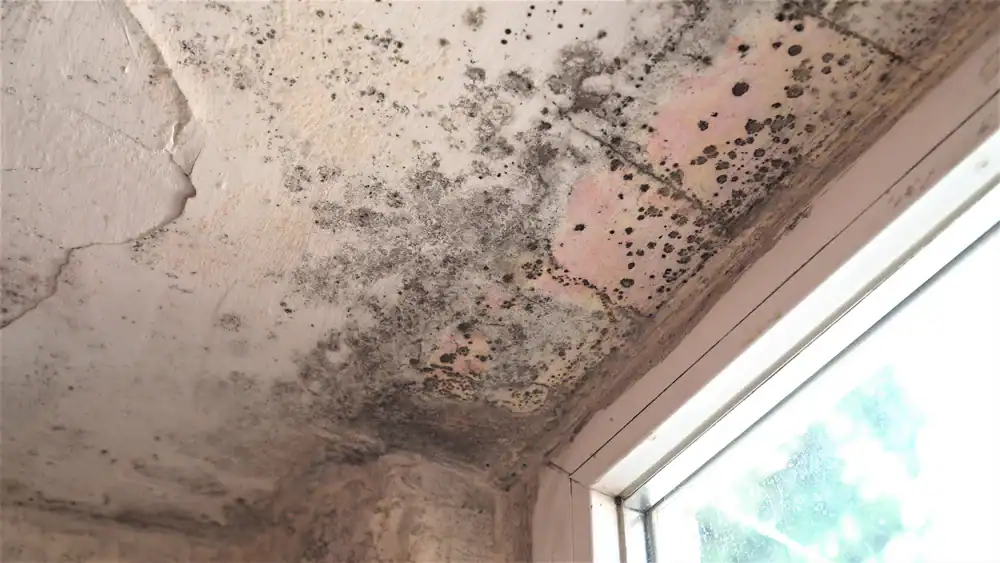
What drives the price up isn’t the materials alone. It’s the prep work. A crawl space that has mold on the joists, deteriorated old insulation hanging down, or standing water after a rain needs to be cleaned and dried before anything else goes in. Encapsulating a dirty crawl space just seals the problem inside. Any contractor who skips that step is cutting a corner that will cost you more later.
A vapor barrier makes sense when your main moisture source is ground evaporation — the moisture that rises naturally from the soil under your home. Bare soil releases a significant amount of moisture vapor every single day, and without a liner, all of that goes straight into your crawl space and eventually into your living space through the stack effect. A good vapor barrier stops that process at the source.
Where a vapor barrier falls short is when moisture is also entering through the walls, through vents, or from drainage issues around the foundation. If your crawl space walls are sweating in summer, if you’re seeing water pooling after heavy rain, or if your humidity levels are consistently high even after the ground is covered, a vapor barrier alone isn’t going to hold the line. That’s when encapsulation — sealing the walls and the vents — becomes the right call.
Guilford County’s soil composition plays into this more than most homeowners realize. The clay-heavy soils common throughout Greensboro, High Point, and surrounding areas retain moisture and move it toward foundations, especially on sloped lots. Homes built in the 1960s through the 1990s under older vented crawl space codes are particularly likely to have this problem, because those designs were never built to manage the moisture loads that North Carolina’s climate actually produces.
The short version: a vapor barrier is a legitimate starting point for moderate moisture issues, but it’s not a complete solution for a crawl space that’s dealing with humidity from multiple entry points.
Want live answers?
Connect with a Clean Air LLC expert for fast, friendly support.
This is the question that trips up a lot of homeowners. If you encapsulate, do you still need a dehumidifier? And if you install a dehumidifier, do you still need to encapsulate?
The honest answer to both is: usually yes. Encapsulation and a dehumidifier aren’t competing options — they’re complementary ones. Encapsulation controls what gets into the space. A dehumidifier manages what’s already there. Even a well-sealed crawl space will accumulate some moisture over time from residual soil vapor, minor air infiltration, and seasonal humidity swings. A dedicated crawl space dehumidifier set to maintain around 45–50% relative humidity is what keeps that sealed environment actually stable.
This is the experience a lot of homeowners have already had before they call us. They bought a portable dehumidifier, dragged it into the crawl space, and watched it run constantly — filling up every day, never actually bringing the humidity down to a reasonable level. It’s frustrating, and it’s not because the unit was broken. It’s because it was fighting an infinite moisture source.
In a vented, unencapsulated crawl space, outside air comes in freely. In Guilford County, where summer humidity regularly hits 70% — that’s 10 percentage points above the EPA’s mold-risk threshold of 60% — the air coming in through those vents is already saturated. A dehumidifier in that environment isn’t solving a problem; it’s just running in circles.
There’s also the matter of equipment. A residential portable unit from a hardware store is designed for a conditioned living space. It’s not built for the lower temperatures, higher humidity loads, and continuous-drain requirements of a crawl space. Undersized units run constantly without reaching target humidity. Oversized units short-cycle, which wears out the compressor faster and still doesn’t effectively dehumidify the space. A properly sized, professional crawl space dehumidifier is a different category of equipment — and sizing it correctly to your specific space is one of the most important parts of the installation.
A dehumidifier can be a meaningful part of the solution, but it needs something to work with. At minimum, a vapor barrier on the ground floor gives it a fighting chance. Full encapsulation gives it the controlled environment it’s actually designed to operate in.
When you’re looking at quotes that range from $1,500 to $15,000 for what sounds like the same job, the difference usually comes down to one of three things: the scope of work, the quality of materials, or what’s being left out.
A quote on the lower end of the range is often a vapor barrier only — ground coverage, no wall liner, no vent sealing, no dehumidifier. That’s a legitimate service for the right situation, but it’s not the same as a full encapsulation. If two contractors are quoting you different numbers and one of them is calling both options “encapsulation,” that’s a terminology problem that’s costing you clarity.
A full encapsulation quote should include a detailed breakdown: what’s being cleaned or removed first, what thickness of liner is going on the floor and walls, how the vents are being sealed, whether a drainage system or sump pump is part of the scope, and whether a dehumidifier is included or recommended as an add-on. If a contractor can’t walk you through those line items, that’s worth noting.
The other thing that drives price variation is what the crawl space actually looks like before the work starts. A clean, dry space with no mold and no drainage issues is a straightforward job. A space with deteriorated insulation hanging from the joists, visible mold on the wood framing, and pooling water after rain is a different project entirely — and the price should reflect that. We’ve been working in Guilford County crawl spaces for over 30 years, and no two are exactly alike. The clay soil, the summer humidity, the older housing stock — they all add up differently depending on the specific home.
That’s exactly why we offer free inspections. Not to give you a number over the phone, but to actually look at what’s going on in your crawl space and tell you what it needs — not what costs the most, not what’s easiest to sell. What your specific situation actually calls for.
If you’ve made it this far, you already have a better framework than most homeowners do when they start getting quotes. A vapor barrier addresses ground moisture. Full encapsulation controls the environment. A dehumidifier maintains it. And most of the time, the right answer involves more than one of those things working together.
What you don’t have yet is the one piece of information that actually determines which combination is right for you — what your crawl space looks like right now. Humidity levels, existing liner condition, drainage, mold presence, wall moisture — these are the variables that turn a general framework into a specific recommendation.
We’ve been doing this work in Greensboro, High Point, and across Guilford County since the early 1990s. If you want a straight answer about what your crawl space actually needs, reach out and schedule a free inspection. No pressure, no upsell — just an honest look at what’s going on under your home.
Summary:
Share: