
Contact Info
- Greensboro, NC 27406
- Call: 336-707-0498
- Text: 336-707-0498
-
Mon - Fri: 8am - 4pm
Sat - Sun: Closed
Contact Info
Not all French drains are installed the same way. Here's what separates interior from exterior systems — and how to know which one fits your situation.
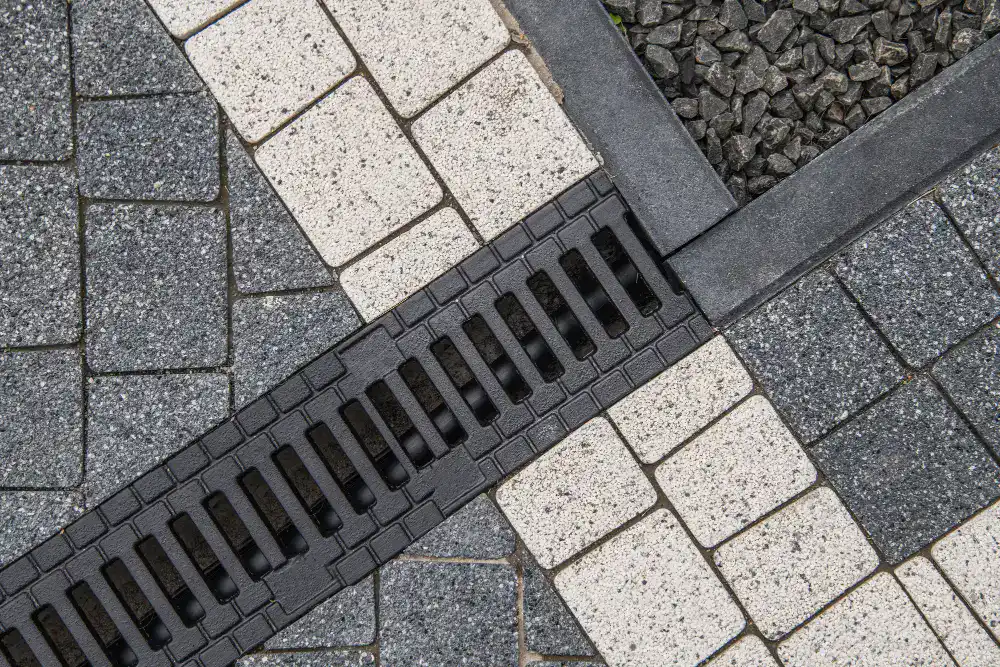
If you’ve got water getting into your crawl space or basement, you’ve probably come across the term “French drain” more than once. It sounds straightforward enough, but once you start digging into it — no pun intended — you realize there are two very different ways to install one, and they’re not interchangeable. Interior systems and exterior systems each have their place, and the right choice depends on your home, your soil, and how the water is actually getting in. Here’s a clear breakdown of both methods so you can walk into any conversation with a contractor knowing exactly what you’re looking at.
An interior French drain doesn’t stop water from reaching your foundation — it manages water once it’s already made its way inside the perimeter. A trench is cut along the inside edge of your basement or crawl space floor, down to the base of the footing. Perforated pipe wrapped in a filter fabric sock is laid in a bed of washed gravel, and the concrete is patched back over it. That pipe channels water toward a sump basin, where a pump pushes it away from the house.
It’s a controlled, efficient system that works with the reality of how water behaves in the soil rather than trying to hold it back entirely. For most existing homes in Guilford County, it’s also the more practical option — no major excavation, no tearing up landscaping, and installation typically wraps up in one to two days.
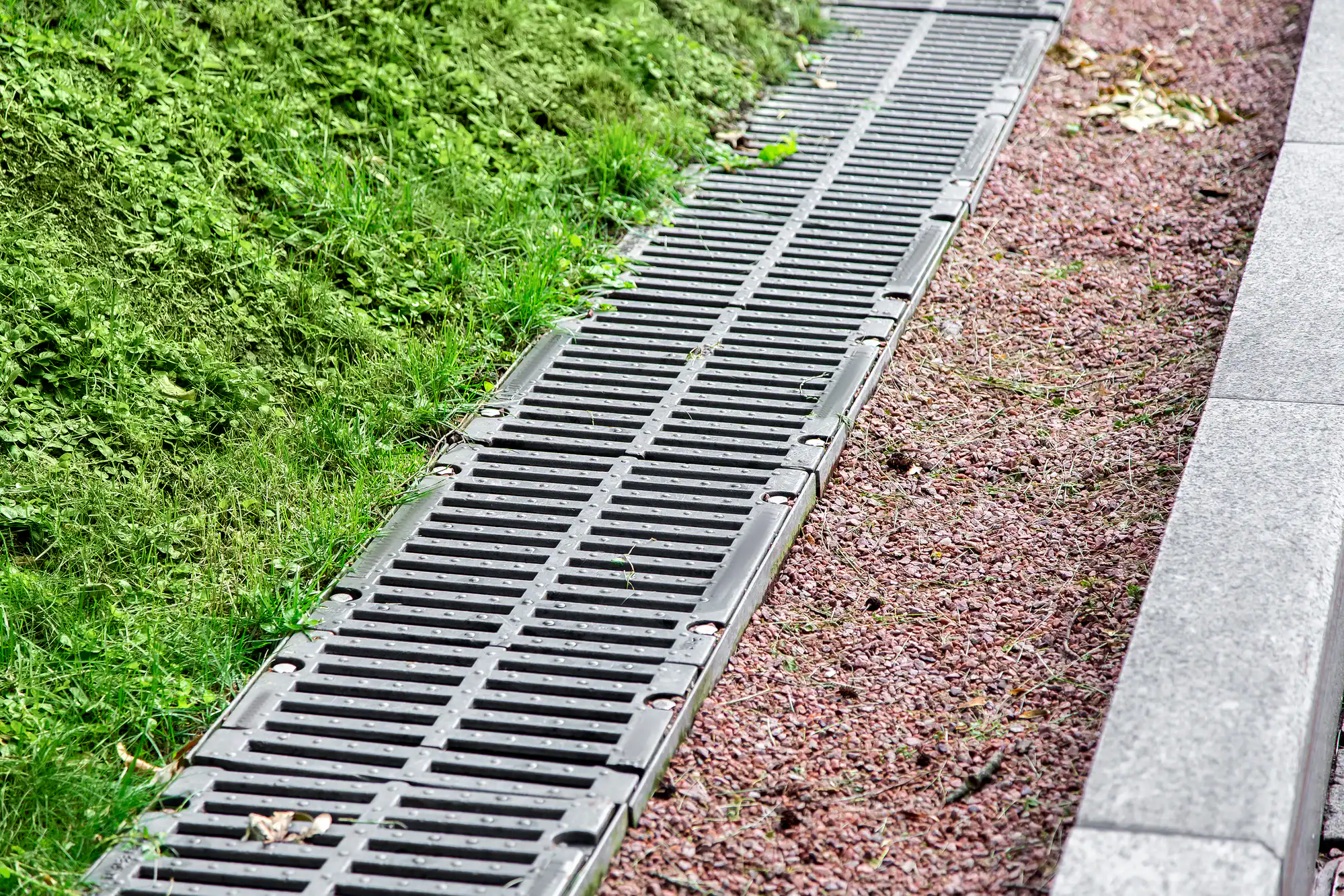
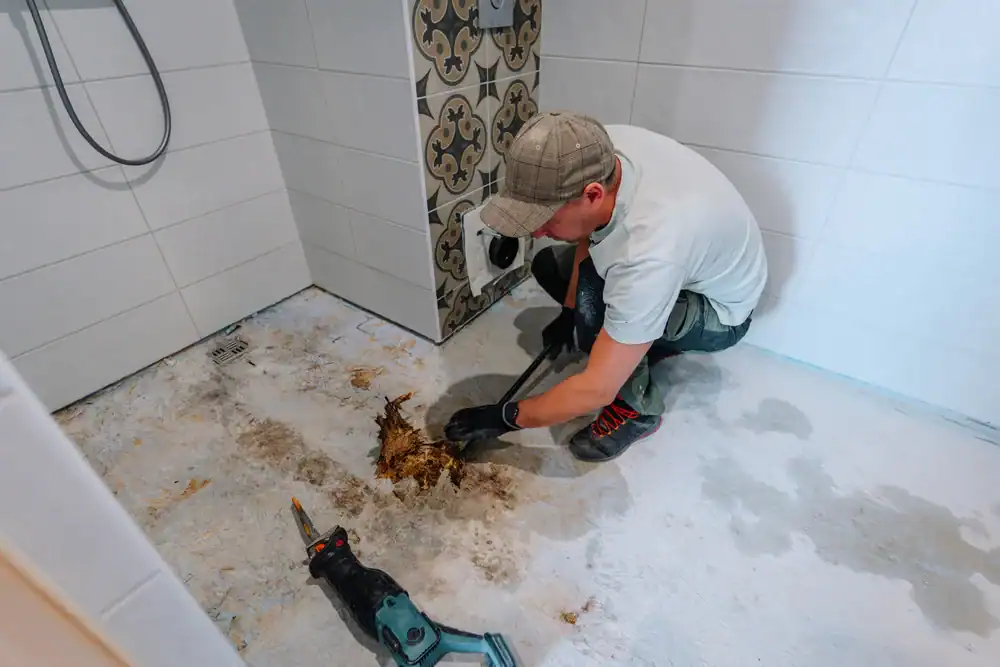
The process starts before a single tool touches your floor. Our crew will cover surfaces, seal off the work area, and protect your home from the concrete dust that cutting generates. That step gets skipped by a lot of contractors, and it matters — concrete cutting is messy, and the dust gets into everything if the space isn’t properly contained.
Once the prep is done, a strip of concrete is cut and removed along the interior perimeter, usually about 12 to 18 inches wide. The trench is dug down to the level of the footing — that’s the structural base your foundation walls sit on. This depth is important. A shallow trench won’t intercept the water at the right point, and the system won’t drain properly.
Washed gravel goes in first, then the perforated pipe — wrapped in filter fabric to keep soil and sediment from clogging the perforations over time. More gravel covers the pipe, and then the concrete floor is restored. The pipe runs to a sump pit, typically installed in a corner of the basement or crawl space, where a pump takes over and discharges the water away from the foundation.
The slope of the pipe is a detail that separates a well-installed system from one that fails quietly. Water doesn’t move on its own without gravity. A proper installation maintains a consistent grade — roughly one inch of drop per eight feet of pipe — so water flows toward the sump rather than sitting in low spots and eventually backing up. It’s a small thing that makes a significant difference over the life of the system.
For Guilford County homes, this process has one more layer of complexity worth understanding. The Cecil sandy clay loam soil that dominates this area holds water for a long time after rain. It doesn’t drain naturally, which means the hydrostatic pressure — the force that pushes water through your foundation walls and up through the cove joint at the base of the floor — builds up faster here than it would in sandier soil. An interior French drain is specifically designed to relieve that pressure by giving the water somewhere to go before it becomes a problem inside your living space.
In some cases, a single-wall or partial installation isn’t enough. If water is entering from multiple directions — which is common in Guilford County during heavy rain events — a full-perimeter interior drain provides more complete coverage. Installing a French drain around the house interior means the entire floor perimeter is protected, not just the wall where you first noticed the problem.
This matters more than it might seem. Homeowners often discover moisture in one corner and assume that’s the only entry point. But water follows the path of least resistance, and in clay-heavy soil, that path can shift depending on how saturated the ground is. A system that only addresses one wall may hold up fine in a moderate rain and fail completely when a storm drops several inches in a short window.
Tropical Storm Chantal in July 2025 dropped over ten inches of rain in parts of central North Carolina in a single event. The Haw River crested more than four feet above flood stage. Groundwater levels across Guilford County spiked, and homes that had never shown signs of moisture suddenly had water where there had never been water before. That kind of event exposes every weak point in a drainage system — or the absence of one.
A full-perimeter interior installation is also what makes the most sense when you’re pairing the drain with a sump pump and crawl space encapsulation . The drain collects water from every direction, routes it to the sump, and the pump clears it out. The encapsulation then seals the space from ambient humidity. Each piece reinforces the others, and the result is a crawl space that stays consistently dry rather than cycling between wet and dry depending on what the weather does.
One thing worth knowing: an interior French drain is not the same as a sump pump, and a sump pump alone is not the same as a French drain. They work together. The drain is the collection system; the pump is the discharge mechanism. Installing one without the other leaves the system incomplete.
Want live answers?
Connect with a Clean Air LLC expert for fast, friendly support.
An exterior French drain takes a different approach entirely. Instead of managing water that’s already reached the foundation, it intercepts water in the soil before it ever gets there. The installation requires excavating down to the footing on the outside of the foundation walls — which means digging several feet deep around the perimeter of your home.
For new construction, this is relatively straightforward. For an existing home, it’s a significant undertaking. Landscaping, driveways, patios, and anything else along the foundation line has to be moved or removed. The excavation exposes the foundation wall, which is then waterproofed with a membrane before the drainage pipe and gravel are installed and the trench is backfilled.
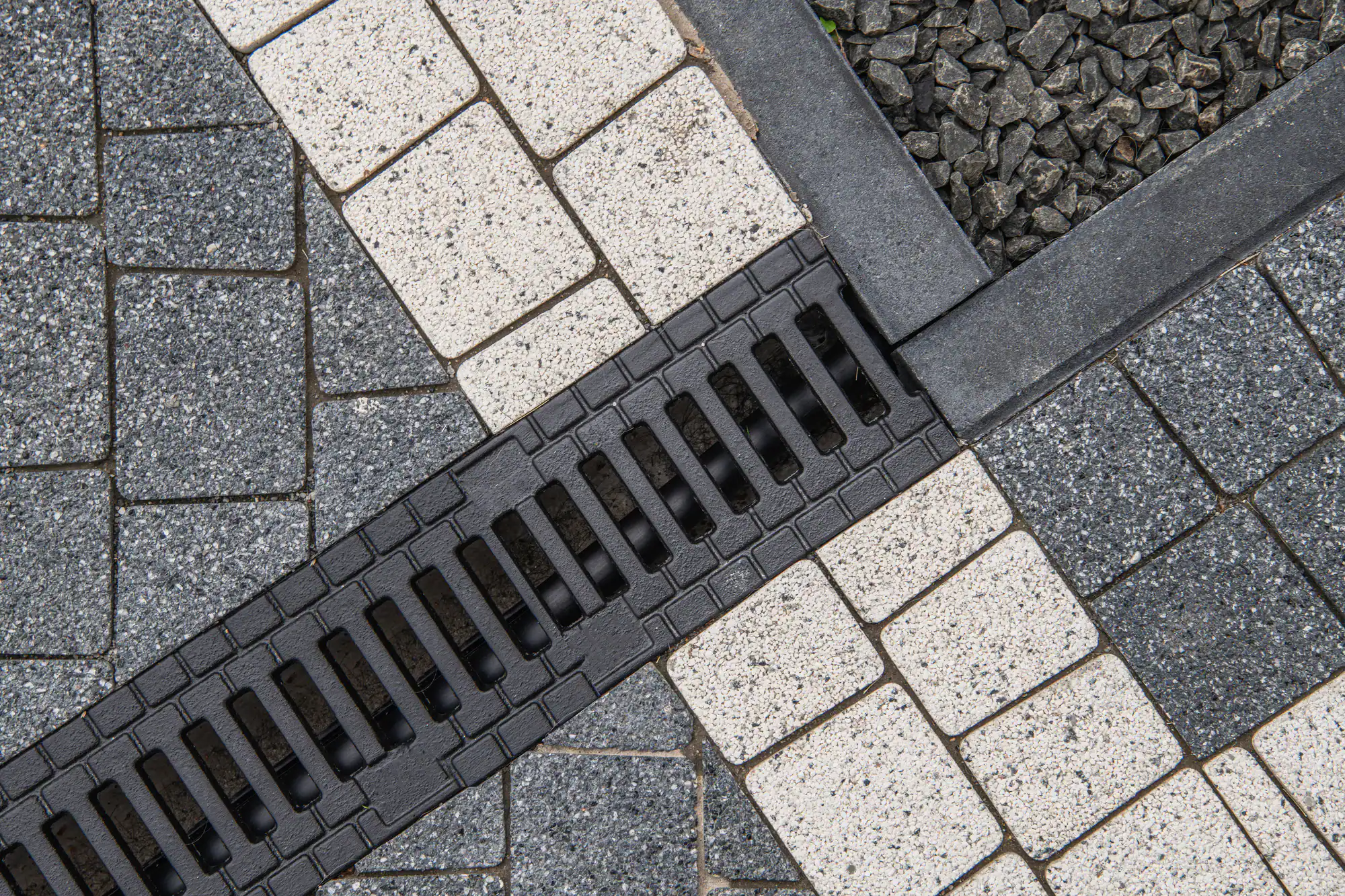
The cost difference between these two approaches is substantial. Interior French drain installation for a typical Guilford County home runs roughly $3,000 to $7,000, depending on the size of the space and whether a sump pump is being added or upgraded. Exterior systems, once you factor in excavation, foundation waterproofing membrane, labor, and landscape restoration, can run $5,000 to $15,000 or more. Some full exterior waterproofing projects land well above that.
That gap exists because of what exterior installation requires physically. Heavy equipment, significant labor, and the time to do it right — exterior excavation on an existing home is not a quick job. It also introduces more variables. Digging too close to the foundation without the right precautions creates structural risk. The footing needs to be exposed carefully, and the membrane needs to be applied correctly to do its job.
For most Guilford County homeowners dealing with crawl space moisture or basement seepage, the interior system offers the better value proposition. It costs less, disrupts less, and can be completed in a fraction of the time. The tradeoff is that it manages water rather than diverting it — but for the majority of residential moisture problems, that’s exactly what the situation calls for.
Where exterior systems earn their cost is in new construction, in cases where the foundation wall itself is damaged and needs to be exposed and repaired anyway, or in situations where the water volume is extreme enough that intercepting it before it reaches the foundation is the only viable long-term solution. A thorough inspection of your property — the grading, the soil saturation, the entry points — is the only reliable way to know which scenario you’re in.
It’s also worth noting that some homes benefit from both. An exterior drain handles the bulk of surface and subsurface water, while an interior system serves as a secondary line of defense for any water that makes it through. This combination is less common for residential properties in Guilford County but comes up in older homes in neighborhoods like Fisher Park or Sunset Hills, where the foundation construction predates modern waterproofing standards by several decades.
One of the most common questions we hear is whether a French drain will actually prevent mold. The short answer is yes — indirectly, and significantly. Mold needs moisture to grow, and a crawl space that stays wet after every rain is exactly the environment mold thrives in. When a French drain keeps that space dry, you remove the primary condition mold depends on. This matters especially in Guilford County, where summer dew points regularly climb above 65°F in July and August. Even without direct rainfall, the ambient humidity in an unsealed, undrained crawl space is enough to sustain mold growth. A drainage system is the first step; encapsulation and a dehumidifier complete the picture.
Another question that comes up often: do you need a permit to install a French drain in Guilford County? It depends on the scope of the work. Interior installations that involve breaking concrete and connecting to a sump pump system may require a building permit through Guilford County’s Planning and Development department. Any work that ties into existing plumbing or municipal drainage systems will typically require a licensed plumbing contractor. We can walk you through what’s required for your specific project before work begins.
People also ask whether they can install a French drain themselves. Technically, yes. Practically, it’s a project where the margin for error is real. A pipe that’s laid without a consistent slope won’t drain. A sump basin that’s undersized for the water volume will fail during a heavy storm. Filter fabric that’s skipped or installed incorrectly leads to clogged perforations within a few years. The cost of fixing a poorly installed system — tearing up the concrete again, replacing the pipe, re-grading the trench — often exceeds what professional installation would have cost in the first place.
Finally, homeowners regularly ask how long a French drain lasts. A properly installed interior system with a filter sock and adequate gravel bed can last 30 to 40 years with minimal maintenance. The sump pump itself needs attention every 8 to 12 years. The most common failure point isn’t the drain itself — it’s the pump, which is why pump condition and capacity matter when the system is first installed.
Interior and exterior French drains solve the same underlying problem from different angles. Interior systems are the more practical and cost-effective choice for most existing homes — they manage water efficiently, install quickly, and pair well with encapsulation and dehumidification to create a complete moisture control system. Exterior systems offer more comprehensive diversion but come with higher cost and disruption, making them the right call in specific situations rather than the default.
What matters most is an honest assessment of what’s actually happening with your water — where it’s coming from, how it’s entering, and what the soil and grading around your home are doing. Guilford County’s clay soil and humid climate make drainage a real issue for a lot of homeowners here, and the right system, installed correctly, makes a lasting difference.
If you’re trying to sort out what your home actually needs, we’ve been doing this work in Guilford County since 1991. We offer free property evaluations, no pressure, and a straight answer about what we’re seeing and what we’d recommend.
Summary:
Share: