
Contact Info
- Greensboro, NC 27406
- Call: 336-707-0498
- Text: 336-707-0498
-
Mon - Fri: 8am - 4pm
Sat - Sun: Closed
Contact Info
Most Greensboro mold companies won't tell you what it costs. Here's the honest breakdown — with local numbers, real factors, and no runaround.
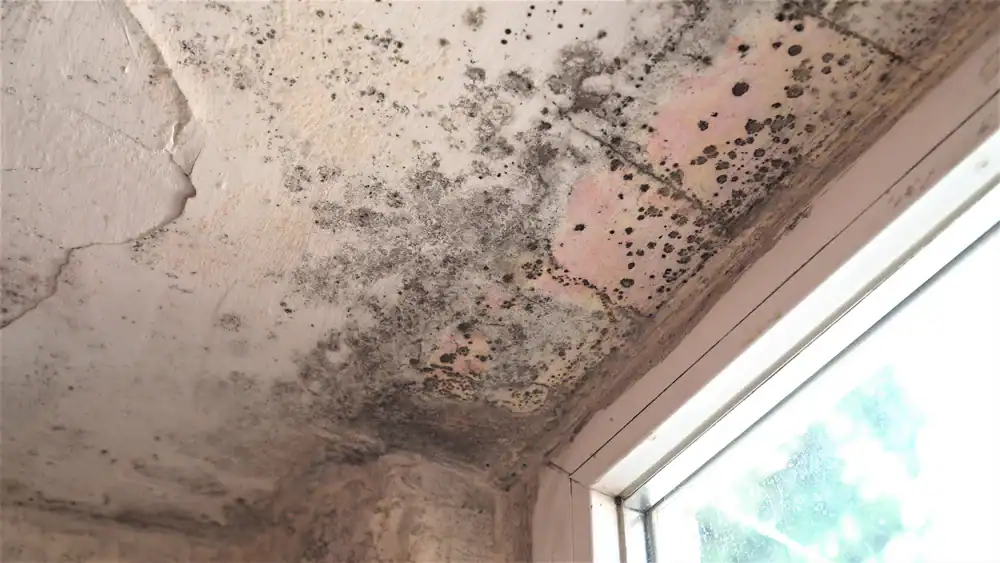
You found something that looks like mold. Maybe it’s a dark patch in the crawl space, a musty smell that won’t quit, or a comment from an HVAC technician during a routine visit. Whatever the trigger, your first instinct is probably to figure out what this is going to cost — before you call anyone.
That’s a reasonable place to start. And it’s exactly where most Guilford County homeowners hit a wall, because almost no local mold company publishes any pricing at all.
We’ve put together this guide to give you the honest numbers — what mold removal actually costs in our area, what drives the price in either direction, and what to watch out for when you’re comparing companies.
Nationally, the average cost for professional mold remediation runs around $2,367, with most jobs falling somewhere between $1,223 and $3,756. But national averages blend high-cost coastal markets with low-cost rural ones — and they don’t tell you much about what a job in Guilford County actually costs.
Based on local project data, homeowners in our area typically pay between $1,744 and $1,913 for mold removal, with a range of roughly $1,659 to $1,997 for standard jobs. Larger infestations — the kind that have spread through multiple areas of a home — tend to run $3,000 to $8,000 in the Piedmont Triad. At the per-square-foot level, most professional remediation is priced between $10 and $25 per square foot, though complex jobs or confirmed black mold can push that higher.
Small, contained surface mold — under 10 square feet — can sometimes be addressed for $150 to $300. But that only applies when the mold is genuinely isolated, the surface is non-porous, and the moisture source has already been resolved. Most homeowners calling about a mold problem are dealing with something bigger than that.
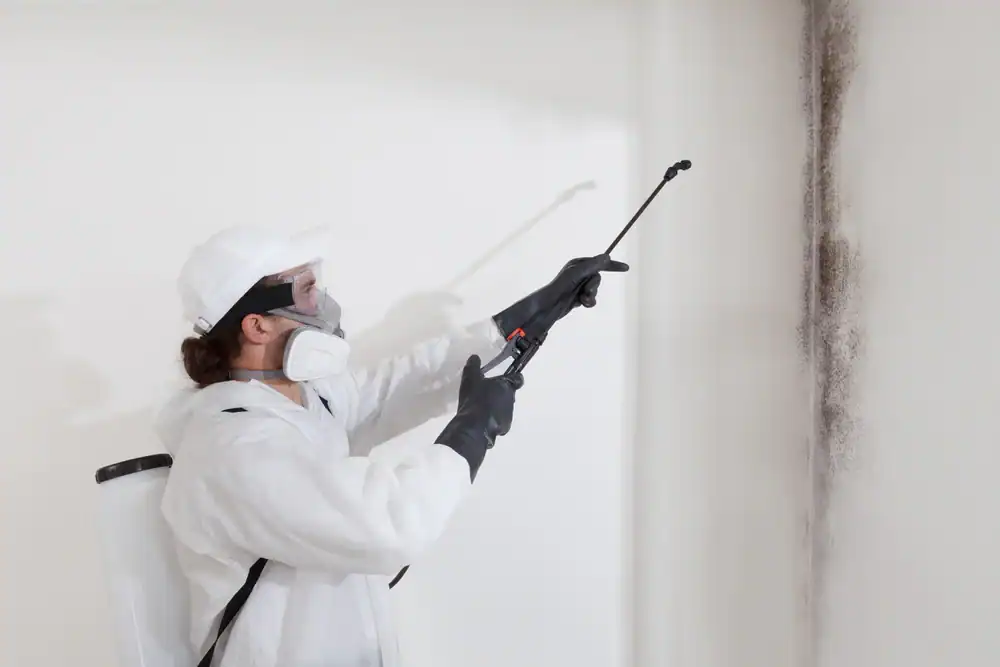
Attic mold is one of the more common — and more expensive — mold scenarios in Guilford County homes. Costs typically range from $1,000 to $4,000 for standard attic remediation, but jobs involving long-standing roof leaks or significant structural spread can reach $7,000 or more.
The reason attic jobs run higher comes down to a few factors that are especially relevant in our area. First, poor attic ventilation is common in older Guilford County homes — properties built before modern moisture management was standard practice. When warm, humid air rises and gets trapped in an under-ventilated attic, condensation builds on the roof decking, and mold follows.
Second, attic remediation often requires more than just cleaning the visible mold. Insulation that has been contaminated typically needs to be removed and replaced, which adds to the overall scope. Rafter surfaces may need sanding or treatment. And because attics are difficult to access and work in, labor time is higher than for a comparable square footage in a basement or crawl space.
If you’ve had a roof leak — even a minor one that seemed to resolve on its own — the attic is worth inspecting. Mold can establish itself within 48 hours of a moisture event, and it’s rarely visible from below until the problem has been growing for a while. By the time you notice staining on a ceiling or a musty smell in an upstairs bedroom, the attic may already have significant contamination.
Guilford County’s clay-heavy soil and the roughly 45 inches of annual rainfall our area receives mean that roof and drainage issues are a persistent driver of attic moisture problems here — not just a seasonal concern.
Basement mold removal typically runs $500 to $3,000 for unfinished spaces, though finished basements — where mold can establish itself behind drywall, paneling, or under flooring — can push costs considerably higher depending on how much material needs to come out.
In Guilford County, basement moisture problems have a structural cause that’s worth understanding: the region’s clay-heavy Piedmont soil retains water rather than draining it. After a heavy rain, that moisture doesn’t move away from the foundation — it sits against it. Over time, that pressure finds its way in through foundation walls, floor joints, and any crack or gap in the slab. Our area averages around 45 inches of rain per year, and we’ve seen increasingly heavy rainfall events in recent years. That combination is a consistent driver of basement moisture and mold in local homes.
The cost of a basement job depends heavily on whether the mold is on the surface or behind finished walls. Surface mold on concrete block or exposed framing is more straightforward to address. Mold that has worked its way into drywall or wood paneling requires those materials to be removed before remediation can happen — and that demolition adds both labor and disposal costs to the final number.
One thing that separates a quality remediation job from a cheap one in this scenario: addressing the moisture source. If water is getting into the basement through a foundation crack or a drainage problem, cleaning the mold without fixing the entry point means you’ll have the same problem again within a season. A thorough assessment should identify where the moisture is coming from, not just where the mold currently is. That’s the difference between a one-time fix and a recurring expense.
Want live answers?
Connect with a Clean Air LLC expert for fast, friendly support.
Black mold — specifically Stachybotrys chartarum — gets a lot of attention, and for good reason. It produces mycotoxins that can cause serious respiratory and neurological effects, and it requires more careful handling than common surface molds. Professionally, confirmed black mold remediation typically runs 15 to 25 percent more than standard mold removal, with per-square-foot pricing ranging from $12 to $40.
It’s worth noting that color alone doesn’t confirm mold type. Plenty of dark-colored molds are not Stachybotrys, and some dangerous molds aren’t visibly black. If type identification matters — for insurance purposes, health concerns, or post-remediation documentation — mold testing to confirm the species costs $450 to $800 in addition to the remediation itself.
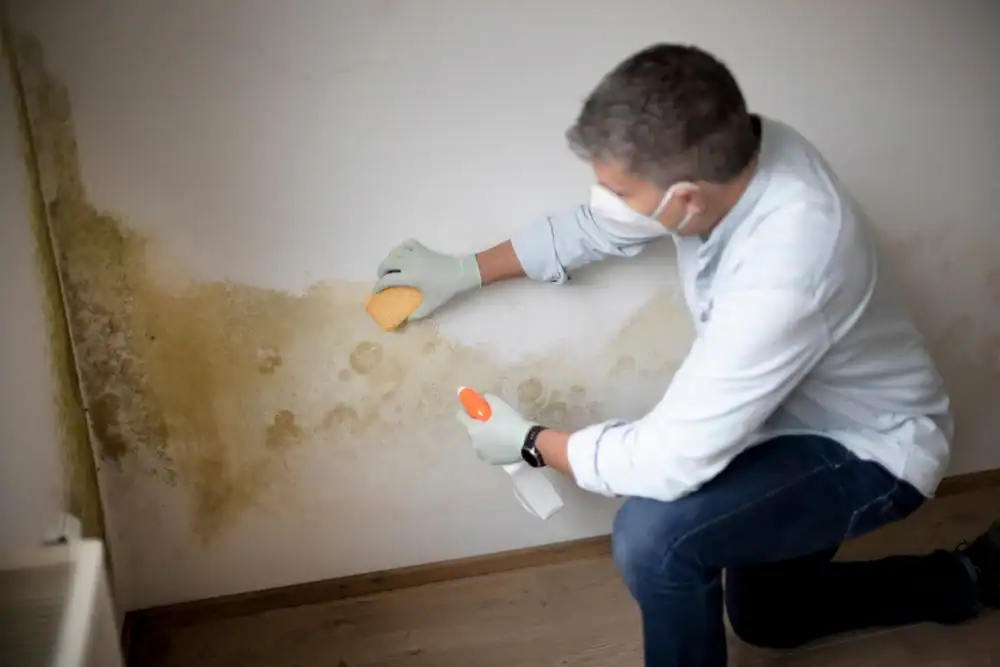
This is the part most mold companies don’t talk about, and it directly affects what you’re actually buying when you hire someone in Guilford County.
North Carolina has no state licensing requirement for mold remediation. NC State University’s Healthy Homes program confirms it plainly: no federal or state certification programs exist for companies or individuals providing mold remediation services in NC. That means a contractor with zero training can legally show up, apply some bleach to a surface, call it done, and hand you a bill. And in a market where most companies publish no credentials and no pricing, homeowners have almost no way to tell the difference.
The industry’s own standard — the ANSI/IICRC S520 Standard for Professional Mold Remediation — establishes that physical removal of mold contamination is the primary means of remediation, not chemical treatment. A contractor who sprays a biocide and calls it remediation isn’t following that standard. And without containment, negative air pressure, and proper disposal protocols, disturbing mold can actually spread spores into living areas that were previously unaffected.
The IICRC AMRT (Applied Microbial Remediation Technician) certification is the credential that signals a contractor has actually been trained to follow this standard. It requires completing a multi-day, in-person course — not an online quiz — plus passing a written exam. It’s not a membership fee or a marketing badge. It’s an earned credential with real prerequisites.
Our team at Clean Air LLC holds IICRC AMRT certification, along with NADCA credentials for duct cleaning work. We’ve been serving Guilford County homeowners for over 30 years, and we’re BBB accredited with an A+ rating and more than 66 five-star Google reviews. We mention those things not to pad a bio, but because in a state with no licensing floor, they’re the only reliable signals that a company is accountable for the work it does.
The reason mold remediation is hard to price without an inspection is that the cost depends almost entirely on scope — and scope is something you often can’t determine from the outside looking in.
The biggest variables are square footage affected, where in the home the mold is located, how accessible that area is, whether the moisture source has been addressed, and whether any materials need to be removed rather than cleaned. A 20-square-foot patch of surface mold in an unfinished basement is a very different job from 20 square feet of mold that has penetrated drywall in a finished room. Same size, very different cost.
Location within the home matters too. Crawl spaces, which are common problem areas in Guilford County homes, typically run $500 to $2,000 for mold remediation — lower than attics or finished basements because the spaces are smaller and the materials involved are less complex. HVAC systems and air ducts are their own category: mold in a duct system can cost $1,000 to $2,000 for an air handler or air conditioning unit, and $2,000 to $8,000 for a full HVAC system depending on how extensively the contamination has spread. That’s a cost category most local mold companies don’t even address — and it’s one where our combination of IICRC AMRT mold certification and NADCA duct cleaning credentials makes a practical difference.
The most reliable way to get a real number for your specific situation is a professional inspection before any work begins. We offer free inspections precisely because scope uncertainty is the thing that makes homeowners hesitate — and it’s a reasonable thing to hesitate about. An inspection lets you know exactly what you’re dealing with, where it is, and what it will cost to address before you commit to anything. Up to 40 percent of the air circulating through your home comes from the crawl space. If mold is present there — or in your ductwork — it’s not staying put. That context tends to make the inspection feel less like a sales step and more like a practical first move.
Mold removal cost in Guilford County is manageable when the problem is caught early and handled correctly. Most homeowners in our area pay somewhere between $1,744 and $3,000 for a typical job — but the real variable isn’t the square footage or the mold type. It’s whether the work is done to a standard that actually resolves the problem, or just makes it invisible for a season.
In a state with no licensing requirement for mold remediation, the company you choose matters more than it would in a regulated market. Credentials, longevity, and documented reviews are the only reliable indicators you have — and they’re worth checking before anyone starts pulling materials out of your home.
If you’re trying to figure out what you’re actually dealing with, Clean Air LLC offers free inspections with no obligation. We’ll tell you what we find, where it is, and what it will take to address it — honestly, and with over 30 years of Guilford County experience behind the answer.
Summary:
Share: