
Contact Info
- Greensboro, NC 27406
- Call: 336-707-0498
- Text: 336-707-0498
-
Mon - Fri: 8am - 4pm
Sat - Sun: Closed
Contact Info
Professional mold removal follows a clear process: inspection, containment, removal, treatment, and prevention. Here's what actually happens when crews show up at your door.
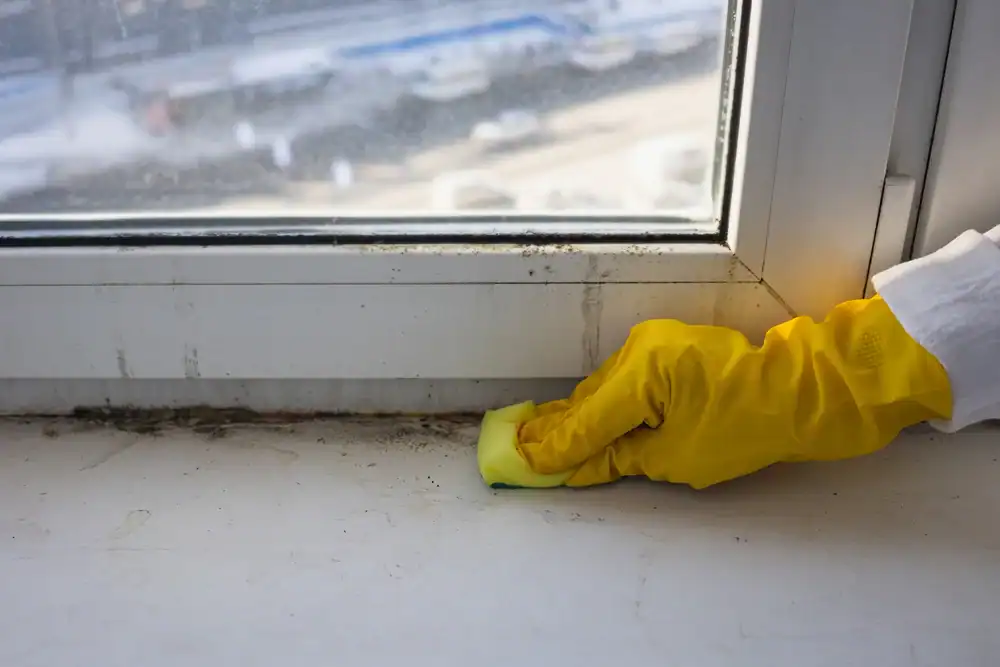
You spotted mold. You called someone. Now we’re scheduled to show up, and you’re wondering what actually happens next.
The mold removal process isn’t as mysterious as it seems. Professional teams follow a structured approach that’s been refined over decades. We’re not just scrubbing surfaces and hoping for the best. There’s containment, specialized equipment, testing, and work to make sure the mold doesn’t come back.
If you’re in Guilford County, NC, where humidity and rainfall create perfect conditions for mold growth, understanding this process matters. Let’s walk through what really happens when professionals remediate mold in your home.
Mold remediation isn’t just cleaning. It’s a systematic process designed to remove existing mold, prevent it from spreading during the work, and address the conditions that let it grow in the first place.
The process typically takes anywhere from one to five days for most residential jobs, depending on how much mold there is and where it’s located. Smaller areas might be done in a day or two. Larger problems involving multiple rooms or structural repairs can stretch into a week or more.
Professional teams follow guidelines from the EPA and industry organizations like the IICRC. These aren’t optional suggestions. They’re proven methods that protect both your home and the people doing the work. The goal is complete remediation, not surface-level fixes that let mold return in a few months.
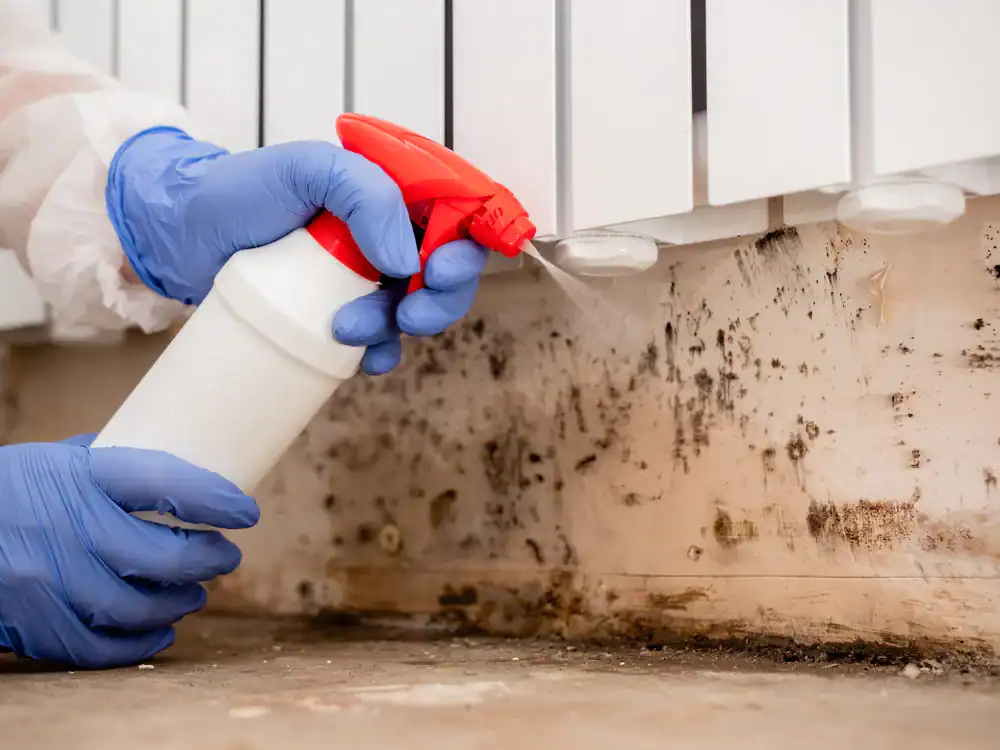
The first step is figuring out what you’re actually dealing with. A certified inspector walks through your home looking for visible mold, but we’re also checking for signs you might not notice. Moisture meters detect dampness behind walls. Infrared cameras spot temperature differences that indicate hidden water problems. Air quality tests measure spore levels.
We’re documenting everything. Where the mold is growing, how much square footage it covers, what materials are affected. We’re also investigating why it’s there. Is it a leaky pipe? Poor ventilation? Water seeping through your foundation after heavy rain? In Guilford County, where we get about 45 inches of rainfall annually and humidity regularly tops 70%, moisture sources vary. Crawl spaces, basements, and attics are common problem areas.
This assessment determines the remediation plan. Small patches of surface mold on non-porous materials need different treatment than extensive growth that’s penetrated drywall or insulation. The inspector explains what we found, what needs to happen, and gives you a realistic timeline and cost estimate. No surprises later.
Once the assessment is done, you’ll get a detailed report. It should include photos, moisture readings, and a clear scope of work. This is also when we discuss whether you need to leave during the work or if containment measures will let you stay in unaffected areas. For minor jobs, staying home is usually fine. Extensive remediation, especially if it involves strong antimicrobial treatments, might require temporary relocation.
The inspection also identifies the root cause. If we don’t fix the moisture problem, you’re wasting money. Mold will just come back. Maybe it’s a roof leak, maybe it’s poor drainage around your foundation, maybe your crawl space needs better moisture control. Whatever it is, it gets addressed as part of the plan.
Before anyone starts removing mold, the affected area gets sealed off. This is containment, and it’s critical. Mold spores are microscopic. When you disturb mold, those spores become airborne and can spread to clean areas of your home. Containment prevents that.
We use thick plastic sheeting to create physical barriers. We seal doorways, vents, and any openings between the work area and the rest of your house. For larger jobs, we create negative air pressure using specialized fans. This means air flows into the contained area but doesn’t flow out, keeping spores from escaping. It looks dramatic, like something from a movie, but it’s standard procedure.
HEPA filtration equipment runs continuously during the work. HEPA filters capture 99.97% of particles as small as 0.3 microns, including mold spores. Air scrubbers pull contaminated air through these filters, cleaning it before it’s exhausted outside or recirculated. We also use HEPA vacuums throughout the process to capture spores from surfaces.
You might notice our technicians wearing protective gear. Full-body suits, respirators, gloves, goggles. This isn’t because we’re trying to scare you. It’s because disturbing mold releases spores, and even professionals need protection. The gear also prevents us from carrying spores on our clothing to other parts of your home.
Containment also means turning off your HVAC system in the affected area. Running heating or cooling while mold is being disturbed can pull spores into your ductwork, spreading them throughout your house. The system stays off until remediation is complete and the area has been cleaned and tested.
This phase takes time to set up correctly, but it’s not wasted effort. Proper containment is the difference between a successful remediation and one that creates new problems in previously clean areas.
Want live answers?
Connect with a Clean Air LLC expert for fast, friendly support.
Once containment is in place, the actual removal begins. This is where the work gets physical. Our technicians remove mold-contaminated materials that can’t be salvaged. Porous materials like drywall, insulation, carpeting, and ceiling tiles absorb moisture and mold grows inside them. You can’t clean these thoroughly enough to guarantee the mold is gone. They get removed, double-bagged in thick plastic, sealed, and disposed of according to local regulations.
Non-porous and semi-porous materials like wood framing, concrete, and metal can usually be cleaned and saved. These get treated with antimicrobial and antifungal solutions designed to kill mold colonies and prevent new growth. We scrub these surfaces, removing both visible mold and residue. The cleaning is methodical, often requiring multiple passes to ensure complete removal.
The removal process is carefully controlled. Materials are misted with water or antimicrobial solution before removal to keep spores from becoming airborne. Everything gets bagged inside the contained area before being carried out. Bags are wiped down on the outside to remove any spores before they leave the work zone. It’s tedious, but necessary.
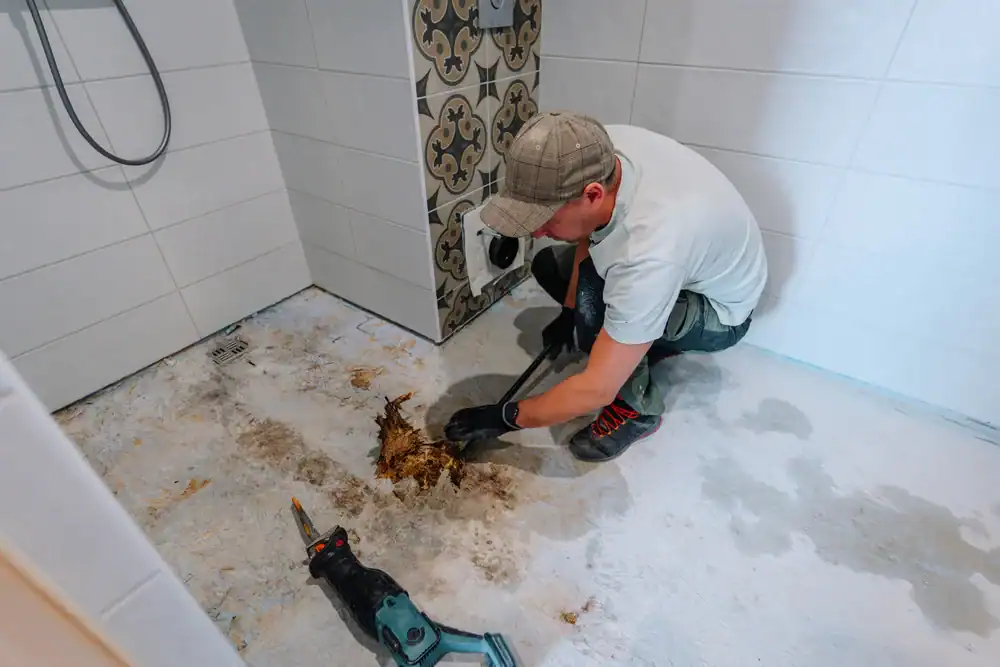
Here’s what separates professional mold remediation from a temporary fix: addressing why the mold was there. Mold needs moisture to grow. Remove the moisture source, and mold can’t come back. Ignore it, and you’ll be calling for remediation again in six months.
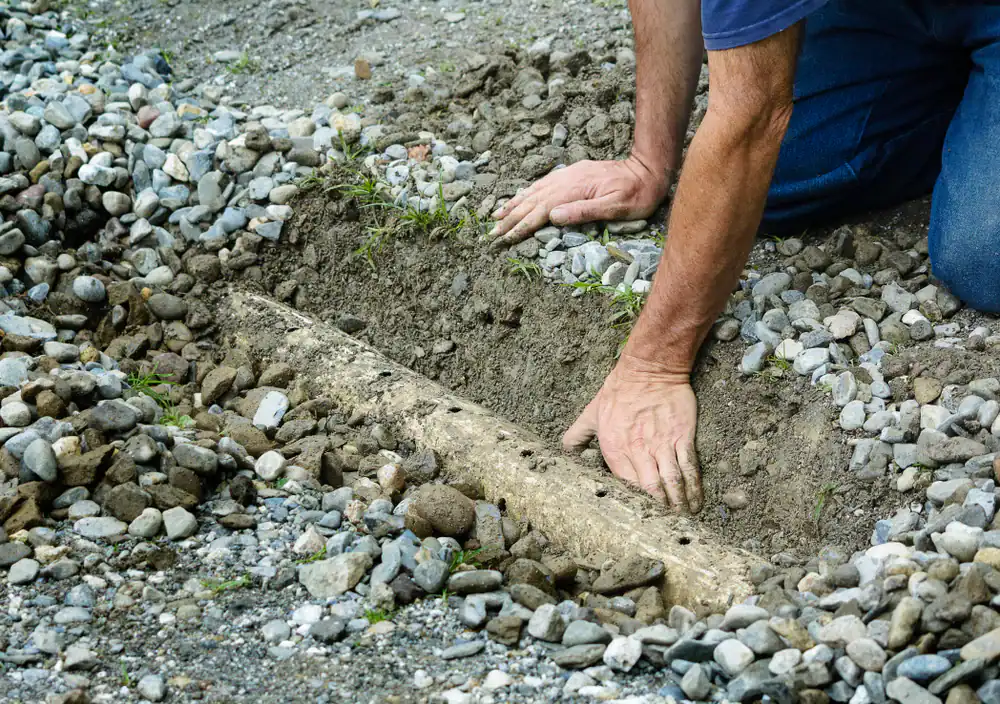
This is where solutions like french drain installation and sump pump repair come into play, especially in Guilford County homes. If your crawl space floods during heavy rain, a french drain system intercepts that water before it enters. The perforated pipe, surrounded by gravel, channels water to a collection point where a sump pump removes it from your property. It’s proactive moisture control.
Sump pumps are critical in areas with high water tables or poor drainage. They sit in a pit at the lowest point of your crawl space or basement. When water accumulates, the pump activates and expels it outside, away from your foundation. If your sump pump isn’t working, water sits there creating humidity and perfect conditions for mold. Repairing or replacing a failing pump is often part of comprehensive mold remediation.
Crawl space encapsulation is another common recommendation. This involves sealing your crawl space with a thick vapor barrier that covers the ground and sometimes the walls. It blocks moisture from the soil from evaporating into the air under your home. Combined with proper drainage and a dehumidifier, encapsulation keeps humidity levels low enough that mold can’t establish itself.
Sometimes the moisture source is simpler. A leaky pipe, a roof that needs repair, poor ventilation in a bathroom. Whatever it is, it gets fixed. We either handle it directly or coordinate with other contractors to make sure it’s done. This isn’t optional. The EPA is clear: if moisture problems aren’t corrected, any mold cleanup is only a short-term solution.
In Guilford County’s climate, with our clay soil and frequent precipitation, moisture control is ongoing. Even after remediation, you need to stay vigilant. Keep gutters clean, make sure downspouts direct water away from your foundation, monitor humidity levels, and address leaks immediately. Prevention is always cheaper than remediation.
After mold and contaminated materials are removed, everything left behind gets thoroughly cleaned. This includes structural elements like floor joists, wall studs, and concrete. We use specialized cleaning agents designed for mold remediation, not household cleaners. The goal is to remove any remaining spores, staining, and organic residue.
HEPA vacuuming happens throughout this phase. Surfaces, floors, even the containment barriers get vacuumed to capture settled spores. Some items might go through additional treatment. Furniture, belongings, and restorable materials can sometimes be cleaned using specialized techniques, though this depends on what they’re made of and how extensively they were contaminated.
The affected area needs to be completely dry before moving to restoration. Industrial dehumidifiers and fans run until moisture levels return to normal. Moisture meters confirm everything is dry. This can’t be rushed. Residual moisture will just lead to new mold growth.
Once the area is clean and dry, restoration begins. This means replacing the materials that were removed. New drywall, insulation, flooring, whatever was taken out. Some remediation companies handle this in-house. Others coordinate with contractors to complete the work. Either way, the goal is returning your home to its pre-mold condition, or better.
During restoration, some homeowners opt for mold-resistant materials. Mold-resistant drywall, for example, is designed to resist moisture absorption. It’s not mold-proof, but it’s more resilient than standard drywall in areas prone to dampness. These upgrades cost more upfront but can provide extra protection in vulnerable areas like basements or bathrooms.
The final step is post-remediation testing. An independent inspector, ideally not affiliated with the remediation company, conducts air quality tests and visual inspection. They’re confirming that mold levels have returned to normal, no visible mold remains, and the area is safe. You should receive a clearance certificate documenting that the work was successful. This matters for your peace of mind, and it’s important if you’re selling your home or dealing with insurance claims.
Professional mold removal follows a clear path: inspect, contain, remove, treat, dry, restore, and test. Each step serves a specific purpose, and skipping any of them creates risk. You’re not just paying for mold to disappear. You’re paying for systematic work that addresses both the visible problem and the underlying cause.
Understanding what happens during remediation removes a lot of the anxiety. You know why we’re setting up containment barriers. You understand why we’re wearing protective gear. You see why addressing moisture control matters as much as removing the mold itself. It’s not mysterious, it’s methodical.
If you’re dealing with mold in your Guilford County, NC home, you don’t have to figure this out alone. We’ve spent over three decades helping local families through this process, from initial inspection through final clearance. The work gets done right, and you understand what’s happening every step of the way.
Summary:
Share: