
Contact Info
- Greensboro, NC 27406
- Call: 336-707-0498
- Text: 336-707-0498
-
Mon - Fri: 8am - 4pm
Sat - Sun: Closed
Contact Info
That musty smell might be coming from below your floors. Here's what a professional crawl space inspection actually uncovers in Greensboro homes.

Something’s off. Maybe it’s a faint musty smell that gets stronger when the air conditioner kicks on. Maybe your floors feel slightly soft in one spot, or your allergies are noticeably worse at home than anywhere else. You’ve cleaned, checked the obvious places, and still can’t find the source.
There’s a good chance it’s coming from below your floors. In Guilford County, where summers are humid and the clay soils hold moisture long after a rainstorm, crawl space problems are more common than most homeowners realize — and they often go undetected for years. Here’s what our professional inspections actually look for, and what it means for your home.
A crawl space inspection isn’t a quick glance through the access door. A thorough inspection means physically entering the space and systematically evaluating everything in it — the structure, the moisture levels, the air quality, and the condition of any existing vapor barriers or insulation.
Our goal isn’t to find something wrong. It’s to give you an accurate picture of what’s happening down there so you can make an informed decision about what, if anything, needs to be done. That distinction matters, because a lot of homeowners have been burned by contractors who showed up with a solution before they’d even looked at the problem.
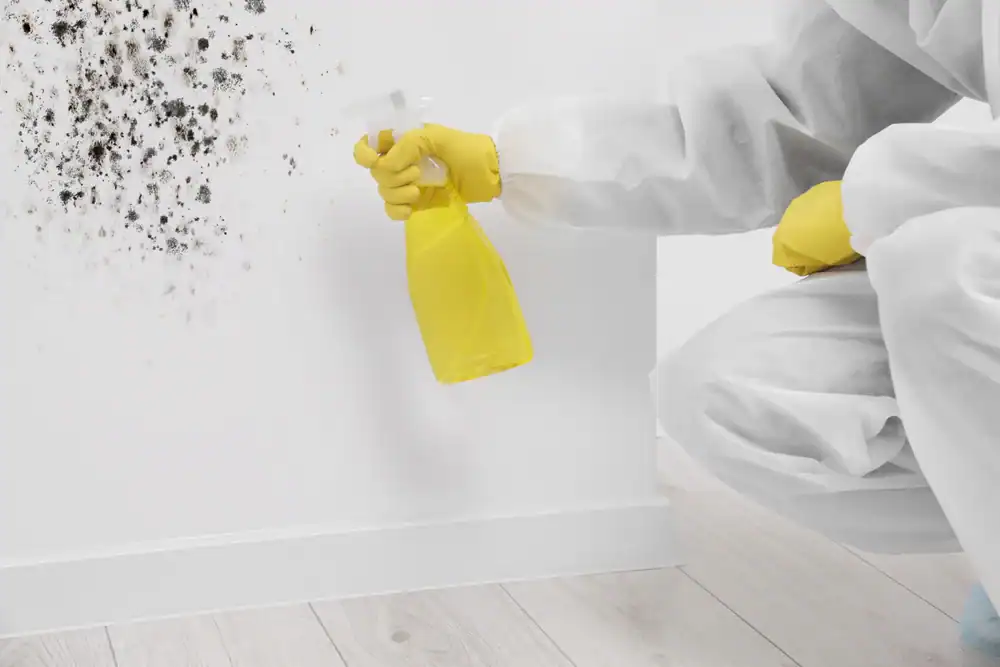
The first thing we assess is moisture — not just whether there’s standing water, but whether the wood framing, floor joists, and subfloor have absorbed enough moisture to be at risk. This requires an actual moisture meter, not just a visual scan. Wood moisture content above 19% creates conditions for fungal growth and structural decay. In Greensboro’s climate, it’s entirely possible to have a serious moisture problem with no visible water anywhere in the crawl space.
From there, our inspection covers the condition of any existing vapor barrier — whether it’s torn, improperly overlapped, or missing entirely from sections of the floor. Older homes in established Greensboro neighborhoods often have partial or deteriorated barriers that were installed decades ago and haven’t been touched since. A barrier that looks like it’s doing its job from the access door can be completely compromised ten feet in.
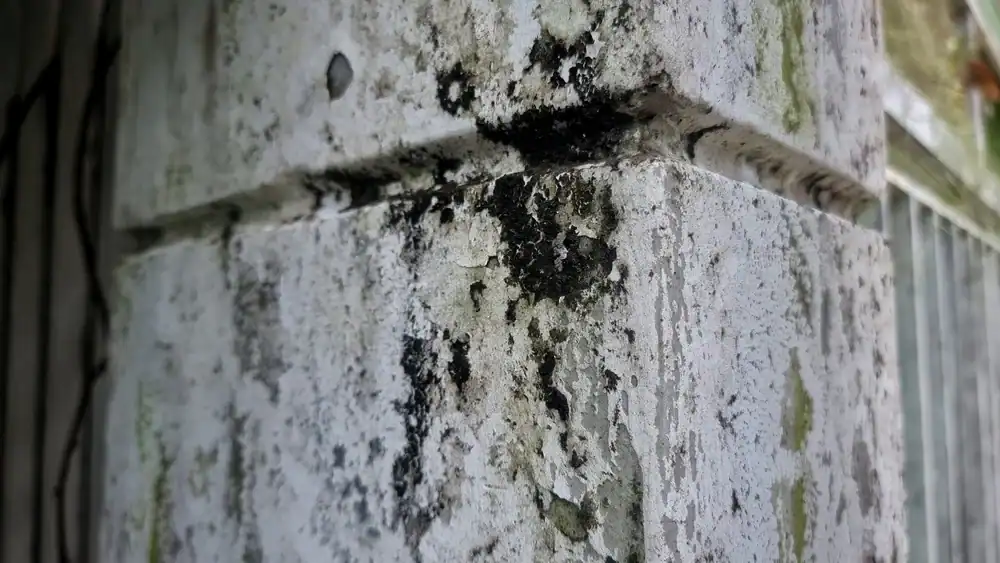
Structural components get close attention too. We check floor joists and beams for signs of rot, sagging, or pest damage. Efflorescence — the white mineral deposits that appear on concrete when water has been moving through it — is noted along the perimeter walls. Insulation condition is assessed, both for moisture damage and for whether it’s actually in contact with the subfloor or has fallen away over time.
Finally, we look for signs of pest activity. Rodents, subterranean termites, and other pests are among the three most commonly found problems during professional crawl space inspections, alongside excess moisture and mold. Evidence of nesting, droppings, or damaged insulation tells its own story about what’s been happening in the space between visits.
Guilford County’s climate does most of the damage quietly, over time. The county averages around 45 inches of rain per year — above the national average — and summers here bring sustained dew points that regularly push above 65°F through July and August. When warm, humid outdoor air enters a vented crawl space and meets the cooler surfaces inside, condensation forms on the wood framing, ductwork, and insulation. That’s how moisture content climbs past the threshold where mold begins to grow, even when there’s been no flooding and no obvious leak.
The soil underneath Guilford County homes compounds the problem. Much of the county sits on clay-heavy soils that drain slowly. After a heavy rain, water pools near foundations for days — sometimes longer — and that ground moisture works its way upward into unencapsulated crawl spaces. Homeowners in areas like Irving Park, Sherwood Forest, or the older subdivisions around High Point often don’t connect the dots between a wet week in April and the musty smell that appears when they run the AC for the first time in May.
That timing is telling. In the Piedmont, the highest-risk period for crawl space moisture problems is April through May, when outdoor dew points rise faster than the crawl space has had time to warm up. Condensation forms on cool surfaces, and the first warm days of spring become the trigger that reveals a problem that’s been developing all winter. It’s not a coincidence that this is when most homeowners in Greensboro start searching for answers.
One more factor worth understanding: up to 40% of the air circulating through your home originates from the crawl space. Mold spores, moisture, and other contaminants don’t stay below the floor — they migrate upward through gaps, penetrations, and the HVAC system into the living areas above. What’s happening under your home is directly connected to the air your family breathes inside it.
Want live answers?
Connect with a Clean Air LLC expert for fast, friendly support.
One of the most common fears homeowners have going into an inspection is that they’ll be handed a $15,000 proposal before we’ve even finished wiping the dirt off our knees. That fear isn’t unfounded — it’s a real pattern in this industry, and it’s made a lot of people skeptical of free inspections in general.
The honest answer is that findings vary enormously. Some inspections reveal nothing more serious than a vapor barrier that needs to be repositioned or a section of insulation that’s sagged. Others uncover active mold growth, significant wood rot, or drainage issues that need real attention. What you’re entitled to is an accurate assessment of what’s actually there — not a predetermined recommendation.
This is the question most homeowners want answered before they even schedule an inspection, which is understandable. The range is wide because the scope of work varies so much from home to home.
A professional crawl space inspection in North Carolina typically costs between $150 and $400, depending on the size and accessibility of the space. We offer our inspections at no charge, because we’d rather you have accurate information than avoid finding out what’s going on due to the cost of a diagnostic visit.
If the inspection reveals that remediation is needed, the scope determines the cost. Mold remediation for crawl space issues can range from $1,500 to $5,000 or more depending on how far it’s spread and what materials are affected. Full encapsulation — which involves sealing the crawl space with a vapor barrier, closing off foundation vents, and often adding a dehumidifier — typically runs between $4,000 and $20,000 in North Carolina, with standard vapor barrier installation falling in the range of $2.50 to $4.00 per square foot. Drainage solutions like French drains or sump pumps, which are often necessary in Guilford County given the clay soil drainage issues, can add $1,100 to $8,000 depending on the complexity of the system.
These are market-context figures, not quotes. Every home is different, and the only way to give you an accurate number is to actually look at your crawl space first. That’s what the inspection is for.
Technically, yes — you can open the access door, shine a flashlight around, and see if anything obvious jumps out. And for some homeowners, that’s enough to confirm there’s nothing alarming going on. But there’s a significant gap between what you can see and what’s actually happening in the space.
Mold doesn’t always look like the black patches you’ve seen in photos. Early-stage fungal growth can appear as white or gray discoloration on wood surfaces that’s easy to dismiss as dust or age. Elevated moisture content in the framing — the condition that makes mold growth possible — is invisible to the naked eye. A moisture meter is the only reliable way to know whether the wood has absorbed enough water to be at risk.
There’s also the matter of what you’re looking for. Most homeowners don’t know what efflorescence on a foundation wall means, or how to assess whether a vapor barrier has enough overlap at the seams to actually function, or what subterranean termite damage looks like in its early stages. These aren’t obscure details — they’re the findings that separate a crawl space that needs attention now from one that can wait.
Our team holds IICRC AMRT certification — Applied Microbial Remediation Technician — which means mold findings are evaluated against the ANSI/IICRC S520 Standard, the same standard referenced by insurance companies and regulatory agencies. That credential requires a minimum of 12 months of verified field experience in mold and microbial remediation. When we tell you what we found and what it means, you’re getting an assessment grounded in that standard — not a general contractor’s best guess.
We’re also NADCA certified, which matters when a crawl space inspection reveals that mold or moisture has been pulled into the HVAC system. Because we handle both crawl space and duct cleaning, we can assess and address both systems under one roof, without you having to coordinate between two different contractors trying to figure out whose scope covers what.
If you’ve noticed a musty smell that gets worse when the AC runs, experienced allergy symptoms that seem worse at home, or simply haven’t had anyone look at your crawl space in the past year or two, that’s reason enough to schedule one. Annual inspections are a reasonable baseline for most homes in Guilford County’s climate. If you’ve already had issues with moisture or mold, twice a year makes more sense.
The inspection itself is the low-risk step. It costs you nothing, takes a few hours, and gives you a clear picture of what’s actually happening under your home — whether that’s nothing serious or something that genuinely needs attention. You’re not committing to a project by finding out what’s there.
Clean Air LLC has been serving Greensboro and Guilford County for over 30 years. If you’re ready to find out what your crawl space is telling you, reach out and we’ll take a look.
Summary:
Share: