
Contact Info
- Greensboro, NC 27406
- Call: 336-707-0498
- Text: 336-707-0498
-
Mon - Fri: 8am - 4pm
Sat - Sun: Closed
Contact Info
That persistent musty smell isn't just unpleasant—it's usually a sign of something hiding in your crawl space, ductwork, or walls that surface cleaning can't touch.
You’ve cleaned the bathrooms, washed the curtains, replaced the air freshener twice, and the smell is still there. That earthy, stale odor that hits you the moment you walk in the door—or worse, the one your guests notice before you do. It’s frustrating, and it’s embarrassing. But here’s the thing: no amount of cleaning will fix it, because it’s not a cleanliness problem. A persistent musty smell almost always traces back to moisture and mold hiding somewhere you can’t see. Here’s what’s actually going on.
The short answer is mold or mildew. Both thrive in damp, poorly ventilated spaces and both produce gases called microbial volatile organic compounds—MVOCs—that travel through your home and create that distinctive musty odor. You don’t need visible growth for this to happen. Mold behind drywall, under insulation, or inside ductwork can be producing that smell long before you ever see a single spot.
Moisture is the root cause of nearly every musty smell. It gets in through leaky pipes, condensation on cool surfaces, water seeping through a foundation, or simply from the air itself. Once a damp environment develops somewhere in your home, mold can start growing within 24 to 48 hours. The smell often shows up well before the problem becomes visible—which is exactly why so many homeowners spend weeks cleaning surfaces and wondering why nothing changes.
This is one of the most common and frustrating situations homeowners deal with. The room looks fine. Nothing’s wet. You can’t see any mold. But the smell is unmistakably there, and it keeps coming back. The reason is almost always that the source isn’t in the room you’re standing in.
Mold doesn’t need to be visible to affect the air you’re breathing. It can be growing inside your walls, underneath flooring, behind baseboards, or in spaces you’d never casually inspect. The MVOCs it produces are gases—they pass through building materials and move freely through the air in your home. A small colony of mold hidden behind a bathroom wall or under a section of damp subfloor can make an entire room smell musty for months.
There’s another mechanism worth understanding: your HVAC system. Every time your heating or cooling kicks on, it pulls air from somewhere in your home and pushes it everywhere else. If there’s a contaminated zone—a damp section of ductwork, a moldy return air plenum, or a crawl space that connects to your air handler—the system actively distributes that musty air into every room on the circuit. This is why many homeowners in Guilford County notice the smell gets noticeably worse the moment the AC turns on. It’s not a coincidence. The system is doing exactly what it’s designed to do—it’s just pulling from the wrong place.
This HVAC distribution effect is one of the most underappreciated causes of whole-home musty smells. Cleaning the visible registers or replacing the filter won’t solve it. The contamination is upstream, and it takes a proper inspection to find it.
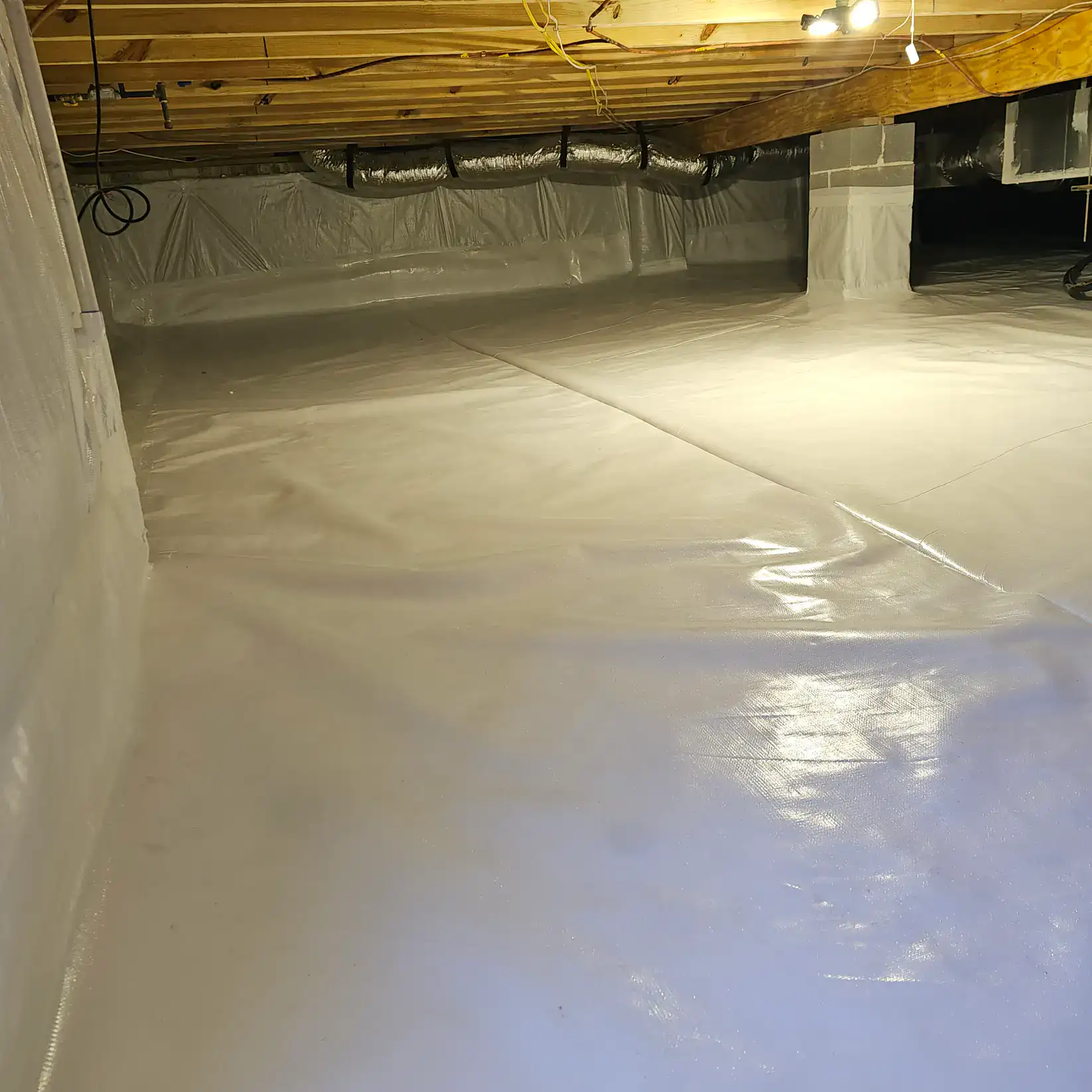
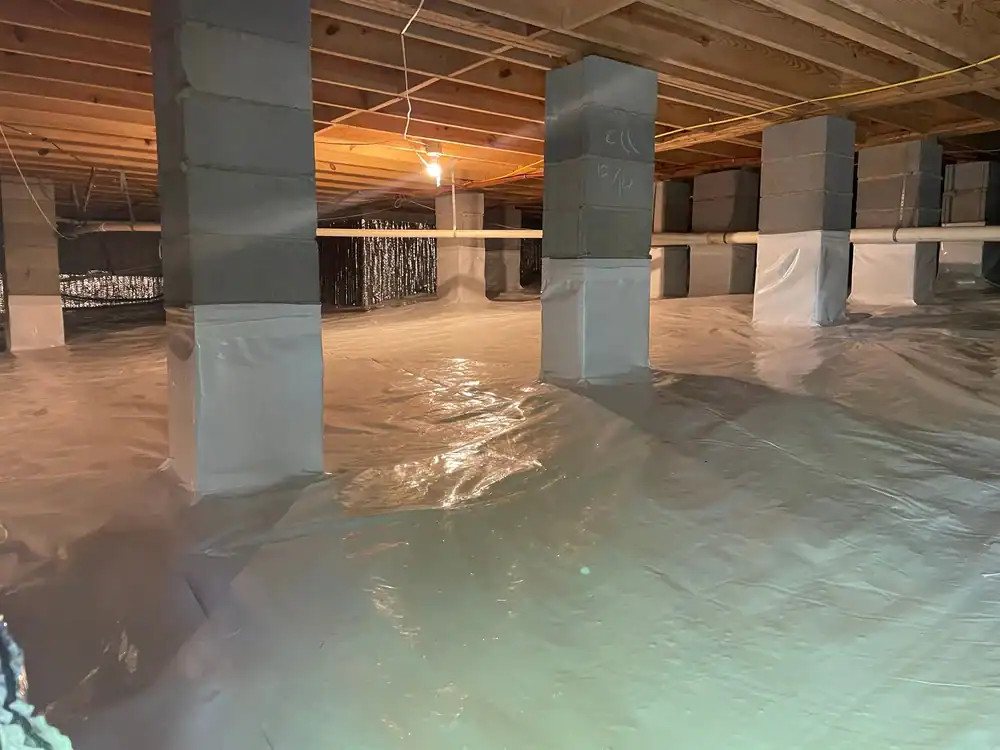
If the musty smell in your home has that particular damp, earthy quality—the kind that reminds you of an old basement or a wet towel left too long—there’s a good chance it’s coming from your crawl space.
In Guilford County, a large share of the housing stock—especially homes built before the 1980s in neighborhoods across Greensboro and High Point—sits on vented crawl space foundations. These were standard construction at the time, and they work fine in dry climates. In North Carolina’s humid summers, they’re a different story. Outdoor humidity in Guilford County regularly hits 70 percent or higher from late spring through early fall. When that warm, humid air flows into a cooler crawl space, it condenses on the wood framing, the insulation, and the soil. Over time, that persistent moisture creates exactly the conditions mold needs to grow.
Here’s what makes it worse: research consistently shows that up to 40 percent of the air circulating through a home comes from the space beneath the floors. So whatever is growing or decaying in your crawl space—mold, mildew, rotting wood, standing water—is contributing directly to the air your family breathes every day. The musty smell that seems to come from nowhere in particular often has a very specific origin: it’s rising from below.
The clay-heavy soil common throughout the Piedmont Triad compounds this problem. It retains water and drains slowly, which means moisture around your foundation lingers far longer than it would in sandier soils. After a heavy summer rain—and Greensboro gets around 45 inches of rainfall annually—that water has nowhere to go quickly. It sits against the foundation, seeps in, and feeds the cycle.
This is why treating a mildew smell with air fresheners or even a portable dehumidifier in the living room rarely works. The source is structural, and it’s underneath you.
Want live answers?
Connect with a Clean Air LLC expert for fast, friendly support.
A musty smell is unpleasant. But the more important question is what’s producing it and what that means for the people inside the home. Mold exposure is linked to upper respiratory infections, worsened asthma, allergic reactions, and chronic sinus issues. The EPA estimates that roughly 4.6 million asthma cases in the United States are attributable to dampness and mold exposure in the home. Dampness and mold are also associated with a 30 to 50 percent increase in respiratory illness more broadly.
If you have kids in the house, the stakes are higher. Infants exposed to mold in their living environment have nearly three times the risk of developing asthma compared to those who aren’t. A persistent musty smell—especially one that’s been present for months—isn’t something to wait out.
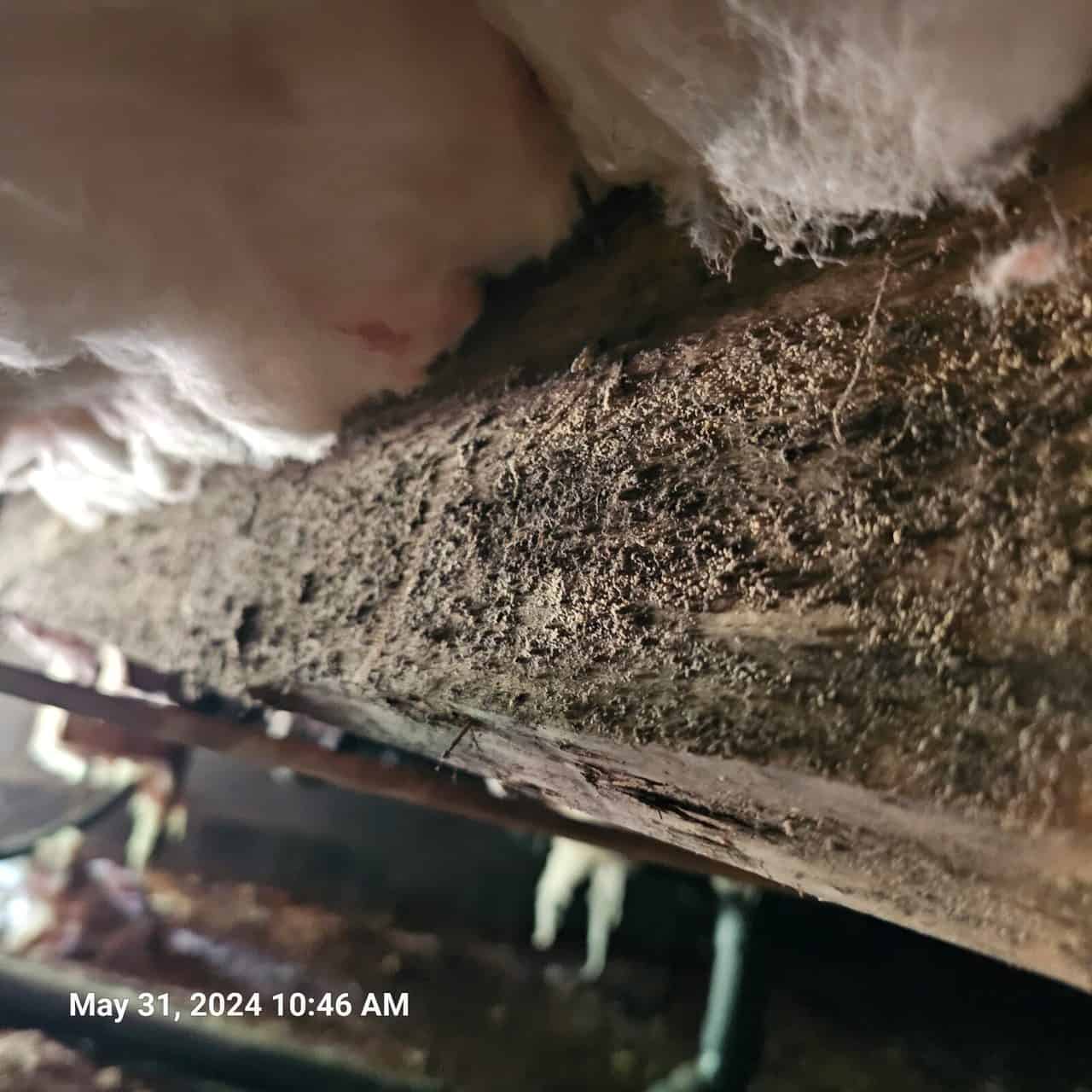
Yes, and this is where a lot of homeowners get tripped up. The absence of visible mold doesn’t mean the absence of mold. It means the mold is somewhere you haven’t looked—or somewhere you can’t easily access.
Mold behind drywall often produces a stronger odor than surface mold because it’s trapped in an enclosed space with limited airflow. The gases build up and have to go somewhere, so they migrate through wall materials and into the room. The same is true for mold growing inside ductwork or underneath crawl space insulation. You won’t see it during a casual walkthrough, but it’s actively affecting your indoor air quality.
The EPA notes that between 30 and 50 percent of all buildings in the United States have damp conditions that may encourage mold growth. Indoor air is two to five times more polluted than outdoor air on average—and hidden mold is one of the primary reasons. A musty smell that doesn’t go away within a few days of cleaning and drying is a reliable signal that something deeper is going on. It’s not a sign to clean harder. It’s a sign to look harder—specifically in places like the crawl space, the ductwork, and any area with a history of moisture.
One practical thing to know: a hygrometer—an inexpensive tool that measures relative humidity—can tell you a lot about your home’s moisture levels without any professional help. The EPA recommends keeping indoor humidity between 30 and 50 percent. If you’re consistently seeing readings above 60 percent in any part of your home, you have a moisture problem that’s likely feeding mold growth, whether you can see it or not. In Guilford County homes during summer, hitting 70 percent or higher in a crawl space or basement isn’t unusual at all—it’s the norm without active moisture control.
The answer depends entirely on where the smell is coming from, which is why the first step is always finding the source—not treating the symptom.
If the smell is coming from your crawl space, the fix isn’t just encapsulation. One of the most important things to understand is the correct sequence: you have to remediate existing mold before you seal the space. Encapsulating over active mold doesn’t solve the problem—it traps it. The mold continues growing in a now-sealed environment, and you’ve just made it harder to address later. Remediation removes what’s there. Encapsulation prevents it from coming back by sealing the crawl space against the humid outdoor air that caused the problem in the first place.
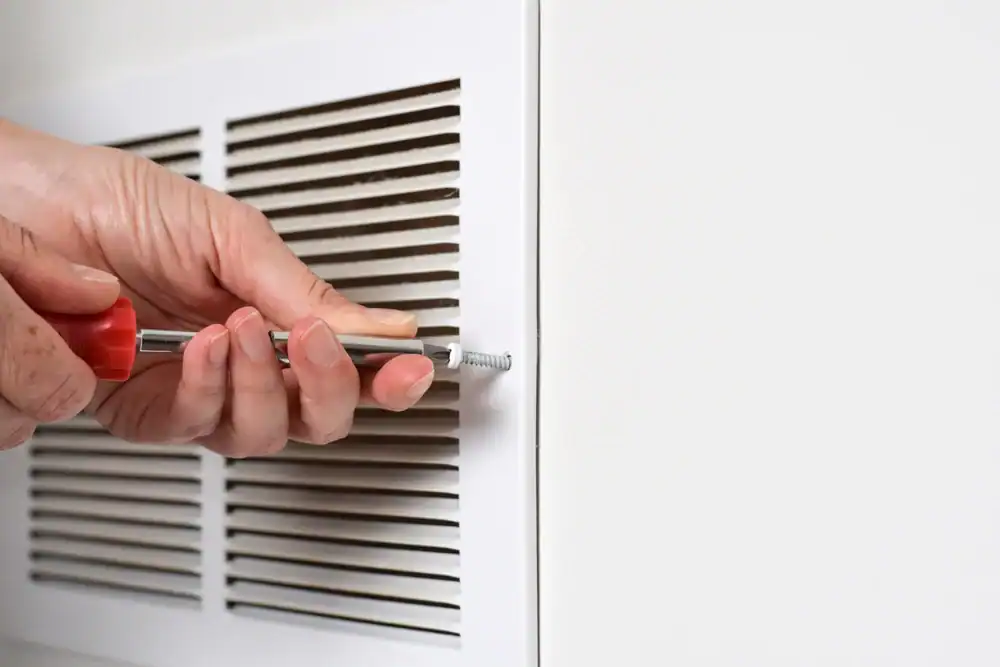
If the smell is coming through your vents, the source could be mold or debris inside the duct system itself, or it could be that the ducts are pulling contaminated air from a damp zone and distributing it. Both situations require a proper inspection to diagnose. Cleaning the ducts with HEPA-filtered equipment removes what’s built up inside the system. But if the root cause is a wet crawl space or a moisture problem near the air handler, the ducts will recontaminate without addressing that source.
The DIY options—portable dehumidifiers, air purifiers, baking soda, vinegar—have their place as temporary measures or as part of a maintenance routine. They are not solutions for an established mold problem. If the smell has been present for more than a few days and you can’t identify a clear, contained source, a professional inspection is the only reliable next step. Not because it’s the expensive option, but because it’s the only way to actually know what you’re dealing with before spending money on a fix that might not work.
For Guilford County homeowners, this matters more than it might in drier climates. The combination of high summer humidity, clay soil that holds water near foundations, and a large stock of older vented crawl space homes means the conditions that create musty smells are built into the local environment. Managing them requires understanding the whole system—crawl space, ductwork, and moisture control—not just treating the part you can see.
A musty smell that keeps coming back is telling you something. It’s almost never about cleaning more thoroughly—it’s about finding a moisture or mold problem that’s hiding somewhere your cleaning routine doesn’t reach. In Guilford County homes, that usually means the crawl space, the ductwork, or both.
The good news is that these problems are solvable. You don’t have to keep masking the smell or wondering what’s in the air your family is breathing. You just need a clear picture of what’s actually going on before you decide what to do about it.
We’ve been inspecting and treating homes in Guilford County since the early 1990s. We offer free inspections with no obligation—because the right starting point is always knowing what you’re dealing with, not guessing. If you’re ready to stop wondering, reach out to us and we’ll take a look.
Summary:
Share: