
Contact Info
- Greensboro, NC 27406
- Call: 336-707-0498
- Text: 336-707-0498
-
Mon - Fri: 8am - 4pm
Sat - Sun: Closed
Contact Info
Clean air ducts aren't just about dust—they're your home's respiratory system. For eco-conscious owners in Guilford County, NC, this maintenance task delivers energy savings, healthier air, and environmental benefits you can measure.
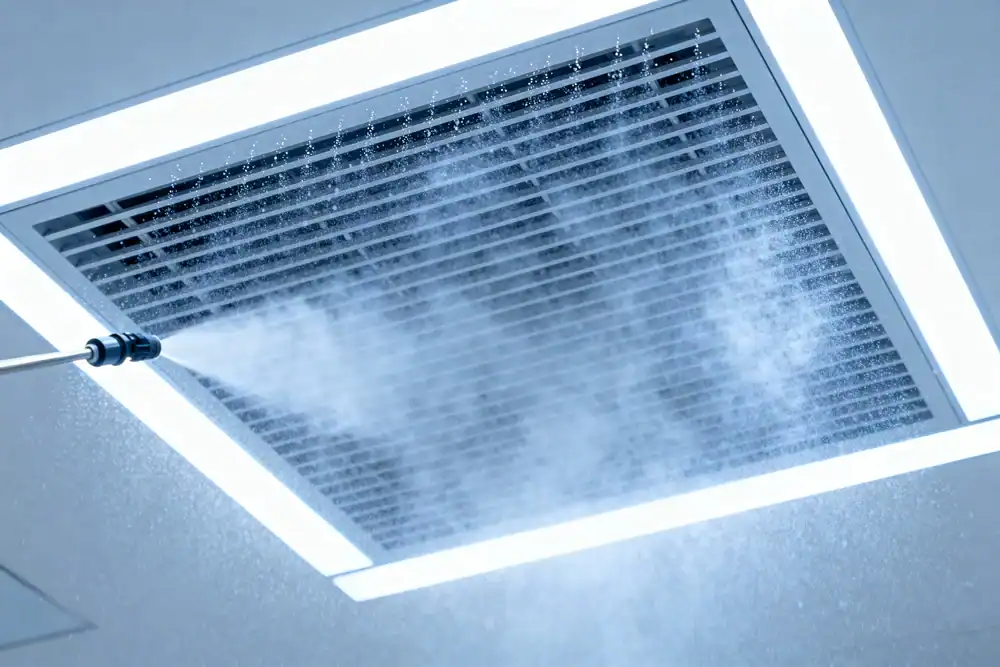
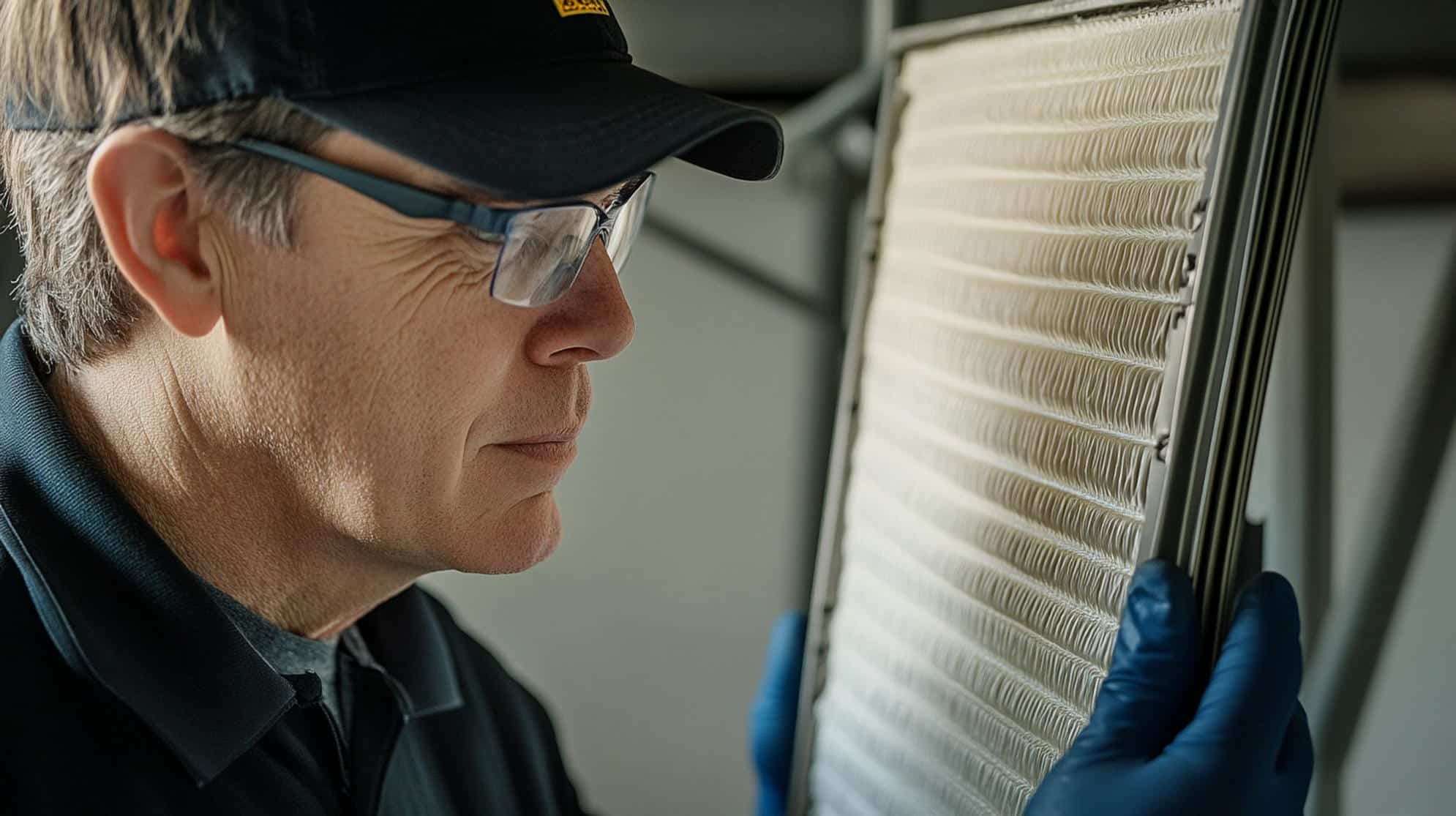
Your HVAC system is essentially your home’s respiratory system. When ducts get clogged with dust, pet dander, and debris, airflow becomes restricted. Think of it like trying to breathe through a straw—everything has to work harder to get the same result.
The numbers tell the story clearly. The U.S. Department of Energy estimates that even modest debris accumulation can increase energy consumption by 15% or more. Recent studies from the National Air Duct Cleaners Association show even more dramatic results, with some systems experiencing 41-60% reductions in fan and blower energy use after professional cleaning. For the average Guilford County, NC household, that translates to $300-400 in annual savings.
But it’s not just about the money. When your system runs more efficiently, it cycles on and off less frequently, maintains more consistent temperatures, and puts less strain on components. You’re not just saving energy—you’re extending the life of equipment that costs thousands to replace.
Most people never see inside their ductwork, which is exactly why problems go unnoticed for years. The average six-room house accumulates about 40 pounds of dust in its air ducts annually. That’s not a typo. Forty pounds.
That dust doesn’t just sit there quietly. Every time your heating or cooling kicks on, your HVAC system pulls air through those ducts, picks up whatever has settled inside, and distributes it throughout every room in your home. You’re breathing it. Your kids are breathing it. It’s settling on your furniture, your bedding, and every surface in your house.
But dust is only part of the equation. In Guilford County, NC, where humidity levels fluctuate throughout the year, moisture can accumulate in ductwork and create the perfect environment for mold growth. Pet owners deal with dander that gets pulled into the system and continuously recirculated. Families who’ve done recent renovations often have construction dust—including drywall particles and sawdust—trapped in their ducts long after the project is finished.
The issue compounds over time. Dust attracts more dust. Moisture encourages mold. Restricted airflow creates pressure imbalances that can actually pull in more contaminants from crawl spaces, attics, or even outdoor air through tiny leaks in the ductwork. What starts as a minor buildup becomes a self-perpetuating cycle that degrades both your air quality and your system’s efficiency.
North Carolina presents specific challenges that make this worse. The state’s geography—from mountains to coast—means varying humidity levels and diverse allergen sources. Pollen from trees, grasses, and weeds gets tracked inside and settles into ductwork. Radon concerns exist in certain areas. And the humid climate, especially during summer months, creates conditions where mold spores thrive if given the opportunity.
Your HVAC system doesn’t discriminate. It circulates whatever is in those ducts, typically 5-7 times per day. If your ducts haven’t been professionally cleaned in years—or ever—you’re essentially running a distribution system for contaminants throughout your home.
Here’s where eco-conscious homeowners see the direct payoff. When your ductwork is clean, your HVAC system doesn’t have to work as hard to move air through your home. That means shorter run times, less frequent cycling, and measurably lower energy consumption.
The Department of Energy states that 25-40% of energy used for heating or cooling a home gets wasted. Much of that waste comes from dirty HVAC systems struggling against restricted airflow. When ducts are clogged, your system might run 30-50% longer to reach the temperature you’ve set on your thermostat. You’re paying for that extra runtime every single month.
Professional duct cleaning removes the physical barriers restricting airflow. Suddenly, conditioned air moves freely through the system. Your furnace or air conditioner reaches the desired temperature faster and shuts off sooner. The compressor and blower motor experience less strain. Everything operates closer to the efficiency level it was designed to deliver.
But there’s another factor most homeowners don’t consider: duct leaks and gaps. When we clean your ductwork, we often identify sections where connections have loosened or where gaps exist. Sealing these leaks—often done in conjunction with cleaning—prevents conditioned air from escaping into attics, crawl spaces, or wall cavities. You’re no longer paying to heat or cool spaces you don’t live in.
For families in Guilford County, NC, where both heating and cooling seasons can be substantial, these savings compound quickly. A typical cleaning investment of $450-1,000 often pays for itself within 1-2 years through reduced energy bills alone. Every year after that represents pure savings that goes back into your budget.
The environmental impact matters too. Lower energy consumption means reduced demand on power plants and a smaller carbon footprint. If sustainability drives your household decisions, this is one of the most measurable ways to reduce your home’s environmental impact. You’re not just saving money—you’re actively consuming less energy, which aligns perfectly with eco-conscious values.
And unlike some energy-saving measures that require significant behavior changes, clean ductwork delivers results passively. You don’t have to remember to do anything differently. Your system simply operates more efficiently, month after month, season after season.
Want live answers?
Connect with a Clean Air LLC expert for fast, friendly support.
Energy efficiency gets a lot of attention, but for many families, the health benefits of clean ductwork matter even more. If anyone in your household deals with allergies, asthma, or respiratory sensitivity, the air quality inside your home directly affects their daily comfort and wellbeing.
The EPA consistently ranks indoor air pollution among the top five environmental health risks. That’s not outdoor smog or industrial emissions—that’s the air inside your home. And in many cases, indoor air is actually 70% more polluted than outdoor air, regardless of your HVAC system type.
The contaminants hiding in dirty ductwork include dust mites, pet dander, pollen, mold spores, bacteria, and even pest droppings if rodents or insects have found their way into the system. Every time your HVAC runs, these irritants get launched into your living spaces where they’re inhaled by everyone in the house.
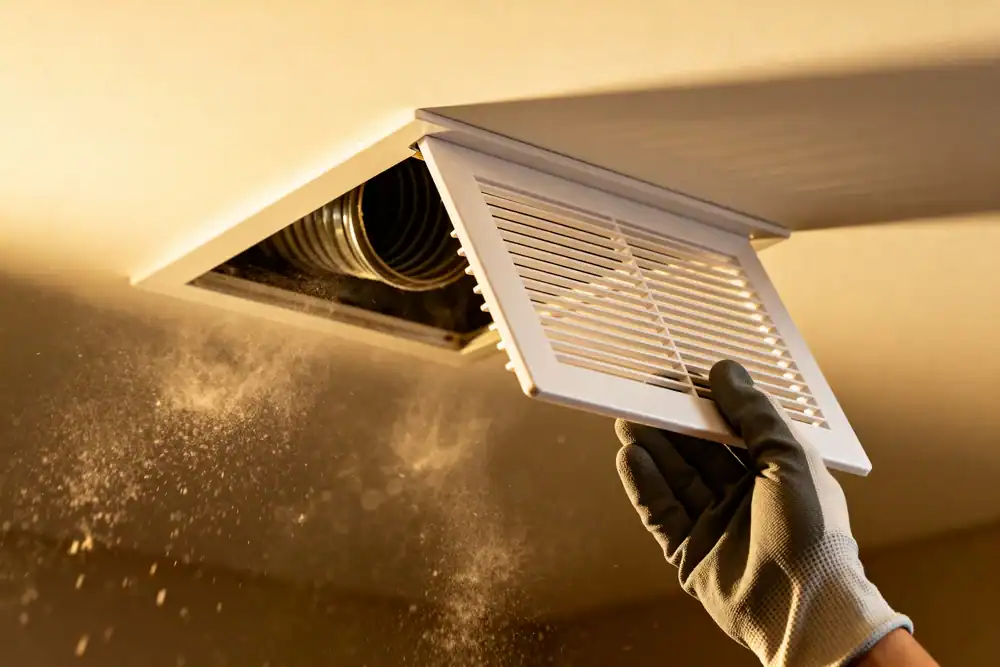
For allergy and asthma sufferers, the connection between duct cleanliness and symptom relief can be dramatic. Studies show that professional duct cleaning can reduce allergy symptoms by up to 40% when combined with other indoor air quality improvements.
The mechanism is straightforward. When you remove the accumulated allergens from your ductwork, there’s simply less material available to be circulated through your home. Dust mites—microscopic creatures that thrive in dust and whose waste products trigger severe allergic reactions—lose their habitat. Pet dander, which is lightweight enough to stay airborne for hours and easily gets pulled into duct systems, gets extracted from the environment. Pollen that’s been tracked inside and settled into ductwork gets removed before it can continue triggering seasonal allergy symptoms indoors.
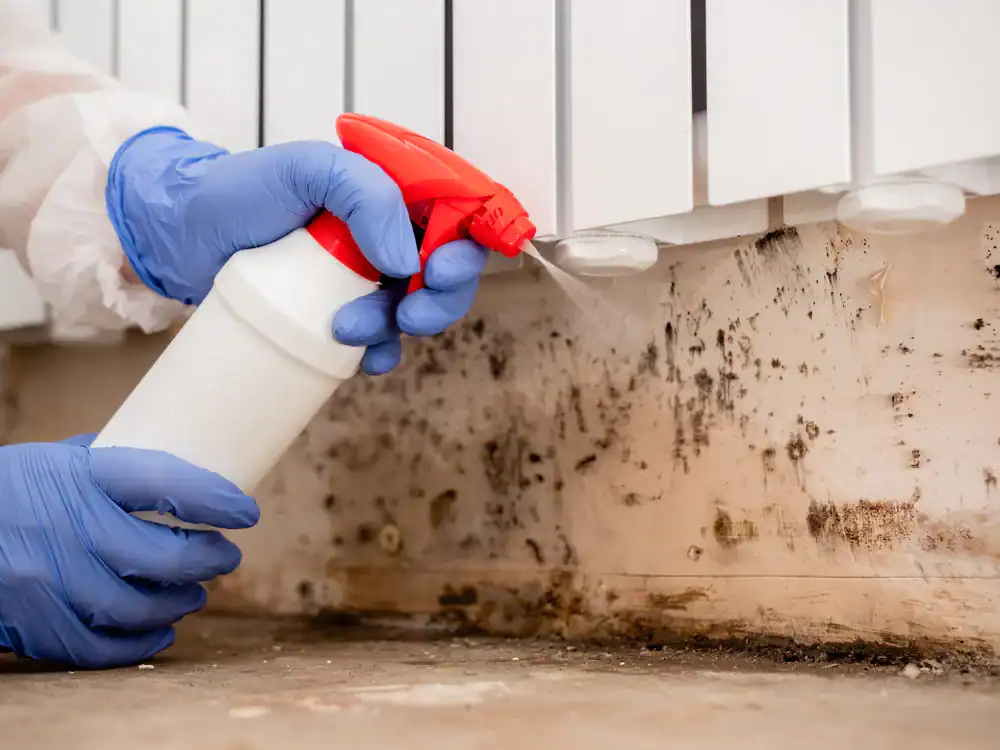
Mold deserves special attention, particularly in Guilford County, NC, where humidity creates ideal conditions for growth. Mold spores in ductwork can cause allergic reactions, trigger asthma attacks, and in some cases lead to more serious respiratory issues. The dark, sometimes damp environment inside ductwork provides exactly what mold needs to colonize and spread. Professional cleaning removes existing mold and, when combined with proper humidity control, prevents it from returning.
For families with children, elderly members, or anyone with compromised immune systems, these improvements aren’t just about comfort—they’re about health. Cleaner air means fewer respiratory infections, better sleep quality, reduced reliance on allergy medications, and overall improved quality of life.
The timing matters too. Many experts recommend scheduling duct cleaning before spring, when pollen counts rise, or before fall, when dust mites and mold become more active as humidity increases. Getting ahead of seasonal allergen exposure helps minimize symptoms before they start.
But here’s what makes this particularly relevant for eco-conscious homeowners: improving indoor air quality through duct cleaning is a chemical-free solution. You’re not introducing air fresheners, synthetic fragrances, or harsh cleaning products into your home. You’re simply removing the source of the problem—accumulated contaminants—through mechanical extraction. It’s a natural, sustainable approach to healthier air.
Here’s something most homeowners don’t realize: up to 50% of the air in your home comes from your crawl space. If that space is damp, moldy, or contaminated, you’re essentially importing those problems directly into your living areas.
Crawl spaces in Guilford County, NC homes face specific challenges. The region’s humidity, combined with temperature fluctuations, creates conditions where moisture accumulates easily. That moisture leads to mold growth, attracts pests, and can even cause structural damage to wooden components over time. And because of how air naturally moves through a house—a phenomenon called the “stack effect”—whatever is in your crawl space doesn’t stay there.
Professional crawl space cleaning removes debris, mold, and contaminants that have accumulated over years. But for long-term protection, many homeowners opt for crawl space encapsulation—sealing the space with a vapor barrier to prevent moisture intrusion in the first place. This creates a controlled environment that stops mold before it starts, keeps pests out, and prevents the musty odors that often indicate crawl space problems.
The impact on indoor air quality is immediate and measurable. Families report that persistent musty smells disappear. Allergy symptoms improve. The overall air in the home feels fresher and cleaner. And because you’ve addressed the source of contamination rather than just treating symptoms, the improvements last.
From an energy efficiency standpoint, crawl space encapsulation delivers benefits beyond air quality. It prevents conditioned air from escaping through your floors, reduces the workload on your HVAC system, and can lower heating and cooling costs by a noticeable margin. For eco-conscious homeowners, it’s another example of how addressing root causes delivers multiple benefits simultaneously—better health, lower energy use, and reduced environmental impact.
The investment in crawl space services typically pays dividends in several ways: improved air quality, energy savings, prevention of costly structural repairs, and increased home value. It’s comprehensive home maintenance that aligns perfectly with sustainable living principles.
If you’re committed to sustainable living, air duct cleaning isn’t just another task on a home maintenance checklist—it’s a foundational practice that supports nearly every other eco-conscious decision you make. Clean ductwork reduces energy waste, improves the efficiency of your HVAC system, protects your family’s health through better indoor air quality, and extends the life of expensive equipment.
The average recommendation is to have your ducts professionally cleaned every 3-5 years, though homes with pets, allergy sufferers, or recent renovations may benefit from more frequent service. The investment typically ranges from $450-1,000 depending on your home’s size and ductwork complexity, but the return—in energy savings, health improvements, and system longevity—far exceeds that initial cost.
For homeowners in Guilford County, NC, where humidity and allergen challenges are part of the regional reality, professional duct and crawl space cleaning isn’t optional—it’s essential. We’ve been helping families in Greensboro and surrounding areas breathe easier for over three decades, combining industry-leading equipment with local expertise to deliver results you can actually feel.
Summary:
Share: