
Contact Info
- Greensboro, NC 27406
- Call: 336-707-0498
- Text: 336-707-0498
-
Mon - Fri: 8am - 4pm
Sat - Sun: Closed
Contact Info
If you've noticed a smell that won't quit, you might already have a mold problem. Here's what professional remediation actually looks like — start to finish.
Most people don’t start searching “mold remediation” because they found a patch of black fuzz on the wall. They start because something smells off — and it won’t go away no matter what they try. That smell is usually the first signal that something is happening where you can’t see it: inside a crawl space, behind a wall, up in the attic, or inside the ductwork that circulates air through every room in your home.
If that sounds familiar, you’re in the right place. This page walks you through what professional mold remediation actually involves, what drives the cost, and what to look for in a contractor — especially here in Guilford County, where the rules around who can legally call themselves a mold professional might surprise you.
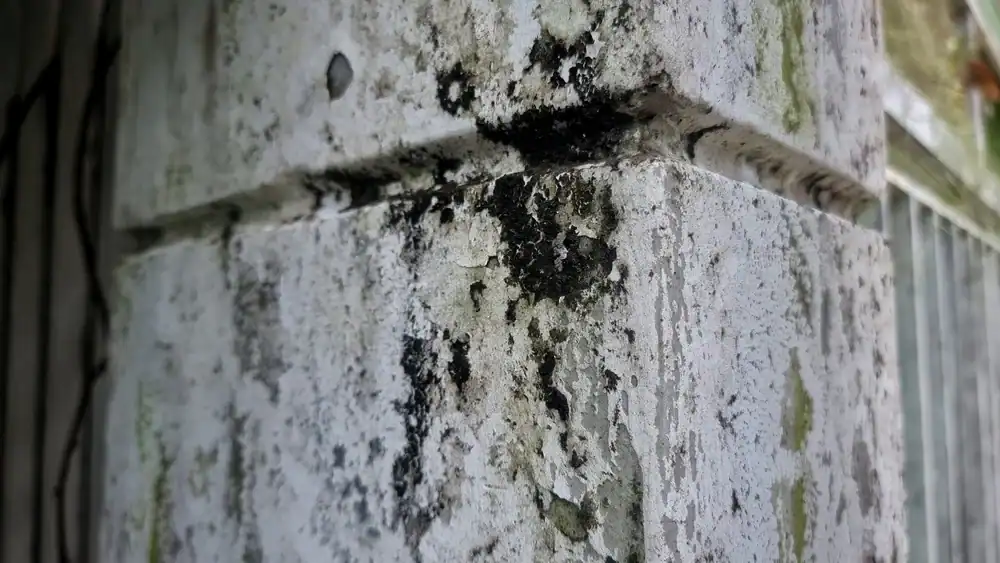
That musty odor isn’t just unpleasant — it’s a symptom. Mold and mildew release gases called microbial volatile organic compounds, or MVOCs, as they break down organic material. Those gases are what you’re smelling. The stronger and more persistent the smell, the more active the growth tends to be.
A mold smell in your house that gets worse after rain, when humidity rises, or when the HVAC system runs is especially telling. It usually means the source is somewhere moisture collects — a crawl space with no vapor barrier, an attic with a slow roof leak, or a basement that takes on water. The smell isn’t the problem. It’s pointing you toward the problem.
This is one of the most common things we hear: “The room looks fine, but it smells terrible.” It makes sense that people are confused — if you can’t see anything wrong, why does it smell like a wet basement?
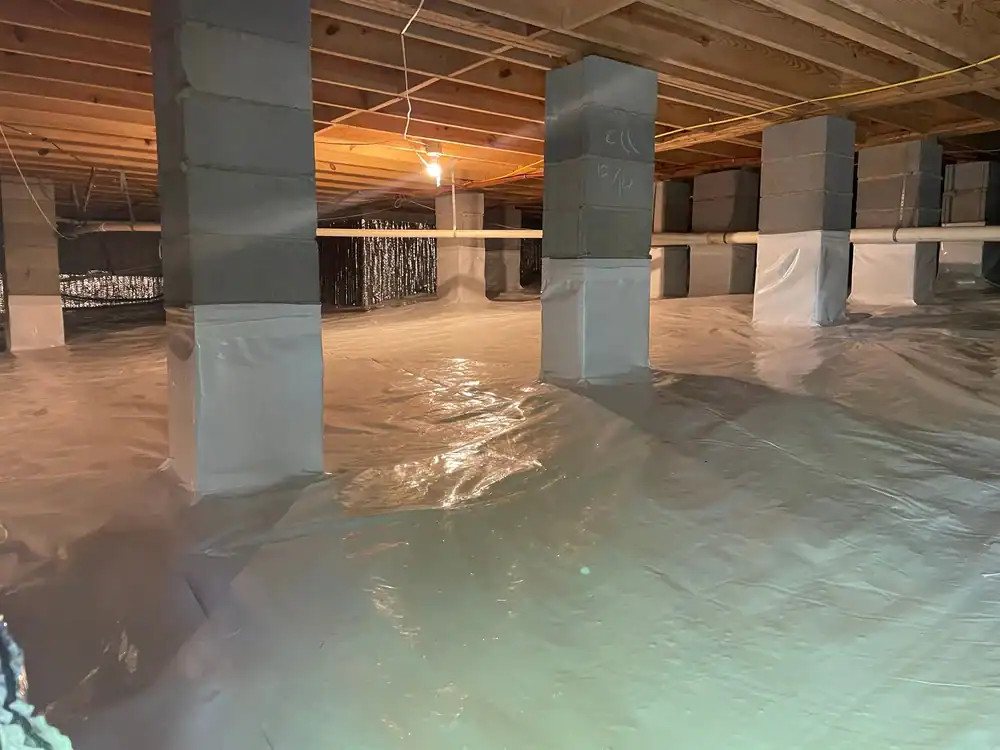
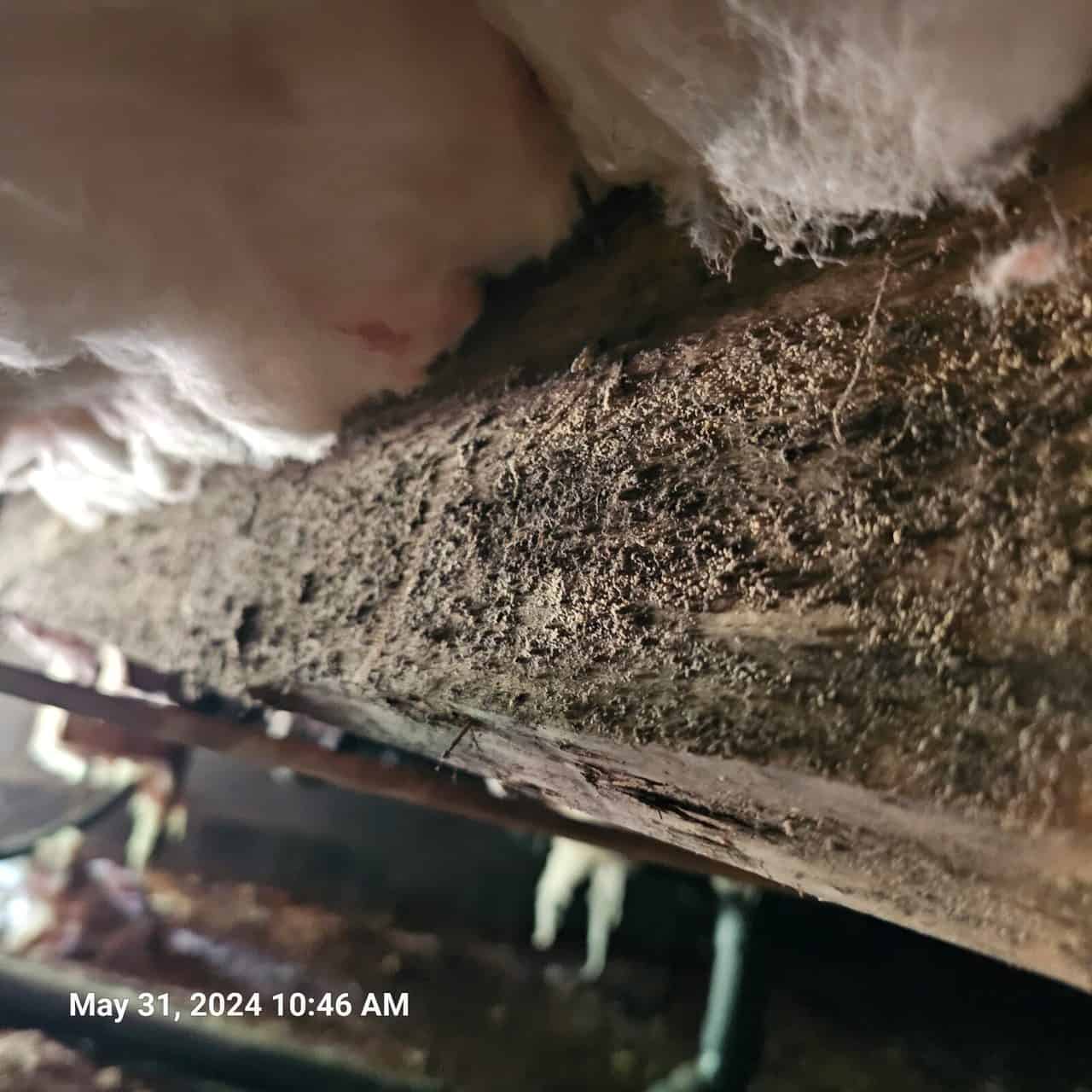
The answer is almost always location. Mold doesn’t need to be visible to be active. In Guilford County homes — particularly the older ranch-style and mid-century houses with crawl space foundations that make up a large portion of the housing stock in Greensboro, High Point, and the surrounding communities — mold often grows on the underside of subfloor wood, on floor joists, or on the interior of duct systems. None of that is visible from inside a room.
Here’s the part that matters most for air quality: research consistently shows that up to 40% of the air circulating through a home with a crawl space comes from that crawl space. So when mold is actively growing under your floors, the air you’re breathing inside your home is carrying whatever is happening down there — spores, odors, and all.
The same logic applies to attics. Poor ventilation, a slow roof leak, or inadequate insulation can create the warm, moist conditions mold needs to thrive. Because attics are out of sight and rarely visited, mold there often goes undetected for months or years — until the smell becomes impossible to ignore, or until a home inspection surfaces it during a real estate transaction.
What causes a mildew smell in a house, specifically? Usually one of a few things: a crawl space without a vapor barrier or dehumidifier, an HVAC system that’s been pulling humid air through a contaminated space, a bathroom fan that vents into the attic instead of outside, or a basement that floods seasonally. The smell is the system telling you something is wrong with moisture management — and the mold is the result.
Bathrooms are one of the most common places homeowners first notice a mold smell — and one of the most misunderstood. Because bathrooms are inherently damp, it’s easy to assume a little mildew smell is just normal. It’s not.
A sudden musty smell in a bathroom usually points to one of three things. First, mold growing behind the tile or drywall where moisture has been collecting undetected — often around a shower pan, a slow pipe leak, or a window that doesn’t seal well. Second, a bathroom exhaust fan that isn’t actually venting to the outside, which means humid air is being pushed into the wall cavity or attic and creating a mold-friendly environment just out of sight. Third, and less obvious, the smell may not originate in the bathroom at all — it may be coming through the HVAC system from a contaminated crawl space or duct, and the bathroom just happens to be where you notice it most because you spend time there in a small, enclosed space.
The distinction matters because the fix is different depending on the source. Surface cleaning might address mold on tile grout, but it won’t touch mold that’s growing inside a wall or in a duct system. And bleach — the go-to DIY approach — kills surface mold on non-porous materials but is largely ineffective on the wood, drywall, and insulation where mold actually takes hold in most homes. It also does nothing about the moisture that caused the mold in the first place, which means it comes back.
If the smell in your bathroom appeared suddenly and you can’t trace it to an obvious source, a professional inspection is the most efficient next step. It’s faster than guessing, and it gets to the actual cause rather than the surface symptom.
Want live answers?
Connect with a Clean Air LLC expert for fast, friendly support.
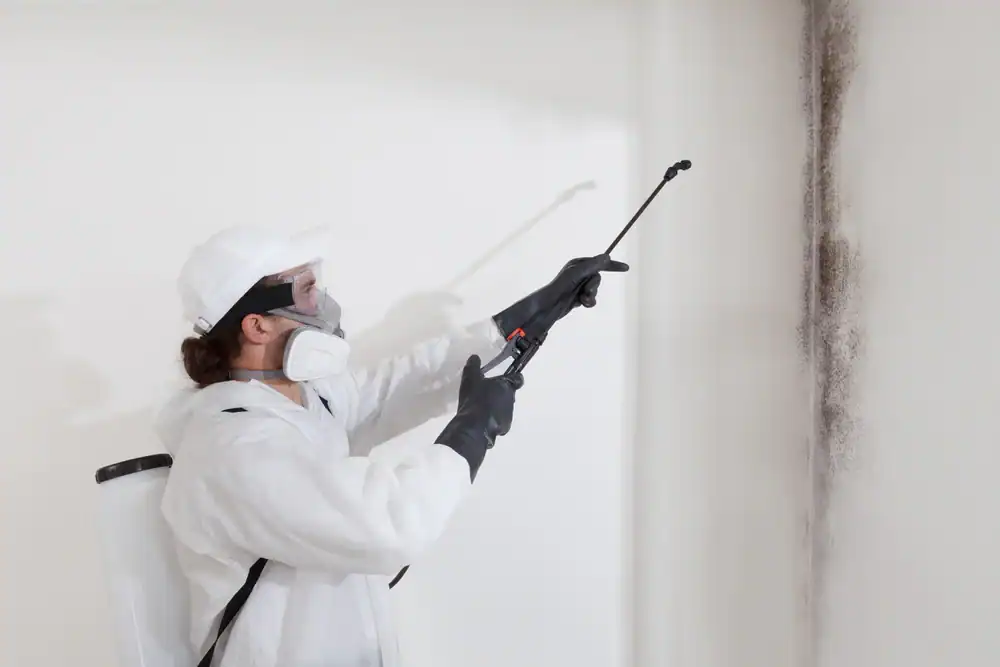
Most people picture mold remediation as someone in a hazmat suit tearing out walls. That’s sometimes the reality — but it’s far from the only scenario, and it’s not even the most common one for crawl space or attic mold in residential homes.
Professional mold removal follows a structured process designed to eliminate the mold, prevent it from spreading during removal, and address the moisture source so it doesn’t come back. Understanding that process helps you know what you’re paying for — and helps you spot a contractor who’s cutting corners.
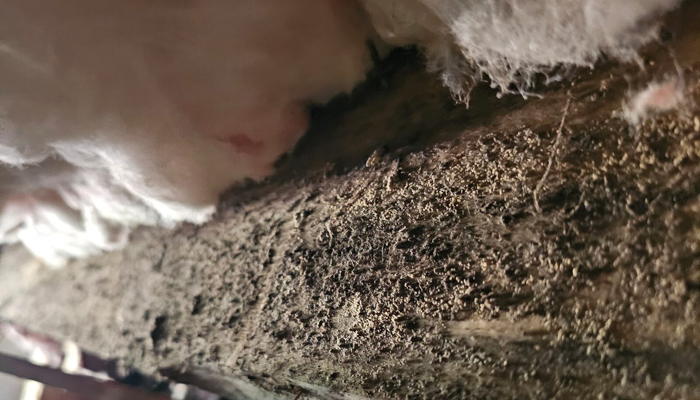
The process starts before anyone touches a surface. A proper inspection identifies where mold is growing, how far it has spread, and — critically — what moisture source is feeding it. Skipping this step is one of the most common ways mold remediation fails. If you remove the mold but leave the moisture problem in place, you’re just resetting the clock.
Once the scope of work is established, the affected area is contained. This means sealing it off with plastic sheeting and using negative air pressure — essentially creating a controlled environment where air flows in but doesn’t flow back out into the rest of the home. This step is what prevents mold spores from being disturbed during removal and spreading to clean areas. It’s not optional. Any contractor who skips containment is not doing professional remediation.
During removal, HEPA-filtered equipment is used to capture what’s being disturbed rather than recirculating it. HEPA filtration is specifically designed to trap particles at the size of mold spores — standard vacuums don’t come close. Unsalvageable materials — contaminated insulation, severely affected drywall — are removed and properly disposed of. Surfaces that can be saved are treated with antifungal or antimicrobial products appropriate to the substrate.
After the work is done, a clearance process confirms that remediation was successful. Ideally, this involves post-remediation air testing by an independent party — someone separate from the company that did the work — to verify that spore counts have returned to normal levels. You should also receive before-and-after documentation: photos and a written record of what was found and what was done. If a contractor can’t provide that, you have no way to verify the job was actually completed.
In Guilford County’s climate — hot, humid summers with relative humidity that can push well above 70% from June through August — crawl spaces and attics are the two most common locations for mold growth in residential homes. Understanding what remediation looks like in each space helps set realistic expectations.
For crawl space mold, the process typically involves cleaning out debris and contaminated insulation, treating exposed wood surfaces with antifungal products, and then addressing the moisture conditions that allowed mold to develop in the first place. That last part is non-negotiable. A crawl space mold job that doesn’t include a conversation about vapor barriers, encapsulation, or a dehumidifier is incomplete. The Piedmont’s humidity levels mean an untreated crawl space will almost certainly develop mold again within a season or two.
Crawl space mold remediation in Guilford County typically runs between $1,500 and $4,000, depending on the extent of growth, whether structural wood is affected, and what moisture control measures are needed alongside the remediation itself.
Attic mold removal follows similar principles but has its own variables. Attics are often warmer than crawl spaces in summer, which accelerates mold growth once moisture gets in. The source is usually a roof leak, inadequate ventilation, or a bathroom fan that vents into the attic instead of outside. Attic remediation typically costs between $1,000 and $4,000, though jobs involving long-undetected leaks or structural decking replacement can run higher. The per-square-foot cost for attic mold has been trending upward in recent years as labor and material costs increase.
One thing that applies to both spaces: the mold you can see is rarely all of it. Professional inspection with moisture meters and, where warranted, air sampling gives a complete picture that a visual check alone can’t provide. In a market like Guilford County — where older homes with crawl space foundations are common throughout Greensboro, High Point, Kernersville, and surrounding communities — that thoroughness matters. These homes were often built before modern moisture management standards existed, and many have never had a proper vapor barrier installed.
Here’s something most contractors won’t tell you: North Carolina has no state licensing requirement for mold remediation. Anyone can legally call themselves a mold professional. That makes credentials your primary protection — specifically, IICRC AMRT certification, which is the credential NC State Extension and the NC Department of Health and Human Services identify as the industry benchmark. You can verify any contractor’s certification at iicrc.org. If they can’t provide a certification number, that tells you something.
Beyond credentials, look for a contractor who offers a written scope of work, documents the job with before-and-after photos, and addresses the moisture source — not just the mold itself. A free inspection is a reasonable starting point. It lets you get a professional assessment and an honest quote before you spend anything.
We’ve been serving Guilford County since the early 1990s, and we hold both IICRC AMRT and NADCA certifications. If you’re dealing with a smell you can’t explain or a mold problem you’re not sure how to handle, Clean Air LLC offers free inspections — no pressure, no commitment. Just answers.
Summary:
Share: