
Contact Info
- Greensboro, NC 27406
- Call: 336-707-0498
- Text: 336-707-0498
-
Mon - Fri: 8am - 4pm
Sat - Sun: Closed
Contact Info
Mold removal without fixing the moisture source is money wasted. Here's what actually works — and what to look for in a Guilford County remediation company.
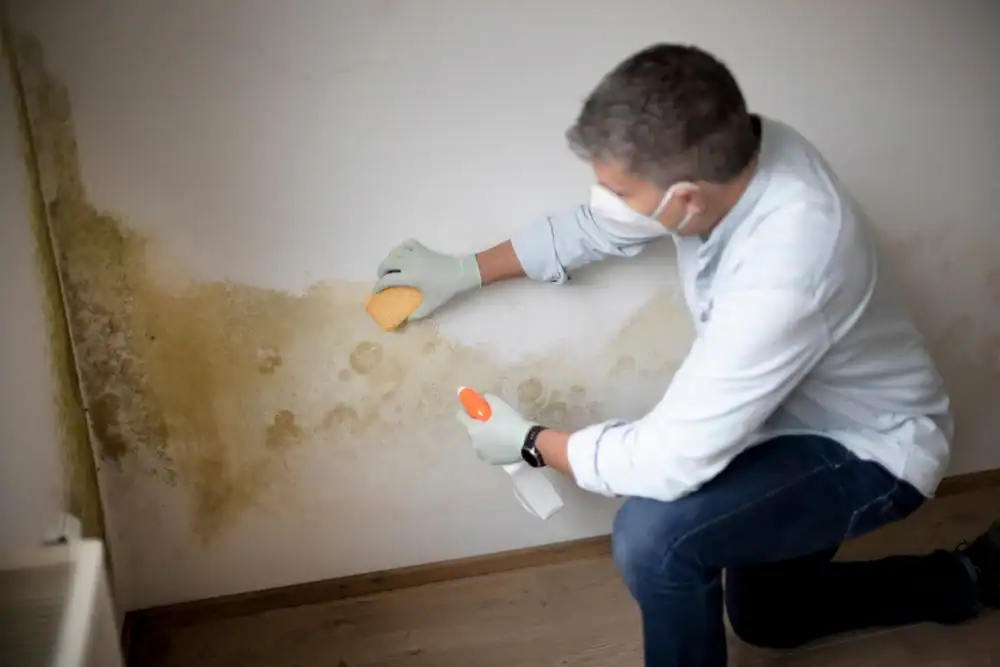
If you’ve noticed a musty smell in your basement or crawl space, or you’ve spotted dark patches on the floor joists or walls, you’re probably already past the “is this a problem?” stage. You know it’s a problem. What you’re trying to figure out now is what to actually do about it — and whether the company you hire is going to solve it or just buy you a few months before it comes back.
That’s the question worth answering. Because mold removal and mold remediation are not the same thing, and the difference between them is usually the difference between a permanent fix and a recurring one.
The single most common reason mold returns after treatment is that the moisture source was never corrected. A technician can clean every visible surface, apply antimicrobial treatments, and leave the space looking completely clear — and if the underlying humidity or water intrusion problem is still there, mold will colonize again within months.
This isn’t a fringe outcome. It’s the default outcome when remediation stops at the surface. Mold is a symptom. Moisture is the cause. Treating one without the other is like mopping up a leak without turning off the water.
Greensboro and the surrounding Guilford County area get roughly 45 inches of rain a year, and summer humidity regularly climbs above 70 percent. That’s not a minor inconvenience — it’s a persistent structural challenge for any home with a crawl space or basement foundation.
The Piedmont region’s clay-heavy soil makes things worse. Clay drains slowly, which means water from a heavy rain event doesn’t move away from your foundation quickly. It sits. It seeps. And in older homes — which make up a significant portion of Guilford County’s housing stock — the moisture barriers and drainage systems that exist today simply weren’t part of the original build.
Once humidity inside a crawl space or basement climbs above 60 percent, you’re in mold territory. At 70 or 80 percent — which is common in an unencapsulated Guilford County crawl space during summer — you’re not just risking mold on the wood and concrete. You’re creating conditions where mold is almost inevitable.
There’s also something most homeowners don’t realize: up to 40 percent of the air circulating through your home comes from the space beneath your floors. That means what’s happening in your crawl space isn’t staying there. The moisture, the spores, the musty odor — it rises through gaps in your subfloor and moves through your living space. If your family has been dealing with persistent congestion, worsening allergies, or a smell that never fully goes away no matter how much you clean, the source may be directly beneath your feet.
Neighborhoods like Sunset Hills, Westerwood, College Hill, and Adams Farm tend to have older homes that are particularly susceptible to this. But even newer developments can run into serious moisture problems when heavy rains push water toward foundations faster than drainage systems can handle it.
Professional mold remediation is a multi-step process, and each step matters. Skipping any one of them is usually how you end up back at square one.
It starts with a thorough inspection — not just a visual scan, but a moisture survey to understand where water is entering, where it’s accumulating, and how far the mold has spread. Mold grows inside wall cavities, on the underside of floor joists, and behind vapor barriers. What you can see is rarely the full picture.
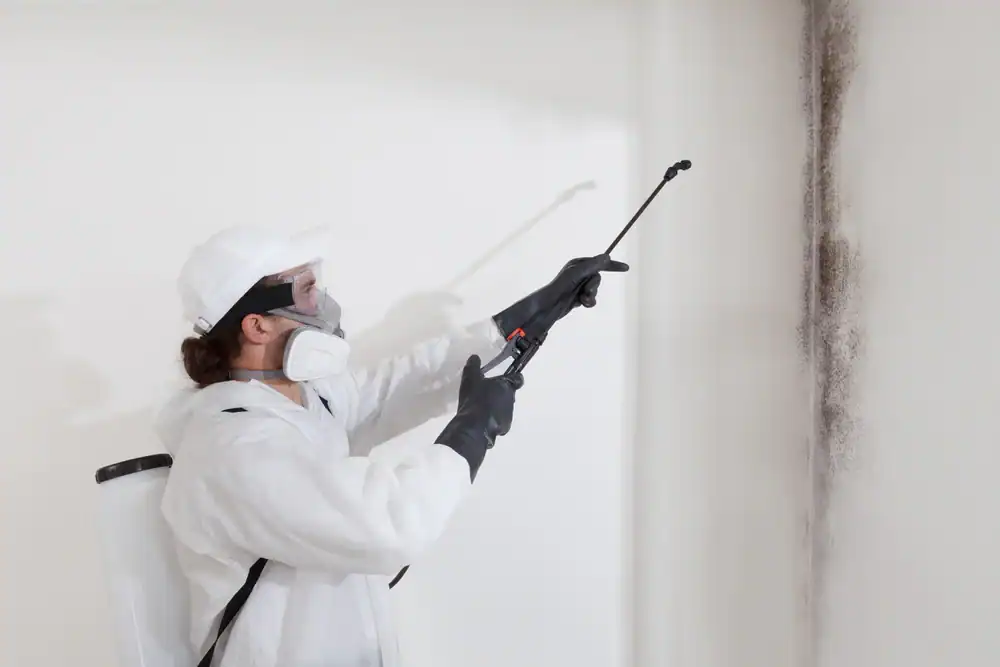
Once the scope is established, containment comes next. Before any mold is disturbed, the work area needs to be isolated. Disturbing a mold colony without containment releases spores into the air and can spread the problem to areas of the home that were previously unaffected. This is one of the clearest signs of a professional operation versus someone cutting corners.
The actual removal process involves HEPA vacuuming to capture mold and microscopic spores from surfaces, followed by antimicrobial and biocide treatments. The distinction matters: household bleach only treats the top layer of a surface. Professional biocide treatments are formulated to kill mold at the root, penetrating porous materials like wood rather than just cleaning what’s visible.
On structural wood in crawl spaces, we apply a fungicidal encapsulant after treatment — it bonds to the wood and creates a barrier against future colonization. Any porous materials that are too far gone — saturated insulation, deeply compromised drywall — need to be physically removed and replaced. No treatment can fully rehabilitate material where mold has penetrated too deeply.
Then comes the step that separates a real fix from a temporary one: correcting the moisture source. That might mean crawl space encapsulation with a vapor barrier, installation of a commercial-grade dehumidifier to maintain humidity in the 40 to 50 percent range that prevents mold growth, improved drainage, or some combination of all three. Without this step, everything else is temporary.
One thing worth knowing: in North Carolina, there is no state license required to perform mold remediation. Anyone can call themselves a mold remediation contractor. That makes third-party certifications the only meaningful signal you have to evaluate a company’s actual qualifications. The IICRC’s AMRT credential — Applied Microbial Remediation Technician — is the recognized standard in the industry. It covers mold biology, containment, treatment methods, and the health and safety protocols required to protect both occupants and workers. It’s worth asking any company you’re considering whether they hold it.
Want live answers?
Connect with a Clean Air LLC expert for fast, friendly support.
Cost is almost always the first question, and it’s a reasonable one. But mold remediation pricing is genuinely variable, and understanding what drives that variation will help you evaluate quotes more accurately than any ballpark figure could.
The factors that most affect cost are the square footage of the affected area, the severity of the contamination, whether structural materials need to be removed and replaced, and — critically — what moisture correction work is needed after the mold is treated. A quote that only covers the mold removal itself, without addressing the moisture source, isn’t a complete solution. It’s just the first half of one.
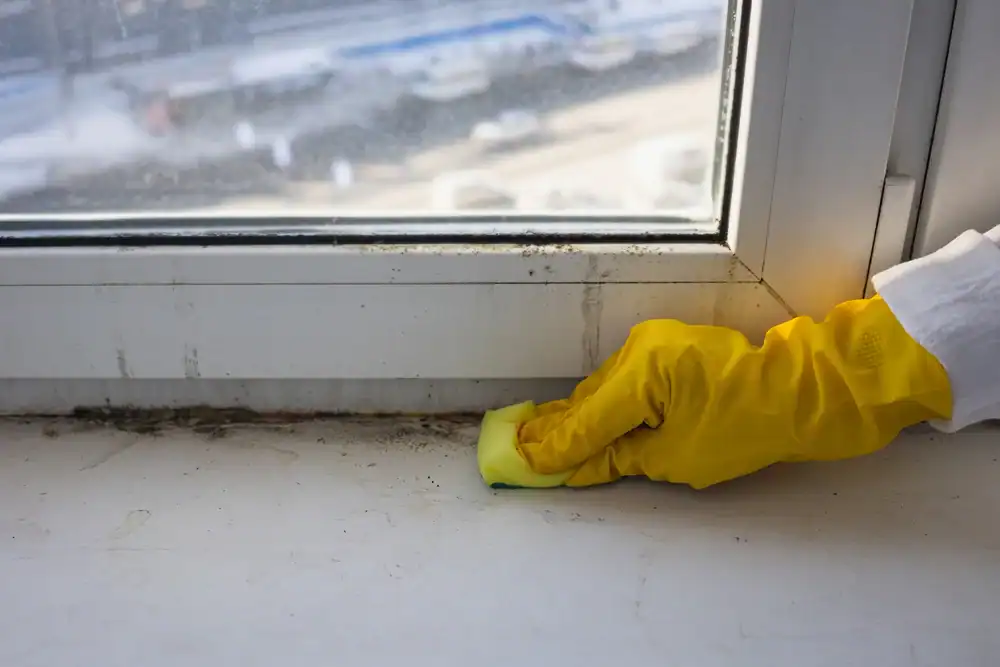
When you’re getting quotes for crawl space or basement mold remediation, the lowest number on the page can be genuinely tempting. But there’s a pattern worth understanding before you make that call.
A low quote that doesn’t include moisture correction — encapsulation, a dehumidifier, drainage improvements — is a quote for half the job. The mold gets treated. The conditions that caused it don’t change. And six to twelve months later, you’re back to the same smell, the same spots, the same problem. Except now you’ve paid once already and have to decide whether to pay again.
The more useful question to ask any company you’re evaluating isn’t just “what does this cost?” — it’s “what does this include, and what happens if the moisture problem isn’t addressed at the same time?” A company that can answer that clearly, explain their process step by step, and document the work before and after is one that’s treating the whole problem, not just the visible part of it.
It’s also worth being cautious of any company that pushes urgency aggressively or inflates the scope of the problem without showing you evidence. Mold remediation does have a legitimate time component — mold can spread to new areas within 24 to 48 hours of a moisture event — but that’s a reason to act reasonably soon, not a reason to sign something before you’ve had a chance to think. We give you a clear estimate before any work begins.
One of the most common questions we hear is whether homeowners can handle this themselves. For a very small, contained mold patch on a non-porous surface, DIY cleaning is sometimes reasonable. But for anything in a crawl space or basement — where moisture is structural, where mold has likely spread beyond what’s visible, and where the conditions that caused it are still present — professional remediation is almost always the more cost-effective path. A DIY attempt that disturbs mold without proper containment or treatment can spread the problem significantly, turning a manageable situation into a much larger one.
Another question that comes up often: does homeowner’s insurance cover mold remediation? The honest answer is that most standard policies exclude mold damage caused by long-term moisture problems. Coverage is more likely when mold results from a sudden, accidental water event — a burst pipe, for example — than from gradual moisture accumulation. It’s worth a call to your insurer before assuming either way.
People also ask how long remediation takes. That depends on the scope, but most residential crawl space and basement jobs in Guilford County can be completed within a day or two for the remediation itself. Encapsulation and dehumidifier installation may extend the timeline slightly depending on the size of the space and what the inspection reveals. We’re straightforward about timelines from the start — no vague estimates, no surprises.
Finally, a question specific to Guilford County homeowners: does the local climate mean mold is just something you have to live with? It doesn’t. Greensboro’s humidity and rainfall do create persistent pressure on crawl spaces and basements, but with proper encapsulation, a correctly sized dehumidifier, and good drainage, it’s entirely manageable. The goal isn’t to fight the climate — it’s to build a system that handles it automatically, so you’re not back in this situation every few years.
The right company for basement mold removal isn’t necessarily the one with the lowest quote or the fastest availability. It’s the one that can explain what’s causing your mold, walk you through the full process clearly, and address the moisture source alongside the remediation — so the fix actually holds.
In North Carolina, where there’s no state mold remediation license, certifications like the IICRC AMRT are the clearest signal that a company has been trained to do this correctly. Pair that with a strong local track record, transparent estimates, and before-and-after documentation, and you have a company worth trusting.
We’ve been serving Guilford County homeowners since the early 1990s, and we offer free inspections as a starting point — no pressure, no inflated scope, just an honest look at what’s actually going on and what it would take to fix it. If you’re ready to get a clear answer, Clean Air LLC is here to help.
Summary:
Share: