
Contact Info
- Greensboro, NC 27406
- Call: 336-707-0498
- Text: 336-707-0498
-
Mon - Fri: 8am - 4pm
Sat - Sun: Closed
Contact Info
Hiring a mold remediation company in Guilford County, NC? Here's the five-point checklist that separates qualified professionals from anyone with a spray bottle and a van.
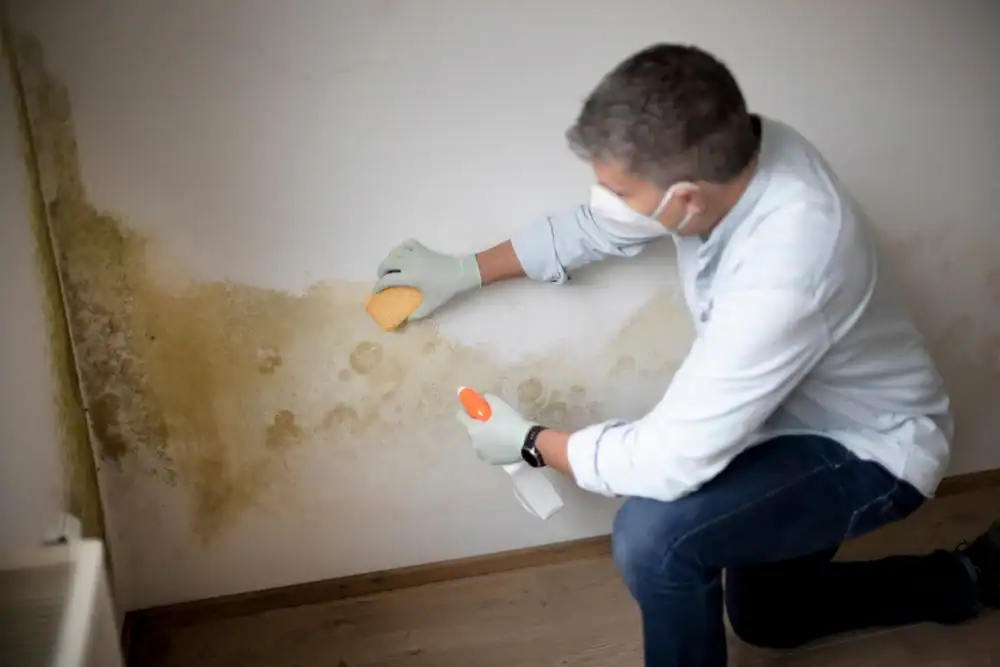
You’ve already decided to hire someone. You’re not here to learn about mold — you’re here to figure out who to trust. That’s a harder question than it sounds, especially in a state where the bar to call yourself a mold remediation professional is essentially nonexistent. No license required. No minimum training. No state oversight. Just a company name and a website.
So how do you tell the difference between a company that actually knows what it’s doing and one that’s going to spray something, hand you an invoice, and disappear? You ask the right questions — and you know what the right answers look like.
Professional mold removal isn’t a single task — it’s a sequence of steps that each serve a specific purpose. Inspection and assessment come first, then containment to prevent spores from spreading, then physical removal of affected materials, then moisture source correction, then cleaning and treatment, and finally post-remediation verification to confirm the space is actually clean.
Skip any of those steps — especially moisture correction — and the mold comes back. The conditions that grew it never changed.
The problem is that most homeowners can’t tell whether a company is following this process or cutting corners. That’s exactly why knowing what to ask, and what to look for, matters before you sign anything.
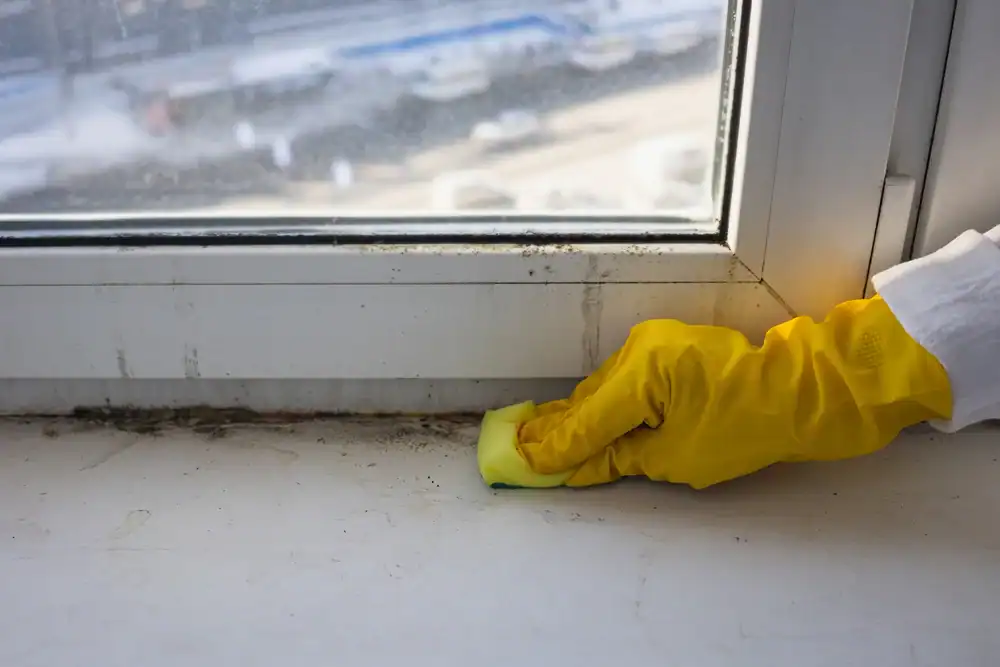
These two terms get used interchangeably, but they describe very different scopes of work. Mold cleaning — the kind you can do yourself or hire a handyman to do — means wiping or treating visible mold on a surface. It addresses what you can see.
The problem is that mold isn’t just a surface issue, especially on porous materials like wood framing, drywall, and insulation. Bleach solutions, for example, kill surface mold but penetrate only about 1/16 of an inch. The root structure, called hyphae, stays intact. The mold grows back. Sometimes faster.
Mold remediation goes deeper — literally. It involves identifying and removing contaminated materials, not just treating them. It requires proper containment so that disturbing the mold doesn’t release millions of spores into parts of your home that weren’t affected. It uses HEPA-filtered equipment that captures 99.97% of particles down to 0.3 microns, rather than vacuums that just redistribute what’s already there.
And critically, real remediation addresses the moisture source. Mold doesn’t appear randomly. It grows where conditions allow it — warmth, organic material, and moisture. In Guilford County, that usually means a crawl space. The Piedmont clay soil holds water like a sponge, and when it rains — which it does roughly 43 to 45 inches a year — that moisture has nowhere to go but toward your foundation.
Up to 50% of the air circulating through your home comes from below the floor. If the crawl space is damp and contaminated, you’re breathing it.
A company that treats the visible mold without addressing what’s feeding it isn’t doing remediation. They’re doing mold cleaning with a bigger invoice.
Here’s something most homeowners in Guilford County, NC don’t know: North Carolina does not require a mold removal license. As of 2026, only four jurisdictions in the entire country — Florida, Texas, New York, and Washington D.C. — license both mold assessors and remediators. The remaining states, including North Carolina, have no mold-specific regulation at all.
When a company says they’re a “licensed mold remediation professional,” they may be referring to a general contractor’s license — which has nothing to do with mold. There’s no state exam, no state-mandated training, no minimum competency standard specific to mold work in NC. Anyone with equipment can legally advertise as a mold remediation company.
This is where voluntary industry certifications become the only meaningful signal. The IICRC — the Institute of Inspection, Cleaning and Restoration Certification — is the most widely recognized credentialing body in the water and mold restoration industry. Our AMRT credential, which stands for Applied Microbial Remediation Technician, is the standard that insurance adjusters, property managers, and general contractors look for when selecting a remediation company.
It’s not a certificate you get after a weekend webinar. AMRT candidates must complete a minimum of three days of hands-on training and pass a proctored written exam before the credential is awarded. It’s renewed every three years with required continuing education.
The NC State Extension program confirms it plainly: no federal or state certification programs exist for mold remediation companies in North Carolina. The IICRC is the most widely accepted industry certification today. When there’s no license to check, the credential is the only proof that a technician actually knows what they’re doing. Ask to see it. A legitimate company will show you without hesitation.
Want live answers?
Connect with a Clean Air LLC expert for fast, friendly support.
You don’t need to become an expert in mold science to make a good hiring decision. You just need to know the five things a legitimate company should be able to prove — and what it means if they can’t.
Think of this as a checklist you can bring to any estimate appointment. A company that welcomes these questions is a company worth hiring. One that deflects, gets vague, or pressures you to decide before you’ve had time to think is telling you something important.
First, they should be able to show you a verifiable industry credential — specifically an IICRC AMRT certification. Not just name it. Show you the card, give you a name you can look up in the IICRC’s online registry. In a state with no licensing requirement, this is the only proof that the technician has actually been trained and tested.
Second, they should offer a written scope of work before any work begins. Not a verbal estimate. Not a ballpark. A documented breakdown of what they’re going to do, how they’re going to contain the work area, what materials will be removed, and what post-remediation verification looks like. If they won’t put it in writing, that’s a red flag.
Third, they should be able to explain how they’ll address the moisture source — not just the mold itself. Any company that proposes to remove mold without correcting what caused it is setting you up for a return visit. In crawl space situations, that often means encapsulation, drainage improvements, or dehumidification — not just treatment.
Fourth, they should have documented reviews with specific outcomes. Not just a star rating. Look for reviews that name the technician, describe the actual problem, and explain what changed after the work was done. Sixty-six five-star Google reviews that include details like that tell a very different story than a hundred anonymous ratings.
Fifth, they should offer a free inspection with no pressure attached. The NC Department of Health and Human Services specifically warns homeowners not to hire a consultant who also provides remediation services, because the conflict of interest is real. A company that will come out, show you exactly what’s wrong with documentation, and let you decide without pressure is a company that’s confident in what they’ll find and how they’ll fix it.
Some warning signs are obvious in hindsight but easy to miss in the moment, especially when you’re anxious about a mold problem and someone is offering a quick fix.
Be skeptical of any company that guarantees to eliminate all mold. Mold spores exist everywhere — indoors and out. The goal of legitimate remediation is to return indoor mold levels to normal ambient levels and eliminate the conditions that allowed it to colonize. Any company promising total elimination either doesn’t understand what they’re doing or is telling you what they think you want to hear.
Be cautious of unusually low bids. A quote that’s dramatically lower than others usually means something is being skipped — containment, post-remediation verification, or moisture source correction. Those aren’t optional steps. They’re what separates a job that holds from one that fails in six months.
Watch out for pressure to decide immediately. Mold does spread — it can move through a property in as little as 48 hours under the right conditions — but a legitimate company will give you time to review a written proposal. Urgency tactics are a sales technique, not a remediation protocol.
And if a company refuses to provide credentials you can verify, or gives you a verbal-only estimate with no itemization, keep looking. In Guilford County’s older housing stock — the pre-1980 neighborhoods across Greensboro and High Point that were built with minimal crawl space moisture control — a mold problem that’s handled wrong the first time can become a significantly more expensive problem the second time around. Costs for severe infestations can reach $10,000 to $15,000 or more when moisture issues go unaddressed. Getting it right the first time is worth the extra scrutiny upfront.
The five things to verify — credentials, written scope, moisture source correction, documented reviews, and a no-pressure inspection — aren’t complicated. But they do separate companies that know what they’re doing from ones that are learning on your job.
We’ve been serving Guilford County since the early 1990s. IICRC AMRT certified, BBB accredited, and built almost entirely on referrals from homeowners who came back for their second and third homes. We offer free inspections because we’d rather show you exactly what’s going on before you spend a dollar than have you take our word for it.
If you’re trying to figure out who to call, we’d welcome the chance to earn that call. Reach out to Clean Air LLC and let’s start with a look — no pressure, no commitment, just answers.
Summary:
Share: