
Contact Info
- Greensboro, NC 27406
- Call: 336-707-0498
- Text: 336-707-0498
-
Mon - Fri: 8am - 4pm
Sat - Sun: Closed
Contact Info
Your air conditioner doesn’t get a break during a North Carolina summer. Between the heat and the humidity, it’s running constantly just to keep your home livable. But if your ducts are packed with years of dust, pet dander, and moisture buildup, your AC is fighting an uphill battle every single time it kicks on.
That extra strain shows up in higher energy bills, uneven cooling, and a system that’s wearing out faster than it should. Cleaning your AC ducts isn’t about perfection. It’s about giving your system a fair shot at doing its job without burning through electricity or leaving half your house sticky and uncomfortable.
North Carolina summers aren’t just hot. They’re humid. Greensboro averages 69% humidity year-round, and during summer months, that number climbs into the 70s and 80s. Your air conditioner has to work harder in humid conditions because it’s not just cooling the air—it’s pulling moisture out of it.
When your ducts are dirty, that job gets even harder. Dust and debris restrict airflow, forcing your system to run longer cycles to reach the temperature you set on the thermostat. The longer it runs, the more energy it burns, and the higher your bill climbs. In a climate where your AC is already working overtime, dirty ducts are like asking it to run a marathon with a weight vest on.
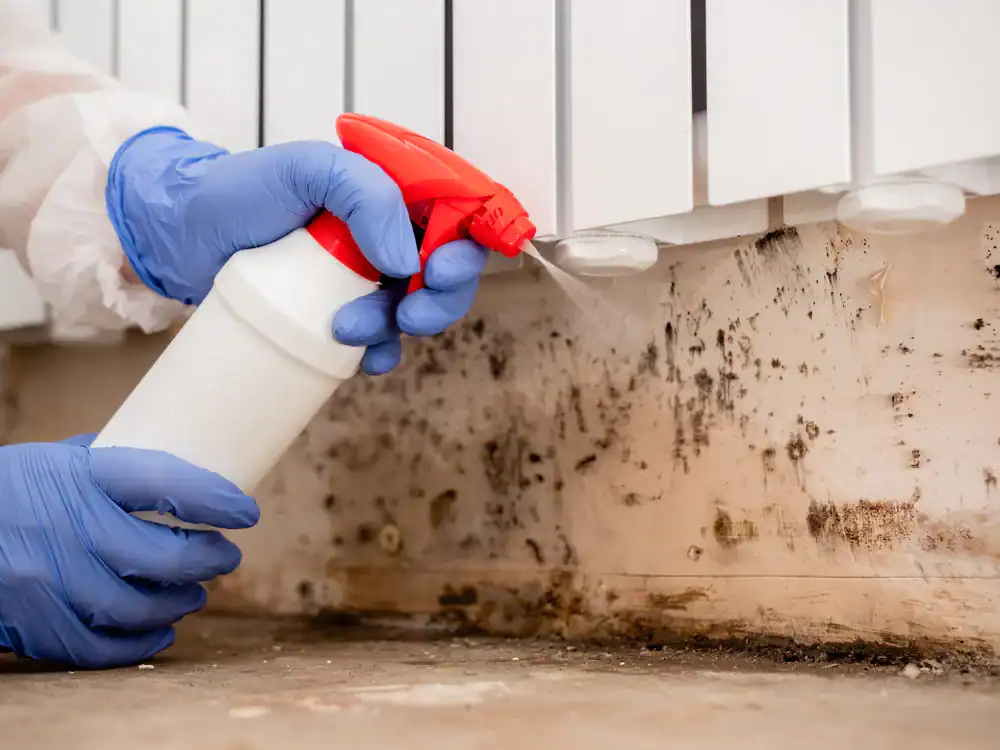
Moisture is the other problem. North Carolina’s humidity creates condensation inside your ductwork, and when that moisture mixes with dust and organic material, you get mold. Mold doesn’t just smell bad. It narrows your ducts even further and gets blown into every room of your house every time your system runs. In Guilford County homes, this is especially common in ductwork that runs through attics or crawl spaces where temperatures fluctuate and humidity settles.
Your energy bill spikes in the summer because your AC runs more. That’s expected. What’s not expected is how much of that cost comes from inefficiency you could actually fix.
According to the U.S. Department of Energy, 25 to 40 percent of the energy used for heating or cooling a home is wasted. A lot of that waste comes from ductwork issues—leaks, poor insulation, and buildup that blocks airflow. Even a small amount of debris accumulation can increase your energy consumption by 15% or more. When you’re already running your AC heavily during July and August in Guilford County, that 15% adds up fast.
Clean ducts let air move freely. Your system doesn’t have to push as hard to circulate cooled air through your home, so it reaches your set temperature faster and shuts off sooner. Shorter run times mean less electricity used. Less electricity used means lower bills. It’s not complicated, but it’s one of those things most people don’t think about until they see the difference.
Homeowners who’ve had professional ac duct cleaning often report noticeable drops in their summer cooling costs. Some studies show energy consumption reductions between 20% and 30% after a thorough cleaning, especially in homes that haven’t had it done in years. If your monthly bill during peak summer is $250, saving even 20% puts $50 back in your pocket every month. Over a three-month summer, that’s $150. Over a few years, it’s enough to pay for the cleaning several times over.
The efficiency gains aren’t just about the ducts themselves. When airflow improves, your AC’s internal components—coils, fans, blowers—don’t have to work as hard either. That reduces wear and tear, which means fewer breakdowns and a longer lifespan for your equipment. You’re not just saving on your electric bill. You’re protecting a multi-thousand-dollar investment from premature failure. In a region where AC systems run six to seven months out of the year, that protection matters.
Professional air conditioning duct cleaning isn’t a quick vacuum job. It’s a systematic process that addresses your entire HVAC system, not just the visible vents.
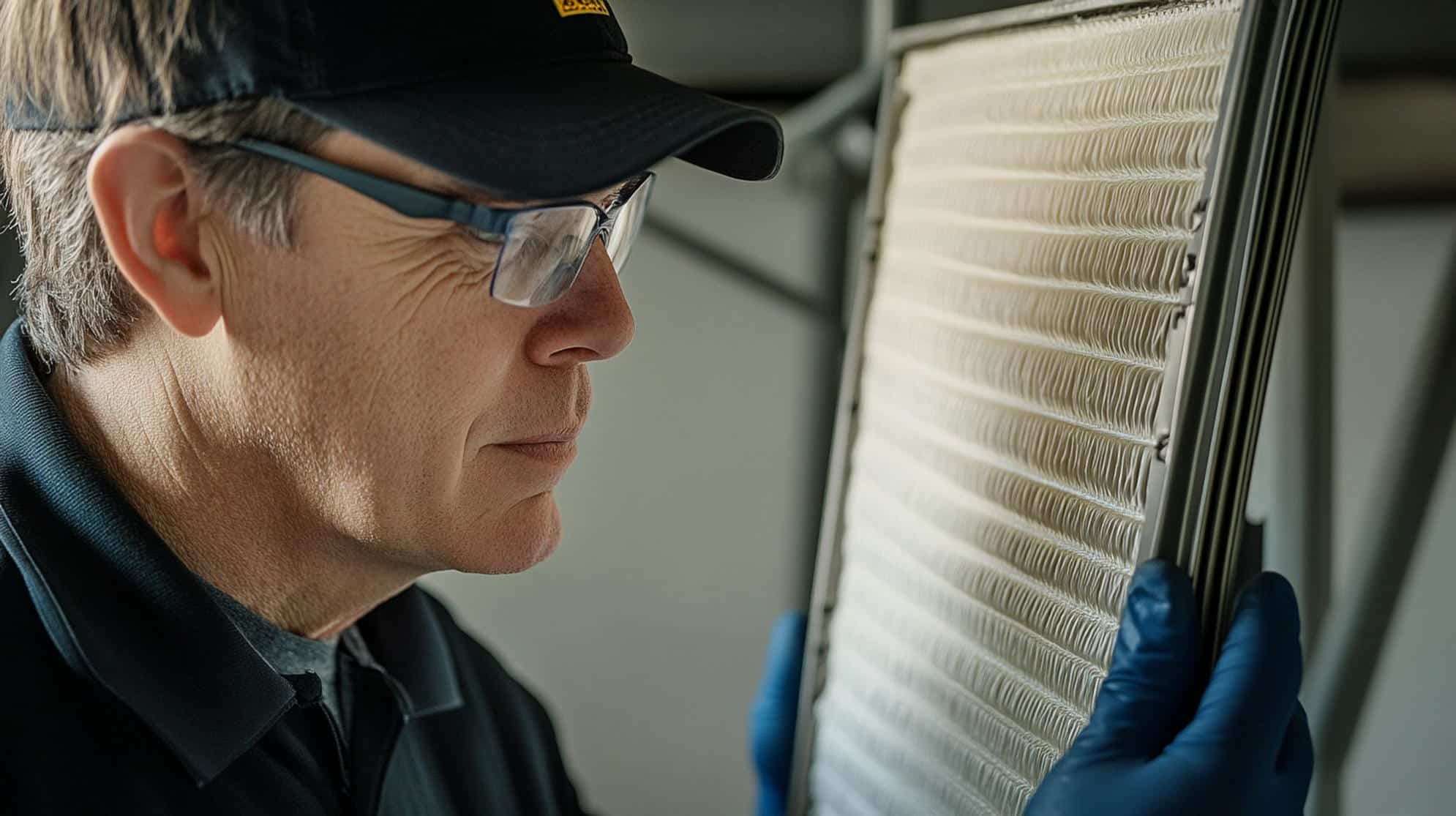
The process starts with an inspection. We use cameras to look inside your ductwork and identify problem areas—heavy dust buildup, mold growth, disconnected sections, or debris that’s restricting airflow. This step matters because it shows you what’s actually in there, not just what someone assumes based on the age of your home. You should see the footage yourself. If a company won’t show you, that’s a red flag.
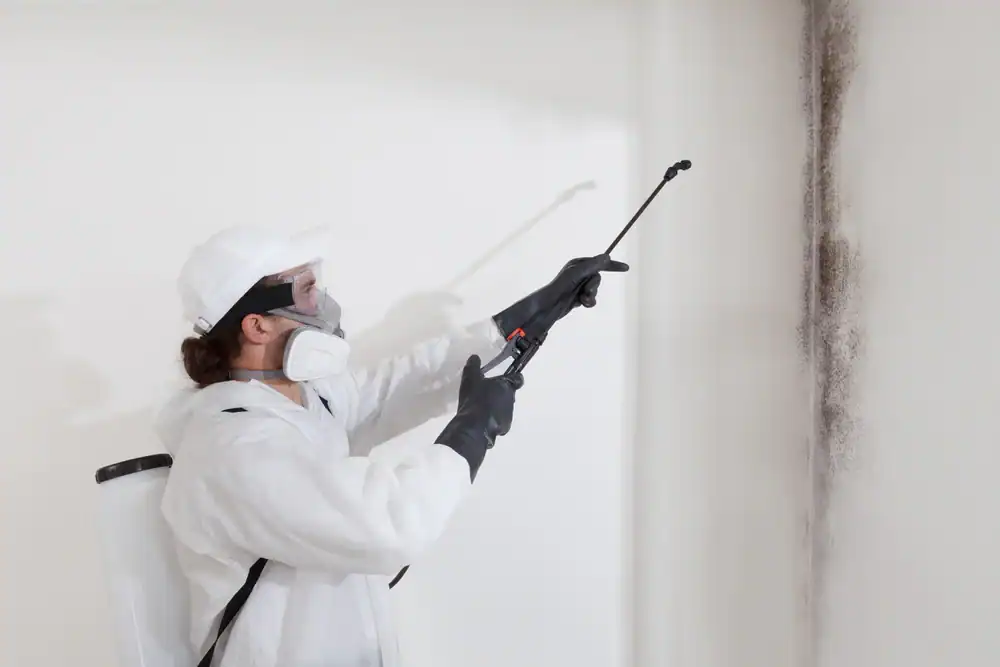
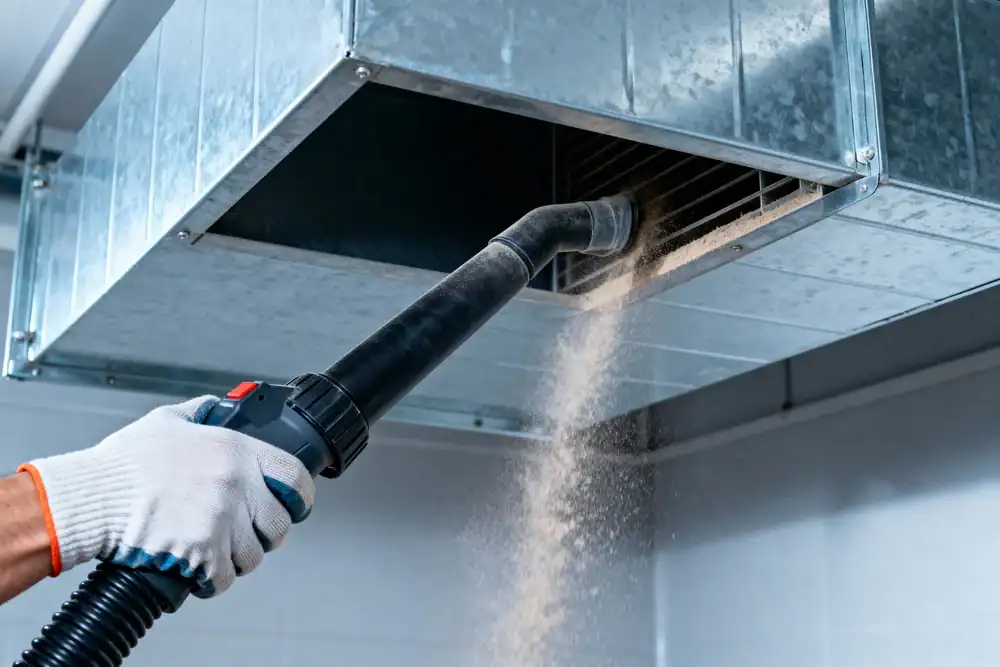
Once the inspection is done, the cleaning begins. We use professional-grade equipment—truck-mounted HEPA vacuum systems—to create negative pressure throughout your duct system. That negative pressure is key. It keeps contaminants from escaping into your home while the cleaning is happening. Think of it like a giant, controlled vacuum that pulls everything toward the collection point instead of blowing it around.
While the vacuum is running, we use specialized tools—rotating brushes, compressed air nozzles, air whips—to agitate and dislodge debris stuck to the interior walls of your ducts. Dust doesn’t just sit loose in there. It clings. It builds up in layers. It gets damp and sticky in humid climates like ours. Standard household vacuums can’t touch it. You need equipment designed specifically for this job, capable of capturing particles down to 1/300th the diameter of a human hair.
The cleaning covers both the supply ducts (which deliver cooled air to your rooms) and the return ducts (which pull air back to the system). Both sides matter. If you only clean one, you’re leaving half the problem untouched. The process also includes cleaning registers, grills, diffusers, coils, drain pans, fans, and the air handling unit. Contamination in any part of the system affects the whole thing, so a thorough job addresses all of it.
Most homes take three to four hours for a complete cleaning. Larger homes or systems with significant buildup may take longer. After the work is done, you should get another camera inspection showing the results. Clean ducts look clean. You shouldn’t see debris, dust layers, or mold. If you do, the job wasn’t finished.
Want live answers?
Connect with a Clean Air LLC expert for fast, friendly support.
You don’t need to guess whether your ducts need attention. Your home will tell you. The signs aren’t subtle once you know what to look for.
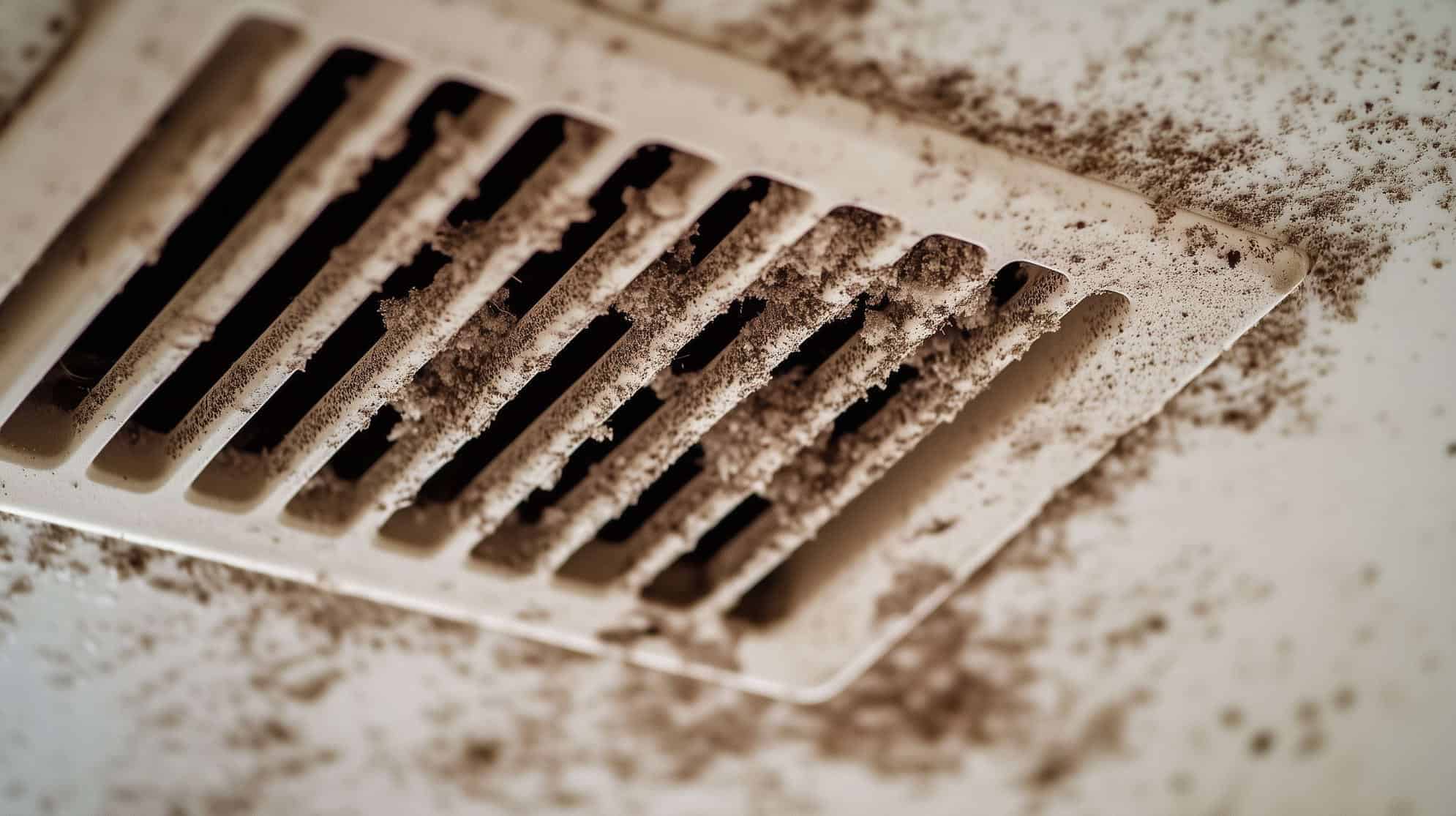
Dust around your vents is the most obvious one. If you see buildup on the vent covers themselves or notice a puff of dust when your AC kicks on, that’s dust coming directly from your ductwork. It’s not just settling there. It’s being blown out every time your system runs, which means it’s also being blown into the air you’re breathing.
Musty smells are another clear indicator, especially in a humid climate. If your house smells damp or moldy when the AC is running, there’s a good chance mold is growing somewhere in your ductwork. That smell doesn’t come from nowhere. It’s spores and organic compounds being circulated through your home. You can’t fix that with air fresheners. You have to address the source. This is particularly common in Guilford County homes where crawl spaces contribute up to 40% of the air that enters your living space.
If some rooms in your house never seem to get cool while others are freezing, that’s often a duct problem. Blockages, leaks, or heavy buildup in certain sections can restrict airflow to specific areas, leaving those rooms warmer than the rest of the house.
This is frustrating for obvious reasons, but it also costs you money. When your thermostat is in a room that’s getting plenty of airflow, it might read 72 degrees and shut the system off—even though your bedroom upstairs is still sitting at 78. Your AC thinks it’s done its job, but half your house is still uncomfortable. So you turn the thermostat down further, forcing the system to run longer and work harder just to get a little relief in the rooms that aren’t cooling properly.
Clogged ducts make this worse. When air can’t flow freely, your system compensates by running longer cycles. That puts extra strain on your equipment and drives up your energy consumption. You’re paying more to stay less comfortable, which is the exact opposite of what your HVAC system is supposed to do.
Regular ac duct cleaning removes those blockages and restores balanced airflow throughout your home. Air moves the way it’s supposed to, reaching every room efficiently. Your thermostat gets accurate readings. Your system cycles on and off normally instead of running continuously. And you stop paying for cooling that’s not actually making your whole house comfortable.
In older Guilford County homes with original ductwork, this problem tends to get worse over time. Decades of dust accumulation, settling, and possible pest activity create restrictions that weren’t there when the system was new. A professional cleaning can restore performance closer to what your system was designed to deliver.
If you or your family members are sneezing, coughing, or dealing with congestion that gets worse when you’re home, your ducts might be the reason. Dirty ductwork is a reservoir for allergens—dust mites, pollen, pet dander, mold spores—and every time your AC runs, it circulates those contaminants through your living space.
The EPA has confirmed that indoor air can be two to five times more polluted than outdoor air. In homes with dirty ducts, that number can be even higher. Your HVAC system is supposed to filter and circulate clean air, but when the ducts themselves are contaminated, the system becomes part of the problem instead of the solution.
This is especially true in North Carolina, where high humidity creates ideal conditions for mold growth. Mold doesn’t need much to thrive—just moisture, organic material, and a dark space. Your ductwork checks all those boxes. Once mold establishes itself, it releases spores into the air every time your system runs. Those spores can trigger allergic reactions, asthma attacks, and respiratory irritation, particularly in children, elderly family members, and anyone with compromised immune systems.
An ac cleaning service that addresses the entire system removes the accumulated allergens and eliminates mold growth at the source. You’re not just masking symptoms with medication or air purifiers. You’re actually improving the air quality in your home by getting rid of what’s causing the problem in the first place. Families who’ve had their ducts cleaned often report fewer allergy symptoms, better sleep, and an overall improvement in how their home feels.
It’s not a magic fix for every health issue, but if your symptoms improve when you leave the house and worsen when you come back, your indoor air quality is worth investigating. And your ductwork is a logical place to start, especially if it hasn’t been cleaned in several years or if you’ve never had it done at all.
North Carolina summers are demanding enough without your AC system fighting against dirty ductwork. When your ducts are clean, your system runs efficiently, your energy bills stay manageable, and your home stays consistently comfortable even during the hottest, most humid months.
This isn’t about chasing perfection. It’s about giving your equipment a fair chance to do what it’s designed to do without unnecessary strain, wasted energy, or compromised air quality. Clean ducts improve airflow, reduce moisture-related issues, and extend the life of your HVAC system—all while lowering your monthly cooling costs.
If you’re in Guilford County and you’re tired of high energy bills, uneven cooling, or indoor air that doesn’t feel as clean as it should, it’s worth having your ductwork inspected. We’ve been serving Greensboro and the surrounding areas for over 30 years, using professional-grade equipment and NADCA-certified methods to deliver results you can actually see and feel. Your home deserves air that works for you, not against you.
Summary:
Share: