
Contact Info
- Greensboro, NC 27406
- Call: 336-707-0498
- Text: 336-707-0498
-
Mon - Fri: 8am - 4pm
Sat - Sun: Closed
Contact Info
NADCA certification isn't just a badge—it's proof your duct cleaning service follows industry standards. Here's why that matters when choosing who enters your home.
You’ve probably seen the ads. Whole-house duct cleaning for $99. Maybe less. It sounds like a deal worth considering, especially when you’re noticing more dust on your furniture or family members are dealing with allergies that seem worse at home.
But here’s what most homeowners in Guilford County don’t realize until it’s too late: not all duct cleaning services are created equal. Some companies follow established industry standards and use professional-grade equipment. Others show up with portable vacuums, spray some disinfectant, and leave your ducts dirtier than before—while charging you ten times the advertised price.
The difference often comes down to one thing: NADCA certification. Let’s talk about why that matters and what you’re actually paying for when you hire a duct cleaning service.
When you’re hiring someone to clean your home’s ductwork, you’re trusting them with your indoor air quality and your HVAC system’s health. That’s not a small thing. Professional standards exist for a reason—they separate legitimate services from operations that do more harm than good.
NADCA, the National Air Duct Cleaners Association, sets the benchmark for what proper duct cleaning should look like. Their ACR Standard is recognized worldwide as the guide for best practices in HVAC system cleaning. It’s not just a suggestion. It’s a detailed framework covering everything from equipment requirements to safety protocols.
Companies that hold NADCA certification aren’t just paying for a membership. They’re committing to having certified technicians on staff who’ve passed rigorous exams. These Air Systems Cleaning Specialists understand how HVAC systems work, how to clean them without causing damage, and how to protect your home’s occupants during the process. The certification isn’t permanent either—technicians must renew annually, ensuring they stay current with industry developments and proven methods.
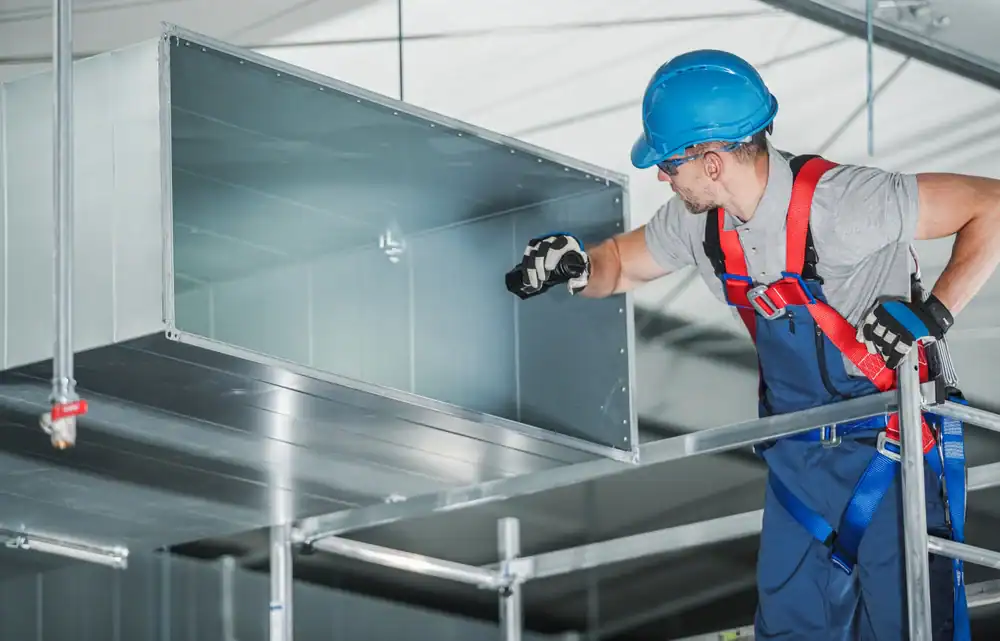
Here’s where the difference between certified and non-certified services becomes obvious: the equipment. Professional duct cleaning requires industrial-grade tools that most scam operations simply don’t have.
Legitimate services use truck-mounted or high-powered portable vacuums that create negative pressure throughout your entire duct system. We’re talking about machines pulling 5,000+ CFM (cubic feet per minute), not the 1,000 CFM Shop-Vac sitting in your garage. That difference matters because true mechanical source removal—the process of actually extracting contaminants from your ducts—requires that level of power.
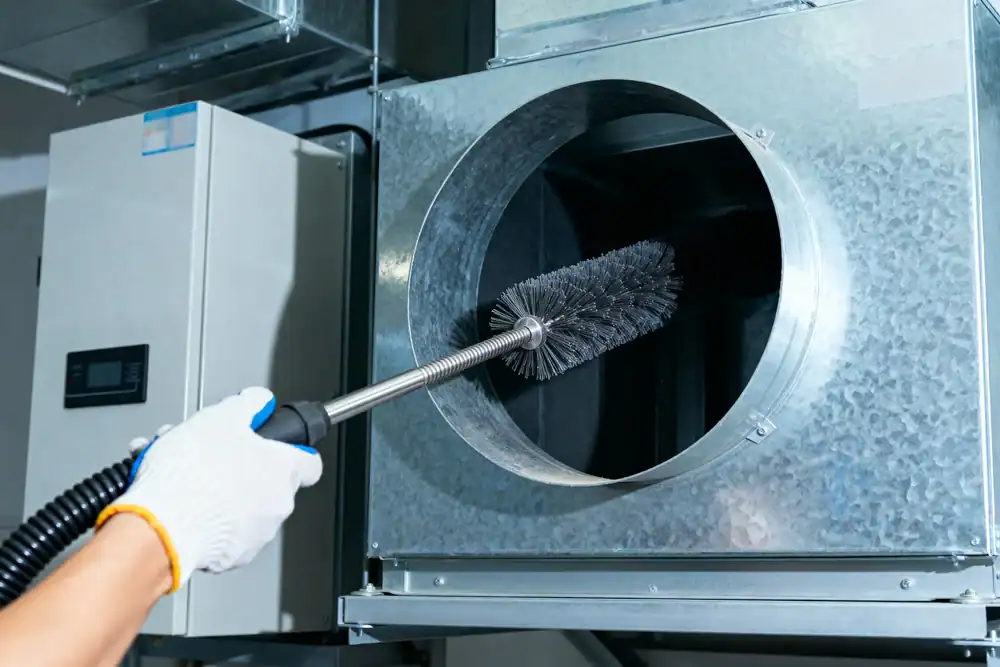
The process starts with a thorough inspection, often using high-definition cameras that snake through your ductwork. You should be able to see what’s actually in there before any cleaning begins. Then, the entire HVAC system gets placed under continuous negative pressure. This prevents contaminants from escaping into your living space while technicians use specialized brushes, air whips, and compressed air nozzles to dislodge debris stuck to interior surfaces.
Everything gets captured by that powerful vacuum system and removed from your home. Not blown around. Not pushed deeper into the system. Removed.
The whole thing takes time—usually 2 to 5 hours for an average home, depending on size and complexity. If someone’s promising to clean your entire duct system in 30 minutes, they’re not actually cleaning it. They’re performing theater.
Professional services also clean more than just the ducts themselves. They address the entire HVAC system: supply and return ducts, registers, grills, diffusers, coils, drain pans, fans, and the air handling unit. Cleaning only part of the system just recontaminates everything else, making the whole effort pointless.
Not every home needs duct cleaning right now. That’s something honest professionals will tell you upfront, even if it costs them a sale.
The EPA’s guidance is clear: you don’t need routine duct cleaning just because time has passed. You need it when there’s visible evidence of a problem. That includes substantial mold growth on ductwork or other HVAC components, vermin or pest infestations in your ducts, or ducts clogged with substantial deposits of dust and debris that are releasing particles into your home.
You might also consider cleaning if you’ve recently completed major renovations. Construction dust is different from everyday household dust—it’s finer, more pervasive, and gets into everything including your ductwork. Or if someone in your household is experiencing unexplained respiratory symptoms that seem worse at home, and your doctor suspects an environmental trigger.
Homes with pets that shed, family members with asthma or severe allergies, or properties that have experienced smoke, mold, or water damage often benefit from more frequent cleaning. NADCA recommends every 3 to 5 years for most homes, with adjustments based on your specific circumstances.
But here’s what you shouldn’t do: agree to duct cleaning because someone knocked on your door with a too-good-to-be-true offer, or because a technician “found” mold without showing you proof. Legitimate companies provide visual evidence—often through camera inspections—before recommending services. They give you time to make informed decisions. They don’t create artificial urgency or pressure you into signing on the spot.
If you’re unsure whether your ducts need cleaning, start with a visual inspection of your return registers. Some dust accumulation is normal as dust-laden air gets pulled through the grate. That doesn’t mean your entire duct system is contaminated. You can vacuum those registers yourself or remove and clean them. But if you’re seeing substantial buildup, visible mold, or noticing musty odors when your system runs, it’s worth having a professional take a look.
Want live answers?
Connect with a Clean Air LLC expert for fast, friendly support.
Professional duct cleaning follows a structured process that protects both your home and your HVAC system. Understanding what should happen helps you recognize when you’re dealing with legitimate service versus a scam operation.
The process begins with a comprehensive inspection. Technicians should examine your entire ductwork system, identifying areas that need attention and assessing contamination levels. This isn’t a quick glance. It involves specialized tools, often including cameras that provide real-time footage of your duct interiors. You should be able to see what they’re seeing.
Then comes preparation. Professionals protect your home with drop cloths and coverings around work areas. They temporarily shut down your HVAC system and may create strategic access points in the ductwork if needed. These access holes get professionally sealed afterward, maintaining your system’s integrity.
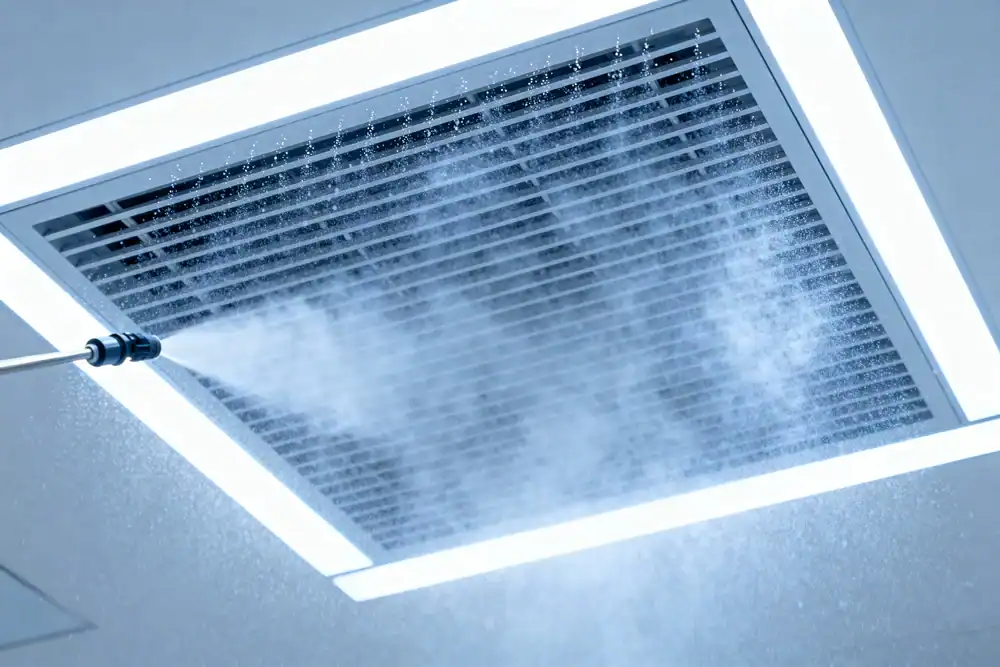
Once preparation is complete, the actual cleaning begins with creating negative pressure throughout your duct system. A powerful vacuum collection device connects to your ductwork near the air handler, essentially putting your entire system under suction. This is critical—it ensures that as contaminants get dislodged, they flow directly to the collection device rather than escaping into your home.
With negative pressure established, technicians work through each register systematically. They use rotating brushes to agitate duct walls, loosening decades of accumulated dust, pet dander, and debris. Compressed air tools help dislodge stubborn contaminants. The vacuum continuously pulls everything out as it’s loosened.
Both the supply side (which sends air throughout your house) and the return side (which brings air back into the system) get cleaned separately. They’re completely separate systems, and both need attention. Skipping either one defeats the purpose.
The cleaning extends beyond just the ducts. Technicians clean registers, grills, diffusers, coils, fans, and blower components. They address the air handling unit housing. Every component that touches your home’s air gets attention because contamination anywhere affects everything.
After cleaning, there’s a final inspection to verify the work. Professionals often use cameras again to document the difference, showing you before-and-after footage. You should see clean duct surfaces, not just hear promises that it’s cleaner.
The whole process typically takes 3 to 5 hours for an average home. Larger homes or systems with heavy contamination take longer. Smaller homes with straightforward ductwork might finish faster. But if someone’s done in 30 minutes, they haven’t done the job.
The duct cleaning industry has a scam problem. Unregulated in most states, it attracts operators who use bait-and-switch tactics to prey on homeowners who don’t know what legitimate service looks like. Knowing the red flags protects you.
The $99 whole-house cleaning is almost always a scam. You cannot legally, mechanically, or financially perform complete duct cleaning for that price. The equipment alone costs more to operate. What happens instead: technicians show up, claim the advertised price only covers the main trunk line or first few vents, then discover “dangerous contamination” that requires expensive treatment. Your $99 job becomes $1,200 or more, often with aggressive pressure to agree immediately.
Watch for fake mold discoveries. Some operators wipe a dirty return vent, claim you have lethal black mold, and demand hundreds of dollars on the spot for chemical fogging. Legitimate professionals provide proof—usually through lab testing or at minimum, clear visual evidence you can verify. They don’t pressure you into immediate payment based on scare tactics.
Equipment matters. If technicians show up with portable vacuums that look like they came from a hardware store, they don’t have the tools to do proper cleaning. Ask about CFM ratings. Professional truck-mounted or industrial portable systems should pull 5,000+ CFM. Anything less is inadequate for whole-system cleaning.
Legitimate companies provide written estimates before work begins. They explain what’s included, how long it will take, and what the total cost will be. They don’t have hidden fees that appear after they’re already in your home. They don’t use high-pressure sales tactics or create artificial urgency.
Check certifications. Ask if technicians hold NADCA certification—specifically ASCS (Air Systems Cleaning Specialist) credentials. Ask how many certified technicians are on staff. Verify BBB accreditation. Look for companies with substantial local history and real customer reviews on third-party platforms, not just testimonials on their own website.
Ask about their process. Professionals should be able to explain exactly what they’ll clean, what equipment they’ll use, and how long it will take. They should mention negative pressure, source removal, and whole-system cleaning. If they’re vague or focus only on spraying disinfectant, that’s a red flag.
Finally, trust your instincts. If something feels off—if the price seems too good to be true, if you’re being pressured to decide immediately, if the technician can’t answer basic questions about their process—walk away. Legitimate companies want informed customers who understand what they’re paying for. Scammers want quick decisions before you have time to think.
NADCA certification isn’t just a credential. It’s proof that a company follows established industry standards, uses proper equipment, and employs technicians who’ve passed rigorous testing. When you’re choosing who to trust with your home’s air quality, that matters.
Professional duct cleaning costs between $450 and $1,000 for most homes—a range that reflects the actual equipment, time, and expertise required to do the job right. Anything significantly cheaper is either incomplete service or a bait-and-switch setup. Anything significantly more expensive should come with clear justification for the additional cost.
Your home’s indoor air quality affects your family’s health, your HVAC system’s efficiency, and your energy bills. Choosing a certified professional who follows NADCA standards means you’re investing in real results, not just theatrical cleaning that leaves problems untouched.
If you’re in Guilford County and dealing with dust accumulation, allergy symptoms, or concerns about what’s circulating through your home, we’ve been serving local families for over 30 years with NADCA-certified technicians, BBB accreditation, and the professional-grade equipment needed to actually clean your ductwork—not just move dust around.
Summary:
Share: