
Contact Info
- Greensboro, NC 27406
- Call: 336-707-0498
- Text: 336-707-0498
-
Mon - Fri: 8am - 4pm
Sat - Sun: Closed
Contact Info
That earthy, musty smell in your home isn't something to air out and forget. Here's what it's actually telling you.

You noticed it. Maybe when you ran the AC for the first time this spring. Maybe after a rainy week. Maybe it’s just always kind of… there. That damp, earthy smell that doesn’t go away no matter how many candles you burn or windows you open.
Here’s the thing — that smell isn’t random. It’s your home trying to tell you something. And in most cases, what it’s telling you is that mold is actively growing somewhere you probably haven’t looked yet. Understanding what’s behind the odor is the first step toward actually solving it.
The musty smell most people associate with mold isn’t the mold itself — it’s a byproduct of mold growing. As mold colonies develop, they release compounds called Microbial Volatile Organic Compounds, or MVOCs. These are the chemical gases responsible for that earthy, damp, sometimes faintly sour odor you’re picking up.
What makes MVOCs important to understand is that they don’t go away just because you wipe down a surface. They embed themselves in drywall, wood, insulation, carpet, and even the air in your ductwork. That’s why so many people clean the visible mold, think the problem is solved, and then find themselves wondering why the smell came back a few weeks later. It didn’t come back — it never actually left.
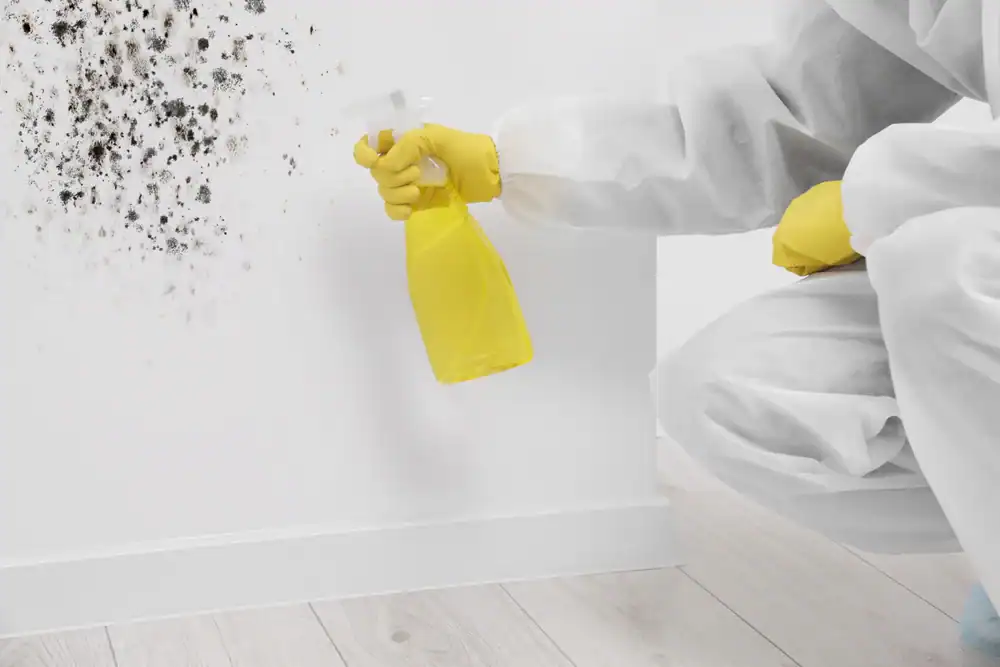
Most people assume that if they had a real mold problem, they’d be able to see it. That’s rarely how it works. Mold most commonly grows in places you’re not regularly looking — behind walls, inside ductwork, underneath flooring, and especially in crawl spaces. The smell reaches your living area long before any visible growth does.
This is particularly common in Guilford County, where a large portion of the housing stock was built with vented crawl spaces. That design made sense in drier climates, but in the Piedmont, where summer humidity regularly runs between 70 and 90 percent, a vented crawl space essentially invites the outdoor air — and all its moisture — directly underneath your home. Mold doesn’t need much. Give it a damp surface, some organic material like wood or insulation, and limited airflow, and it gets to work fast.
Here’s the part that surprises most homeowners: up to 50% of the air circulating through your home comes from the space beneath your floors. So when mold is growing in your crawl space, you’re not just dealing with a problem under the house. You’re breathing that air in your living room, your kitchen, your kids’ bedrooms. The musty smell you’re noticing upstairs is often a crawl space problem that’s traveled through your HVAC system and into every room.
This is also why simply masking the odor never works long-term. Air fresheners, candles, even a new dehumidifier — none of those address what’s happening at the source. The smell keeps coming back because the mold colony keeps producing MVOCs. Until the growth is physically removed and the moisture feeding it is addressed, the cycle continues.
If you’ve noticed the smell is stronger when the HVAC is running, that’s a meaningful clue. It suggests the ductwork may be carrying mold spores or MVOC-laden air from a contaminated area — often the crawl space — and distributing it throughout the house. That’s not a problem you can solve with a filter change.
People use “mold” and “mildew” interchangeably, but they’re not quite the same thing. Mildew is a surface-level fungal growth — the flat, powdery stuff you might see on a damp shower wall or on outdoor furniture that’s been left in the rain. It’s easier to clean and generally stays on the surface of materials rather than penetrating them.
Mold is different. It grows into porous materials — wood, drywall, insulation, subflooring — and its root structures, called hyphae, anchor deep beneath the surface. That’s why wiping mold off with bleach often doesn’t solve the problem. You’re removing what you can see, but the mold’s structure remains embedded in the material, and as long as moisture is present, it continues to grow back.
Both mold and mildew produce MVOCs, and both signal that you have a moisture problem somewhere that needs to be found and fixed. The mildew smell in your house and the mold smell in your house are telling you the same thing: something is wet that shouldn’t be, and it’s been that way long enough for fungal growth to take hold.
In Guilford County, the conditions that produce both are remarkably consistent. Clay soil retains water and drains slowly, which means moisture accumulates beneath homes even without a visible leak or flood event. Older neighborhoods in Greensboro — the kind of homes you find in areas like Fisher Park or Irving Park — often have original vapor barriers that have degraded over decades, leaving crawl spaces exposed to ground moisture year-round. Newer construction in western Guilford County faces a different but related problem: tightly sealed homes that trap indoor humidity and limit the natural air exchange that would otherwise keep moisture levels in check.
Whether you’re smelling mildew or mold, the response is the same. Find the moisture source, address it properly, and remove the growth — not just from the surface, but from the material it’s colonized.
Want live answers?
Connect with a Clean Air LLC expert for fast, friendly support.
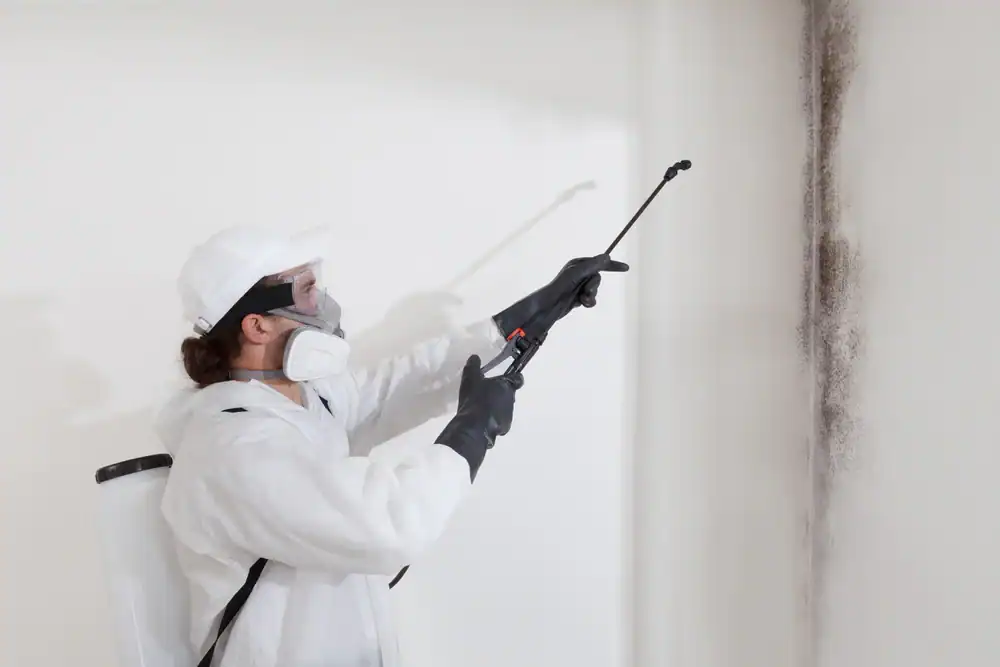
There’s a lot of confusion in this space about what mold removal actually involves, and some of that confusion is deliberate — there are companies that benefit from keeping homeowners uncertain. So let’s be straightforward about what a professional remediation process should include.
First, it starts with finding the source. Not just the visible mold, but the moisture condition that’s allowing it to grow. Without addressing that, any remediation is temporary. Second, the affected materials need to be physically removed or treated — not just sprayed with bleach and wiped down. The IICRC S520 standard, which governs professional mold remediation nationally, is clear on this point: physical removal is the correct approach.
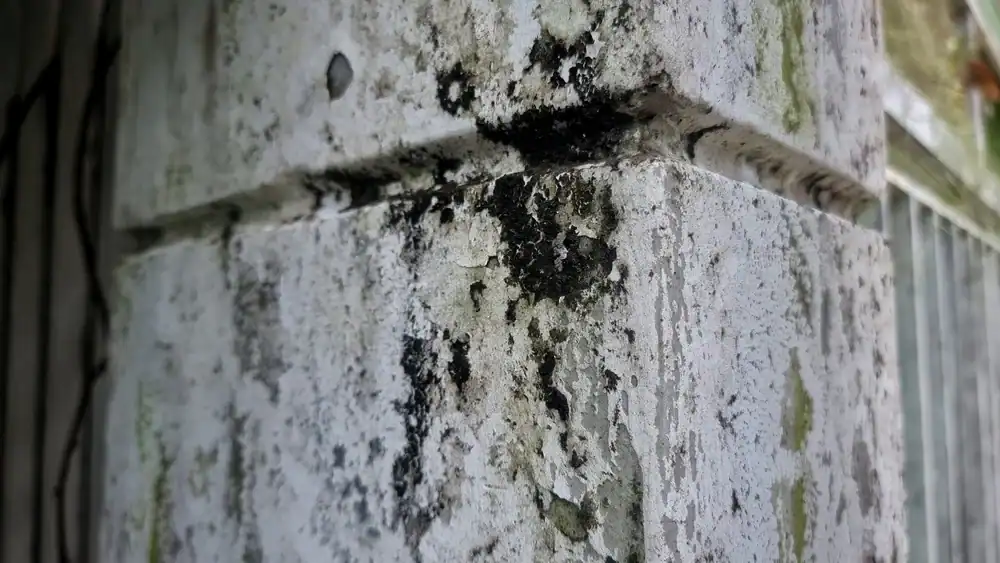
The EPA draws a fairly clear line: if mold growth covers more than 10 square feet, professional remediation is recommended. That’s roughly a three-by-three-foot area. Most homeowners dealing with a persistent mold smell are dealing with something larger than that — they just can’t see it yet because it’s in the crawl space, behind a wall, or inside the duct system.
DIY approaches tend to fail for a few reasons. Bleach, the most common go-to, kills surface mold on non-porous materials like tile. But it doesn’t penetrate wood or drywall, which means the mold’s root structure survives and regrows. More importantly, DIY cleaning doesn’t address containment — disturbing mold without proper precautions can release spores into the air and spread the problem to areas of the home that weren’t previously affected.
There’s also the equipment gap. Professional mold remediation uses HEPA-filtered vacuums that capture spores at the 0.3-micron level rather than redistributing them into the air. Without that equipment, cleaning efforts can inadvertently worsen air quality during the process. And without post-remediation verification — air sampling compared against outdoor baseline levels — there’s no objective way to confirm the problem has actually been resolved.
For Guilford County homeowners dealing with crawl space mold specifically, the DIY path is even more limited. Crawl space remediation typically involves removing contaminated insulation, treating structural wood, and then addressing the underlying moisture issue — whether that’s a failed vapor barrier, inadequate drainage, or a vented crawl space design that’s working against you in the Piedmont climate. That’s not a weekend project with a bottle of bleach. It’s a multi-step process that requires the right tools, the right training, and an understanding of how your specific home is built.
The mold remediation industry has a documented problem with scare tactics and inflated scopes of work. Homeowners who are already anxious about what they’ve found are easy targets for companies that lead with worst-case scenarios and high-pressure quotes. Knowing what separates a credible provider from a bad actor matters before you pick up the phone.
Certifications are the clearest signal. The IICRC AMRT — Applied Microbial Remediation Technician — is the gold-standard mold-specific field credential. It requires hands-on training and a written examination, and it’s governed by the same S520 standard now required for military housing remediation under federal law. If a company is offering mold removal without any verifiable certifications, that’s worth noting.
One specific red flag the BBB calls out: any company that promises to make your home “100% mold free.” That’s not scientifically possible — mold spores exist naturally in the environment, and the goal of professional remediation is to return your home to normal ecological levels, not to eliminate every spore. A company making that claim is either uninformed or trying to sell you something.
Beyond credentials, look for transparency. Does the company explain what they’re going to do before they do it? Do they provide before-and-after documentation so you can actually verify the work was completed? Do they offer a free inspection rather than charging you just to find out what you’re dealing with?
We’ve been doing this work in Guilford County since 1991. Rick Watson and Noah Watson are both NADCA-certified, and we hold IICRC AMRT certification for mold remediation. We’re BBB accredited, and we’ve built most of our business on referrals from homeowners who told their neighbors about us — which means our reputation in this community is something we take seriously. We offer free inspections because we believe you should be able to get a straight answer about what’s in your home before you commit to anything.
A mold smell in your house isn’t something that resolves on its own. The mold producing that odor is alive, it’s growing, and in most cases it’s in a place you haven’t checked yet. The longer the moisture condition continues, the more material it affects — and the more complicated the fix becomes.
The good news is that catching it early, even at the “I just smell something off” stage, puts you in the best possible position. You don’t need to have confirmed mold to reach out. That’s exactly what a free inspection is for.
If you’re in Greensboro, High Point, or anywhere in Guilford County, NC and something in your home doesn’t smell right, Clean Air LLC is a straightforward call to make. We’ll tell you what we find — honestly — and help you figure out the right next step.
Summary:
Share: