
Contact Info
- Greensboro, NC 27406
- Call: 336-707-0498
- Text: 336-707-0498
-
Mon - Fri: 8am - 4pm
Sat - Sun: Closed
Contact Info
Tired of basement water problems that keep coming back? French drain installation addresses the root cause while patch jobs only delay the inevitable in Guilford County's clay-heavy soil.
Before we talk about solutions, you need to understand what’s actually happening underground. When it rains in Guilford County, that water doesn’t just disappear. It soaks into the soil around your home. And when that soil is mostly clay—which it is across the Piedmont region—it absorbs water like a sponge, then swells.
That swelling creates hydrostatic pressure. Think of it as the weight of all that water-saturated soil pressing against your foundation walls. We’re not talking about a little moisture. A cubic foot of water weighs more than 60 pounds, and when the ground around your basement is saturated, you could be dealing with tens of thousands of pounds of force.
That pressure doesn’t care how thick your concrete is. It finds the cracks, the joints, the weak spots. And it pushes water through.
North Carolina’s Piedmont region—including Guilford County, Greensboro, Winston-Salem, and surrounding areas—sits on predominantly clay soil. Cecil soil is the most common type here, and it’s loaded with red clay deposits that expand dramatically when wet.
Clay doesn’t drain well. When it rains, the water has nowhere to go, so it sits in the soil around your foundation. During dry periods, that same clay shrinks, creating gaps and voids beneath your home. This constant cycle of expansion and contraction puts stress on your foundation walls, causes settling, and creates new cracks even in well-built basements.
This is why the same basement crack keeps opening back up. You patch it. The soil swells again. The pressure builds. The patch fails. It’s not that you did the repair wrong—it’s that you’re fighting a force that never stops.
And here’s the part most homeowners don’t realize until it’s too late: even if the crack isn’t leaking right now, the pressure is still there. It’s still pushing. It’s still working its way through your foundation. Bowing walls, horizontal cracks, water stains, efflorescence—those are all signs that hydrostatic pressure is winning.
The only way to actually solve it is to remove the water from the equation. That’s where interior drainage and exterior drainage systems come in.
Walk into any hardware store and you’ll find hydraulic cement, epoxy injections, waterproof sealants—all marketed as basement fixes. And sure, they work. For a while.
Hydraulic cement sets fast, even in wet conditions. You can pack it into a crack, smooth it out, and watch the leak stop. Problem solved, right? Not quite. Cement has no flexibility. When your foundation shifts—and it will, because the soil beneath it is constantly moving—that rigid patch cracks. The water comes back.
Epoxy injections are a step up. They’re designed to bond the concrete back together and create a seal. But they have the same weakness: they can’t handle movement. When the walls expand and contract with temperature changes or soil pressure, the epoxy can crack just like the cement.
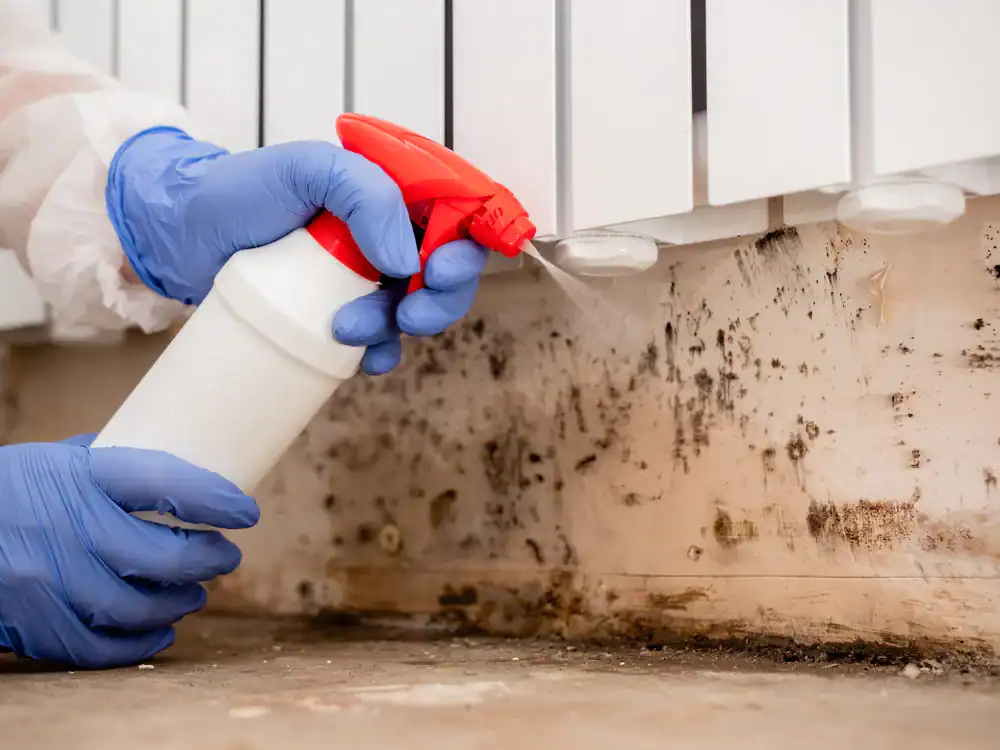
Then there are the sealants and waterproof paints. These create a barrier on the surface of your basement walls. They might stop minor seepage for a season or two, but they don’t address what’s causing the water to show up in the first place. The hydrostatic pressure is still there, still building, still pushing. Eventually, the water finds a way around the sealant—or it just pushes the coating right off the wall.
Here’s the bigger issue: every time you patch, you’re spending money on a fix that doesn’t last. You’re also giving the real problem more time to get worse. Water doesn’t just sit there. It causes mold, damages wood framing, weakens concrete, ruins insulation, and lowers your home’s value. The longer it goes untreated, the more expensive the real repair becomes.
Patch jobs aren’t solutions. They’re delays. And if you’re dealing with Guilford County’s clay soil and the kind of pressure it creates, those delays add up fast.
Want live answers?
Connect with a Clean Air LLC expert for fast, friendly support.
A French drain doesn’t try to hold water back. It removes it. Instead of creating a barrier that water will eventually break through, it gives that water a place to go—before it ever reaches your foundation.
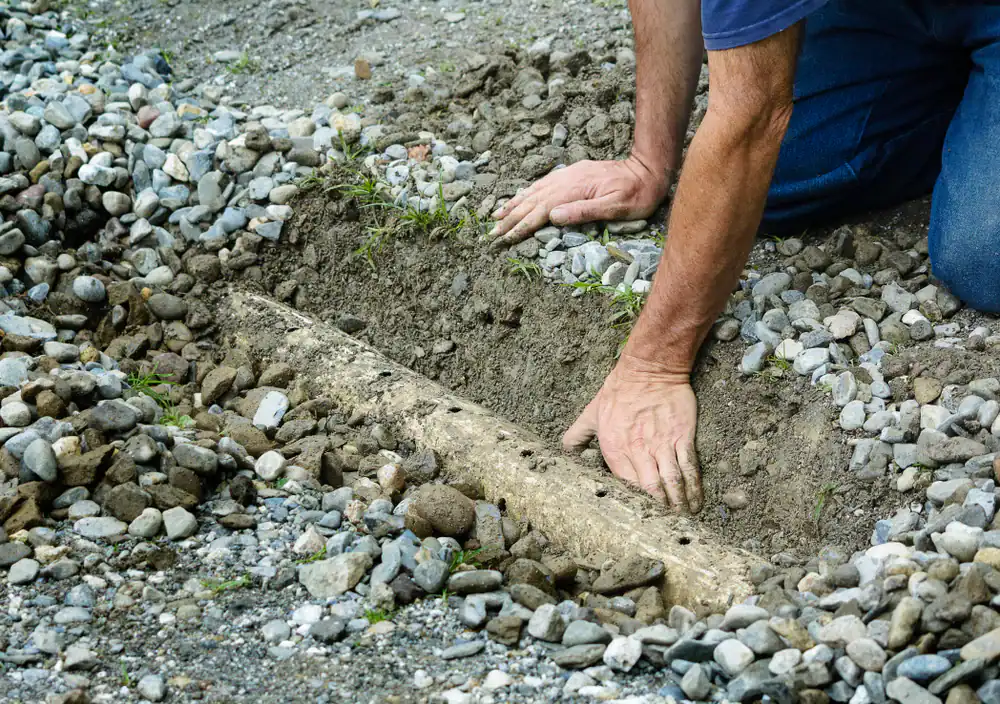
The system is simple in concept but effective in execution. A perforated pipe is installed in a trench, either around the exterior of your foundation or along the interior perimeter of your basement floor. That pipe is surrounded by gravel, which acts as a filter to keep soil and debris out. When water saturates the ground, it flows into the gravel, enters the pipe through the perforations, and gets carried away to a sump pump or drainage area away from your home.
What makes this work is gravity and pressure relief. The water follows the path of least resistance, which is now the drain system instead of your basement wall.
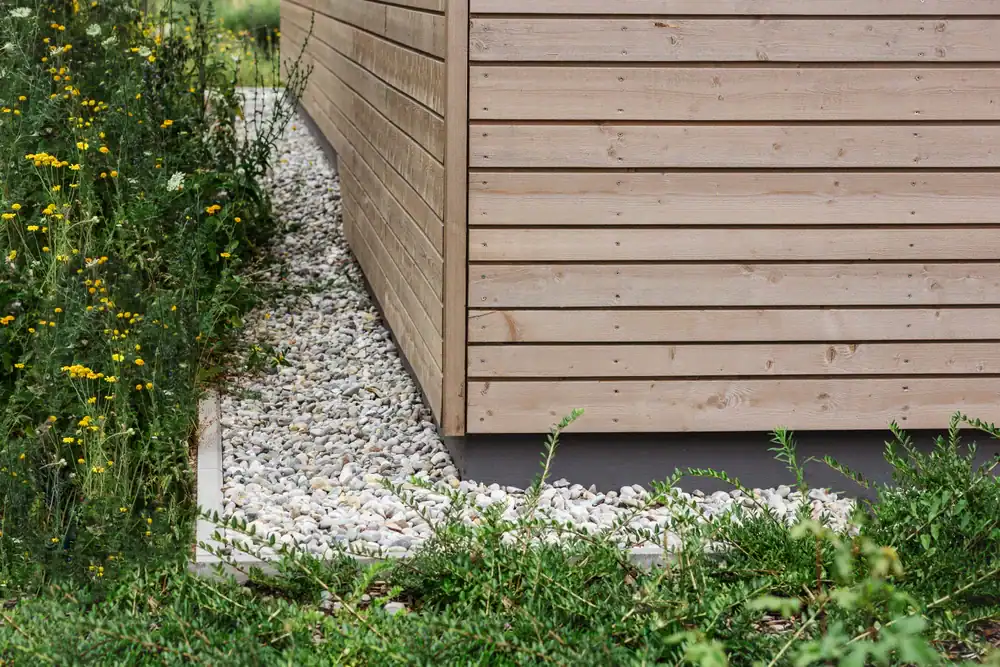
There are two main types of French drain systems, and which one you need depends on your situation.
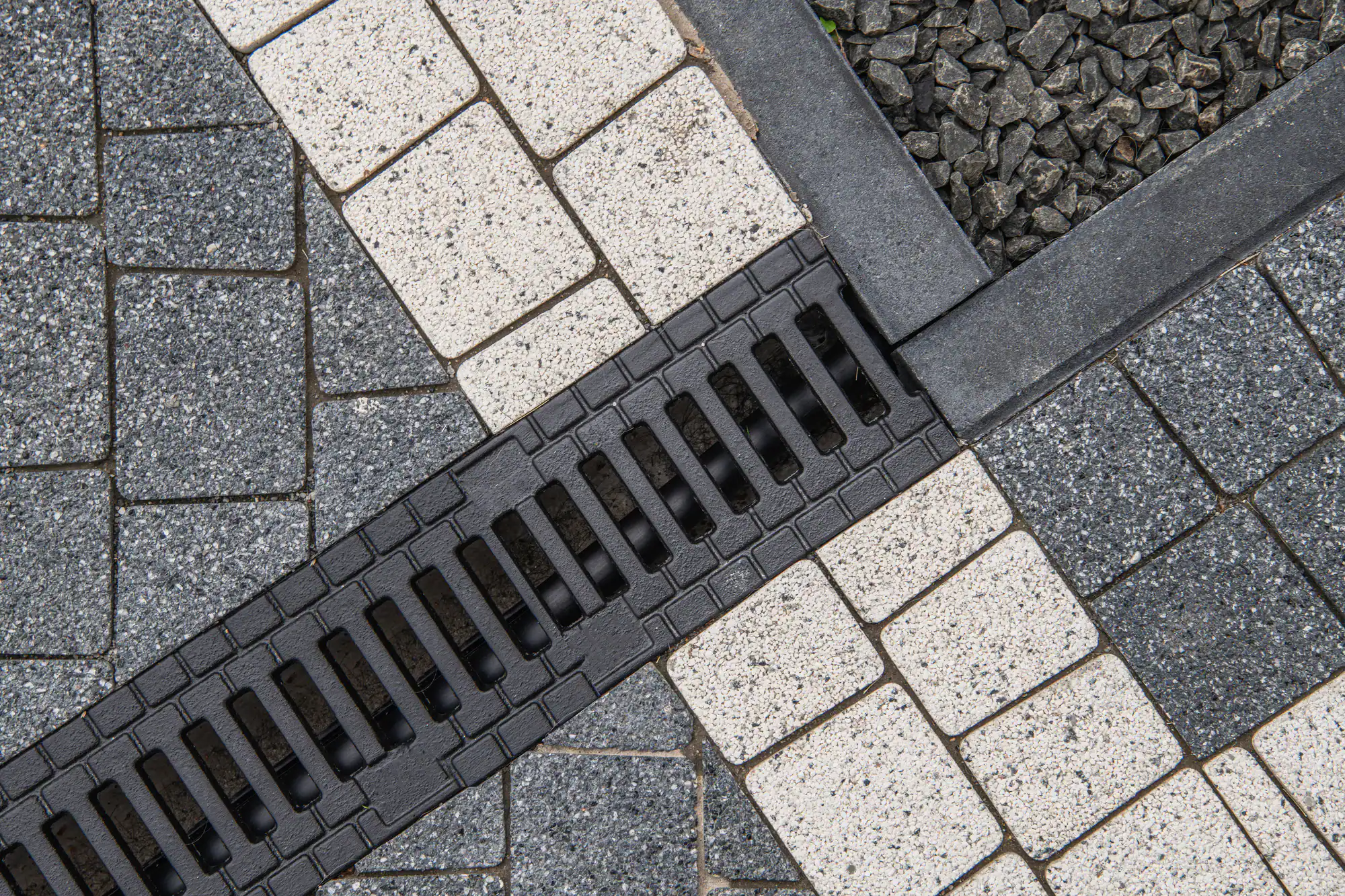
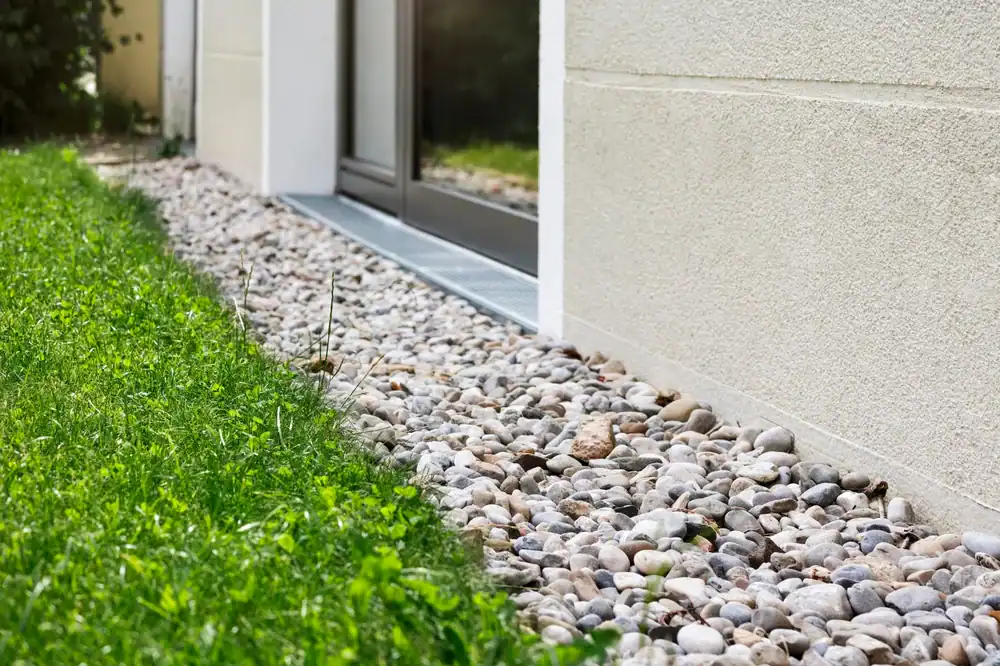
Exterior French drains are installed outside your foundation, usually at the footing level. These are ideal for new construction or homes where the grading and surface water runoff are the main issues. They intercept water before it ever reaches your foundation walls. The downside? Installation requires excavating around your entire foundation, which means tearing up landscaping, driveways, or decks. It’s invasive, expensive, and if tree roots or shifting soil cause a clog years down the road, you’re digging it all up again.
Interior French drains are installed inside your basement, just beneath the floor slab. They work by relieving hydrostatic pressure from below. When water builds up under your foundation, it enters the drain system and gets pumped out by a sump pump before it can push up through cracks or seep through walls. Interior drainage systems are less disruptive to install, easier to access for maintenance, and they handle groundwater pressure more effectively than exterior drains. They’re also the better choice when the water table sits above your basement floor—a common issue in low-lying areas or homes built on poorly draining soil.
Both systems work. But for existing homes dealing with ongoing water problems, interior French drains tend to be the smarter, more cost-effective solution. They address the pressure where it’s actually causing the problem, and they do it without tearing apart your yard.
The key is proper installation. The trench has to be dug to the right depth, the pipe has to slope correctly, and the gravel has to be clean and sized appropriately. Get any of that wrong, and you’re just moving water around instead of removing it. That’s why this isn’t a DIY project—not if you want it to work long-term.
The difference between a patch and a drainage system comes down to one thing: are you treating the symptom, or are you treating the cause?
Patches treat symptoms. They cover the crack, seal the wall, block the visible water. But they don’t do anything about the pressure building up in the soil. That pressure doesn’t go away just because you can’t see it anymore. It keeps pushing, keeps testing your foundation, keeps looking for the next weak spot.
French drains treat the cause. They remove the water from the soil before it has a chance to create pressure. No pressure means no force pushing against your walls. No force means no new cracks, no bowing, no seepage. The system works passively, around the clock, redirecting water away from your home without you having to think about it.
And because the drain is installed below the slab or outside the foundation—where the water actually is—it doesn’t rely on surface coatings or rigid materials that crack under stress. It’s designed to handle movement, temperature changes, and the constant cycle of wet and dry conditions that come with North Carolina’s climate.
Here’s what that means in practical terms: a properly installed French drain can last 30 to 40 years. Compare that to a patch job that might hold up for a year or two before it fails again. Over time, the drainage system isn’t just more effective—it’s also more cost-efficient. You’re not paying for the same repair over and over. You’re investing once in a solution that actually works.
And when you pair it with other smart basement waterproofing strategies—like proper grading, downspout extensions, and a sump pump with battery backup—you’re building a system that protects your home even during the heaviest rains.
If you’re reading this, chances are you’ve already tried the quick fixes. You’ve patched the cracks, sealed the walls, maybe even repainted the basement. And the water keeps coming back.
That’s not your fault. It’s the reality of living in an area with clay-heavy soil and unpredictable weather. Hydrostatic pressure doesn’t care how many times you patch. It only cares about finding a way through.
French drain installation is the permanent answer. It removes the water, relieves the pressure, and gives you a basement that stays dry—not just this season, but for decades. It’s not the cheapest option upfront, but it’s the one that actually solves the problem instead of postponing it.
If you’re ready to stop chasing the same water issue and start protecting your home the right way, we can help. With years of experience serving Guilford County homeowners, we understand the unique challenges of this region’s soil and drainage conditions—and we know how to fix them for good.
Summary:
Share: