
Contact Info
- Greensboro, NC 27406
- Call: 336-707-0498
- Text: 336-707-0498
-
Mon - Fri: 8am - 4pm
Sat - Sun: Closed
Contact Info
North Carolina's humidity creates the perfect storm for crawl space moisture problems. Learn how encapsulation protects your home, your health, and your wallet.
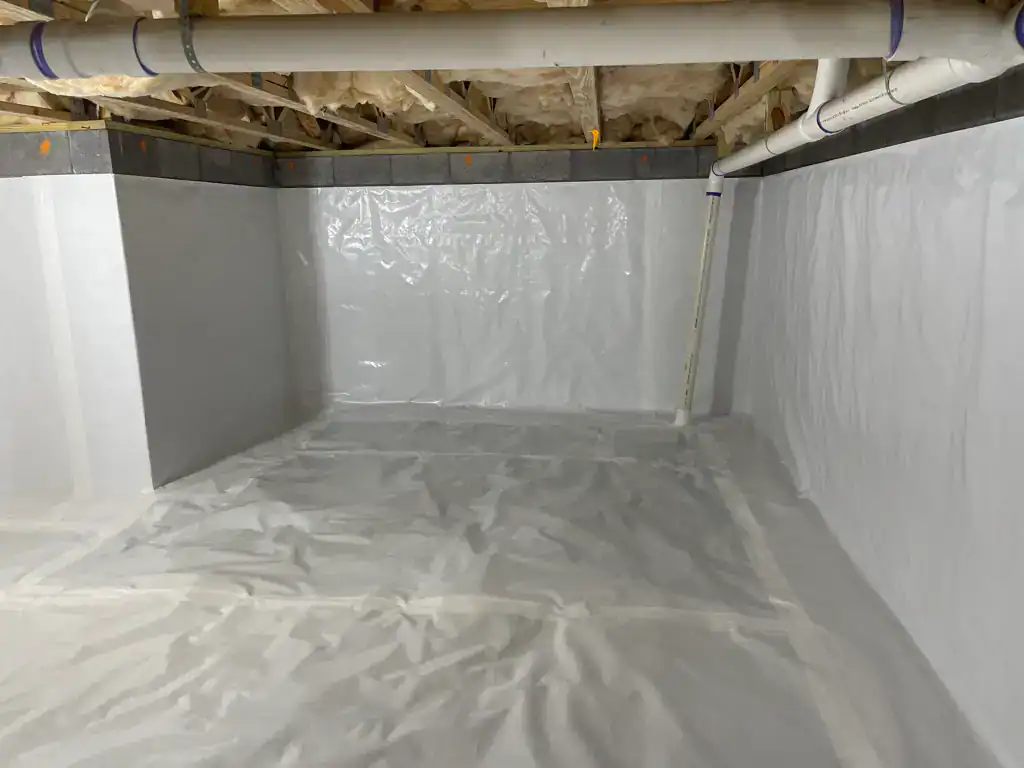
Crawl space encapsulation is the process of sealing off the area beneath your home to create a controlled, dry environment. Think of it as weatherproofing from the ground up—transforming a vulnerable space into one that actually protects your home instead of threatening it.
The process involves installing a heavy-duty vapor barrier across your crawl space floor and walls, sealing vents and openings, and typically adding a dehumidifier to regulate moisture levels. It’s not just laying down plastic and calling it done. Proper encapsulation creates an integrated system that blocks ground moisture, controls humidity, and prevents outside air from turning your crawl space into a breeding ground for problems.
In areas like Guilford County, where moisture challenges are constant, this kind of comprehensive moisture control isn’t optional. It’s the difference between a home that stays healthy and one that slowly deteriorates from the foundation up.
Our humid subtropical climate creates what experts call a “perfect storm” for crawl space moisture problems. When warm, humid outdoor air meets the cooler surfaces inside your crawl space, condensation forms. That moisture doesn’t just sit there—it soaks into wood, feeds mold growth, and creates conditions that attract pests.
Guilford County sits in the Piedmont Region, where temperature swings between morning and afternoon can be dramatic, especially during spring and fall. These daily fluctuations cause continuous condensation cycles. Your crawl space becomes naturally cooler than the outdoor air, making it a condensation zone that never really dries out without intervention.
The soil beneath your home constantly releases water vapor. Even in areas that seem dry, ground moisture evaporates upward. Traditional vented crawl spaces were supposed to solve this with air circulation, but research has shown that ventilation actually contributes to moisture and humidity problems in our climate. Opening vents to humid outdoor air just invites more moisture inside.
This is why so many North Carolina homes built with conventional vented crawl spaces end up dealing with mold, mildew, rot, and pest infestations. The building methods that worked in drier climates don’t hold up here. Modern construction techniques now recognize that sealed, encapsulated crawl spaces perform better in humid regions—they’re even becoming standard for LEED homes and various green building rating systems.
The stack effect compounds these issues. As warm air rises in your home, it pulls air upward from your crawl space. If that space is damp and moldy, those contaminants rise directly into your living areas. Studies from Duke University confirmed that HVAC systems serve as conduits for mold spore transmission from crawl spaces into indoor environments, directly affecting children’s health and respiratory illness rates.
For Guilford County homeowners, this means your crawl space isn’t just affecting the space under your home—it’s affecting the air you breathe every single day.
A vapor barrier is your first line of defense—a thick polyethylene sheet that creates a physical barrier between damp soil and your crawl space air. But not all vapor barriers are created equal, and installation quality matters as much as material thickness.
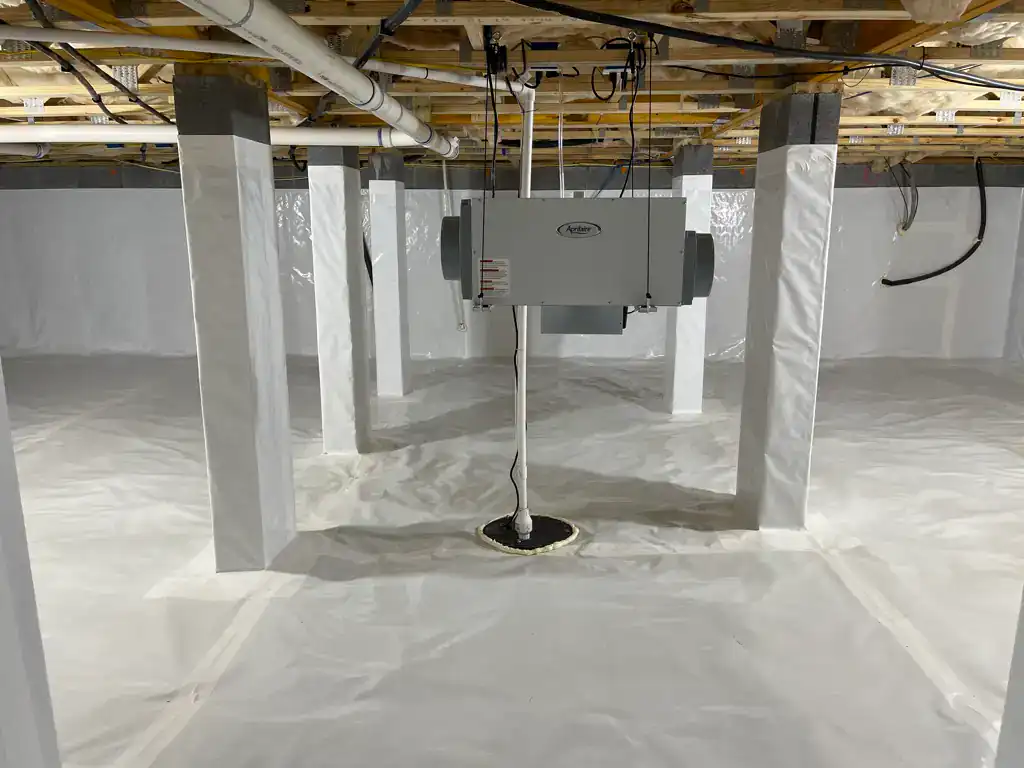
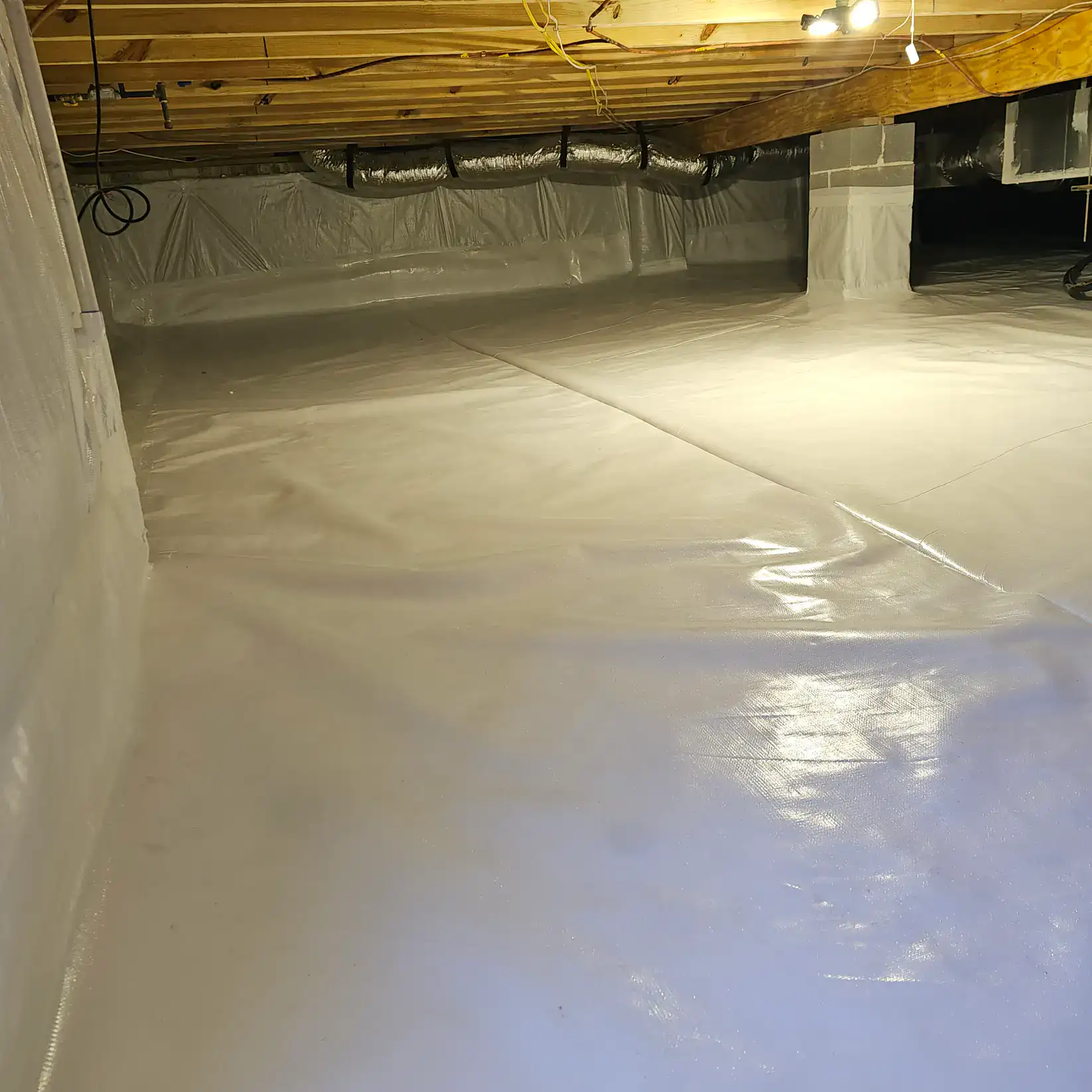
Professional-grade vapor barriers typically measure 20-mil thick, made from reinforced polyethylene with antimicrobial properties. These barriers get installed across the entire crawl space floor and extend up foundation walls, wrapping around columns and piers. Every seam overlaps by at least a foot and gets sealed with specialized tape. Every potential gap gets addressed because even small openings allow moisture to defeat the system.
The vapor barrier prevents ground moisture from evaporating into your crawl space air. When properly installed, it can reduce humidity levels dramatically. But here’s the thing—a vapor barrier alone isn’t encapsulation. It’s one component of a comprehensive system.
That’s where dehumidification comes in. Even with a perfect vapor barrier, some moisture will enter your crawl space through foundation walls, from plumbing condensation, or from outside air before the space gets fully sealed. A crawl space dehumidifier actively removes moisture from the air, maintaining humidity levels between 30-50%. This range effectively stops mold growth, which typically starts when relative humidity reaches 50-60%.
The dehumidifier works continuously, automatically monitoring humidity levels and removing excess moisture before it causes problems. In North Carolina’s climate, this active moisture management is what transforms a crawl space from a problem area into a controlled environment that actually protects your home.
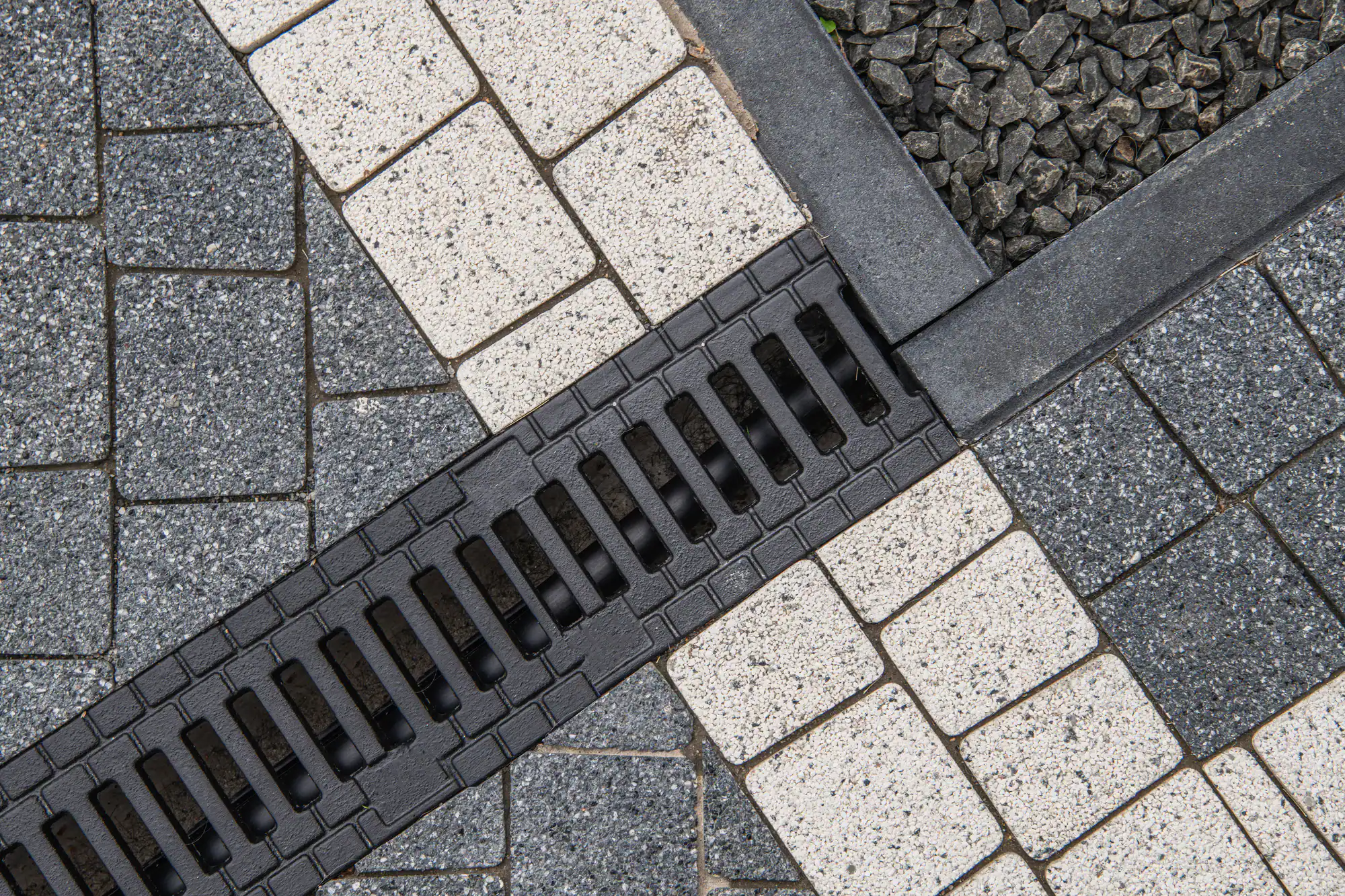
Drainage also plays a role in complete moisture control. If your crawl space has standing water issues or is prone to flooding during heavy rains, drainage systems like interior perimeter drains and sump pumps intercept and remove water before it becomes a humidity problem. These systems work alongside your vapor barrier and dehumidifier to handle moisture from every possible source.
The goal is maintaining a dry environment year-round, regardless of what’s happening with North Carolina weather outside. When all these components work together—vapor barrier, dehumidification, drainage, and sealed vents—you create conditions where mold can’t grow, wood stays dry, and pests find your crawl space uninviting.
Want live answers?
Connect with a Clean Air LLC expert for fast, friendly support.
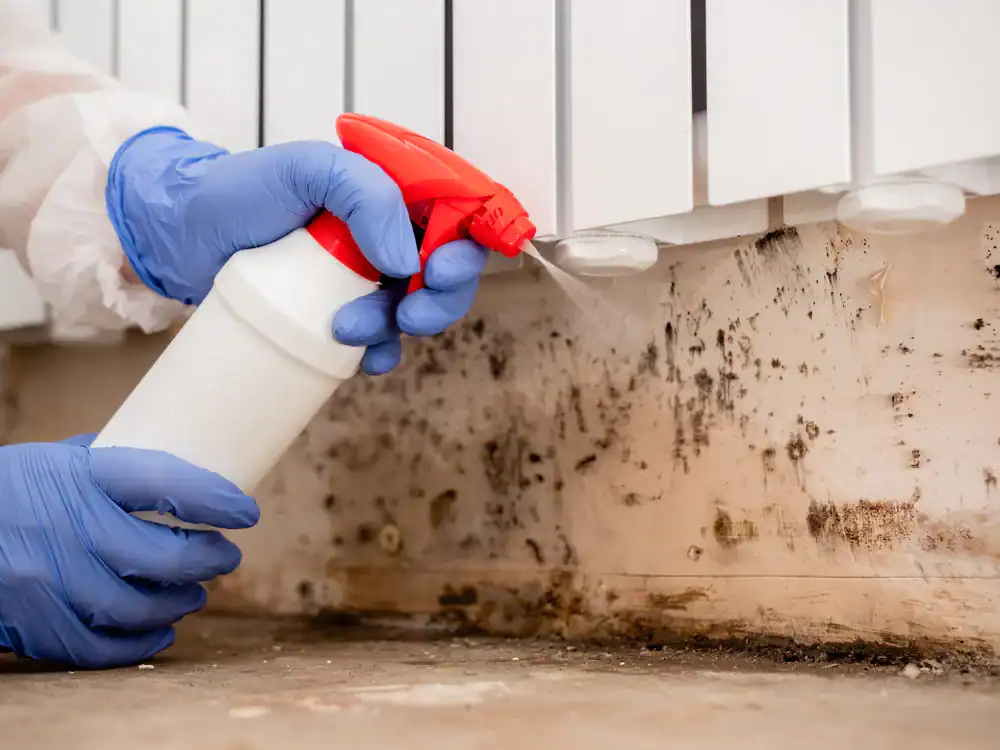
Mold isn’t just unsightly—it’s a legitimate health threat and a structural concern. When mold grows in your crawl space, it releases spores into the air that travel throughout your home. Those spores can trigger allergic reactions, asthma attacks, respiratory infections, sinus problems, and chronic fatigue.
For people with existing respiratory conditions, weakened immune systems, children, and the elderly, mold exposure can be particularly dangerous. Even healthy adults often experience symptoms they don’t connect to their crawl space—headaches, irritation, brain fog, or low energy that improves when they leave the house.
Encapsulation addresses mold at its source by eliminating the moisture mold needs to survive. Research shows that 95% of molds cannot thrive when humidity drops below 65%. By maintaining humidity between 30-50%, encapsulation creates conditions where mold simply can’t establish itself. That’s prevention, not just treatment.
Moisture doesn’t just create mold problems—it actively destroys the structural components holding up your home. Wood rot, a fungal decay that feeds on damp wood, can weaken floor joists, support beams, and subflooring. Left unchecked, this deterioration leads to sagging floors, bouncy or squeaky surfaces, and eventually structural failure that costs thousands to repair.
Metal components in your crawl space aren’t immune either. Moisture accelerates corrosion on pipes, HVAC ductwork, and metal fasteners. Insulation loses its effectiveness when it absorbs moisture, sagging away from the surfaces it’s supposed to protect. Fiberglass insulation, in particular, becomes a moisture magnet in humid crawl spaces, holding dampness against your floor joists and creating ideal conditions for rot.
Temperature fluctuations add another layer of stress. When building materials expand and contract with temperature changes, they create gaps and cracks that allow more moisture infiltration. Wood structures are particularly susceptible to this temperature-related stress, which compounds over years of exposure.
Encapsulation stabilizes your crawl space environment. By maintaining consistent temperature and humidity levels, you eliminate the conditions that cause structural deterioration. Your floor joists stay dry and strong. Your insulation actually works the way it’s supposed to. The foundation supporting your entire home remains solid instead of slowly weakening beneath your feet.
Foundation repair costs can range from $4,500 to $20,000 for major issues. Wood rot remediation, mold removal, and structural repairs add thousands more. Encapsulation represents preventative maintenance that protects you from these expensive problems before they develop. It’s the difference between investing in protection now versus paying for emergency repairs later.
Your crawl space is part of your home’s thermal envelope. When it’s unsealed, you’re essentially leaving a door open to the outside—cold air infiltrates during winter, hot humid air invades during summer, and your HVAC system works overtime trying to compensate.
Studies specific to North Carolina homes show that sealed crawl spaces with insulated foundation walls use 18% less energy for heating and cooling compared to identical homes with vented crawl spaces. That translates to real money on your utility bills every single month. Many homeowners report saving 15-20% on energy costs after encapsulation.
The energy savings come from multiple factors working together. First, you’re eliminating air leaks. Unsealed crawl spaces allow outdoor air to flow in and conditioned indoor air to leak out. Sealing these leaks means your heating and cooling actually stays inside your home instead of escaping through the floor.
Second, you’re stabilizing temperatures under your living space. When your crawl space maintains consistent temperatures, your floors don’t feel cold in winter or contribute to heat gain in summer. This makes your entire home more comfortable and reduces the temperature differential your HVAC system has to overcome.
Third, your insulation actually works when it stays dry. Wet insulation loses most of its R-value—its ability to resist heat transfer. Keeping your crawl space dry means your insulation maintains its effectiveness, creating a genuine thermal barrier instead of a damp, useless layer.
The average American family spends over $2,000 annually on heating and cooling costs. Even a 15% reduction from encapsulation means $300 back in your pocket every year. Over a decade, that’s $3,000 in savings—often enough to offset a significant portion of your encapsulation investment.
But the benefits go beyond just dollars saved. Your HVAC system doesn’t have to work as hard, which extends its lifespan and reduces maintenance needs. Your home maintains more consistent temperatures, eliminating hot and cold spots. And you’re not constantly adjusting the thermostat trying to get comfortable.
For Guilford County homeowners dealing with our humid summers and variable winters, these improvements in comfort and efficiency make a noticeable difference in daily life.
Crawl space encapsulation isn’t just about fixing a moisture problem—it’s about protecting your family’s health, preserving your home’s structural integrity, and creating a more comfortable, efficient living environment. The investment addresses multiple issues simultaneously: mold prevention, energy savings, foundation protection, improved air quality, and pest deterrence.
In North Carolina’s climate, where humidity and moisture are constant challenges, encapsulation has become one of the most effective investments homeowners can make. The process addresses problems at their source rather than just treating symptoms. You’re creating conditions where those problems can’t develop in the first place.
If you’re noticing musty odors, experiencing unexplained allergies, dealing with high energy bills, or just concerned about what might be happening beneath your home, it’s worth having your crawl space evaluated. We specialize in crawl space encapsulation and indoor air quality solutions for Guilford County homeowners, using professional-grade materials and proven methods to deliver lasting results that protect both your home and your family’s health.
Summary:
Share: