
Contact Info
- Greensboro, NC 27406
- Call: 336-707-0498
- Text: 336-707-0498
-
Mon - Fri: 8am - 4pm
Sat - Sun: Closed
Contact Info
Industrial facilities face complex air quality challenges. Discover the maintenance standards, compliance requirements, and best practices that protect workers and operations.
Walk into any manufacturing facility in Guilford County and you’ll see the difference immediately. The scale alone changes everything. Commercial systems handle exponentially more air volume, serve larger spaces, and run longer hours than residential setups. But size isn’t the only factor that separates industrial ventilation from home HVAC maintenance.
Industrial facilities generate process-specific contaminants. A woodworking operation produces fine sawdust. A metal fabrication shop creates metal fumes and particulates. Food processing plants deal with flour, sugar, and organic dust. Each of these materials behaves differently in your ductwork and carries unique risks.
The regulatory landscape is entirely different too. Residential duct cleaning is largely optional. Commercial facilities answer to OSHA, EPA, NFPA, and industry-specific standards that carry real consequences. You’re not just maintaining equipment—you’re managing compliance, documentation, and liability.

OSHA doesn’t mess around when it comes to air quality in manufacturing facilities. The General Duty Clause establishes that workplaces must be “free of recognized hazards” that could cause serious harm or death. That’s not a suggestion. It’s a legal mandate backed by citation authority and fines that can exceed $340,000 for serious violations.
Permissible Exposure Limits set the bar for airborne contaminants. These PELs define maximum concentrations for hundreds of substances, from respirable crystalline silica to metal dust to organic particulates. If air quality testing shows your facility exceeds these limits, you’re exposing workers to conditions OSHA considers unacceptable. The fix isn’t just better ventilation—it’s engineering controls, administrative procedures, and documented proof that you’ve addressed the problem.
North Carolina operates its own OSHA program, which means state-specific requirements may exceed federal standards. Facilities in Guilford County need to understand both layers of regulation. The state’s industrial ventilation guidelines specifically address local exhaust systems, which capture contaminants at the source before they spread throughout your facility.
Here’s what compliance actually looks like in practice. You need air monitoring data that proves you’re within PELs. You need maintenance records showing your ventilation systems are inspected and functioning properly. You need employee training documentation demonstrating that workers understand the hazards and know proper procedures. And you need a written plan that outlines how you’re controlling exposure through engineering controls, work practices, and protective equipment.
The combustible dust emphasis has intensified. Between 1980 and 2005, the Chemical Safety Board documented 281 combustible dust incidents that killed 119 workers. OSHA now conducts targeted inspections of facilities handling materials that can ignite. If you’re processing wood, metal, food, chemicals, or pharmaceuticals, your dust isn’t just a housekeeping issue—it’s a potential explosion hazard that requires specific control measures.
Many facility managers don’t realize their dust is combustible until they face an inspection. The burden of proof sits with you. You must demonstrate through testing that your dust doesn’t present fire or explosion risks. That means working with qualified testing labs, understanding your dust’s characteristics, and implementing appropriate collection and control systems.
The National Air Duct Cleaners Association sets the benchmark for commercial HVAC system cleaning through their ACR Standard. This isn’t a residential guideline adapted for bigger buildings. It’s a comprehensive framework specifically designed for the complexity of commercial and industrial systems. Understanding these standards helps you know what proper maintenance actually looks like.
NADCA recommends annual inspections for most commercial properties. That frequency increases for high-use facilities, industrial environments with significant contaminant generation, or buildings with sensitive operations. The inspection comes first—always. You can’t clean effectively without knowing what you’re dealing with. Qualified inspectors use cameras, moisture meters, airflow measurements, and particle counters to assess your system’s condition.
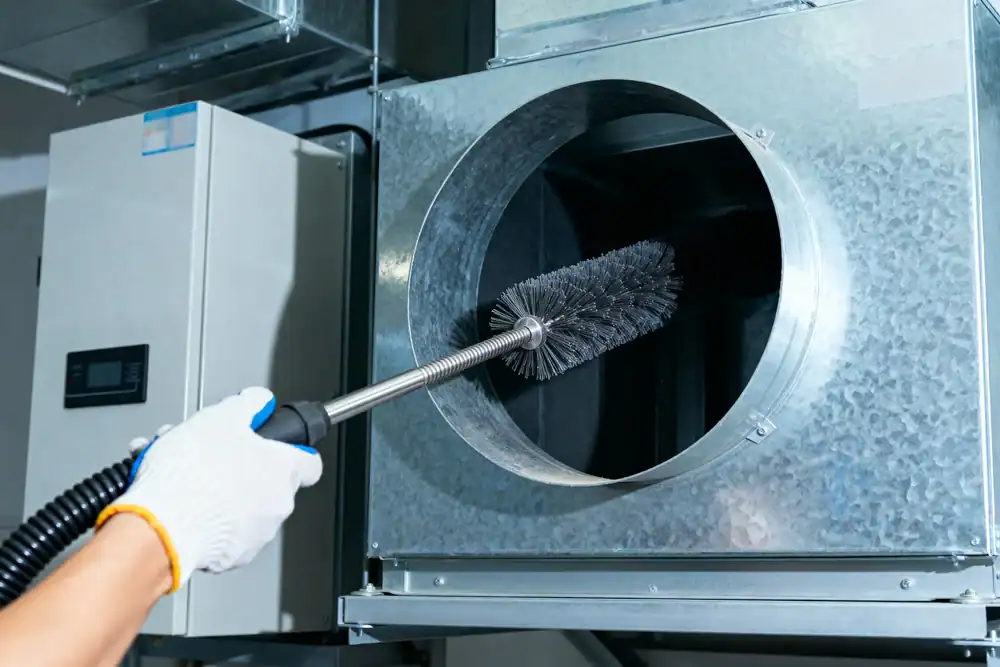
The ACR Standard emphasizes source removal cleaning. This means physically dislodging and removing contaminants from your ductwork, not just stirring them up or pushing them around. It’s the most effective method, but it requires specialized equipment. High-powered HEPA vacuum systems, rotary brushes, negative air pressure techniques, and mechanical agitation tools do the actual work. Anything less leaves contamination behind.
Commercial duct cleaning should include your entire system. Supply and return ducts, vents and registers, blower compartments, coils, drip pans, and fan housing all accumulate contaminants. Missing any component means dust and debris remain in your system, ready to recirculate. The EPA notes that just 0.42 inches of dirt buildup on heating or cooling coils can decrease efficiency by 21 percent. That’s not a minor performance hit—it’s a significant operational cost.
Documentation matters more in commercial settings than residential ones. You need before-and-after verification, preferably with visual evidence. You need records of what was cleaned, what methods were used, and what the results showed. When OSHA or insurance inspectors ask questions, your documentation either proves compliance or reveals gaps.
Facilities handling multiple products face additional concerns. Airborne dust can migrate between production lines, causing cross-contamination. This is especially problematic in food processing, pharmaceuticals, and chemical manufacturing where purity standards are strict. Well-engineered dust collection systems prevent this migration by capturing particulates at their source and filtering them effectively before they spread.
The cleaning frequency depends on your specific operation. A warehouse with minimal dust generation might go three to five years between cleanings. A food processing facility or metal fabrication shop might need annual service. High-dust environments like woodworking or chemical processing could require even more frequent attention. The key is basing the schedule on actual conditions, not arbitrary timelines.
Want live answers?
Connect with a Clean Air LLC expert for fast, friendly support.
Your industrial ventilation system is more than ductwork. It’s a network of components that work together to control air quality, manage contaminants, and protect workers. Understanding each piece helps you maintain the system effectively and identify problems before they escalate.
Local exhaust ventilation captures contaminants at the source. Hoods positioned at grinding stations, mixing areas, or cutting operations pull dust and fumes directly into the collection system before they disperse. This is your first line of defense. When LEV systems fail or underperform, contaminants spread throughout your facility, increasing worker exposure and creating housekeeping nightmares.
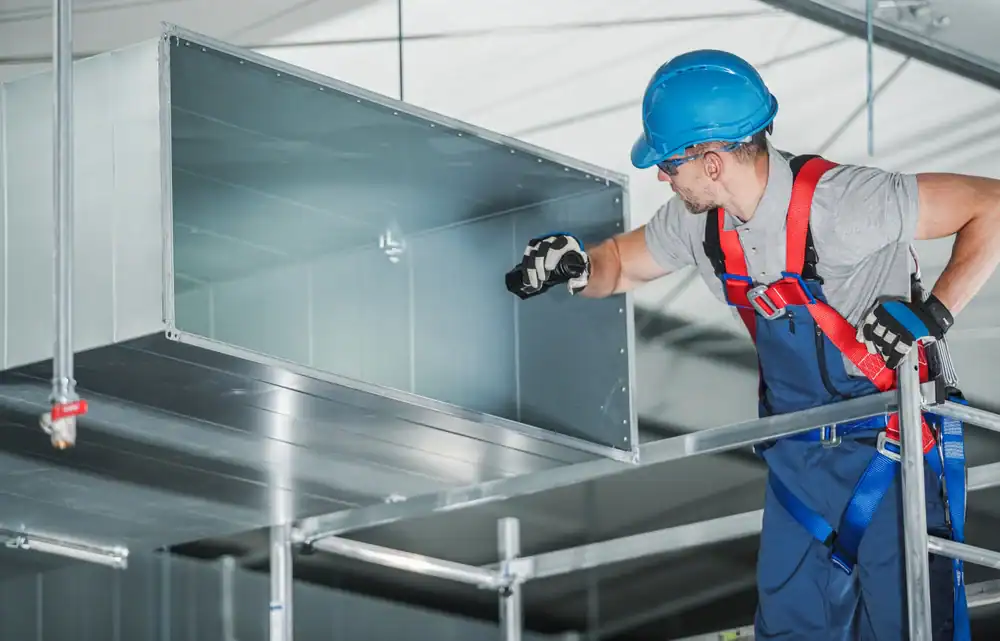
Ductwork transports captured contaminants to collection points. Commercial ducts are larger, more complex, and subject to different stresses than residential systems. They handle higher volumes, deal with abrasive materials, and run through areas that may be difficult to access. Regular inspection identifies leaks, damage, or blockages that reduce system effectiveness.
Dust control in manufacturing isn’t optional—it’s a fundamental safety requirement. The type of system you need depends on what you’re producing, how much dust you generate, and what hazards that dust presents. Getting this wrong doesn’t just affect efficiency. It affects lives.
Dust collection systems come in several configurations. Baghouse collectors use fabric filters to capture particulates. Cyclone separators use centrifugal force to remove larger particles. Cartridge collectors offer high-efficiency filtration in a compact footprint. Each design suits different applications, dust types, and space constraints. The key is matching the system to your specific needs, not installing whatever seems convenient.
Capture velocity matters more than most people realize. Your collection system needs sufficient airflow at the hood opening to pull contaminants into the ductwork before they escape. Inadequate velocity means dust bypasses your collection system entirely, settling on surfaces or entering the breathing zone. This is where engineering calculations become critical—you can’t guess your way to effective capture.
Filter maintenance determines whether your system actually protects workers or just moves dust around. Clogged filters reduce airflow, increase energy consumption, and can allow particulates to pass through. Many facilities don’t realize their filters need replacement until performance has already degraded. Monitoring differential pressure across filters tells you when changeout is necessary, before efficiency drops.
The combustible dust factor changes everything. NFPA 652 requires facilities handling combustible particulate solids to conduct a Dust Hazard Analysis. This assessment identifies where dust accumulates, evaluates ignition sources, and determines explosion risks. If your DHA reveals hazards, you need specific control measures—explosion venting, suppression systems, isolation equipment, or process modifications.
Housekeeping practices work hand-in-hand with mechanical collection. OSHA and NFPA both emphasize that dust accumulation on surfaces, equipment, and overhead structures creates secondary explosion risks. Regular cleaning prevents buildup, but the methods matter. Compressed air and brooms stir dust into the air, increasing exposure and creating ignition risks. Industrial vacuums with HEPA filtration remove dust without dispersing it.
Your dust collection system should capture at least 99 percent of dust at the source for certain operations. OSHA specifically requires this level of performance for work involving concrete cutting, drilling, or grinding. The standard recognizes that source capture is the most effective control method. Administrative controls and PPE come into play only when engineering controls can’t fully eliminate exposure.
Clean ductwork isn’t just about compliance and safety. It’s about money. Facilities with dirty HVAC systems pay for that contamination every month in their utility bills, often without realizing where the extra costs come from.
Industrial ventilation systems consume substantial electricity. Dust collection and fume extraction represent significant operational expenses. When ducts are clogged, coils are fouled, or filters are loaded, your fans work harder to move the same volume of air. That increased effort translates directly to increased energy consumption. Studies show that properly maintained ventilation systems can reduce energy use by 15 to 30 percent while maintaining or improving exposure control.
The EPA data on coil contamination tells the story clearly. A buildup of just 0.42 inches on heating or cooling coils decreases efficiency by 21 percent. Most facilities don’t measure coil contamination regularly, so they don’t know they’re operating at reduced capacity until the performance drop becomes obvious. By then, they’ve been overpaying for months or years.
Dirty systems also stress equipment. Blower motors work harder. Belts wear faster. Bearings fail sooner. The cumulative effect is shortened equipment lifespan and increased maintenance costs. Unplanned downtime from HVAC failures disrupts production, creating costs that far exceed the equipment repair itself. A proactive maintenance approach prevents these failures before they shut down operations.
Demand-controlled ventilation offers additional savings opportunities. By monitoring actual air quality and adjusting ventilation rates accordingly, facilities can reduce airflow during low-production periods while ensuring adequate control during high-generation times. This optimization only works with clean systems, though. Dirty ductwork and fouled sensors prevent the system from responding appropriately to changing conditions.
The payback period on professional duct cleaning is typically short. When you factor in energy savings, reduced equipment repairs, avoided downtime, and compliance risk reduction, the investment pays for itself quickly. Many facility managers view duct cleaning as an expense rather than an investment, which causes them to defer maintenance until problems force action. That reactive approach always costs more than preventive maintenance.
Temperature control becomes more difficult with dirty systems. Uneven heating or cooling across your facility affects worker comfort and productivity. In some manufacturing processes, temperature consistency impacts product quality. When your HVAC system can’t maintain set points despite running constantly, contaminated ductwork is often the culprit.
Industrial air quality management isn’t a one-time project. It’s an ongoing responsibility that requires attention, expertise, and commitment. The facilities that handle this well treat duct maintenance as a core operational priority, not an afterthought that gets addressed when problems arise.
Start with a professional assessment. You need to know your current baseline before you can improve it. A qualified inspector can identify contamination, assess system performance, and recommend specific actions based on your facility’s actual conditions. That assessment should include visual inspection, airflow measurements, and documentation of any deficiencies that affect safety or compliance.
The right maintenance partner makes a significant difference. Commercial duct cleaning requires specialized knowledge and equipment that goes beyond residential capabilities. Look for providers who understand industrial environments, follow NADCA standards, and can document their work to compliance standards. Experience with facilities similar to yours matters—someone who’s worked in manufacturing understands the challenges differently than someone who primarily serves office buildings.
We’ve been serving industrial and commercial facilities in Guilford County, NC for over three decades. Our team understands the regulatory landscape, the technical requirements, and the operational realities that facility managers face daily. From initial assessment through cleaning and documentation, we provide the expertise that keeps facilities running safely and efficiently.
Summary:
Share: