
Contact Info
- Greensboro, NC 27406
- Call: 336-707-0498
- Text: 336-707-0498
-
Mon - Fri: 8am - 4pm
Sat - Sun: Closed
Contact Info
Wondering what french drain installation actually costs in Guilford County? Here's what local homeowners pay, what drives the price, and what to watch out for.
If water keeps finding its way into your crawl space, pooling against your foundation, or turning your yard into a soggy mess after every rain, you’re probably already wondering what a french drain would cost — and whether it’s actually worth it.
That’s a fair question, and you deserve a straight answer. Not a vague range pulled from a national average that has nothing to do with Guilford County’s clay soil and 44-plus inches of annual rainfall. This page covers what local homeowners actually pay, what drives the price up or down, and how to make sure you’re getting an honest quote before you sign anything.
The national average for french drain installation gets thrown around a lot — $9,250, according to Angi and HomeAdvisor. But that figure reflects complex full-basement perimeter systems in high-cost markets, and it has a way of inflating expectations on both sides of the table.
In Guilford County, the reality looks different. Based on 686 completed projects in the Greensboro area, most homeowners pay somewhere between $2,517 and $3,627, with a broader range of $818 to $5,485 depending on the scope of the job. Per linear foot, most residential projects in our area fall between $20 and $60 — though depth, soil conditions, and whether you’re dealing with an interior or exterior system can push that number in either direction.
Knowing the local range before you call anyone is one of the simplest ways to protect yourself from a quote that’s padded for profit.
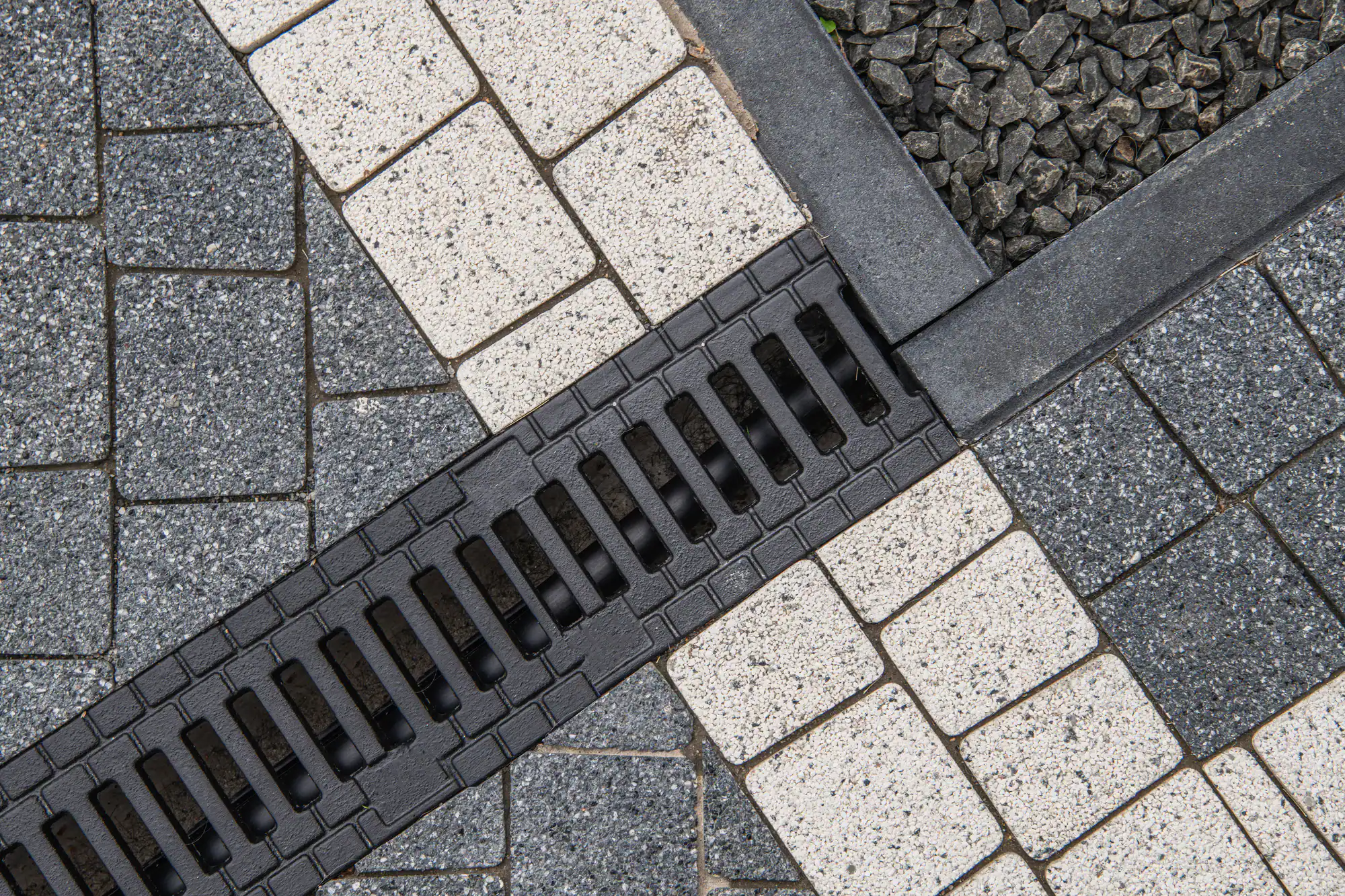
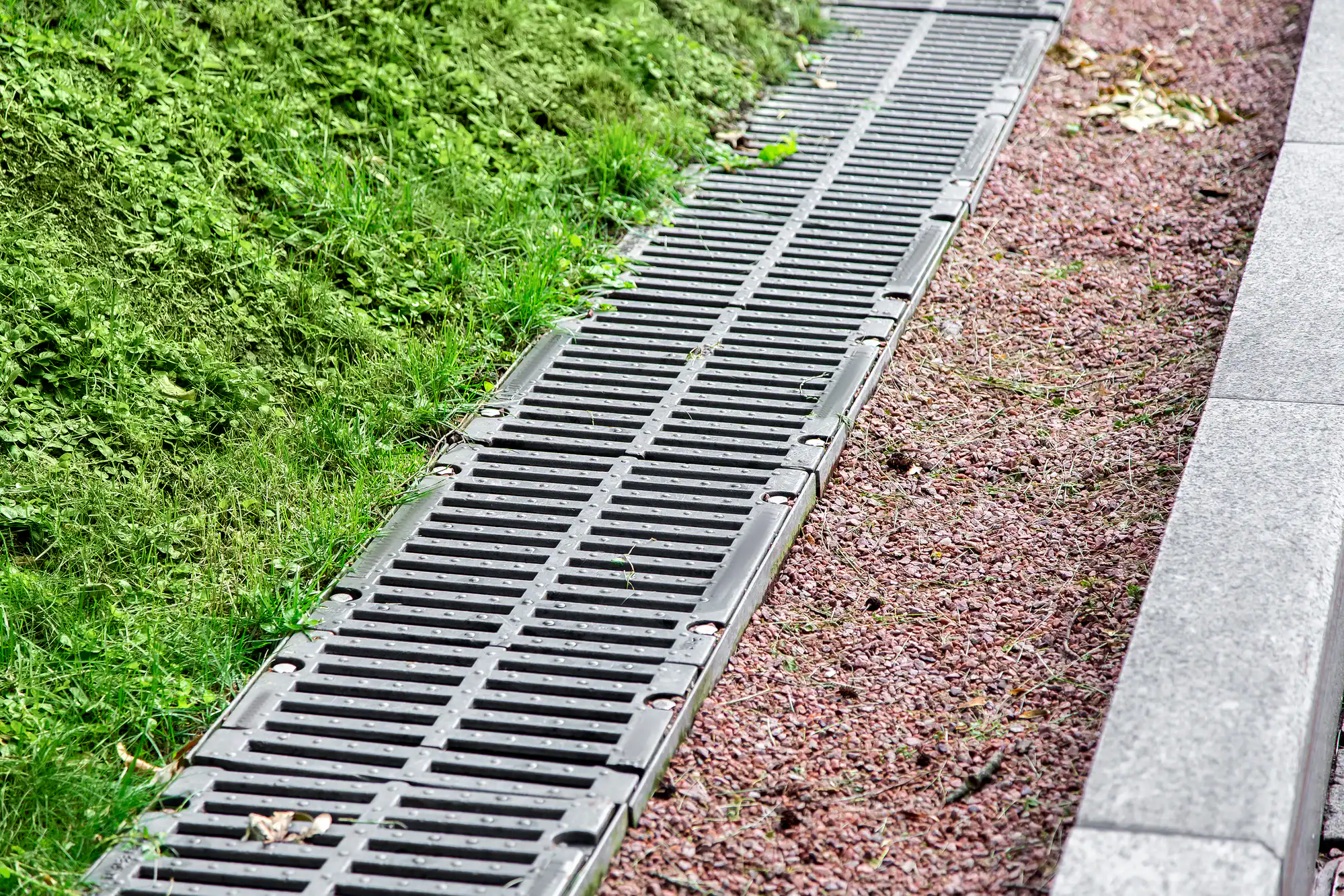
A standard exterior french drain — the kind installed in your yard or along your foundation’s perimeter — typically runs $10 to $50 per linear foot for shallower systems, and $25 to $100 per linear foot for deeper footing-level drains. A 100-foot exterior system usually lands somewhere between $1,000 and $6,500 total, depending on how deep the trench needs to go and what the ground looks like once you start digging.
Here’s what most cost guides won’t tell you: Guilford County’s soil changes the math. The dominant soil type across this area is Cecil sandy clay loam — a dense Piedmont clay that doesn’t absorb water the way sandy soils do. When it rains, that clay channels water fast, and it tends to push it straight toward your foundation. When the soil dries out in summer, it contracts and cracks, which opens up new pathways for water to follow the next time the rain comes.
What that means practically is that exterior french drain installations in Guilford County often require deeper trenches, more gravel volume, and proper geotextile fabric wrapping to keep clay particles from migrating into the pipe over time. Skip the fabric, and you’re looking at a system that clogs within a few years — which ends up costing far more than doing it right the first time.
Landscape restoration is another cost that tends to catch homeowners off guard. Sod replacement runs $0.30 to $0.80 per square foot and is rarely included in the initial quote. If a contractor doesn’t mention it upfront, ask. A complete exterior installation should account for getting your yard back to where it was, not just running a pipe through it.
The slope calculation matters more than most people realize. A properly graded french drain needs at least a 1% grade — one inch of drop for every eight feet of run. That sounds simple, but it requires precision. Eyeballing it is how you end up with a drain that moves water toward your foundation instead of away from it, which is the most common failure point we see in DIY attempts and low-bid contractor jobs alike.
Interior basement french drains solve a different problem than exterior systems. Where an exterior drain intercepts water before it reaches your foundation, an interior system manages water that has already found its way in — typically through the joint where your basement floor meets the wall, or through cracks in the foundation itself.
The installation process is more involved. It requires breaking up the concrete floor along the perimeter, excavating down to the footing level, laying perforated pipe in gravel, and then pouring new concrete over the top. Most interior systems are paired with a sump pump to move collected water out of the home entirely. That’s why the cost is higher: $40 to $100 per linear foot is the typical range, with full perimeter systems for an average basement running $5,000 to $15,000. Adding a sump pump brings in another $500 to $4,000 depending on the type.
For Guilford County homes — many of which were built in the 1950s and 1960s during the county’s post-war expansion, or even earlier to house textile workers — interior drainage is often the more realistic solution. Exterior excavation around an older foundation can be complicated by settled soil, mature landscaping, and proximity to neighboring properties. Interior systems sidestep those complications while still addressing the core problem.
There’s also something worth understanding about what happens after water gets in. Greensboro’s year-round humidity already runs around 70%, which is above the recommended range for a healthy indoor environment. When a wet basement or crawl space adds to that moisture load, it creates conditions where mold establishes itself quickly. And because up to 40% of the air circulating through your home comes from the space beneath your floors, that mold doesn’t stay in the basement — it moves through your HVAC system and into the air your family breathes every day. A french drain addresses the source. But if moisture has been present for a while, the air quality consequences deserve attention too.
Want live answers?
Connect with a Clean Air LLC expert for fast, friendly support.
Price variation in this industry isn’t random, and understanding what drives it puts you in a much stronger position when you’re comparing quotes.
Depth is the biggest single cost driver. A shallow yard drain sits two to three feet below the surface and is relatively quick to excavate. A footing drain runs six to eight feet down and requires significantly more labor and equipment. The deeper the trench, the higher the cost — and in Guilford County’s clay soil, deeper is often necessary to reach drainage that actually works.
Material quality is the other major variable. HDPE pipe costs more than corrugated pipe, but it holds its shape under soil pressure and lasts significantly longer. Angular drainage stone performs better than rounded pea gravel because it creates more void space for water to move through. Geotextile fabric wrapping around the gravel and pipe is what keeps sediment from clogging the system over time. These aren’t premium upgrades — they’re the difference between a drain that works for decades and one that fails in a few years.
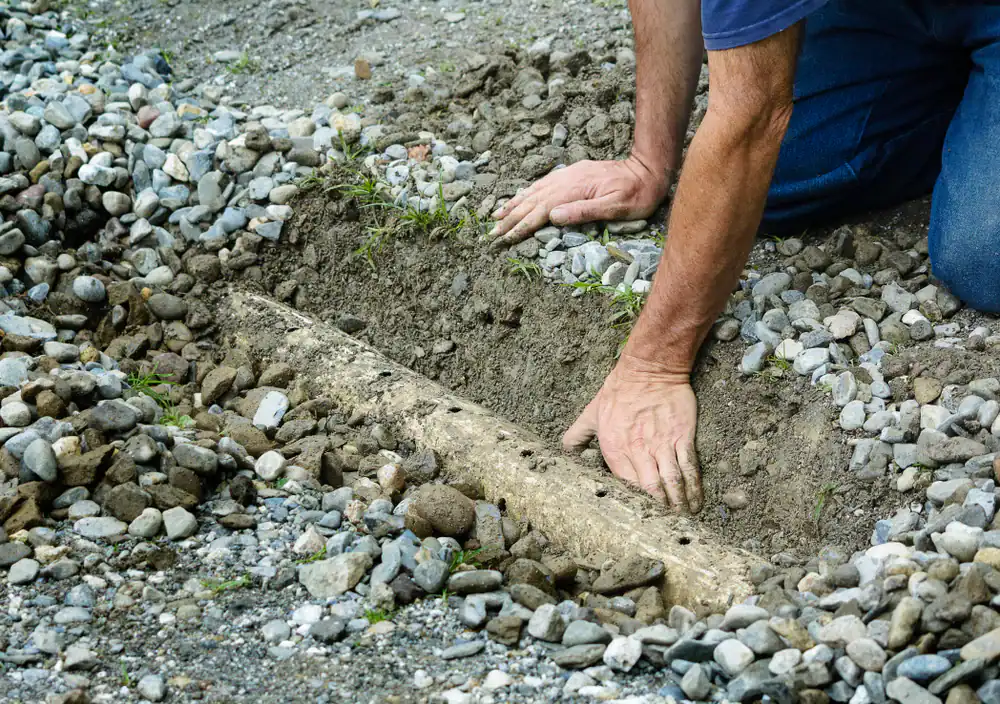
French drain installation doesn’t have a single required license in North Carolina, which means the barrier to entry for contractors is low. Anyone with a shovel and a pickup truck can claim to be a drainage specialist. That’s not meant to alarm you — there are plenty of skilled, honest contractors working in this space — but it does mean you have to do a little more homework than you would with a licensed trade.
A few things worth watching for: a quote that’s significantly below the local range often means something is being cut — usually materials, slope precision, or the fabric wrapping that prevents clogging. A contractor who can’t explain how they’ll calculate the slope, where the water will discharge, or why they’re recommending interior versus exterior installation is a contractor who’s guessing.
Ask specifically whether the quote includes landscape restoration. Ask what type of pipe they use and whether the gravel will be wrapped in geotextile fabric. Ask where the water exits the system — in North Carolina, drains are required to discharge to daylight or into existing storm drainage, not onto a neighbor’s property. These aren’t gotcha questions. Any experienced contractor should be able to answer them without hesitation.
BBB accreditation is one of the few external markers that actually means something in this industry. It requires a business to meet verified standards, respond to complaints, and operate transparently — not just pay a membership fee. In a market where pricing scams are well-documented, it’s worth checking before you commit to anyone.
Also worth noting: before any excavation project in North Carolina, state law requires you to call 811 to have utility lines marked. A contractor who doesn’t bring this up or who skips it entirely is cutting a corner that can result in serious damage and legal liability.
**Do I need a permit to install a french drain in Guilford County?**
It depends on the scope of the project. Simple exterior drains on private property often don’t require a permit in North Carolina. But if the system connects to a municipal storm drain, disturbs more than an acre of land, or involves work near a wetland or regulated waterway — like properties in the drainage basins of North Buffalo Creek or South Buffalo Creek in Guilford County — a permit may be required. Interior systems that tie into plumbing may also require a licensed plumber depending on how the discharge is handled. When in doubt, check with Guilford County’s planning and permitting office before work begins.
**How long does a french drain last?**
A well-built system using HDPE pipe, angular drainage stone, and proper geotextile fabric can last decades with minimal maintenance. The ones that fail early — sometimes within two to five years — are almost always the ones where the fabric was skipped or cheap corrugated pipe was used. Periodic inspection every few years to check for sediment buildup or root intrusion is good practice regardless of material quality.
**Can I install a french drain myself?**
Technically, yes. Materials for a basic 25-foot system run roughly $21 per linear foot in DIY costs. But the most common failure point — an incorrect slope — is also the hardest thing to get right without proper tools. A drain that’s graded even slightly wrong can move water toward your foundation instead of away from it. In Guilford County’s clay soil, where drainage margins are already tight, that’s a costly mistake to undo.
**Will a french drain fix my mold problem?**
It addresses the source. If water intrusion is what’s feeding moisture in your crawl space or basement, a properly installed drain can stop that cycle. But if mold has already taken hold, drainage alone won’t remove it. The moisture source and the existing mold both need to be addressed — and if the air in your home already smells musty, it’s worth having the ductwork and crawl space assessed as well, since that air is moving through your home whether you can see the mold or not.
French drain installation is one of those projects where the difference between a good outcome and a frustrating one comes down almost entirely to who does the work and how. The pricing ranges in this guide give you a realistic starting point for Guilford County — but your yard, your soil, your foundation, and your drainage situation are specific to your property, and a number pulled from a guide can only take you so far.
What actually protects you is getting a thorough, honest inspection before anyone starts digging. One that looks at where the water is coming from, where it needs to go, and whether there are any downstream consequences — like crawl space moisture or air quality issues — that a drain alone won’t solve.
We’ve been doing this work in Guilford County since the early 1990s, and we offer free inspections with no pressure and no obligation. If you’re ready to get a real picture of what’s happening under and around your home, Clean Air LLC is a straightforward place to start.
Summary:
Article details:
Share: