
Understanding Professional Mold Mitigation Services
Professional mold mitigation isn’t just “cleaning with better equipment.” It’s a process designed to remove existing growth, kill what’s left, and eliminate the conditions that let it come back.
The difference starts with how we approach the problem. We don’t just treat what you can see. We test the air, check moisture levels in walls and floors, and track down every place water is getting in. Because mold is never just a surface issue.
In North Carolina, where humidity regularly tops 70%, the environment is already working against you. Crawl spaces stay damp, ducts collect condensation, and one slow leak behind a wall can feed mold growth for months before you notice. That’s why we use thermal imaging, moisture meters, and air quality tests—not guesswork.
Why IICRC AMRT Certification Matters for Safe Mold Treatment
Not all mold removal is the same. And not everyone calling themselves a “mold guy” has the training to do it right.
IICRC AMRT certification—Applied Microbial Remediation Technician—is the industry standard for professional mold work. It requires hands-on field experience, not just a weekend class. Technicians learn how to contain work areas so spores don’t spread to clean rooms.
They’re trained on proper ventilation, HEPA filtration, and antimicrobial treatments that actually work on porous materials like drywall and wood. This isn’t theory—it’s applied knowledge that comes from working real mold mitigation jobs in real homes.
Here’s what that looks like in practice. Before any mold removal starts, the area gets sealed off with plastic sheeting. Negative air pressure machines pull contaminated air out through HEPA filters so nothing escapes into your living space. Only then does removal begin—carefully, methodically, with every surface either cleaned or removed entirely if it’s too damaged to save.
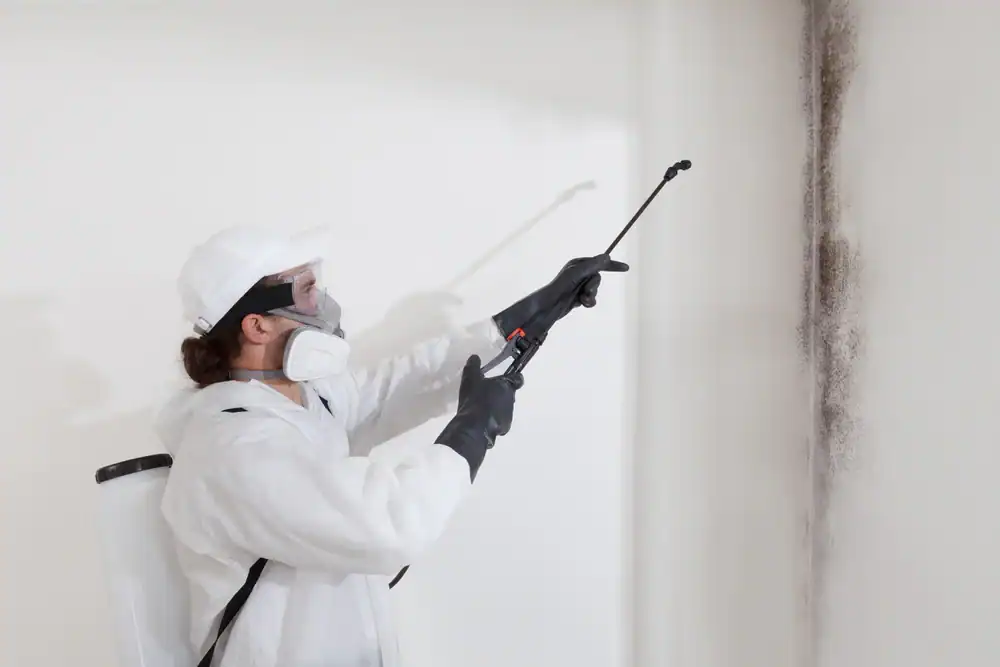
The certification also covers something most people overlook: personal protection. Mold releases spores when disturbed. Without the right respirator, goggles, and gloves, you’re breathing in exactly what you’re trying to get rid of.
Our certified techs know this. We also know that different mold types require different approaches, and we can tell the difference between surface mold and a deeper infestation that’s eating through your insulation.
If someone shows up without this certification, they might clean what you can see. But they won’t know how to prevent cross-contamination, test for hidden growth, or address the moisture problem that caused it. You’ll pay them, the mold will come back, and you’ll pay someone else to fix it properly.
That’s not a maybe—it’s a pattern that plays out in homes across Greensboro every year. Certification isn’t about paperwork. It’s about whether the person you hire knows how to protect your home and your health while solving the actual problem.
What Happens During Professional Mold Detection and Air Testing
You can’t treat what you can’t find. That’s the whole point of professional mold detection—it finds the growth you’re not seeing yet.
Mold inspection starts with a visual check, but it doesn’t stop there. We look for water stains, discoloration, warping, and musty smells. We check behind appliances, under sinks, around windows, and in attics. We use moisture meters to measure humidity levels inside walls and floors, because mold grows where moisture sits—not just where you can see it.
Air testing takes it further. A sample of your indoor air gets sent to a lab, where technicians identify the types and concentrations of mold spores. This tells you whether you’re dealing with common surface mold or something more serious, like Stachybotrys—black mold.
It also shows whether spores are spreading through your HVAC system. That means every time your heat or AC kicks on, you’re circulating mold throughout the house.
Thermal imaging is another tool we use, especially in older homes or after water damage. It detects temperature differences in walls and ceilings that indicate moisture trapped inside. You might not see mold on the drywall, but if the infrared camera shows a cold, damp spot, there’s a good chance it’s growing behind the surface.
This level of mold detection matters because mold doesn’t grow in one place. It spreads. A small patch in the bathroom could mean there’s a bigger problem in the wall cavity or the crawl space below.
In Guilford County, NC, where crawl spaces are common and humidity is high, that’s not rare—it’s typical. Testing also gives you a baseline. After mold mitigation, a follow-up air test confirms that spore levels are back to normal.
Without that, you’re just hoping the work was done right. With it, you have proof. If you skip this step and go straight to cleaning, you’re gambling. You might get lucky, or you might spend money treating the wrong area while the real problem keeps growing somewhere you didn’t check.
Professional Mold Removal: Advanced Techniques and Safety Protocols
Removing mold safely requires more than a spray bottle and a scrub brush. It requires containment, filtration, and a plan for what to do with contaminated materials.
Professional mold removal starts with isolation. Plastic sheeting seals off the work area from the rest of your home. Negative air machines create pressure differences so air flows into the contaminated zone, not out of it. HEPA filters on those machines trap microscopic spores before they reach clean air.
Once containment is set, mold treatment begins. Non-porous surfaces like tile and metal get cleaned with antimicrobial solutions. Porous materials—drywall, insulation, carpet—usually get removed entirely if the growth is extensive. You can’t scrub mold out of drywall. It grows into the material. The only way to eliminate it is to take it out, bag it, and dispose of it properly.
Black Mold Removal Safety Protocols and Equipment Requirements
Black mold—Stachybotrys chartarum—gets attention because it produces mycotoxins that can cause serious health problems. Respiratory issues, headaches, fatigue, and in severe cases, neurological symptoms. It’s not something you want to mess with casually.
Removing black mold requires stricter protocols than common mold varieties. Full-face respirators, not just dust masks. Protective suits that cover skin completely. Double-bagging of all contaminated materials in heavy-duty plastic before they leave the work area.
The black mold removal process itself is slower and more methodical. Every surface gets misted with water before disturbance to keep spores from going airborne. HEPA vacuums capture particles during the work. Air scrubbers run continuously to filter the environment.
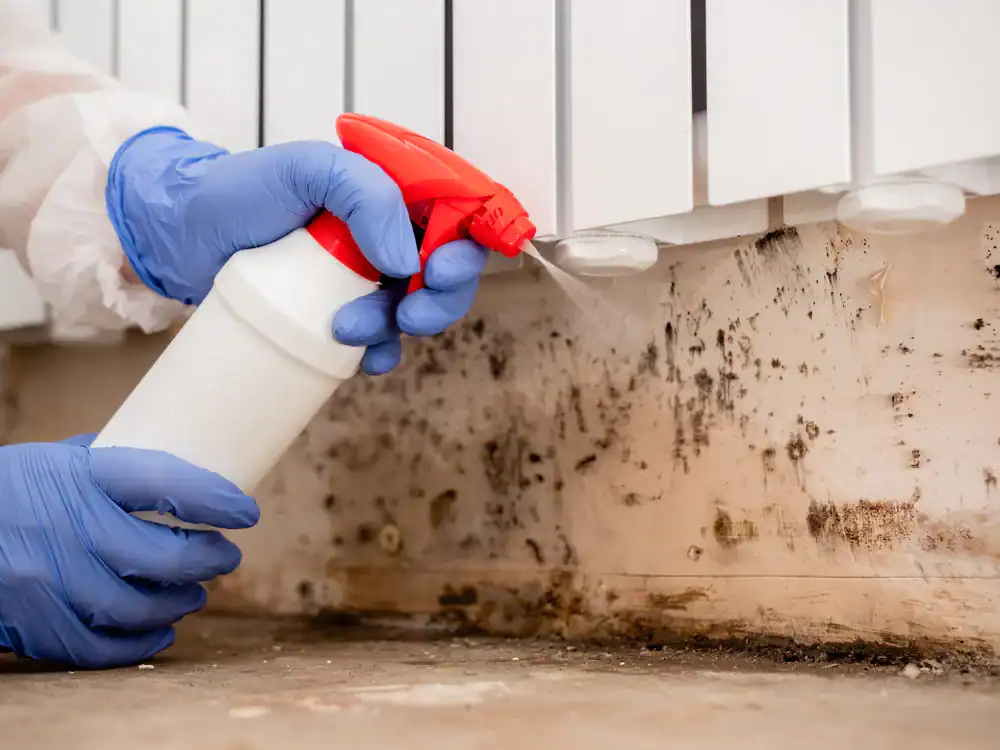
And once physical removal is done, antimicrobial treatments are applied to any surfaces that remain. Here’s what people get wrong: they see black mold, panic, and try to bleach it.
Bleach doesn’t penetrate porous materials. It kills surface mold, sure, but the roots stay alive in the drywall or wood. Worse, the moisture from bleach can actually feed the mold you’re trying to kill. So you spray, it looks better for a week, then it comes back darker and more widespread.
Professional black mold removal also includes air quality testing before and after the work. The “before” test confirms what you’re dealing with and how concentrated the spores are. The “after” test verifies that mold remediation brought levels back to safe ranges.
Without that second test, you’re trusting that the work was thorough. With it, you have documentation. In Guilford County, NC, black mold shows up most often in crawl spaces, attics after roof leaks, and bathrooms with poor ventilation.
The humidity here creates perfect conditions. Once it takes hold, it doesn’t go away on its own. It spreads, releases more spores, and the longer it sits, the more expensive and complicated mold removal becomes.
If you’re dealing with black mold, this isn’t a DIY situation. The health risks are real, the mold treatment process is technical, and the consequences of doing it wrong can follow you for years.
How Professional Mold Treatment Works on Different Materials
Mold doesn’t treat all materials equally, and neither should your mold mitigation approach. What works on tile won’t work on wood. What saves a hardwood floor might not save drywall.
Non-porous surfaces are the easiest to treat. Glass, metal, tile, sealed concrete—these don’t absorb mold. It grows on the surface, and you can clean it off with the right antimicrobial solution.
Scrub, rinse, dry thoroughly, and it’s done. As long as you address the moisture source, it won’t come back.
Porous materials are a different story. Drywall, insulation, carpet, unsealed wood, fabric—mold doesn’t just sit on these surfaces. It grows into them. The spores send roots deep into the material, and no amount of surface cleaning will kill what’s embedded inside.
For drywall, if the mold covers more than a few square feet or has been there for weeks, the standard approach is removal. Cut out the affected section, dispose of it properly, and replace it with new material. Trying to save heavily contaminated drywall just leaves spores behind that will regrow as soon as conditions allow.
Wood is more nuanced. Structural wood like framing can sometimes be saved if caught early. The surface gets sanded down to remove visible growth, then treated with a penetrating antimicrobial that kills spores below the surface.
But if the wood is soft, spongy, or rotting, it’s compromised. At that point, it’s not just a mold problem—it’s a structural problem. The wood needs to be replaced.
Carpet and padding almost never survive significant mold growth. The fibers trap moisture and spores, and even after cleaning, the smell and contamination remain. We recommend removal and replacement rather than attempting to salvage it.
HVAC systems present their own challenges. Mold in ductwork spreads spores every time the system runs. Cleaning requires specialized equipment—rotating brushes, HEPA vacuums, and sometimes fogging with antimicrobial agents. If mold has colonized the evaporator coil or air handler, those components may need replacement to fully resolve the issue.
The key is matching the mold treatment to the material and the severity of the growth. We know when to clean, when to treat, and when to remove. Homeowners trying to save money often try to clean everything, even materials that can’t be saved.
That’s how you end up with a house that smells like mold six months after “remediation.” Different materials, different approaches. One size doesn’t fit all.
Getting Mold Mitigation Right the First Time
Mold mitigation isn’t something you want to do twice. It’s expensive, disruptive, and if it’s not done right, it doesn’t solve anything.
The mistakes covered here—using bleach instead of proper antimicrobials, ignoring moisture sources, skipping professional mold detection, attempting black mold removal without proper equipment, and treating all materials the same—these aren’t rare. They’re common. And they’re exactly why homeowners across Guilford County, NC end up paying thousands more than they should have.
The solution isn’t complicated. Hire someone with IICRC AMRT certification who understands North Carolina’s humidity challenges. Get proper testing before and after mold remediation. Address the moisture problem, not just the mold. And don’t try to save money by cutting corners on materials that can’t be saved.
If you’re dealing with mold in Greensboro or the surrounding counties, we’ve been handling these situations for over 30 years. IICRC certified, NADCA certified, BBB accredited, with the equipment and experience to get it done right the first time.