
Contact Info
- Greensboro, NC 27406
- Call: 336-707-0498
- Text: 336-707-0498
-
Mon - Fri: 8am - 4pm
Sat - Sun: Closed
Contact Info
Commercial and residential duct cleaning serve different purposes. Understanding the differences in equipment, scheduling, compliance, and system complexity helps business owners make informed decisions about facility maintenance.
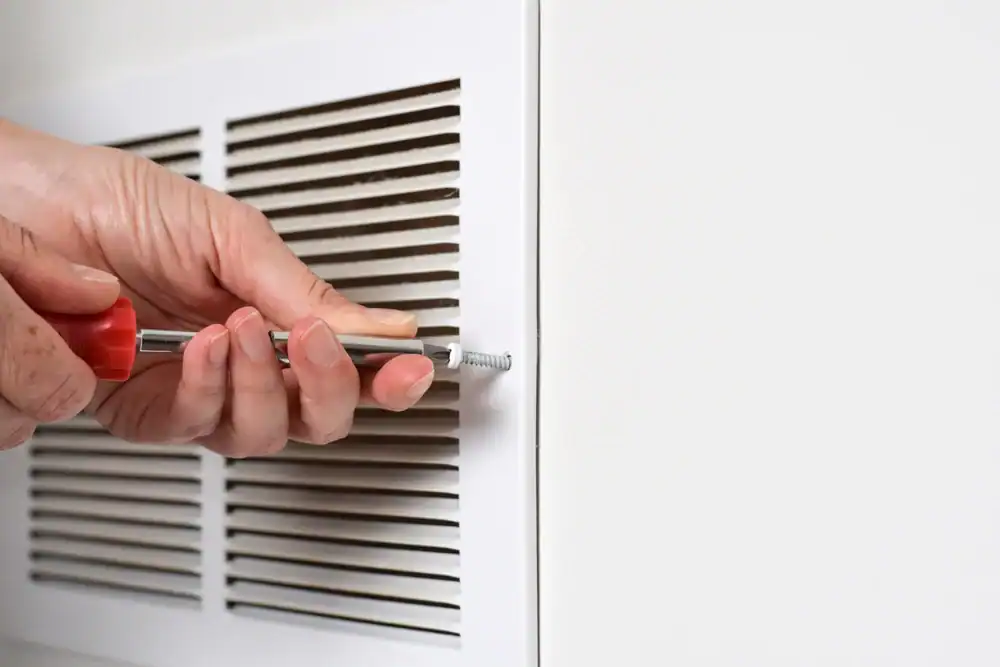
Your commercial HVAC system isn’t just a bigger version of what’s in someone’s home. The equipment is different. The contaminants are different. The stakes are higher. When you’re responsible for the air quality in a building where employees work or customers visit, you need more than a residential duct cleaning approach scaled up. You need a service designed for commercial environments from the ground up—one that understands compliance requirements, works around your operations, and delivers documentation you can actually use. Here’s what separates commercial duct cleaning from residential service, and why it matters for your Guilford County, NC facility.
The biggest difference isn’t just size. It’s everything that comes with size—complexity, accessibility, contaminants, and consequences. Residential systems typically serve a single household with straightforward duct runs and one or two air handlers. Commercial systems span multiple floors, serve dozens or hundreds of occupants, and include complex zoning configurations that require detailed planning just to access properly.
Commercial spaces also accumulate different types of debris. Homes deal with dust, pet hair, and pollen. Commercial buildings face chemical residues from cleaning products, grease buildup in restaurant settings, higher volumes of particulate matter from foot traffic, and industrial contaminants depending on the business type. That’s why commercial duct cleaning uses industrial-grade equipment—truck-mounted vacuum systems, high-capacity negative air machines, and specialized tools designed to handle the volume and variety of contaminants found in business environments.
The cleaning process itself takes longer and requires coordination. A typical home might take a few hours. A commercial building could take anywhere from a full day to several weeks depending on system size and complexity. That’s not inefficiency—it’s thoroughness applied to a system that’s exponentially larger and more intricate than residential ductwork.
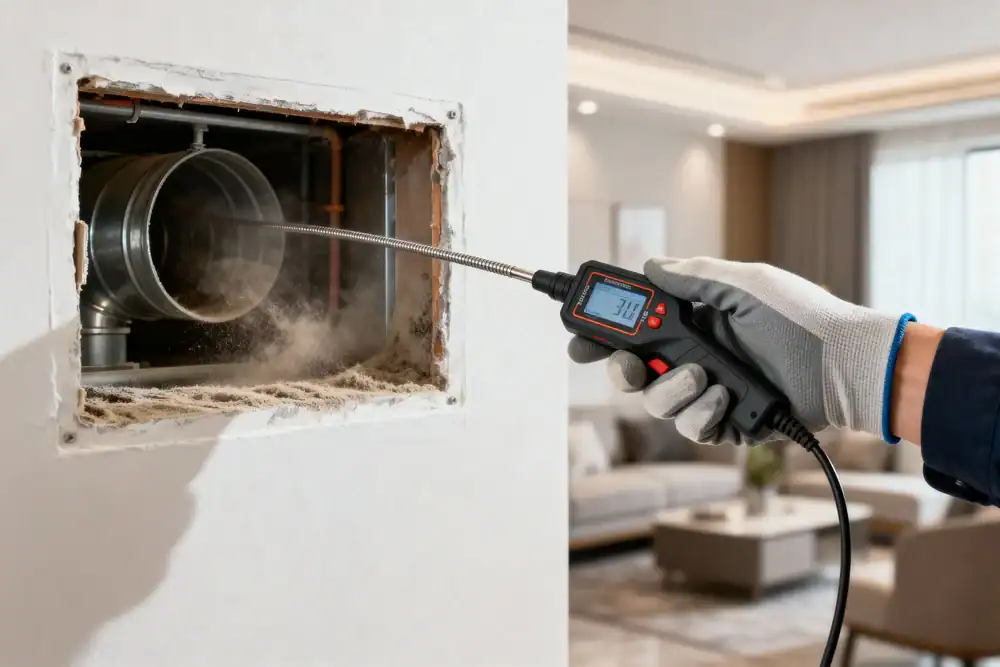
Commercial properties operate under regulatory oversight that doesn’t apply to homes. OSHA mandates routine maintenance of air-handling systems. EPA standards require documentation of indoor air quality measures. Depending on your industry—healthcare, food service, education—you may face additional compliance requirements that demand professional cleaning at specific intervals with proper certification and record-keeping.
NADCA certification matters in commercial environments because it demonstrates adherence to ACR standards—the industry benchmark for proper HVAC system cleaning. To become a NADCA member, companies must employ at least one certified Air Systems Cleaning Specialist, maintain liability insurance, and agree to follow established cleaning protocols. That certification isn’t just a credential. It’s proof that the work meets the standards regulatory agencies expect when they review your facility.
Documentation is another area where commercial duct cleaning diverges from residential service. You need before-and-after photos. You need compliance certificates. You need detailed reports suitable for health department inspections, insurance requirements, and building management reviews. Residential customers might want to see what was removed from their vents. Commercial clients need documentation that holds up under regulatory scrutiny.
We bring NADCA certification and over 30 years of experience serving Guilford County, NC businesses. We understand that commercial duct cleaning isn’t just about removing debris—it’s about creating a defensible record that your facility maintains proper indoor air quality standards. With BBB accreditation and IICRC AMRT mold certification, we provide the credentials and documentation commercial properties require.
Guilford County’s subtropical climate creates additional compliance considerations. High humidity and seasonal pollen loads promote mold growth and allergen accumulation in ductwork. North Carolina’s workplace safety regulations and school air quality standards require documented compliance, making professional testing and cleaning essential for commercial properties throughout the region. The tightly sealed construction common in modern energy-efficient buildings traps these contaminants indoors, where they concentrate to levels that trigger regulatory concern and health complaints.
Your business can’t stop running for duct cleaning. That’s the reality commercial mechanical contractors face that residential providers don’t. A homeowner can schedule service during the day when they’re at work. A business needs cleaning that happens without disrupting operations, affecting customers, or forcing employees to work in uncomfortable conditions.
That’s why commercial duct cleaning often occurs after hours, on weekends, or in carefully phased segments that address one section of the building at a time. The scheduling complexity goes beyond just picking a convenient time. You need coordination with building management, communication with tenants or department heads, and contingency plans for unexpected issues that might extend the timeline.
The equipment setup alone requires more planning. Truck-mounted vacuum systems need exterior access. Negative air machines must be positioned to prevent cross-contamination between cleaned and uncleaned sections. Access points may need to be created in ductwork that wasn’t designed with cleaning in mind. All of this happens while your business continues operating around the work.
We operate Monday through Friday, 8am to 4pm, but we understand that commercial projects often require flexibility beyond standard business hours. With over three decades serving Guilford, Randolph, Alamance, and Forsyth Counties, we’ve developed systems for coordinating commercial projects that minimize disruption. Our approach focuses on working around your operations rather than forcing your business to work around our schedule.
Commercial heating service integration adds another layer of scheduling complexity. Many businesses combine duct cleaning with HVAC maintenance to maximize efficiency and minimize disruption. That requires coordination between duct cleaning technicians and HVAC service providers, often with timing dictated by seasonal demand, equipment replacement schedules, or facility renovation projects. Getting all the moving parts aligned takes experience with commercial operations and an understanding of how different building systems interact.
The consequences of poor scheduling extend beyond inconvenience. Disrupted operations cost money. Uncomfortable employees are less productive. Customers who encounter service work in progress form negative impressions. That’s why commercial duct cleaning isn’t just a technical service—it’s a project management exercise that requires understanding business operations and facility management priorities.
Want live answers?
Connect with a Clean Air LLC expert for fast, friendly support.
The tools that work for residential duct cleaning simply can’t handle commercial systems. Portable vacuum units suitable for a home’s ductwork don’t have the capacity for a multi-story office building. Brushes designed for residential flex duct won’t reach the extended trunk lines in commercial installations. The equipment gap between residential and commercial duct cleaning is substantial because the systems themselves are fundamentally different in scale and design.
Commercial air duct cleaning relies on truck-mounted vacuum systems with industrial-grade suction capacity—often 14,000 CFM or higher. These systems create the negative pressure differential needed to extract contaminants from extensive ductwork while preventing debris from escaping into occupied spaces. High-pressure air whips and rotary brushes designed for commercial applications dislodge buildup that’s been accumulating for years in hard-to-reach sections of the system.
The process follows NADCA ACR standards, which specify minimum procedural requirements for assessment, cleaning, and restoration. That means inspecting the entire system with cameras before work begins, creating service openings as needed to access otherwise unreachable areas, mechanically cleaning all duct systems to remove visible contaminants, and verifying cleanliness through visual inspection or testing after completion. It’s a systematic approach that ensures nothing gets missed.
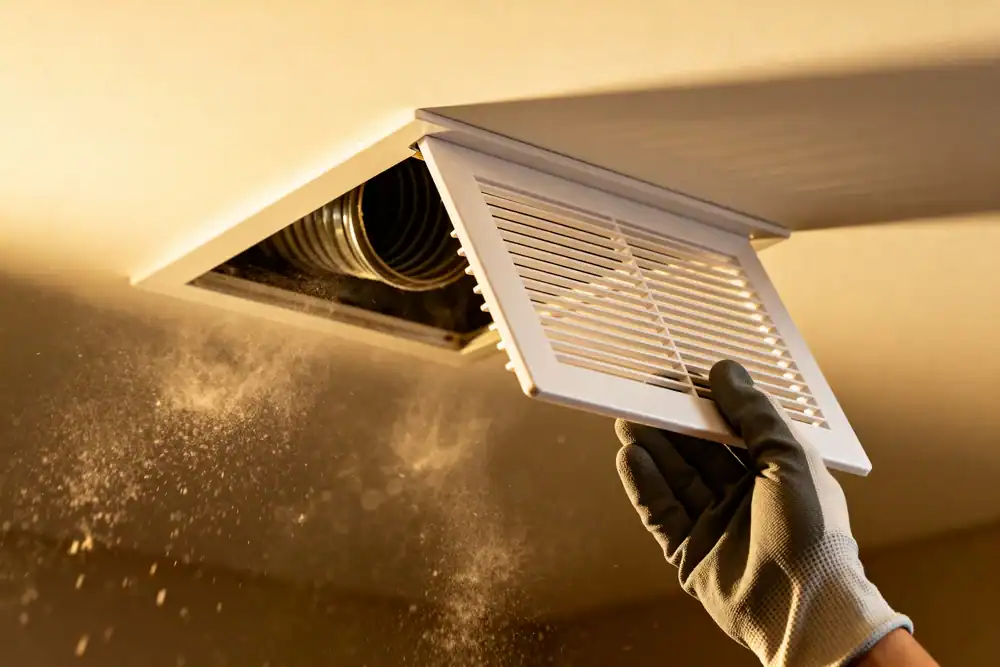
Commercial HVAC systems aren’t designed with cleaning in mind. They’re designed for performance, efficiency, and capacity. That creates challenges when it’s time to clean them. Ductwork may run through walls, above ceilings, or in mechanical chases that require special access. Multiple air handlers may serve different zones with interconnected ductwork that must be isolated during cleaning to prevent contamination from spreading.
The complexity means you need technicians who understand commercial HVAC design and can navigate systems they’ve never seen before. They need to identify all the components that require cleaning—supply and return ducts, registers, grills, diffusers, coils, drain pans, fans, air handling units. Missing any component means incomplete cleaning and continued air quality problems.
Robotic cleaning systems are increasingly common in commercial applications because they can reach areas human technicians can’t access without major demolition. High-definition cameras allow inspection of ductwork from the inside, identifying problem areas and verifying cleaning effectiveness. These technologies aren’t common in residential service because homes don’t need them. Commercial buildings do.
We use professional-grade equipment that reaches deeper than standard residential tools. Our industry-leading equipment and proven methods address the specific challenges of commercial ductwork—the extended runs, the complex configurations, the variety of contaminants that accumulate in business environments. With NADCA certification, we follow the systematic approach commercial systems require rather than applying residential methods to commercial-scale problems.
Guilford County commercial buildings range from historic downtown structures to modern energy-efficient facilities. Each presents different challenges. Older buildings may have ductwork that’s never been cleaned, with decades of accumulation. Newer buildings have tightly sealed construction that traps pollutants at higher concentrations. Both need cleaning approaches tailored to their specific conditions, which requires experience with diverse building types and HVAC configurations.
Commercial duct cleaning doesn’t happen in isolation. It’s part of comprehensive facility maintenance that includes HVAC service, indoor air quality management, and building systems optimization. Smart facility managers coordinate duct cleaning with other maintenance activities to maximize efficiency and minimize disruption to operations.
Integrating commercial heating service with duct cleaning makes practical sense. When HVAC technicians are already accessing your equipment for seasonal maintenance or repairs, adding duct cleaning to the scope eliminates duplicate mobilization costs and reduces the number of times your building operations are affected by service work. It also allows technicians to address problems they discover during cleaning—leaking ductwork, malfunctioning dampers, failing insulation—before they become bigger issues.
The timing of commercial duct cleaning often aligns with HVAC system lifecycles. New construction requires post-construction cleaning to remove debris before the system goes into service. Equipment replacements create opportunities to clean ductwork that will serve new air handlers. Renovations generate dust and contaminants that must be removed before occupants return. Each scenario requires coordination between commercial mechanical contractors and duct cleaning specialists.
Energy efficiency is another reason to integrate duct cleaning with facility maintenance. The Department of Energy estimates that 25 to 40 percent of energy used for heating or cooling is wasted when HVAC systems are dirty or poorly maintained. Clean ductwork improves airflow, reduces strain on equipment, and lowers energy consumption. When combined with proper HVAC service—filter changes, coil cleaning, system calibration—the energy savings compound.
Our comprehensive service offering extends beyond basic duct cleaning. With IICRC AMRT mold certification, we address mold issues that often accompany duct contamination in Guilford County’s humid climate. Our free inspections help facility managers understand what their systems actually need rather than selling unnecessary services. That consultative approach aligns with how commercial clients prefer to work—understanding the problem, seeing the options, making informed decisions based on actual conditions rather than sales pressure.
Indoor air quality management has become a facility maintenance priority since the pandemic heightened awareness of airborne contaminants and ventilation effectiveness. Commercial properties now face questions from employees, tenants, and customers about what measures are in place to ensure healthy indoor air. Professional duct cleaning with proper documentation provides tangible evidence that facility management takes these concerns seriously and invests in solutions that actually address them.
Commercial duct cleaning requires different equipment, different expertise, and different coordination than residential service. The systems are more complex. The stakes are higher. The documentation requirements are stricter. Understanding these differences helps you evaluate providers and make decisions that actually serve your facility’s needs rather than just checking a maintenance box.
Look for NADCA certification, which demonstrates commitment to industry standards and proper procedures. Verify that the company has experience with commercial projects similar to yours in size and complexity. Ask about scheduling flexibility and how they minimize disruption to your operations. Request examples of the documentation they provide for compliance and record-keeping purposes.
We bring over 30 years of experience serving commercial and residential clients throughout Guilford County, NC. With NADCA certification, BBB accreditation, IICRC AMRT mold certification, and 66+ five-star reviews, we provide the credentials and track record commercial properties require. Our professional-grade equipment and proven methods address the specific challenges of commercial ductwork while our flexible approach accommodates the operational realities businesses face. If you’re ready to address your facility’s duct cleaning needs with a provider who understands commercial requirements, we offer the expertise and local knowledge Guilford County businesses depend on.
Summary:
Share: