
Mold Detection Starts With Understanding What You’re Actually Looking At
Most people see a black spot and assume it’s mold. Sometimes it is. Sometimes it’s dirt, mildew, or staining from an old leak that dried up months ago. The problem is, you can’t tell just by looking.
Mold grows in patterns. It spreads from a moisture source. If you see it in one corner of a room, there’s usually more behind the wall or under the floor. North Carolina’s humidity makes this worse because mold doesn’t need a major water event to thrive here. A slow drip, condensation on a cold pipe, or a crawl space that never quite dries out—that’s enough.
Why Black Mold Removal Requires More Than a Visual Inspection
Black mold gets the most attention, and for good reason. Stachybotrys chartarum produces mycotoxins that can cause respiratory problems, headaches, and worse. But here’s what most homeowners don’t know: not all black-colored mold is Stachybotrys, and not all dangerous mold is black.
You can’t identify mold species by color alone. That requires testing. A mold air test measures spore concentration in your home’s air and identifies what types are present. An indoor air quality assessment goes further, checking humidity levels, airflow patterns, and potential moisture sources that feed mold growth.
This matters because the remediation approach changes based on what you’re dealing with. Surface mold on a painted wall is different from mold embedded in drywall, which is different from mold colonizing wood framing in your crawl space. If you don’t know what you have, you can’t fix it properly.
Testing also protects you if you’re selling your home. North Carolina requires disclosure of known water intrusion and drainage problems on the Residential Property Disclosure Statement. If you had mold, remediated it, and can show clearance testing that proves it’s gone, that documentation has value. Without it, buyers will assume the worst.
The cost of mold air testing in Greensboro typically runs a few hundred dollars. Compare that to the cost of guessing wrong—ripping out materials that didn’t need replacing, or worse, leaving contaminated materials in place because you thought you got it all. Professional mold detection isn’t an upsell. It’s the foundation of doing the job right.
Home Air Testing Shows You What’s Hiding in Your HVAC System
Your HVAC system is either helping you or making your mold problem worse. Most homeowners don’t think about it until we point out spores growing inside their ductwork.
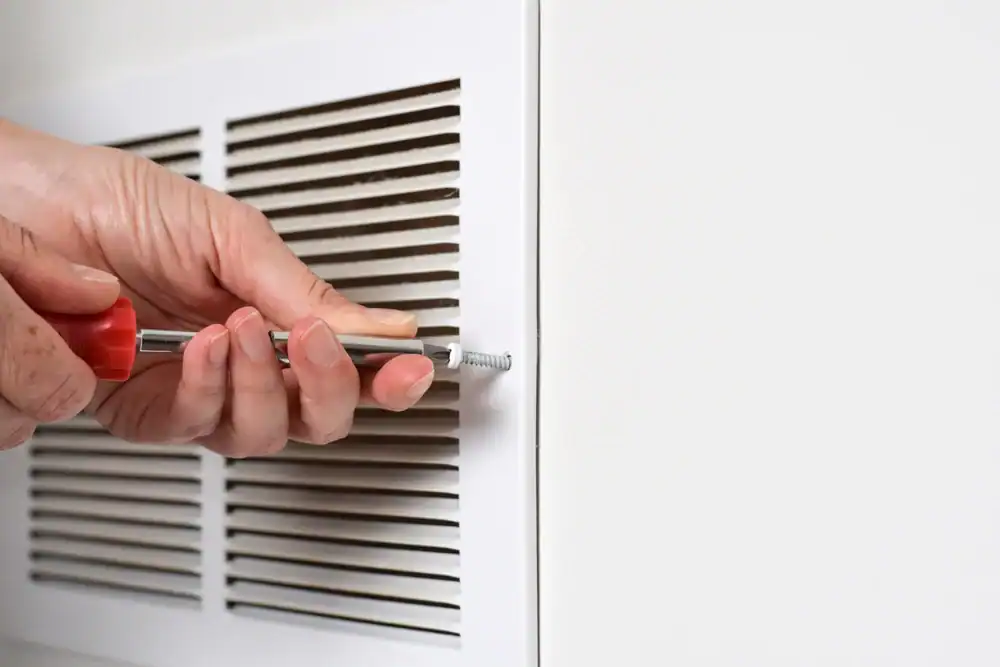
Here’s how it happens. Mold grows in your crawl space or basement. Your HVAC system pulls air from those areas—up to 40% of your home’s air comes from your crawl space in most North Carolina homes. That contaminated air gets pulled through your ducts, depositing spores on the interior surfaces. Your air conditioner runs, condensation forms on the cold duct surfaces, and now you’ve created a perfect growing environment inside the system itself.
You can clean every visible surface in your home and still have a mold problem because the source is in your ventilation system. That’s why environmental air quality testing matters. It measures what’s in the air you’re actually breathing, not just what you can see on walls.
If testing shows elevated spore counts, you need to address the HVAC system as part of remediation. That usually means professional duct cleaning with HEPA filtration, treating interior surfaces with antimicrobial solutions, and fixing the moisture problem that caused it in the first place. Skipping this step is like mopping the floor while the sink overflows. You’re treating the symptom, not the cause.
Indoor air quality assessment also reveals whether your ventilation is adequate. Poor airflow traps moisture. Sealed-up homes without proper mechanical ventilation create conditions where humidity stays elevated even when it’s not raining. In Guilford County, where summer humidity regularly hits 70-90%, that’s a recipe for recurring mold growth no matter how many times you bleach the walls.
Professional Mold Removal Costs Less Than Fixing DIY Disasters
The math seems simple. Hire a professional, pay $2,000-$3,000. Do it yourself, spend $100 on supplies. Except DIY mold removal almost never costs $100, and it rarely works the first time.
What actually happens is this: you clean the visible mold, feel accomplished for a week, then watch it come back. Or you disturb mold without containment and spread spores to rooms that didn’t have a problem before. Or you use the wrong products, damage your building materials, and create a bigger repair bill than you started with.
Mold Cleaning With Bleach Doesn’t Kill Mold in Porous Materials
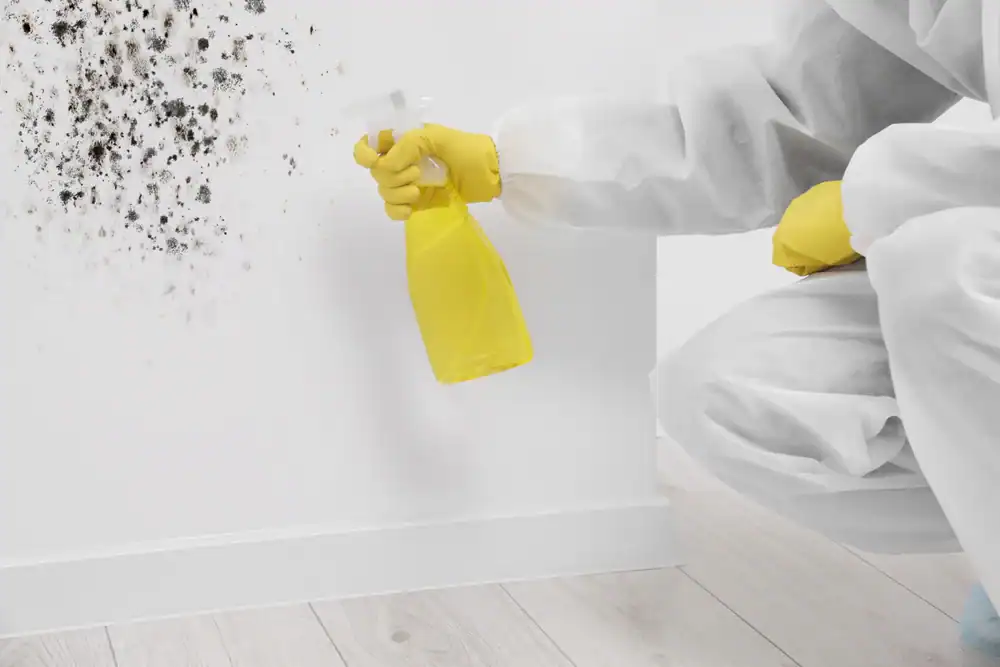
Bleach works on hard, non-porous surfaces like tile or glass. It kills surface mold and lightens stains. That’s it. On porous materials—drywall, wood, insulation, fabric—bleach doesn’t penetrate deep enough to kill the roots. The mold you see on the surface is just the fruiting body. The actual organism, the mycelium, grows into the material.
When you spray bleach on drywall, you’re bleaching the surface while the mold continues growing underneath. The moisture in the bleach solution actually feeds the mold deeper in the material. A few weeks later, it’s back. Homeowners assume they didn’t use enough bleach or didn’t scrub hard enough, so they repeat the process. The mold keeps coming back because the approach doesn’t work.
Professional mold treatment uses products specifically designed to penetrate porous materials and kill mold at the source. These antimicrobial solutions are applied after the moisture source is fixed and contaminated materials are removed. You can’t buy them at the hardware store, and you can’t replicate the process with household cleaners.
The other problem with bleach is what it does to you. Bleach produces fumes that irritate your respiratory system. Mix it with other cleaners—which people do all the time—and you’re creating toxic chlorine gas. If you’re working in a poorly ventilated crawl space or bathroom, you’re exposing yourself to concentrations that can cause serious harm. Professional mold abatement includes proper respiratory protection, containment, and ventilation. DIY rarely does.
If you’ve already tried bleach and the mold came back, you’re not alone. It’s the most common mistake homeowners make. The fix is to stop treating the symptom and start addressing the moisture source that’s feeding the growth.
Mold Mitigation Without Fixing the Moisture Source Guarantees It Returns
Mold needs three things: moisture, food, and the right temperature. You can’t eliminate the food source—your home is made of organic materials like wood and drywall. You can’t keep your house at freezing temperatures. The only variable you control is moisture.
Every mold problem has a moisture source. A roof leak. A plumbing drip. Condensation on cold pipes. Groundwater seeping into your crawl space. High humidity with inadequate ventilation. If you remove the mold but leave the moisture source untouched, you’re just buying time until it grows back.
This is where most DIY efforts fail. Homeowners see mold in a bathroom and assume it’s from shower steam. They clean it, run the fan more often, and call it fixed. But if the real problem is a slow leak behind the wall or a poorly vented exhaust fan that’s dumping moisture into the wall cavity, the mold will return no matter how much you clean.
Professional mold remediation starts with identifying the moisture source. That might mean using moisture meters to check wall cavities, infrared cameras to find hidden leaks, or humidity monitors to measure conditions in your crawl space. Once the source is identified, it has to be fixed before remediation begins. Otherwise, you’re wasting money on a temporary fix.
In North Carolina, crawl space moisture is the leading cause of whole-home mold problems. Vented crawl spaces were designed to let outside air dry the space, but in our humid climate, they do the opposite. They pull in moisture-laden air that condenses on cool surfaces, creating ideal conditions for mold growth. The fix isn’t better ventilation—it’s crawl space encapsulation with a vapor barrier, sealed vents, and a dehumidifier to control humidity year-round.
Fixing the moisture source often costs more than the mold cleaning itself. Crawl space waterproofing, foundation repairs, plumbing fixes—these aren’t cheap. But they’re the only way to solve the problem permanently. Skipping this step to save money guarantees you’ll be paying for mold remediation again in six months.
Vapor Seal Crawl Space Solutions Stop Mold Before It Starts
Your crawl space is probably the reason you have mold in your home, even if that’s not where you see it growing. North Carolina’s heavy clay soil holds water. Summer humidity stays above 70%. Your vented crawl space pulls in that humid air, and condensation forms on every cool surface—floor joists, ductwork, pipes.
That moisture feeds mold growth on wood framing. The mold releases spores into the air. Your HVAC system pulls that air into your living space. You start seeing mold in bathrooms, closets, or around vents, and you assume it’s a localized problem. It’s not. The source is under your house.
Crawl Space Waterproofing Eliminates the Moisture That Feeds Mold Growth
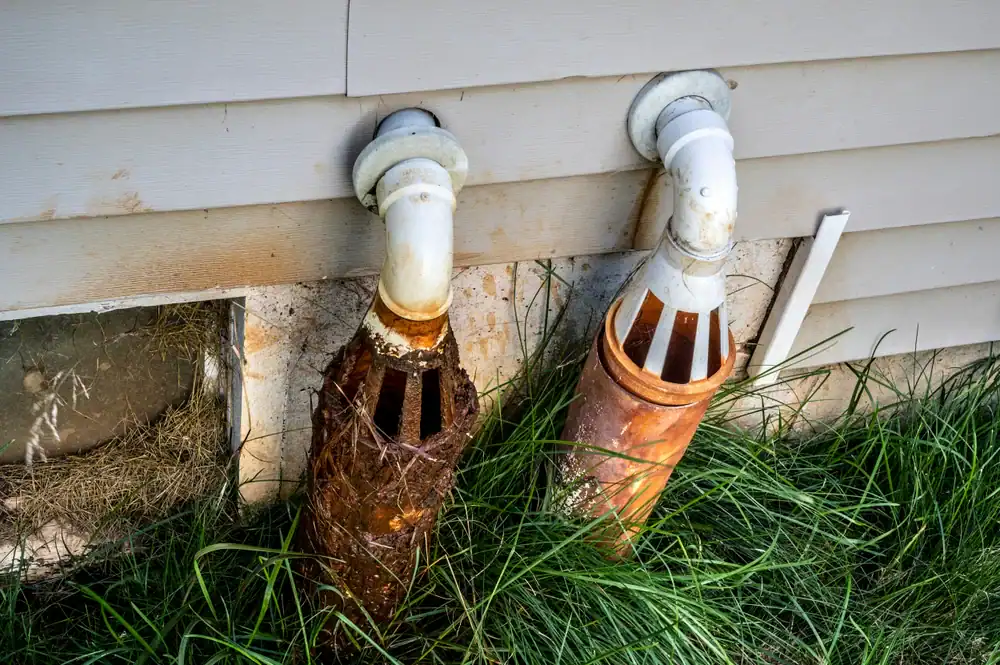
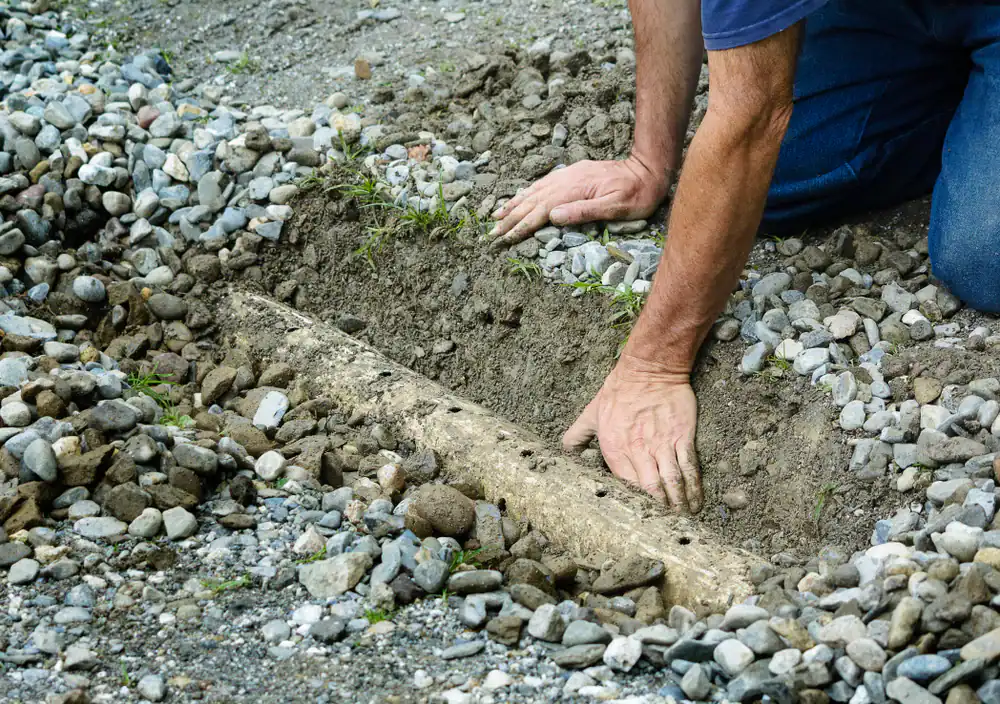
Crawl space waterproofing starts with controlling groundwater. If you have standing water in your crawl space after heavy rain, you need drainage. That usually means installing a perimeter drain system and a sump pump to remove water before it can evaporate into the air.
Next is the vapor barrier. A proper vapor seal crawl space uses heavy-duty polyethylene sheeting—at least 12-mil thick, preferably 20-mil—that covers the entire floor and extends up the foundation walls. The seams are sealed with tape, and the edges are mechanically fastened to prevent moisture from wicking through.
This creates a barrier between the ground and your home’s air. Moisture from the soil can’t evaporate into your crawl space. That eliminates the primary source of humidity that feeds mold growth.
But a vapor barrier alone isn’t enough. You also need to seal the foundation vents. Vented crawl spaces made sense in dry climates, but in North Carolina, they make the problem worse. Closing the vents and conditioning the space—either with a dehumidifier or by extending your HVAC system into the crawl space—keeps humidity below the threshold where mold can grow.
Crawl space encapsulation cost in North Carolina typically runs $3,500-$7,000 for an average-sized home, depending on the condition of the space and what repairs are needed first. If you have existing mold, that has to be remediated before encapsulation. If you have structural damage from wood rot, that has to be repaired. But once it’s done, you’ve eliminated the conditions that allow mold to grow in the first place.
This is the difference between treating mold and preventing it. Mold remediation removes what’s already there. Crawl space encapsulation removes the conditions that allowed it to grow. One is reactive, the other is proactive. Both are necessary if you want a permanent solution.
Insulation in Crawl Space Needs to Be Done Right or It Makes Mold Worse
Fiberglass insulation in crawl space floor joists is common in older North Carolina homes. It’s also one of the worst things you can have in a humid, vented crawl space.
Here’s why. Fiberglass absorbs moisture from humid air. Once it’s damp, it stays damp. That wet insulation becomes a food source for mold. It also loses its insulating value, so you’re paying to heat and cool a home with insulation that doesn’t work anymore. Eventually, the weight of the moisture-soaked insulation causes it to sag and fall, leaving it in piles on your crawl space floor.
If you have fiberglass insulation in your crawl space and you’ve had mold problems, that insulation needs to be removed during remediation. You can’t clean mold out of fiberglass. The material is too porous. Once it’s contaminated, it has to go.
The right approach is to insulate the crawl space walls, not the floor. Rigid foam board insulation on the foundation walls keeps your crawl space—and the floor above it—warmer in winter and cooler in summer. It doesn’t absorb moisture, doesn’t support mold growth, and doesn’t lose R-value when humidity is high.
This is part of the crawl space encapsulation process. You’re creating a conditioned space that’s part of your home’s thermal envelope, not an unconditioned buffer zone that’s constantly fighting outdoor humidity. The result is better energy efficiency, lower utility bills, and no more mold growing on wet insulation.
Crawl space insulation cost varies depending on the size of your space and the type of insulation used, but it’s a fraction of what you’ll spend on recurring mold remediation if you leave the problem unfixed.
Mold Abatement Cost Is Lower When You Catch It Early
The size of your mold problem determines what you’ll pay to fix it. A small area—less than 10 square feet—might cost $500-$1,500 if you catch it early and the contamination is limited to surface growth on non-porous materials. That’s the best-case scenario.
Most homeowners don’t catch it that early. By the time you see visible mold, it’s usually been growing for weeks or months. What started as a small patch behind a toilet has spread to the wall cavity. What began as condensation on a crawl space joist has colonized multiple beams and the subfloor above.
Black Mold Remediation Costs More Because It Requires Stricter Containment
Black mold remediation cost runs 15-25% higher than remediation for other mold types because of the additional safety protocols required. Stachybotrys chartarum produces mycotoxins that are hazardous even in small concentrations. That means full containment with negative air pressure, HEPA filtration, and disposal of contaminated materials as hazardous waste.
Workers need respiratory protection—not just dust masks, but respirators with HEPA filters. The work area has to be sealed with plastic sheeting to prevent spores from spreading to other parts of your home. Air scrubbers run continuously to capture airborne particles. After the physical removal is complete, the space has to pass clearance testing before it’s considered safe.
All of that costs money. But it’s necessary. Black mold exposure can cause serious health problems, especially for children, elderly family members, or anyone with respiratory conditions. Cutting corners to save money isn’t worth the health risk.
In Greensboro, average mold removal cost for a typical project runs $1,700-$2,000, but black mold remediation in a crawl space or basement can easily hit $3,000-$5,000 depending on the extent of contamination and what structural repairs are needed.
The best way to control mold abatement cost is to address problems early, before they spread. That means paying attention to warning signs—musty odors, visible growth, water stains, increased allergy symptoms when you’re home. A free inspection from a certified mold remediation company can tell you what you’re dealing with and what it will cost to fix, without any obligation.
Mold Remediation Cost Includes More Than Just Cleaning
When you get a quote for mold remediation, understand what’s included. Professional mold abatement isn’t just spraying cleaner and wiping surfaces. It’s a multi-step process that addresses the entire problem.
First is containment. The work area gets sealed off with plastic barriers to prevent spores from spreading during the removal process. Negative air machines create lower pressure inside the containment area so air flows in, not out.
Next is removal of contaminated materials. Drywall, insulation, carpeting, baseboards—anything porous that’s been colonized by mold gets removed and disposed of properly. You can’t clean mold out of these materials. They have to be replaced.
Then comes treatment of structural elements. Wood framing, concrete, and other non-porous materials get cleaned with HEPA vacuums, then treated with antimicrobial solutions to kill any remaining mold and prevent regrowth.
After that, the space gets dried completely. High-powered dehumidifiers and air movers bring moisture levels down to where mold can’t grow. This step takes time—rushing it means leaving enough moisture for mold to return.
Finally, clearance testing confirms that spore counts are back to normal levels. Without this step, you have no way to know if the remediation actually worked.
The cost includes labor, equipment rental, disposal fees, antimicrobial products, and testing. It’s not cheap, but it’s comprehensive. Compare that to DIY, where you’re buying a spray bottle and hoping for the best.
Mold treatment cost also includes fixing the moisture source. If the problem is a leaky pipe, that pipe gets repaired. If it’s a poorly vented bathroom, ventilation gets improved. If it’s groundwater in your crawl space, drainage and encapsulation get installed. Without these fixes, you’re just paying to clean mold that will grow back.
Air Quality Inspection Tells You If Your Remediation Actually Worked
You can remove every piece of visible mold and still have a problem if airborne spore counts are elevated. That’s why post-remediation air quality assessment matters. It’s the only way to verify that the work actually fixed the problem.
We use clearance testing as the final step in professional mold remediation. Air samples are collected from the remediated area and from an unaffected area of your home as a baseline. The samples go to a lab for analysis. If spore counts in the remediated area are comparable to the baseline, the space passes clearance. If they’re still elevated, more work is needed.
IAQ Testing Measures What You Can’t See
Indoor air quality assessment goes beyond just mold. It measures total particulates, humidity levels, carbon dioxide, volatile organic compounds, and other factors that affect your home’s air quality.
This matters because mold is often part of a larger indoor air quality problem. High humidity supports mold growth, but it also promotes dust mite populations and makes your home feel stuffy and uncomfortable. Poor ventilation traps contaminants indoors. Dirty ductwork distributes particles throughout your home every time your HVAC runs.
IAQ testing identifies all of these issues, not just mold. That gives you a complete picture of what’s affecting your home’s air quality and what needs to be addressed to fix it.
For homeowners in Guilford County, where humidity is a year-round challenge, IAQ testing often reveals that whole-home dehumidification is needed, not just spot treatment in problem areas. It might show that your HVAC system needs duct cleaning and sealing. It might identify that your crawl space is the primary source of contaminated air entering your home.
All of that information helps you make informed decisions about where to invest your money for the biggest improvement in air quality. Guessing wastes money on solutions that don’t address the root cause.
Foundation Crawl Space Repair Prevents Structural Damage From Mold
Mold doesn’t just affect your health and indoor air quality. It damages your home’s structure. Wood rot from prolonged mold exposure weakens floor joists, sill plates, and support beams. Left untreated, that structural damage can lead to sagging floors, cracked walls, and foundation settlement.
Foundation crawl space repair addresses the structural damage caused by moisture and mold. That might mean sistering new joists alongside damaged ones, replacing rotted sill plates, or installing additional support posts to carry loads that compromised framing can no longer handle.
This work has to be done by qualified contractors who understand structural engineering. It’s not part of mold remediation—it’s a separate scope of work that happens after mold is removed but before encapsulation is installed.
Crawl Space Renovation Combines Mold Removal With Structural Repairs
Crawl space renovation is the comprehensive approach. It combines mold remediation, structural repairs, moisture control, and encapsulation into a single project that transforms your crawl space from a liability into a protected, conditioned space.
The process starts with assessment. A thorough inspection identifies mold contamination, structural damage, moisture sources, and any other issues that need to be addressed. Then comes a detailed scope of work and pricing for the complete project.
Mold remediation happens first. Contaminated materials get removed, structural elements get treated, and the space gets dried completely. Then structural repairs are made—replacing damaged wood, reinforcing compromised framing, addressing any foundation issues.
After that comes moisture control. Drainage systems get installed if needed. The vapor barrier goes down. Vents get sealed. Wall insulation gets installed. A dehumidifier gets set up with proper drainage.
The final step is testing and verification. Air quality testing confirms that mold is gone. Humidity monitoring confirms that moisture levels stay in the safe range. You get documentation showing that the work was done properly and the space is safe.
Crawl space renovation cost is higher than just mold remediation alone, but it solves the problem completely. You’re not just treating symptoms—you’re eliminating the conditions that caused the problem and preventing it from happening again.
For homeowners planning to stay in their homes long-term, this is the right investment. It protects your home’s structural integrity, improves indoor air quality, reduces energy costs, and eliminates recurring mold problems. The upfront cost is higher, but the long-term value is substantial.
Crawl Space Waterproofing Cost Is Lower Than Replacing Rotted Framing
Crawl space waterproofing cost in North Carolina typically runs $3,000-$7,000 for a complete system including drainage, vapor barrier, vent sealing, and dehumidification. That sounds like a lot until you compare it to the cost of foundation repairs, structural work, or whole-home mold remediation after years of moisture damage.
The math is simple. Spend a few thousand dollars now to control moisture, or spend tens of thousands later to fix the damage that moisture causes. Crawl space waterproofing is preventive maintenance that protects your largest investment—your home.
Crawl Space Sealing Cost Varies Based on Size and Condition
Crawl space sealing cost depends on several factors. The size of your crawl space is the biggest variable—larger spaces require more materials and labor. The condition matters too. If you have existing mold or structural damage, that has to be addressed first, which adds to the total cost.
Access is another factor. Crawl spaces with low clearance or difficult entry points take longer to work in, which increases labor costs. If your crawl space has a dirt floor with standing water, drainage work has to happen before the vapor barrier can be installed.
The quality of materials makes a difference. A 6-mil vapor barrier is cheaper than 20-mil reinforced sheeting, but it won’t last as long and it’s more likely to tear or shift over time. The same goes for dehumidifiers—a cheap residential unit might work for a small, well-sealed space, but most North Carolina crawl spaces need commercial-grade equipment to maintain proper humidity levels year-round.
Crawl space sealing cost also includes labor for proper installation. The vapor barrier has to be installed correctly—seams overlapped and taped, edges sealed to foundation walls, penetrations for posts and utilities properly sealed. Vents have to be sealed from both the inside and outside to prevent air leakage. The dehumidifier has to be installed with proper drainage so it runs automatically without needing constant attention.
Done right, crawl space sealing is a permanent solution. Done cheap, it’s a temporary fix that fails within a few years and has to be redone. The cost difference between the two approaches might be 20-30%, but the performance difference is night and day.
Crawl Space Encapsulation Cost Per Sq Ft Depends on What’s Included
Crawl space encapsulation cost per sq ft ranges from $3-$8 for most projects in North Carolina. Basic encapsulation—vapor barrier only—runs $3-$4 per square foot. Full encapsulation including vent sealing, wall insulation, and dehumidification runs $6-$8 per square foot.
That pricing assumes your crawl space is in decent condition. If you need mold remediation first, add $1,500-$5,000 depending on the extent of contamination. If you need structural repairs, add $2,000-$10,000 depending on what’s damaged. If you need drainage and sump pump installation, add $2,500-$5,000.
The total cost for a complete crawl space renovation including all of these elements can run $8,000-$15,000 for an average-sized home. That’s not cheap, but it’s comprehensive. You’re solving every problem at once instead of addressing them piecemeal over several years.
Financing is available through many crawl space contractors, which makes the upfront cost more manageable. Energy savings from better insulation and reduced HVAC load can offset $30-$50 per month in utility costs. The improved air quality and elimination of mold problems has value that’s harder to quantify but just as real.
For homeowners who’ve been fighting recurring mold problems for years, crawl space encapsulation is often the solution they wish they’d done sooner. It costs more than another round of surface cleaning, but it actually fixes the problem instead of just postponing it.
Common Questions About Mold Remediation in North Carolina
Getting Mold Remediation Right the First Time Saves Money
Mold problems in North Carolina homes aren’t going away on their own. Our humidity, our clay soil, our vented crawl spaces—all of it creates conditions where mold thrives. You can keep fighting it with bleach and hoping it doesn’t come back, or you can address the actual problem.
Professional mold remediation costs more upfront than DIY, but it works. It includes proper testing to identify what you’re dealing with, containment to prevent spreading spores during removal, complete elimination of contaminated materials, treatment of structural elements, moisture control to prevent regrowth, and verification testing to confirm the problem is solved. That’s what you’re paying for—a comprehensive solution, not a temporary fix.
If you’re dealing with mold in your Guilford County home, get a proper assessment before you do anything else. We offer free inspections that tell you exactly what you’re dealing with and what it will cost to fix it right. No guessing, no surprises, just honest information from IICRC-certified professionals who’ve been solving mold problems in North Carolina homes for over 30 years.