
What Determines Mold Removal Cost in Guilford County
The price you pay for mold removal depends on three main factors: how much mold you have, where it’s growing, and what’s causing it to grow in the first place.
Square footage matters, but it’s not the whole story. A small patch of mold on drywall that’s easy to access costs less than the same amount of mold inside your HVAC system or behind finished walls. Location affects both the difficulty of removal and the risk of spread. Mold in your air ducts doesn’t stay in your air ducts—it travels through your entire home every time your system runs.
The biggest cost driver is whether the company you hire actually fixes the moisture problem. Bleach and elbow grease might make visible mold disappear, but if water is still leaking or humidity is still too high, you’ll be calling someone again in a few months. Professional mold remediation costs more upfront because it addresses the why, not just the what.
The $500 Mold Cleaning: What You’re Actually Getting
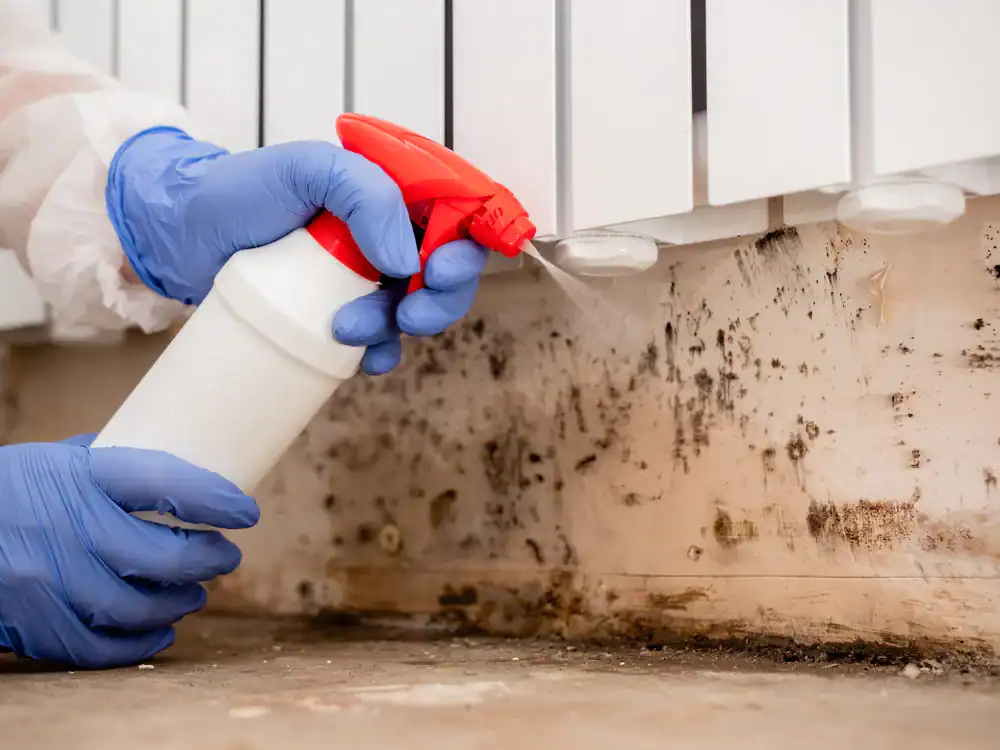
At the lower end of the price spectrum, you’re typically getting surface-level mold cleaning. This might involve someone scrubbing visible mold with commercial cleaners, applying a mold-killing solution, and calling it done. For very small areas of non-porous surface mold—think a small patch on bathroom tile—this approach can work fine.
The problem is that most mold situations aren’t that simple. Mold you can see is often connected to mold you can’t. It grows behind drywall, under flooring, inside wall cavities, and throughout HVAC ductwork. Surface cleaning doesn’t reach those areas.
Budget services also rarely include proper containment. When you disturb mold without sealing off the area, you release thousands of microscopic spores into the air. Those spores travel to other parts of your home, settle on new surfaces, and start new colonies anywhere moisture exists. You might have started with mold in one bathroom. Three months later, you’ve got it in three rooms.
The EPA is clear about this: if mold covers more than 10 square feet, or if it’s caused by contaminated water, you need professional remediation. Anything less is a temporary fix that often makes the problem worse. You’re not saving money if you have to pay for mold treatment twice.
North Carolina’s humidity doesn’t help. With average relative humidity over 70%, even in less humid areas like Greensboro, mold finds moisture easily. If the source isn’t addressed, the conditions that created your mold problem haven’t changed. The mold knows it.
Professional Mold Remediation: The $2,000-$3,000 Difference
This is where you start seeing actual remediation instead of just cleaning. Companies working in this range typically follow industry standards, use professional equipment, and address both the mold and the moisture causing it.
IICRC-certified technicians follow the S520 standard for professional mold remediation. That’s not marketing language—it’s a specific protocol that includes inspection, containment, air filtration, physical removal, cleaning, and verification. The process starts with figuring out where moisture is coming from. Leaking pipes, poor drainage, condensation from HVAC systems, humidity from crawl spaces—whatever’s feeding the mold gets identified and fixed.
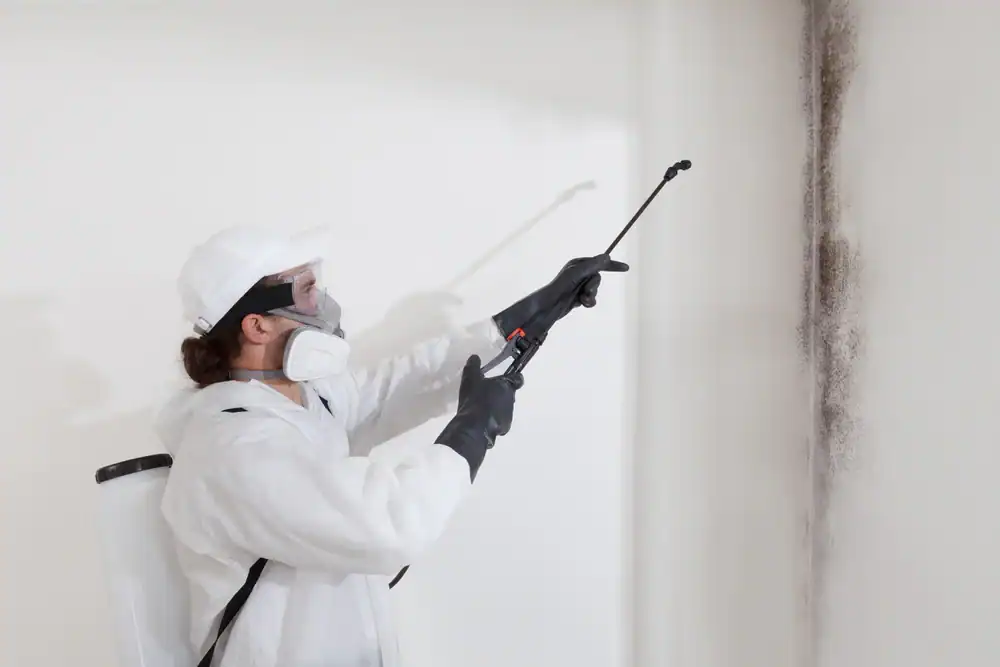
Containment comes next. Professionals seal off the affected area with plastic sheeting and create negative air pressure using HEPA-filtered air scrubbers. This prevents mold spores from spreading during removal. The air in the work area gets filtered continuously, capturing particles down to 0.3 microns. For context, mold spores are typically 3-100 microns. Nothing escapes.
Physical removal is the core of the work. Porous materials that can’t be effectively cleaned—drywall, insulation, carpet padding—get removed and disposed of properly. Non-porous surfaces get cleaned with EPA-registered antimicrobial solutions. The goal isn’t to kill mold in place. It’s to remove it entirely.
After removal, the area gets dried thoroughly using commercial dehumidifiers and air movers. Mold needs moisture to grow. Eliminating that moisture eliminates the conditions that allowed mold to thrive. Finally, the space gets tested to verify that mold levels have returned to normal. You’re not taking anyone’s word for it—you’re seeing documented proof.
This level of service costs more because it takes more time, requires specialized equipment, and involves trained technicians who understand building science and microbiology. But it’s also the level of service that actually solves the problem instead of postponing it.
Professional Mold Mitigation: Why the Process Matters More Than the Price
The difference between professional mold mitigation and surface cleaning isn’t subtle. It’s the difference between addressing symptoms and curing the disease.
Surface cleaning focuses on what you can see. It’s reactive, quick, and cheap. Professional mold mitigation focuses on what’s causing what you can see. It’s comprehensive, time-intensive, and costs more upfront. But here’s what matters: one of these approaches prevents the mold from coming back, and one doesn’t.
Guilford County homeowners deal with specific challenges that make professional remediation especially important. The humid climate creates ideal conditions for mold growth year-round. Crawl spaces, attics, and poorly ventilated areas accumulate moisture easily. Once mold establishes itself in these hidden areas, surface cleaning in visible spaces becomes pointless. You’re treating the result while ignoring the cause.
How IICRC-Certified Mold Removal Protects Your Home Long-Term
Professional mold mitigation follows a specific sequence designed to eliminate mold completely and prevent regrowth. Each step serves a purpose, and skipping any of them compromises the entire process.
Inspection comes first. Technicians don’t just look at the mold you’ve found—they look for the mold you haven’t. Moisture meters, thermal imaging cameras, and visual inspection of hidden areas reveal the full extent of contamination. They’re also looking for the moisture source. Roof leaks, plumbing issues, condensation problems, poor ventilation, ground water intrusion—whatever’s feeding the mold gets identified.
Containment prevents spread during removal. Heavy plastic sheeting seals off the work area from the rest of your home. Negative air pressure machines create airflow that pulls air into the contained area and filters it through HEPA filters before exhausting it outside. This means disturbed mold spores get captured instead of circulating through your house.
The actual removal process depends on what’s contaminated. Porous materials like drywall, insulation, and carpeting that have mold growth get removed and bagged in sealed containers. These materials can’t be effectively cleaned—mold roots penetrate too deeply. Non-porous surfaces like metal ductwork, wood framing, and concrete get cleaned with HEPA vacuums and antimicrobial solutions.
Drying is critical. Industrial dehumidifiers and air movers bring humidity levels down and keep them there. Materials need to be completely dry before reconstruction begins. If moisture remains, you’re just creating conditions for new mold growth.
Verification testing confirms that remediation worked. Air samples and surface samples get sent to independent labs for analysis. Results show whether mold levels have returned to normal background levels. This isn’t optional—it’s how you know the job is actually complete.
When Professional Mold Treatment Needs to Include Your HVAC System
Mold in your HVAC system creates a unique problem. Your heating and cooling system circulates air through every room in your home. If mold is growing inside your ductwork, on your evaporator coils, or in your drain pan, every time your system runs, it’s distributing mold spores throughout your entire house.
This is where our dual expertise in both mold remediation and air duct cleaning becomes especially valuable. Most mold remediation companies will tell you to call an HVAC company. Most HVAC companies will tell you to call a mold remediation company. We handle both, which means the entire problem gets addressed by one team using coordinated protocols.
HVAC-related mold typically starts in areas where condensation occurs. Air conditioning systems produce moisture as they cool air. That moisture should drain away through condensate lines into drain pans and out of your home. When drain lines clog, when drain pans don’t drain properly, or when humidity is high enough that condensation forms on ductwork, you’ve created perfect conditions for mold growth.
The challenge is that you can’t see most of your HVAC system. Ductwork runs through walls, floors, and ceilings. Evaporator coils sit inside air handlers in attics or closets. By the time you notice a musty smell when your system runs, mold has often spread throughout the system.
Professional HVAC mold remediation involves accessing the entire system, not just the parts you can reach. This might mean cutting access panels in ductwork, removing air handler panels, and using cameras to inspect areas that can’t be seen otherwise. Contaminated sections get cleaned using specialized equipment—negative air machines, HEPA vacuums, and antimicrobial fogging systems designed for duct cleaning.
The process also includes fixing whatever allowed mold to grow. Clogged condensate lines get cleared. Drain pans get cleaned and tested to ensure proper drainage. Humidity levels get measured and controlled. If your system is oversized for your space—a common issue that leads to short cycling and inadequate dehumidification—that gets addressed too.
Research shows that up to 40% of the air in your home can come from your crawl space, pulled in through gaps and cracks as your HVAC system operates. If your crawl space has moisture problems and mold growth, your HVAC system becomes the distribution method that spreads contamination throughout your home. Addressing mold in this situation means addressing both the source in the crawl space and the distribution through your ductwork.
This is complex work that requires understanding both building science and HVAC systems. It’s why the cost for comprehensive mold remediation that includes HVAC system cleaning runs higher than simple surface mold removal. But it’s also why it actually works.
Choosing Mold Removal That Actually Works for Your Guilford County Home
The gap between $500 and $5,000 isn’t arbitrary. It reflects the difference between surface treatment and comprehensive remediation, between temporary fixes and permanent solutions, between addressing symptoms and eliminating causes.
You don’t always need the most expensive option. Small areas of surface mold on non-porous materials, caught early and caused by temporary moisture issues, can sometimes be handled with less intensive approaches. But if mold has spread beyond 10 square feet, if it’s growing on porous materials like drywall or insulation, if it’s in your HVAC system, or if it keeps coming back after cleaning, you need professional mold removal that follows IICRC standards.
The question isn’t whether you can afford professional mold remediation. It’s whether you can afford to pay for inadequate removal multiple times. We’ve spent over 30 years helping Guilford County homeowners solve mold problems permanently, combining IICRC mold certification with NADCA-certified duct cleaning expertise to address mold wherever it grows—including the places most companies can’t reach.